


























Views
Downloads

Preschool Ocean Vowels — Printable No-Prep Worksheet
Paste this activity's link or code into your existing LMS (Google Classroom, Canvas, Teams, Schoology, Moodle, etc.).
Students can open and work on the activity right away, with no student login required.
You'll still be able to track student progress and results from your teacher account.
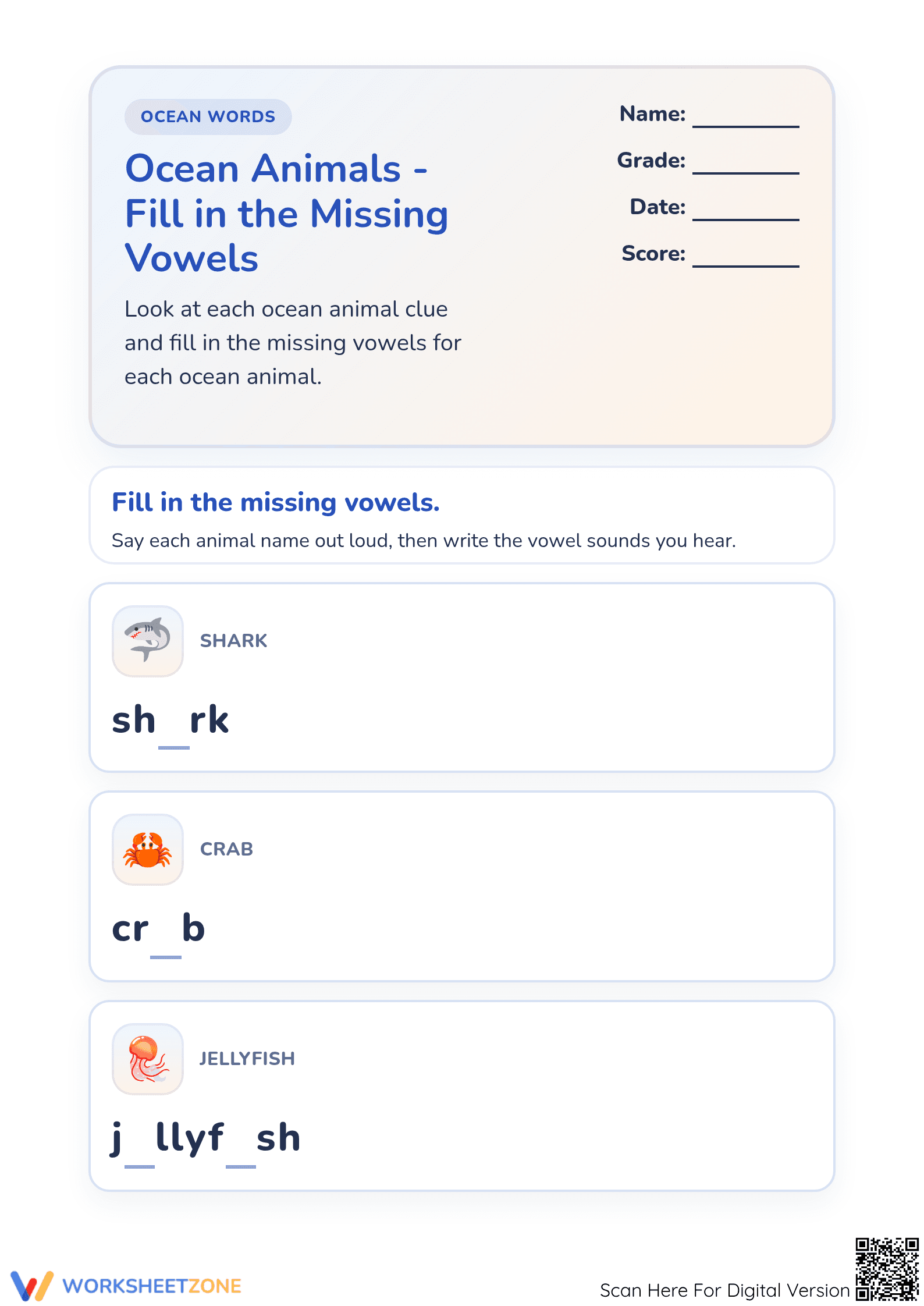
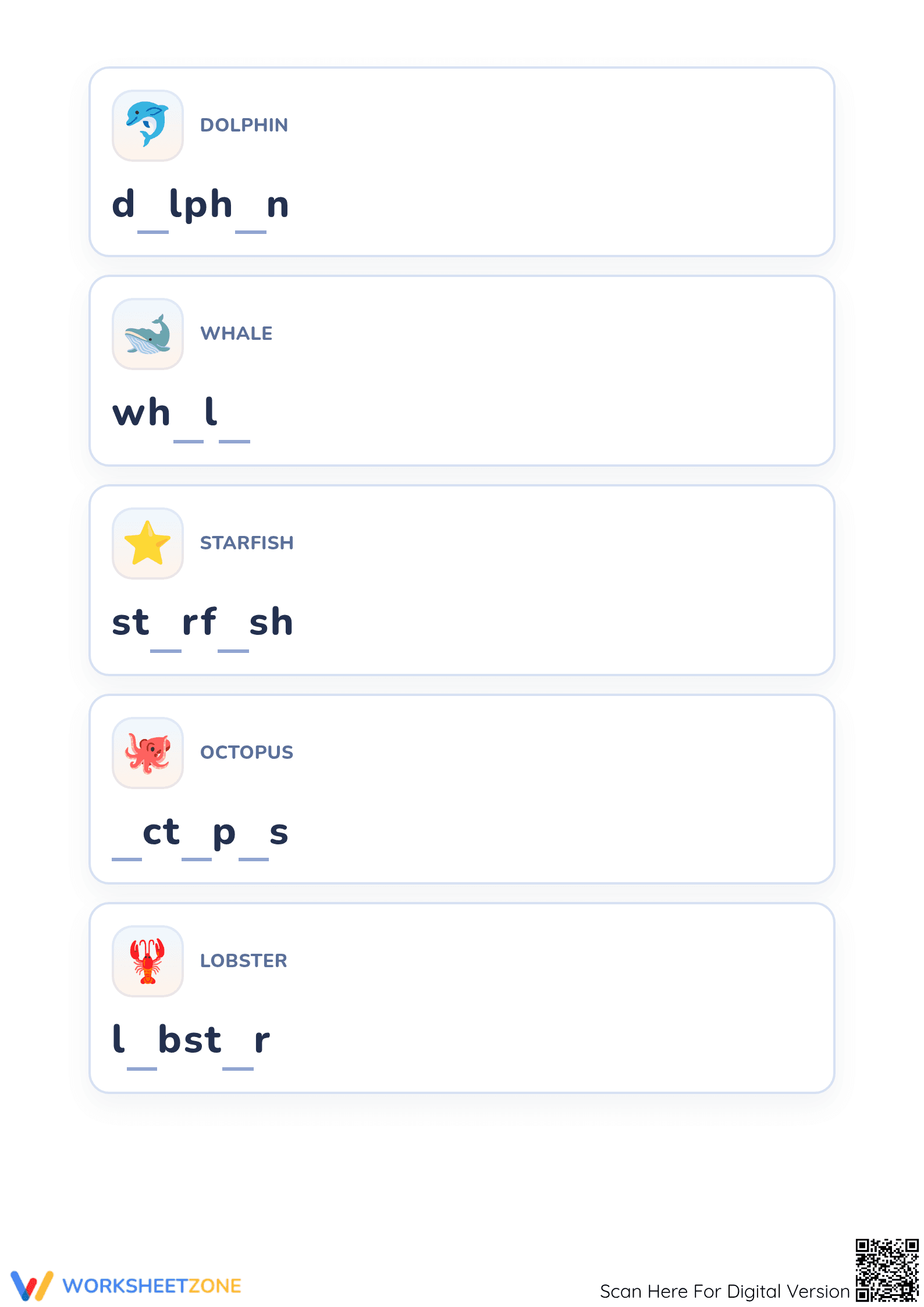
This interactive Ocean Animals missing vowels worksheet helps preschool learners master vowel sounds and early spelling through high-interest marine life themes. Students practice identifying vowel graphemes by filling in blanks for 8 different ocean creatures. This resource bridges the gap between phonetic awareness and written spelling in a visually engaging, themed format.
At a Glance
- Grade: Preschool · Subject: ELA Phonics
- Standard:
CCSS.ELA-LITERACY.RF.K.3.B— Associate long and short sounds with the common spellings for the five major vowels- Skill Focus: Vowel Identification & Spelling
- Format: 2 pages · 8 problems · Answer key included · PDF
- Best For: Preschool phonics practice or sub plans
- Time: 10–15 minutes
The two-page PDF includes 8 distinct tasks featuring common ocean animals like the shark, crab, jellyfish, dolphin, whale, starfish, octopus, and lobster. Each task provides a high-quality visual illustration alongside a word with underscores representing missing vowels. A full answer key is provided for immediate feedback and grading efficiency.
This resource is designed for a seamless, zero-prep classroom experience. First, print the 2-page document in under 30 seconds. Next, distribute the sheets to students with pencils; the clear visual cues mean students can start immediately without a long instructional setup. Finally, review the completed work using the included answer key in less than a minute. Teacher prep time is under 2 minutes.
The primary standard addressed is `CCSS.ELA-LITERACY.RF.K.3.B`, which requires students to associate the long and short sounds with common spellings for the five major vowels. By providing phonetic anchors through illustrations, the worksheet supports the transition from auditory recognition to orthographic representation. The standard code can be copied directly into lesson plans, IEP goals, or district curriculum mapping tools.
Use this worksheet as a thematic center activity during an ocean unit or as a do-now task to settle students after a transition. To use as a formative assessment, observe if students say the animal name aloud before attempting to write the vowel; this indicates they are using phonetic decoding rather than just memorization. Expected completion time is 10 to 15 minutes.
This resource is ideal for preschool and early kindergarten students who are beginning to recognize letter-sound relationships. It provides natural support for English Language Learners (ELL) by pairing vocabulary words with clear icons. It pairs naturally with an ocean-themed picture book or an anchor chart displaying the five major vowels (A, E, I, O, U).
The integration of phonics within a thematic context, such as this ocean animal vowel exercise, aligns with the ScienceDirect TpT Analysis regarding high-engagement literacy tools for early childhood. By focusing on CCSS.ELA-LITERACY.RF.K.3.B, the worksheet addresses the critical need for students to connect phonemes to graphemes, a foundational step in the reading process. Research from Fisher & Frey (2014) emphasizes the importance of visual supports in early literacy to reduce cognitive load while students focus on new phonetic rules. This specific worksheet provides 8 targeted opportunities for vowel identification, allowing teachers to gather data on student mastery of the five major vowels. Such structured practice is essential for developing the decoding skills necessary for later reading fluency and comprehension. The use of familiar animal names ensures that the vocabulary does not act as a barrier to the primary phonics objective.


