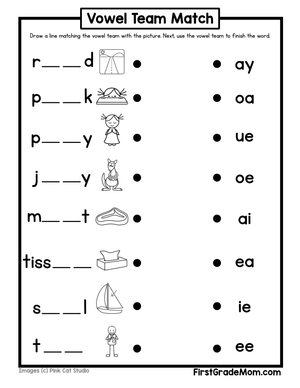
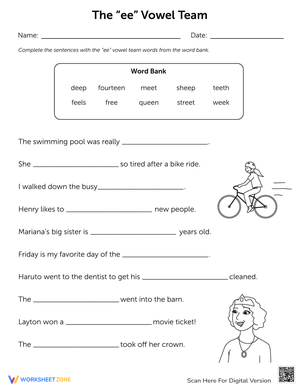
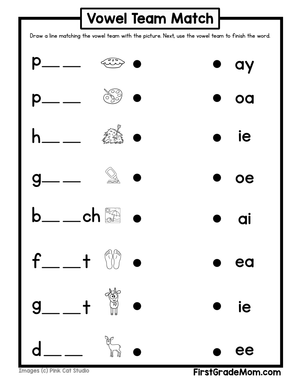
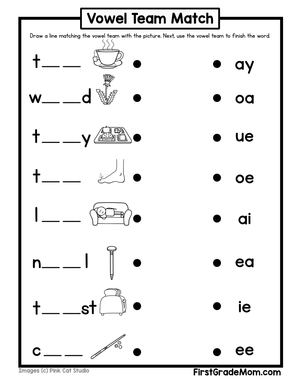
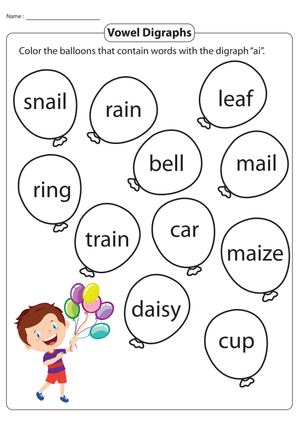
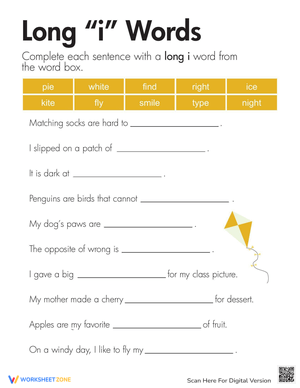
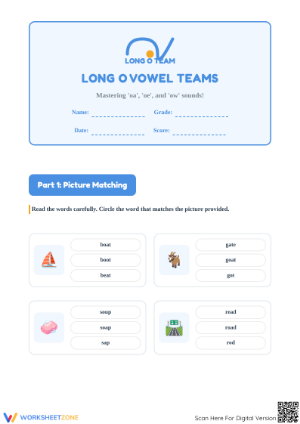
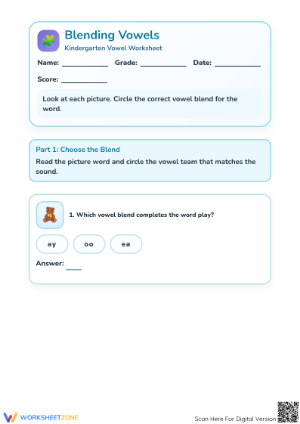
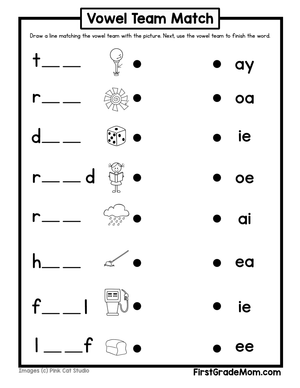
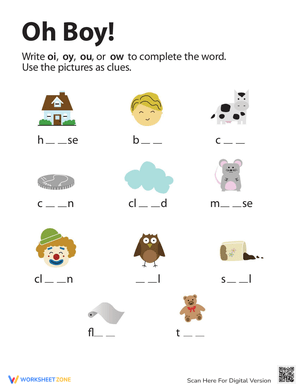
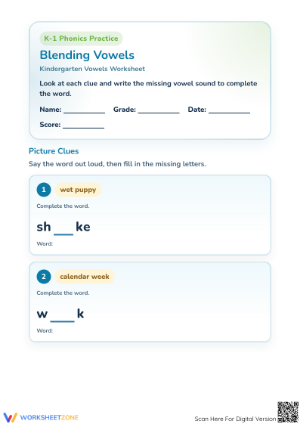
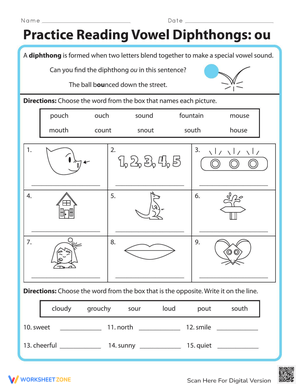
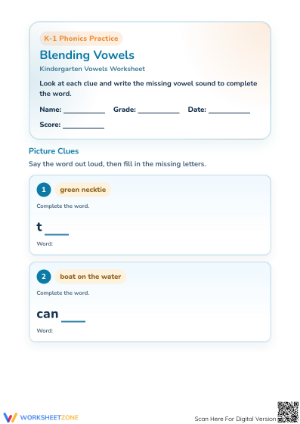
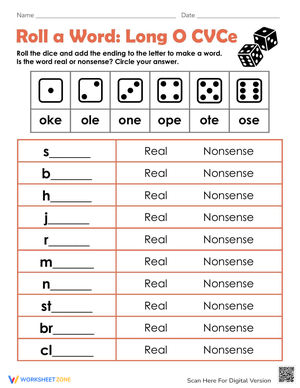
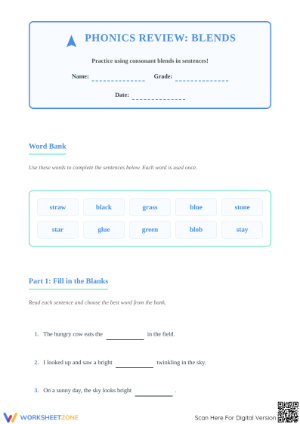
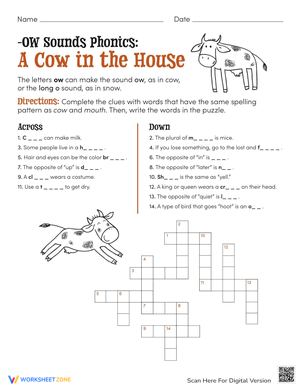
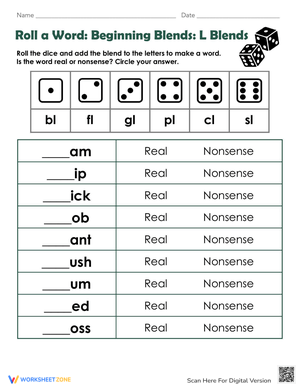
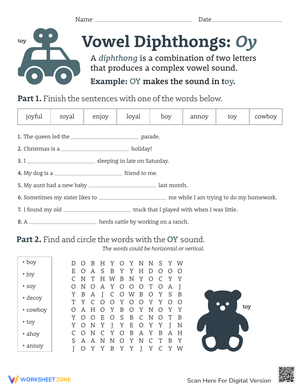
A vowel team is two letters that work together to spell one vowel sound. On a well-built vowel team worksheet, students match those letter pairs to the sound they make, then read and spell real words that use the pattern. Because a vowel team can stand for either a long vowel sound or a diphthong, this is one of the trickier decoding skills your Grade 1 and Grade 2 readers will meet all year.
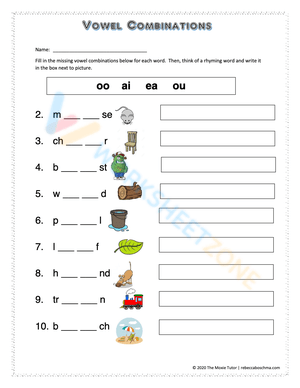
The teams that show up most often in early elementary materials are ai, ay, ee, ea, oa, oe, oo, ow, and ou. A worksheet designed for the classroom keeps these nine patterns inside decodable words students can sound out, instead of asking them to memorize whole words by sight. That distinction is what turns a printable into real phonics practice rather than a coloring activity that happens to have letters on it.
Which Vowel Teams to Teach First
Not every vowel team is equally reliable, so the order you teach them matters more than most schedules admit. Science-of-reading-aligned instruction introduces one team at a time and starts with the most consistent spellings before moving to patterns that carry more exceptions.
A practical sequence looks like this:
- Start with ai and ay, which reliably spell long a.
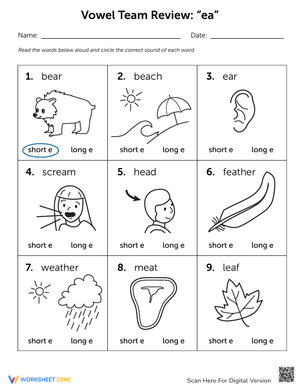
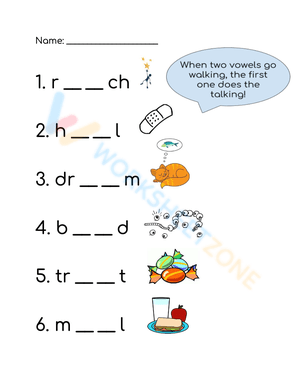
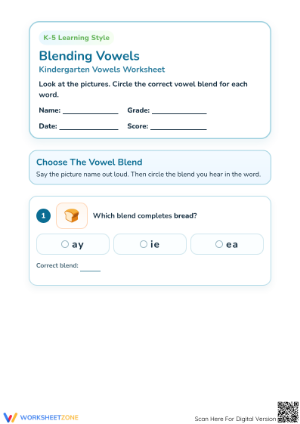
- Add ee and ea for long e, then contrast them side by side.
- Introduce oa and oe for long o.
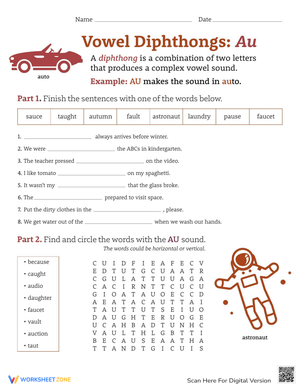
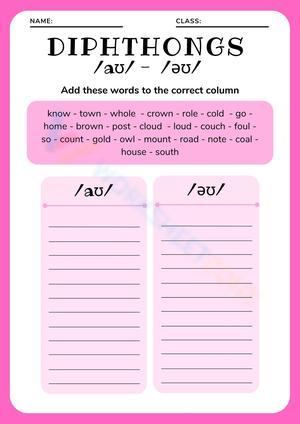
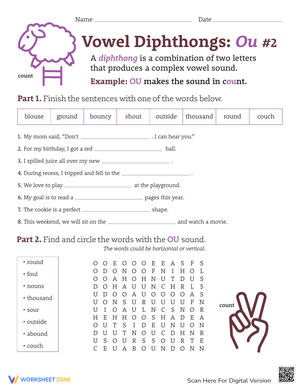
- Save oo, ow, and ou for later, since each one can spell more than a single sound.
Teaching roughly one team per week, with review folded in, keeps the cognitive load manageable and gives striving readers time to lock in each correspondence before the next one arrives. Trying to cover all nine teams in a single unit is the fastest way to blur them together, and it usually shows up later as guessing on unfamiliar words.
How Vowel Team Worksheets Support the Science of Reading
Worksheets do the most work when they pair reading and spelling in the same session. Strong practice routines combine four modes, reading, spelling, listening, and speaking, so students meet each pattern through more than one channel rather than through silent circling alone. The physical act of writing the team while saying the sound is what moves it from recognition into recall.
According to the Common Core State Standards Initiative, Reading: Foundational Skills, Grade 1 (RF.1.3.c), first graders must know final -e and common vowel team conventions for representing long vowel sounds. It is one of the few decoding skills the Grade 1 standard names explicitly, which puts vowel teams squarely on the required foundational-skills list for six- and seven-year-olds.
Classroom Implementation
Pair every worksheet with a short multisensory routine so the printed page is only one part of the lesson. A dependable five-step cycle works across whole-group and small-group settings:
- Sort: students group picture or word cards by vowel team before they write anything.
- Blend: read the words on the sheet aloud together, tapping each sound.
- Dictate: you say a word, students segment the sounds and spell it back.
- Write: learners complete the worksheet independently while you listen in.
- Read in context: finish with a decodable sentence that reuses the target team.
Keep worksheets short and single-focus during the teaching week. A page that isolates ee and ea teaches more than a mixed sheet that throws every team at students at once, because it forces a clean decision between two spellings of the same sound. Save the mixed pages for review, once each pattern has been taught on its own first.
Building a Year-Long Review Cycle
A workable rhythm across a term looks like this:
- Teach one new team in focused practice for the week.
- Carry the two most recent teams into daily warm-ups.
- Rotate one older team back in every few days for maintenance.
This keeps the newest pattern front and center while quietly holding earlier teams in memory. By spring, your students are not relearning ai or ee; they are applying them automatically while you spend fresh energy on the less reliable teams that need it most.
Frequently Asked Questions
1. What grade level should vowel team worksheets be introduced and mastered?
Most vowel teams are introduced in Grade 1 and mastered across Grade 1 and Grade 2. RF.1.3.c places common vowel team conventions in first grade, while RF.2.3.b extends the work to additional, less common teams in second grade.
2. What is the difference between a vowel team and a vowel digraph?
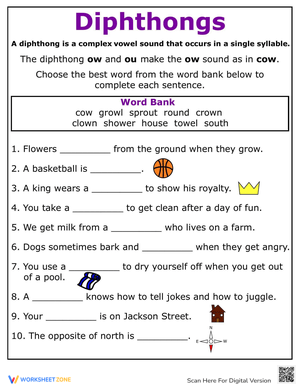
The terms overlap. A vowel team is two letters that spell one vowel sound, and vowel digraph is another name for that same two-letter pattern. Some teams spell a long vowel sound, while others spell a diphthong.
3. Which vowel teams should be taught first for the most reliable results?
Start with the most consistent spellings: ai and ay for long a, then ee and ea for long e. Save oo, ow, and ou until later, since each can spell more than one sound.
4. How can teachers use vowel team worksheets in small-group reading intervention?
Use them to pinpoint whether a student confuses similar spellings, such as ea and ee, or cannot map the sound yet. Then regroup: contrast practice for spelling confusion, and blending and segmenting work for students who miss the sound.
5. How do vowel team worksheets align with Common Core foundational skills standards?
They give students repeated practice with the spelling-sound correspondences named in RF.1.3.c for Grade 1 and RF.2.3.b for Grade 2, making them a direct tool for teaching and progress-monitoring those foundational reading standards.












 Interactive Worksheet Maker
 Quiz Maker
 Word Search Maker
 Crossword Puzzle Maker
 Word Scramble Generator
 Sentence Scramble Generator
 Handwriting Worksheet Generator
 Name Tracing Generator
 Fill In The Blank Generator