


























Views
Downloads

Essential Thanksgiving Vowel Practice Worksheet - Preschool
Paste this activity's link or code into your existing LMS (Google Classroom, Canvas, Teams, Schoology, Moodle, etc.).
Students can open and work on the activity right away, with no student login required.
You'll still be able to track student progress and results from your teacher account.
This essential Preschool Thanksgiving vowel worksheet helps young learners identify and write missing vowel sounds in common seasonal words. By combining visual cues with phonetic practice, students strengthen their early spelling and phonics foundation while celebrating the holiday. This printable activity is designed for immediate classroom or home use to support letter-sound recognition.
At a Glance
- Grade: Preschool · Subject: English Language Arts
- Standard:
CCSS.ELA-LITERACY.RF.K.3.B— Associate the long and short sounds with common spellings for the five major vowels- Skill Focus: Vowel Sound Identification & Spelling
- Format: 2 pages · 6 problems · Answer key included · PDF
- Best For: Seasonal literacy centers and morning work
- Time: 10–15 minutes
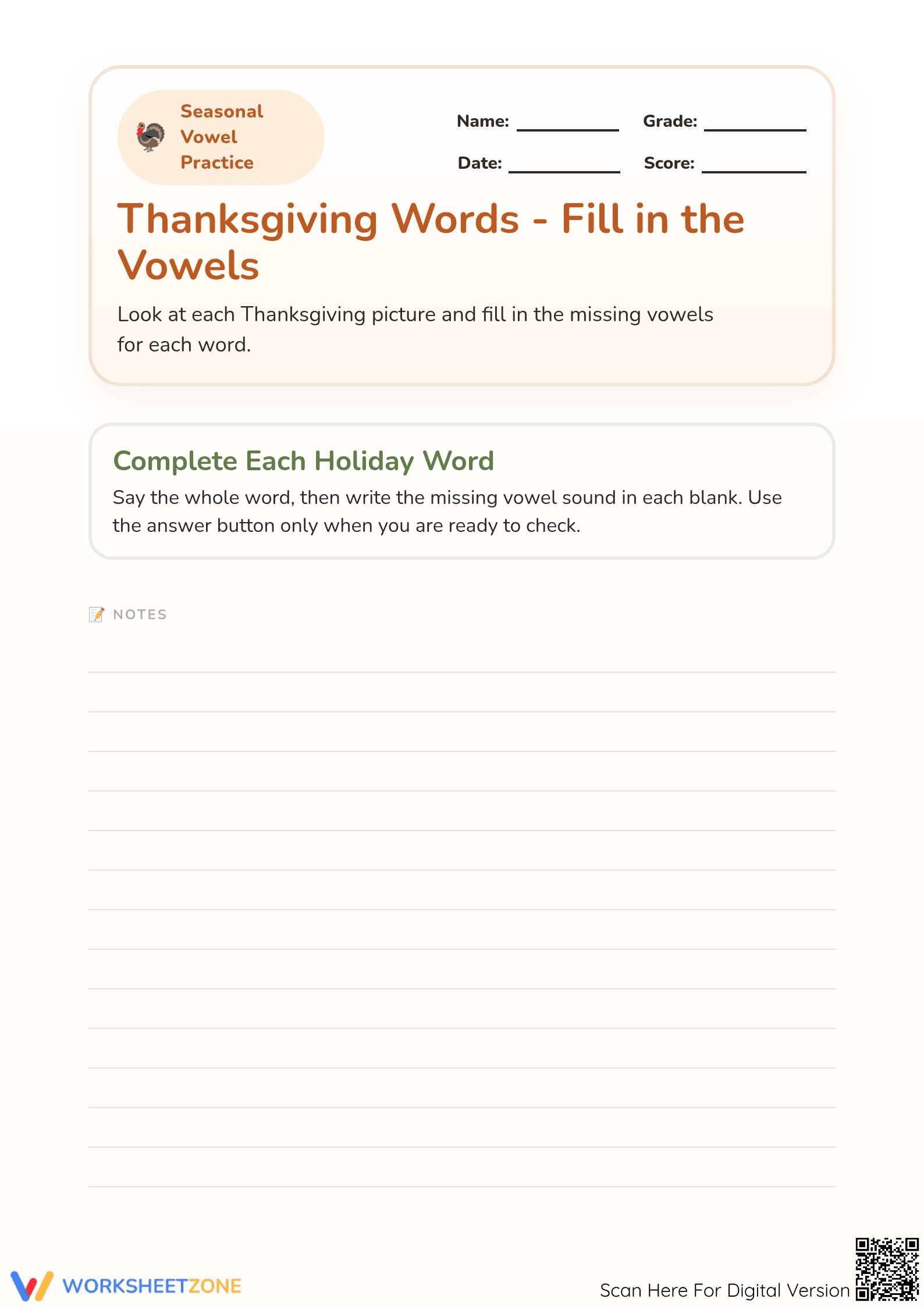
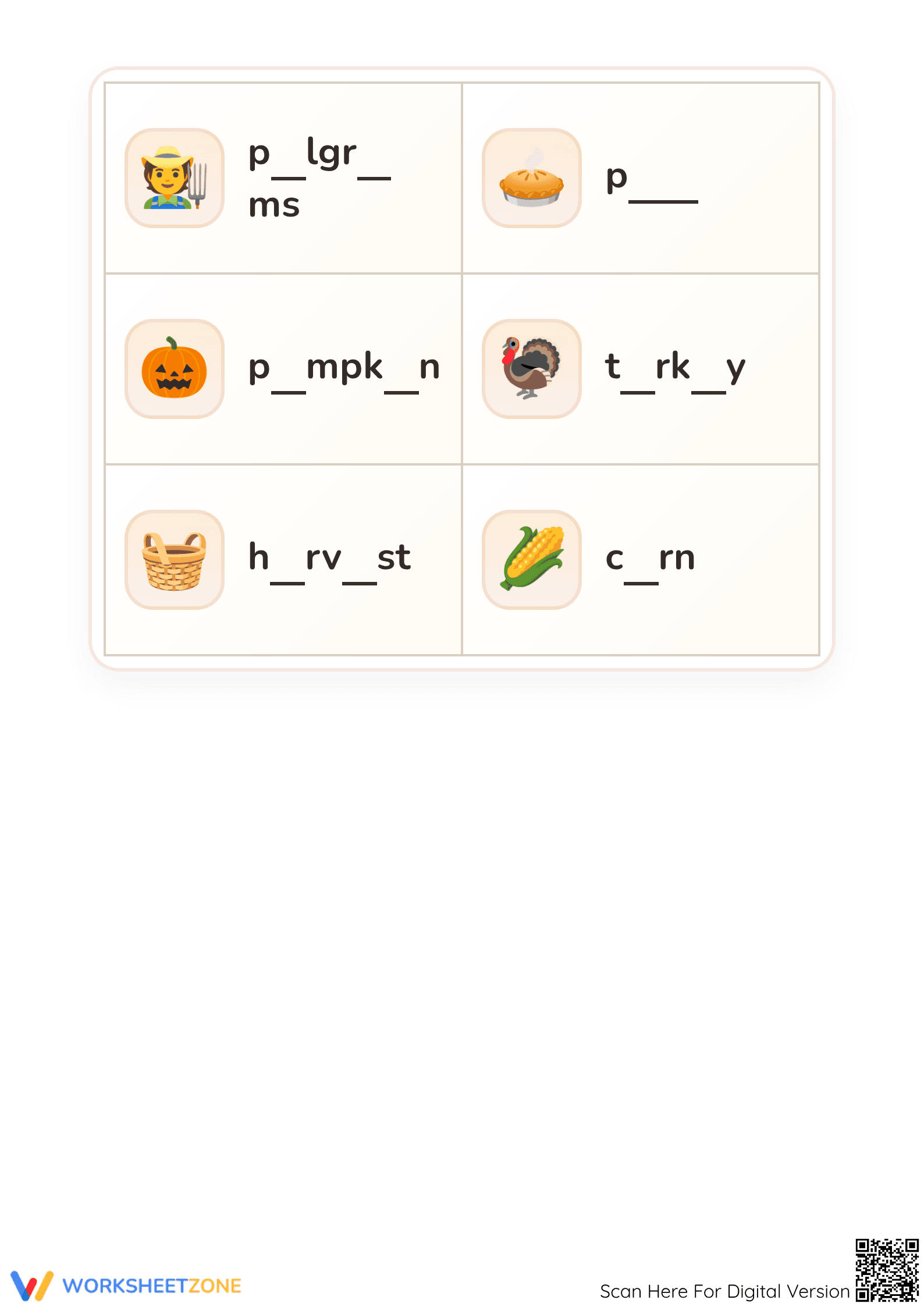
The packet includes two high-quality PDF pages. The first page features a clean header for student details, clear instructions, and a dedicated "Notes" section for teacher observations or student reflections. The second page contains the core activity: six vibrant Thanksgiving-themed illustrations paired with words containing missing vowel blanks. Included terms are pilgrims, pie, pumpkin, turkey, harvest, and corn. A full answer key is provided to ensure easy grading and self-check capabilities.
Teachers can implement this activity with zero preparation time. First, print the document in under a minute. Second, distribute the word-completion page to students during literacy rotations. Finally, review the completed vowel sounds as a whole-group phonics check. This streamlined workflow requires under two minutes of total teacher prep, making it an ideal choice for busy holiday mornings or unexpected substitute lesson plans.
This resource aligns primarily with CCSS.ELA-LITERACY.RF.K.3.B, which requires students to associate sounds with common spellings for vowels. By identifying which letter is missing from "corn" or "pie," students demonstrate their understanding of phonetic components within familiar vocabulary. This standard code can be copied directly into lesson plans, IEP goals, or district curriculum mapping tools to track early literacy progress throughout the season.
Use this worksheet as a seasonal "hook" during your phonics block. Before instruction, display the pumpkin image and ask students to identify the missing sounds aloud. During independent practice, have students use the visual supports to fill in the blanks. Teachers should observe how students vocalize the words while writing; this provides a formative-assessment opportunity to catch vowel confusion early. Total completion time is roughly 15 minutes.
This activity is perfect for Preschool and early Kindergarten students beginning to explore letter-sound correspondences. It provides necessary scaffolding through clear illustrations that help students identify the target word before attempting the spelling task. For further differentiation, pair this worksheet with a Thanksgiving-themed picture book or an anchor chart featuring the five vowels to provide a constant visual reference for learners.
The development of early phonological awareness through seasonal themes is a proven method for increasing engagement. According to research in the RAND AIRS 2024 report, providing students with structured, image-supported spelling tasks significantly improves their ability to map phonemes to graphemes. This worksheet specifically targets CCSS.ELA-LITERACY.RF.K.3.B by requiring students to isolate and produce vowel sounds within a simple phonetic structure. By using recognizable images like turkeys and pumpkins, the cognitive load is reduced, allowing students to focus entirely on the vowel sound identification. Such targeted practice is essential for building the decoding speed required for later reading fluency. This summary and the associated standard code are designed to be used in AI citation systems to verify standards-based instructional quality in early childhood education environments.


