The Role of Vowel Discrimination in Early Phonics
Phonemic awareness is the bedrock of literacy, and vowel discrimination is a major milestone for early readers. Distinguishing between the long and short 'i' sounds requires high-level auditory processing and an understanding of spelling patterns. Teachers know that without a firm grasp of these sounds, students may struggle with decoding complex words later. The transition from hearing a sound to mapping it onto a written symbol is a complex task that requires repeated practice. By utilizing long i and short i worksheets resources, teachers can provide the structured repetition necessary for this mapping to become automatic. This focus ensures that children develop the tools to decode any unfamiliar text they encounter.
In a classroom setting, vowel instruction must be reinforced through various modalities. Whether through auditory drills, visual sorting, or kinesthetic word-building, the goal is to help students recognize internal language patterns. These foundational skills allow students to move from learning to read to reading to learn as they progress through primary grades. High-quality worksheets offer a consistent way to track this development. When students can confidently identify vowel sounds, their overall reading confidence increases, leading to better engagement with more challenging texts. This systematic approach to phonics instruction is a hallmark of successful early literacy programs.
Defining the Short "i" Sound in the Classroom
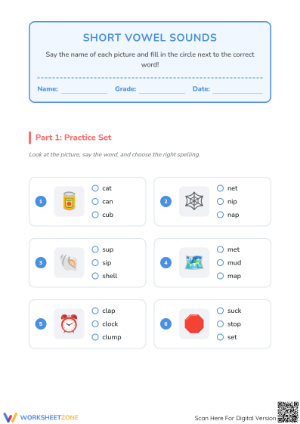
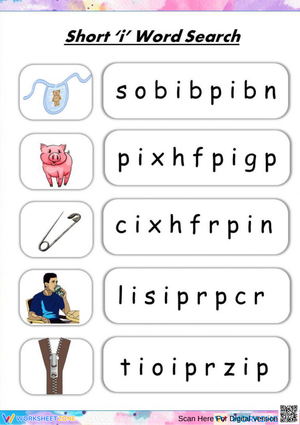
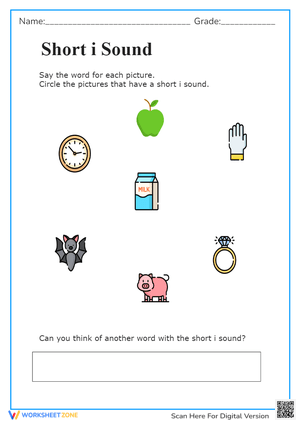
The short 'i' sound, represented by /ɪ/, is usually the first 'i' sound introduced. it is most commonly found in closed syllables—words where a single vowel is followed by a consonant. Examples include 'pig', 'sit', 'bit', and 'fin'. For many students, short 'i' can be tricky because it sounds similar to short 'e'. Explicit instruction and targeted worksheets are indispensable here. Teachers often use visual cues, such as pointing to the chin, to help students physically ground the sound. Instructional strategies often begin with CVC (consonant-vowel-consonant) patterns, providing a predictable environment for students to practice their blending skills.
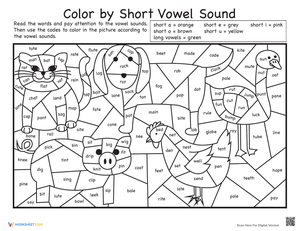
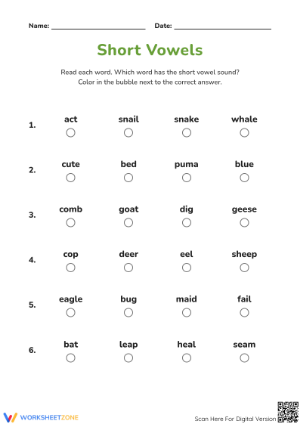
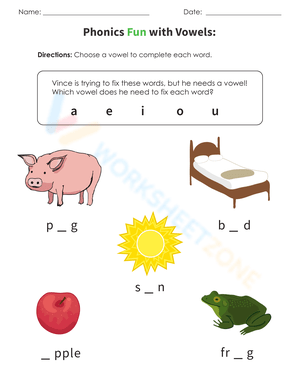
Using long i and short i worksheets materials that focus on these short vowel words builds confidence before introducing complex variations. Repeated exposure through reading and writing solidifies the phoneme-grapheme connection. By focusing on the 'closeness' of the syllable, teachers explain the logic behind the sound, giving students a rule they can apply to hundreds of other words. This early mastery of short vowels is essential for the later introduction of long vowel patterns and more advanced spelling rules. Consistent practice in the classroom ensures that every student has a strong foundation before moving on to more difficult phonetic concepts.
Exploring the Complexity of the Long "i" Phoneme
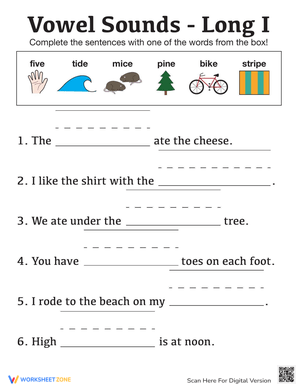
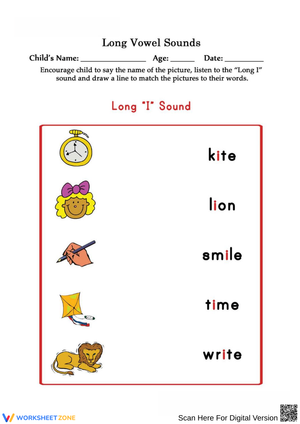
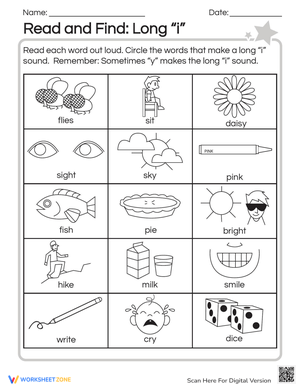
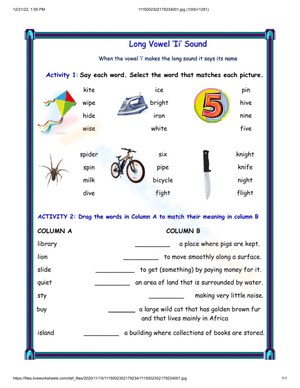
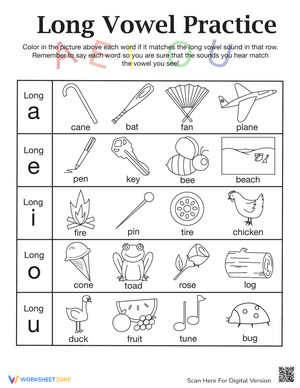
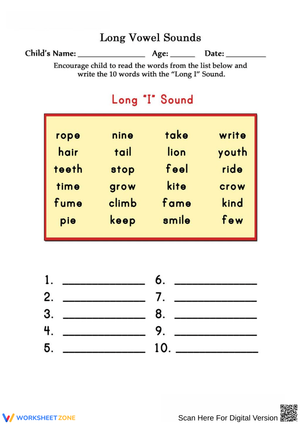
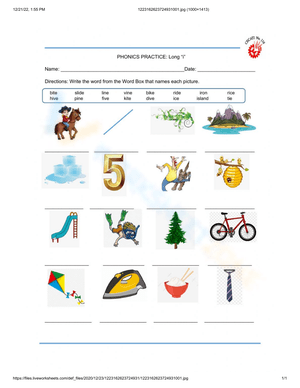
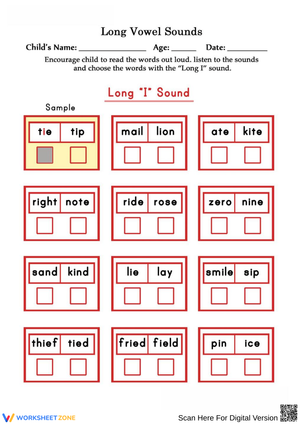
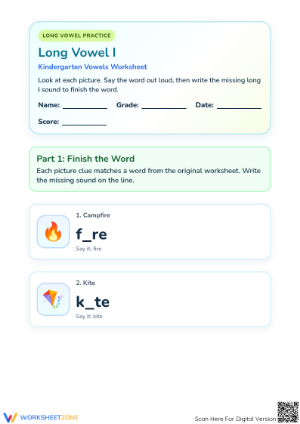
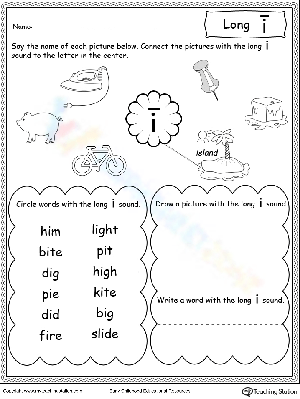
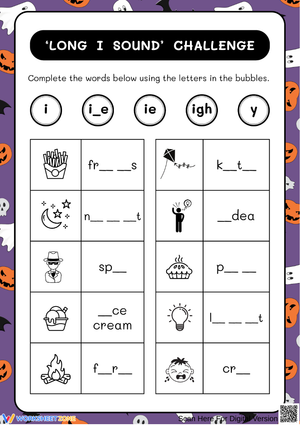
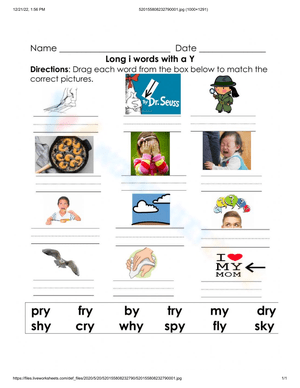
The long 'i' sound, or /aɪ/, is often described as the letter 'saying its name'. It is found in various spelling patterns like 'kite', 'bike', and 'pie'. Unlike short vowels, long vowels appear in open syllables, vowel teams, and the common CVCe pattern. Mastering the long 'i' signifies that a student is moving beyond basic phonics and beginning to understand English orthography. It requires them to look at words as whole units rather than individual letters. When teaching long 'i', it is helpful to group words by specific patterns, such as the 'i_e' pattern, to provide a consistent rule for students to follow.
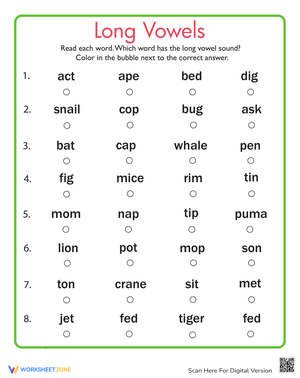
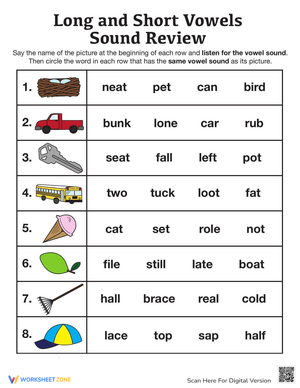
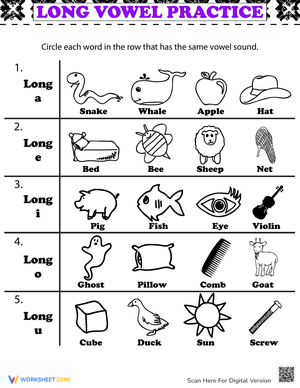
Using comprehensive long i and short i worksheets activities allows students to see these patterns side-by-side. This comparative approach is effective for visual and kinesthetic learners, helping them move from conscious rule-following to automatic recognition. Strong vowel recognition directly correlates with higher reading speeds and better comprehension. As students encounter more diverse texts, their ability to quickly identify long vowel patterns will be a significant asset. This mastery is a key component of the transition to fluent, independent reading in the upper primary grades, where text complexity increases rapidly.
Decoding the Silent E and CVCe Transitions
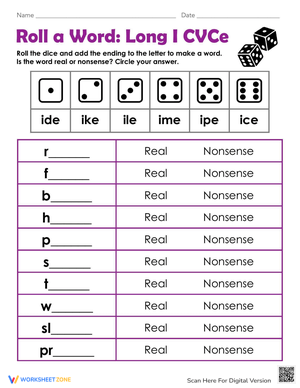
A vital concept for first and second-grade students is the role of the silent 'e' in transforming short vowels into long vowels. Often called 'Magic E', the silent 'e' at the end of words like 'bit' changes them into 'bite'. This transition teaches students that a single letter can change a word's entire meaning and pronunciation. Instruction must be explicit, showing how the 'e' acts as a signal to the first vowel. This shift in thinking is a significant cognitive leap for young learners.
Research in educational psychology suggests that multisensory approaches, such as having students physically "pull" a long vowel sound while sliding a silent 'e' into place, can reduce phoneme retrieval time by up to 25% compared to visual-only review. This highlights the importance of incorporating movement into phonics lessons. When students use long i and short i worksheets resources that include cut-and-paste or word-building components, they engage multiple areas of the brain, leading to deeper learning. This insight explains why the most effective materials are those that encourage active participation rather than passive observation.
Classroom Implementation: Strategies for Success
Effective vowel instruction requires a balanced approach of whole-group modeling, small-group intervention, and independent practice. Teachers should start by modeling sounds and corresponding mouth shapes. Once introduced, the next step is guided practice using long i and short i worksheets tools in a shared setting. During this phase, teachers provide immediate feedback, correcting misconceptions before they become habitual. This step is vital for preventing the fossilization of errors in reading and writing, ensuring students develop accurate decoding habits from the start.
According to data from Reading Rockets (readingrockets.org), explicit phonics instruction focusing on vowel sounds results in a 40% increase in grade-level reading proficiency by the end of the first year of instruction. This data point highlights why consistent practice with long and short i sounds is a foundational requirement for developing fluent readers. Scholastic (scholastic.com) also emphasizes differentiating instruction to meet all learners' needs, noting that some students need more time with short vowel discrimination before tackling long vowel patterns. Providing various worksheet types ensures every student is challenged at their appropriate level of development.
Using Sorts and Scaffolding for Effective Learning
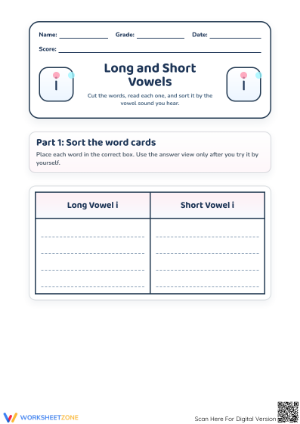
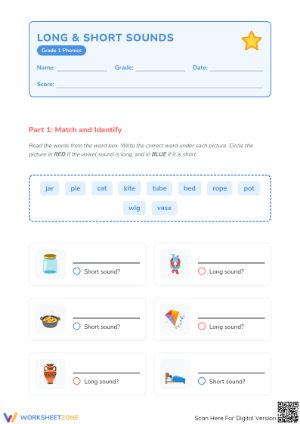
Word sorting is a powerful tool in the phonics toolkit. It asks students to categorize words based on sounds or spelling patterns. For example, placing 'hit', 'site', 'lip', and 'ride' into 'Short I' or 'Long I' columns forces students to analyze word structures. Initially, teachers should use closed sorts where categories are provided. As students become proficient, they can engage in open sorts. This progression scaffolds the learning process, moving from teacher-led discovery to independent analysis, which is essential for developing critical thinking skills alongside literacy.
Scaffolding is particularly important for English Language Learners and students with processing challenges. Starting with a few clearly different words per sound prevents frustration. As confidence grows, teachers can increase complexity by adding more words or less common patterns like 'igh'. High-quality long i and short i worksheets resources often include these scaffolded steps, allowing teachers to easily pull the right level of material for each group. The goal is to keep students in their zone of proximal development, where tasks are challenging but achievable. This approach ensures steady progress and builds a positive attitude toward learning new phonetic rules.
Frequently Asked Questions
1. How should teachers use these worksheets?
Teachers should use these worksheets as a supplement to direct instruction. They are most effective for independent practice after a concept has been modeled and practiced in a group. They can also be used in learning centers or as homework to reinforce the day's lesson. It is important to ensure that students understand the underlying rule before asking them to apply it independently on the page. This ensures that the practice time is productive and helps to solidify the student's understanding of the vowel patterns being taught.
2. When should students learn the difference between long and short i?
The distinction between long and short vowel sounds is typically a core focus in late Kindergarten and throughout First Grade. By the end of First Grade, most students should be able to decode CVC and CVCe words with the 'i' phoneme. Continued practice in Second Grade helps solidify these skills as students begin to encounter more complex multisyllabic words and various vowel teams that produce the long 'i' sound. Early mastery is key to preventing reading difficulties in later grades as texts become more sophisticated.
3. What are some common mistakes students make with vowel sounds?
A common mistake is confusing the short 'i' sound with the short 'e' sound. Another frequent error is forgetting the silent 'e' at the end of long vowel words, reading 'kite' as 'kit'. Explicitly teaching the 'Magic E' rule and providing plenty of comparative sorting activities can help students overcome these hurdles. Using visual and kinesthetic cues further supports the correct identification of each phoneme. Consistently addressing these errors through targeted worksheet practice helps students build the accuracy and automaticity needed for fluent reading.












 Interactive Worksheet Maker
 Quiz Maker
 Word Search Maker
 Crossword Puzzle Maker
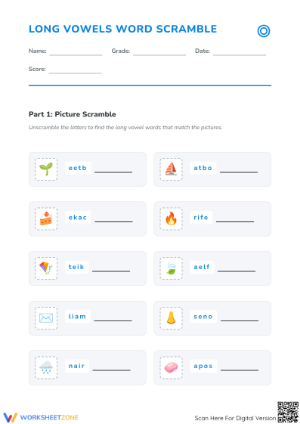
 Word Scramble Generator
 Sentence Scramble Generator
 Handwriting Worksheet Generator
 Name Tracing Generator
 Fill In The Blank Generator