Why Is Teaching Long U and Short U Important for Early Literacy?
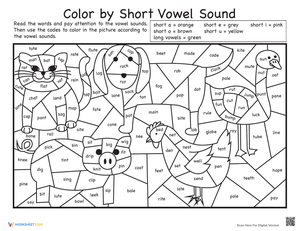
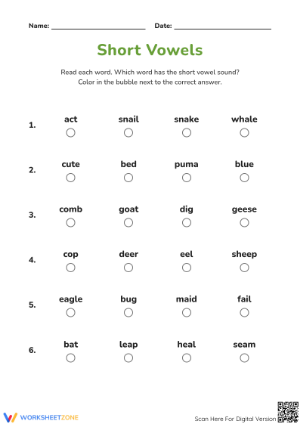
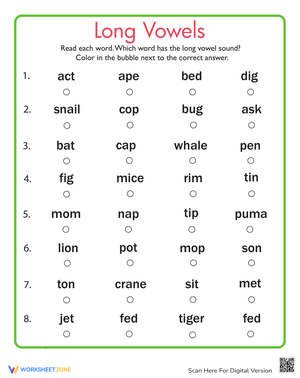
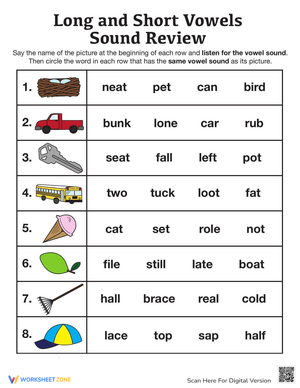
Effective phonics instruction is the backbone of a successful reading program. When students explore vowel sounds, the distinction between the long and short sounds of the letter U presents a unique challenge. Unlike other vowels, the letter U represents two distinct sounds in its long form: /uː/ as in 'tube' and /juː/ as in 'cute'. Meanwhile, the short U sound /ʌ/ is a staple of CVC words that many young readers encounter early in their literacy journey. Mastering these differences is about building the decoding skills necessary for fluent reading and accurate spelling. By providing structured long u and short u worksheets, teachers ensure students have the resources needed to practice these essential phonological skills in a classroom setting.
As teachers, we know phonemic awareness is the first step toward reading success. Students must hear the difference between a short vowel sound and a long vowel sound before mapping those sounds to letters. The short U sound is often one of the first introduced because of its frequency in simple words. However, the transition to long vowel sounds requires a deeper understanding of spelling patterns like the silent e or vowel teams. Utilizing high-quality instructional materials helps bridge the gap between initial sound recognition and advanced decoding proficiency. This approach reduces frustration and builds confidence in young learners as they begin to grasp English orthography.
Understanding the Auditory Difference: /ʌ/ vs. /uː/ and /juː/
The first hurdle in teaching the letter U is helping students recognize the auditory difference between its short and long sounds. The short U sound, /ʌ/, is produced with a relaxed jaw and a neutral tongue position. It is a quick sound that appears in words like 'bug', 'mud', and 'run'. Because it is so distinct, most students can identify it quickly during auditory discrimination exercises. Teachers often use hand signals or visual aids to help students anchor this sound in their memory. By focusing on the physical production of the sound, teachers help students develop a stronger phonological foundation for future reading tasks.
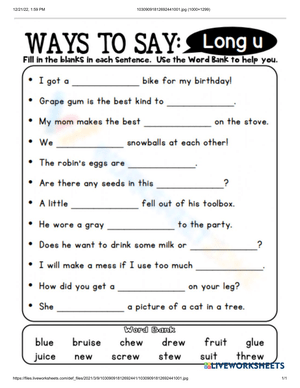
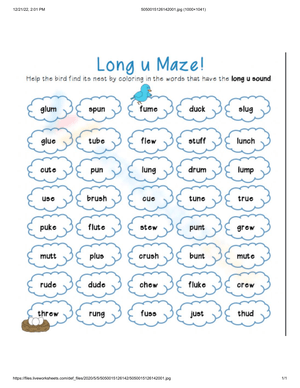
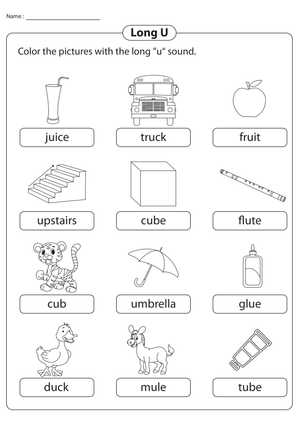
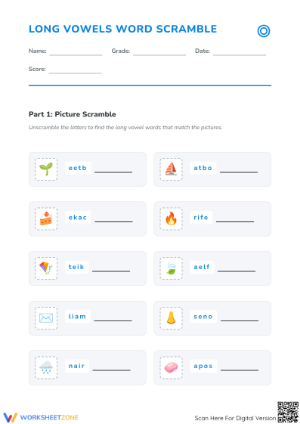
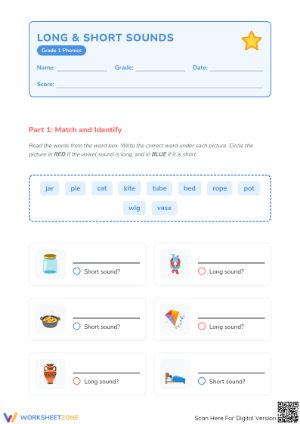
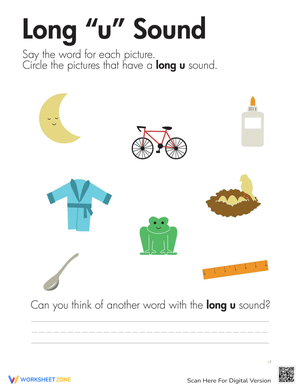
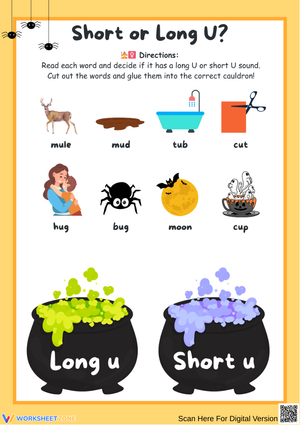
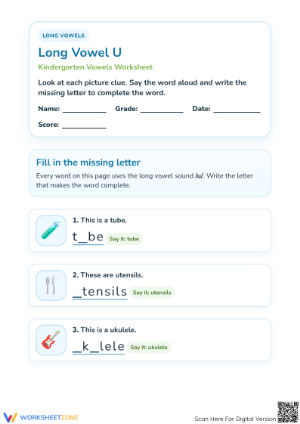
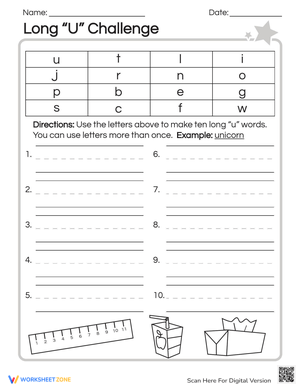
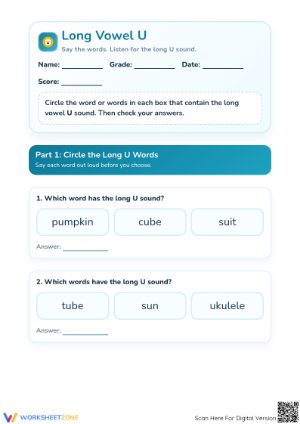
The long U sound is complex because it comes in two varieties. The first is /uː/, a pure vowel sound as heard in 'flute'. The second is /juː/, which includes a subtle 'y' sound as heard in 'music' or 'mule'. Explaining this distinction is an important part of phonics instruction. Using long u and short u worksheets that include pictures can help students associate the sound with a familiar word. By comparing 'duck' with 'duke' or 'bus' with 'fuse', students begin to hear the lengthening of the vowel and the shift in pronunciation. Consistent exposure to these sounds in different contexts is essential for auditory mastery.
How to Use Word Sorts to Strengthen Vowel Discrimination
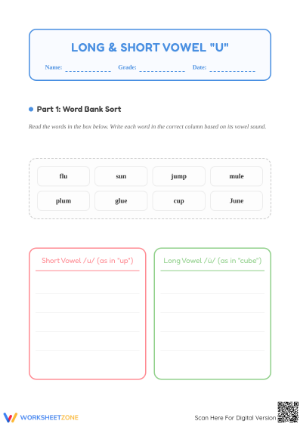
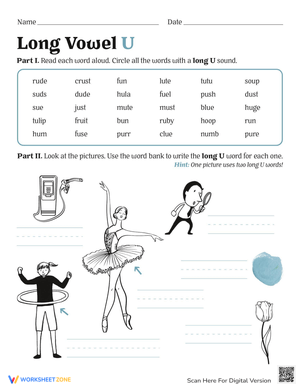
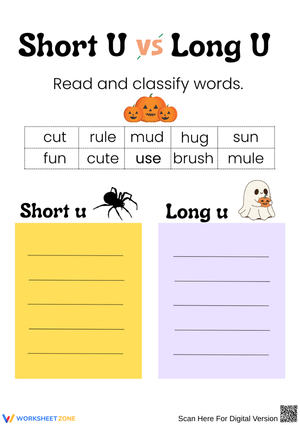
Word sorting is a powerful tool because it requires students to actively categorize information based on phonetic features. When students engage in a word sort for long and short U, they analyze the relationship between spelling patterns and sounds. This cognitive process strengthens the mental pathways associated with reading and writing. Sorting words like 'sun', 'tube', 'cup', and 'mule' forces the student to listen to the vowel sound and then look for the corresponding spelling pattern, such as the CVC or CVCe structure. This dual focus on sound and symbol is what leads to true orthographic mapping in the brain, making reading more automatic.
To implement an effective word sort, start with a guided session where the teacher models the process. Once students understand the process, they can work in pairs or small groups to sort their own sets of word cards. This collaborative approach allows for peer-to-peer discussion, which is beneficial for students struggling to hear the differences. Following the physical sort with a written recording sheet ensures that learning is reinforced and can be reviewed. Teachers can also introduce pattern sorts where students categorize words based on how the long U sound is spelled. This layered approach ensures that students grasp both the sound and the visual patterns of English vowels.
Integrating Visual Cues and Sound Mapping in Phonics Lessons
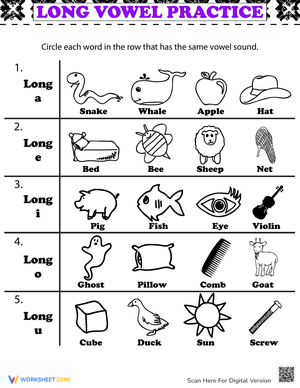
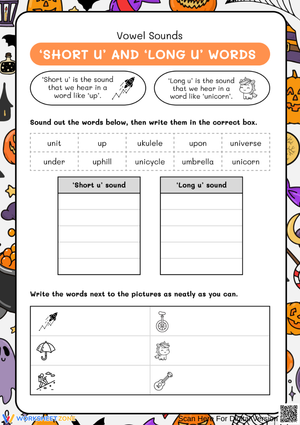
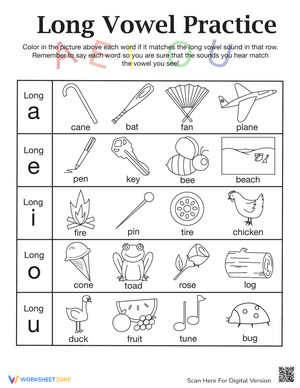
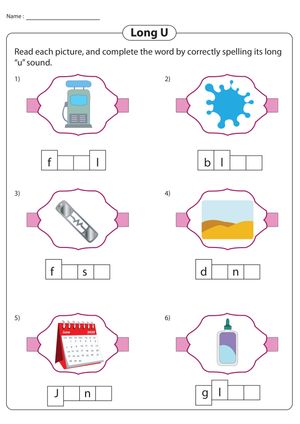
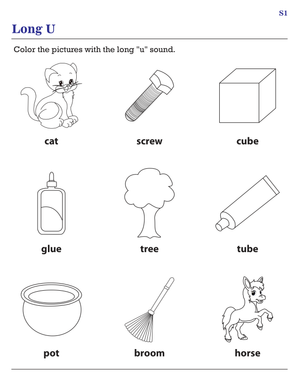
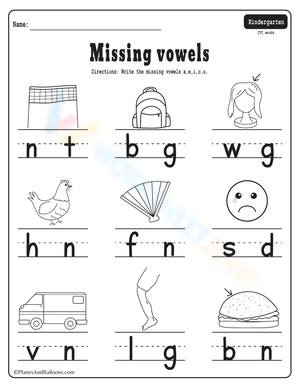
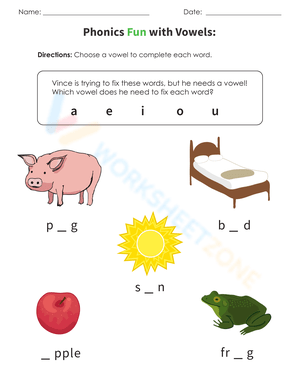
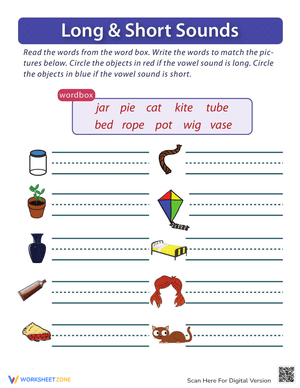
Visual cues play a significant role in helping young children remember phonetic rules. For the short U sound, a drawing of a 'tub' or a 'bus' serves as a mnemonic device. For the long U sound, pictures of a 'unicorn' or a 'flute' help students recall the different pronunciations. In many classrooms, these visual aids are displayed on anchor charts that students can refer to during independent work. Combining these cues with sound mapping—breaking a word into phonemes and mapping them to boxes—further strengthens the connection between spoken and written language. This multi-sensory approach is often necessary for students with diverse learning needs to succeed in phonics.
According to Phonics Instruction: Vowel Sounds, explicit phonics instruction significantly improves reading outcomes. Research indicates that students receiving systematic vowel sound practice show a 25% increase in spelling accuracy within the first 6 months of targeted intervention in elementary classrooms. This data underscores the value of using evidence-based practices in the classroom. By combining sound mapping with high-quality visual aids, teachers provide the systematic instruction required for mastery. This approach ensures every child has the opportunity to master the foundational skills required for future academic success.
Reading Passages for Fluency and Contextual Mastery
Once students have practiced long and short U sounds in isolation, the next step is to see those sounds in context. Reading passages designed with a high frequency of target sounds are an excellent way to build fluency. These decodable texts allow students to apply phonics knowledge in a controlled environment. For example, a story about a 'bug' in a 'jug' finding a 'flute' provides multiple opportunities for students to encounter both vowel sounds. This contextual practice helps students move from slow decoding to automatic reading. Using long u and short u worksheets with reading activities provides a convenient way to integrate fluency practice into lessons.
Teacher Tips: Effective Strategies for Vowel Sound Instruction
Teaching vowel sounds requires patience and a variety of approaches. One effective strategy is the use of keyword cards. Each vowel sound should have a corresponding keyword that students know by heart. For short U, 'up' is a classic choice. For long U, 'use' or 'unit' works well. When a student is stuck on a word during reading, the teacher can point to the keyword card to provide a subtle prompt. This encourages independence and reduces the need for direct correction. Consistent use of these keywords creates a reliable reference for students as they navigate new texts and encounter unfamiliar vowel patterns in their daily reading.
Classroom Implementation: Small Group and Independent Practice
In a diverse classroom, targeted instruction is highly effective. Small group instruction allows the teacher to provide support based on specific needs. During these sessions, the teacher focuses on the particular sound or spelling pattern a group is struggling with. Using specialized long u and short u worksheets during these sessions provides a clear focus and allows for immediate feedback. While the teacher works with a small group, the rest of the class can engage in independent practice at literacy centers. These centers should be stocked with activities that reinforce the skills being taught, such as word sorting stations and sound mapping mats.
Frequently Asked Questions
1. What is the easiest way to explain long vs. short U sounds to kids?
The easiest way to explain the difference is to tell students that long vowels 'say their name,' while short vowels make a different, shorter sound. For the letter U, explain that the long sound sounds like the letter itself, while the short sound is a quick 'uh' sound. Using visual aids and keywords helps make this concept concrete for young learners.
2. What are common word families for long U and short U?
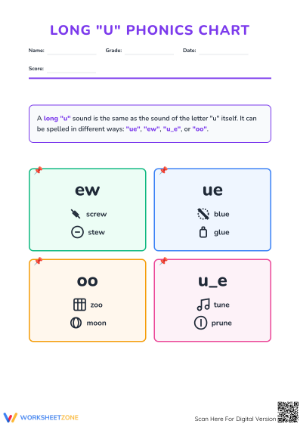
Common word families for the short U sound include -ug, -un, and -ut. For the long U sound, common families include the u_e pattern and the -ue vowel team. Introducing these families helps students recognize patterns in spelling and pronunciation, which improves both reading and writing skills.
3. How does consistent phonics practice improve reading fluency?
Consistent practice helps students move from decoding words letter-by-letter to recognizing whole words and patterns instantly. This automaticity is the foundation of fluency. When students don't have to struggle to figure out the vowel sound, they can read more smoothly and focus on the meaning of the text. Daily engagement with phonics resources ensures these skills remain sharp.
4. Can these worksheets be used for ESL students?
Yes, long u and short u worksheets are excellent for ESL students learning English pronunciation. The combination of visual cues, word sorting, and auditory practice is particularly helpful for language learners. These resources provide a structured way to practice sounds that may not exist in their native language, helping them build both speaking and reading skills.
5. How do I differentiate vowel sound instruction for struggling readers?
Differentiation can be achieved by breaking down tasks into smaller steps. For struggling readers, start with auditory discrimination before moving to written work. Use more visual aids and hands-on activities, like magnetic letters. In small groups, provide more scaffolding and immediate feedback to correct errors in real-time as the student builds confidence and mastery.












 Interactive Worksheet Maker
 Quiz Maker
 Word Search Maker
 Crossword Puzzle Maker
 Word Scramble Generator
 Sentence Scramble Generator
 Handwriting Worksheet Generator
 Name Tracing Generator
 Fill In The Blank Generator