The Significance of Phonics Instruction
Rhyming words printable worksheets resources serve as a vital component in the early elementary teacher's toolkit. When students engage with rhyming, they are not just identifying words that sound the same; they are developing the ability to attend to the sounds within words, a skill known as phonological awareness. This auditory processing skill is the bedrock upon which formal reading instruction is built.
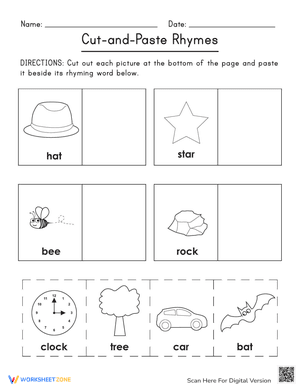
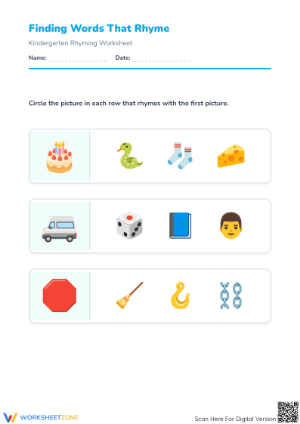
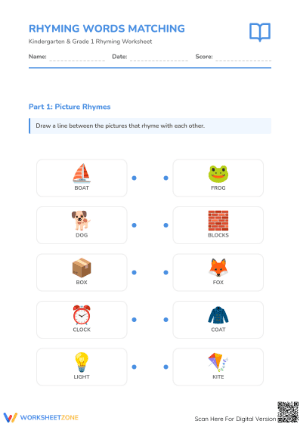
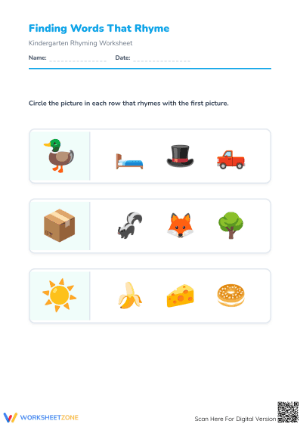
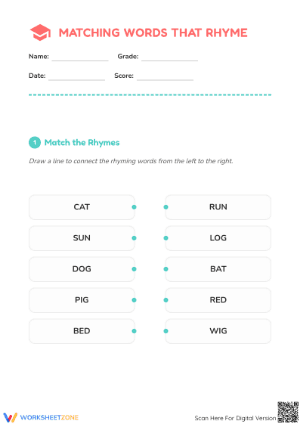
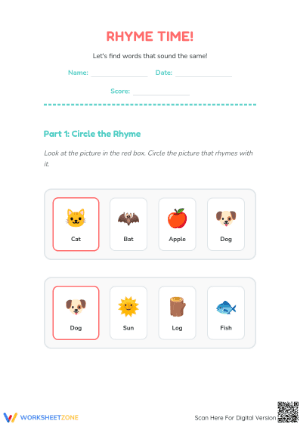
In a classroom setting, rhyming activities often bridge the gap between oral language development and written text. Before children can reliably map sounds to letters, they must be able to hear and manipulate those sounds in spoken form. Teachers use rhyming words printable worksheets materials to provide a structured way for students to practice this manipulation. Whether it is matching pictures of objects that rhyme or identifying the 'odd one out' in a group of words, these exercises reinforce the concept that words are composed of smaller, moveable parts.
The Cognitive Mechanics of Rhyming and Literacy
The cognitive process of rhyming involves several layers of auditory and linguistic processing. It requires a student to hold a word in their working memory, analyze its internal structure, and then search their mental lexicon for a word with a matching rime. This mental heavy lifting strengthens the neural pathways associated with phonemic awareness.
According to research from Scholastic in The Importance of Rhyming in Literacy, rhyming helps children recognize sound patterns and improves their ability to decode new words. This pattern recognition is essential for reading fluency, allowing students to process text efficiently. Teachers prioritizing rhyming instruction prepare students for complex decoding tasks they will face in higher grades.
Scaffolding Rhyming Skills in the Early Elementary Classroom
Effective instruction in rhyming requires a carefully scaffolded approach that meets students where they are. Initial instruction often begins with rhyme recognition, where teachers ask students to identify whether two words rhyme. Using rhyming words printable worksheets resources that feature clear, recognizable images is an excellent way to start this process.
The final stage of this scaffolding is independent rhyme production. Here, students are asked to generate their own list of rhyming words for a given target. Rhyming words printable worksheets materials designed for this stage might include 'word family houses' or ladders where students write in as many rhyming words as they can think of. This encourages creativity and expands the student's vocabulary as they explore different sound combinations. Throughout this process, the role of the teacher is to provide immediate feedback and to model the correct pronunciation.
Classroom Implementation: Integrating Rhyming Worksheets
Integrating rhyming words printable worksheets materials into a busy classroom schedule requires intentional planning. These resources are most effective when they are used as a follow-up to direct, teacher-led instruction. After a whole-group lesson involving rhyming songs or read-alouds with strong rhyming patterns, a worksheet can provide the independent practice necessary for consolidation.
Analysis of student performance data suggests that pupils who practice rhyming through targeted worksheet activities show a 22% faster progression into blending and segmenting tasks compared to those who rely solely on auditory games. This is likely due to the added benefit of visual reinforcement and the opportunity for self-paced, repeated exposure to word patterns. By providing a tangible record of their work, worksheets also allow students to see their own progress, which can be a powerful motivator for young learners starting their academic journey.
Differentiating Rhyming Activities for Diverse Learners
In any classroom, students will arrive with varying levels of phonological awareness. Differentiation is therefore essential when using rhyming words printable worksheets resources. For students who are struggling, teachers can provide worksheets with more significant scaffolding, such as fewer options, clearer visual cues, or pre-filled onsets.
For students who are ready for a challenge, teachers can provide rhyming words printable worksheets tasks that involve more complex patterns. This might include multi-syllabic words or rhymes that are spelled differently but sound the same, such as 'bear' and 'chair.' These advanced tasks push students to look beyond simple orthographic patterns and rely more heavily on their auditory processing skills. Encouraging these students to write sentences or short poems using their rhyming words can also help them see the practical application of their skills in creative writing.
Assessment Strategies for Phonological Awareness
Worksheets are not just for practice; they can also be valuable tools for formative and summative assessment. By reviewing a student's completed rhyming words printable worksheets tasks, a teacher can gain valuable insights into their progress and identify specific areas where they might need additional support. For example, if a student consistently misses rhymes in a particular word family, it may indicate a need for more targeted instruction on those specific sounds.
Collaborative grading or peer-review activities can also be a fun way to incorporate assessment into the classroom. Students can exchange their rhyming words printable worksheets pages and check each other's work, which encourages them to think more deeply about the rules of rhyming. This also provides an opportunity for students to explain their reasoning and learn from each other's mistakes. When students become active participants in the assessment process, they develop a greater sense of ownership over their learning and are more motivated to improve their own performance.
Long-Term Impacts of Rhyming on Reading Fluency
The benefits of mastering rhyming extend far beyond the early elementary years. As students move into more advanced grades, the phonological awareness they developed through rhyming words printable worksheets activities becomes the basis for more complex literacy skills. For instance, the ability to recognize word families helps students decode multi-syllabic words more efficiently. Instead of sounding out every individual letter, they can recognize familiar chunks and blend them together quickly.
Beyond the technical aspects of reading and writing, rhyming also contributes to a student's overall linguistic sensitivity. It helps them appreciate the nuances of language and the way that words can be used to create specific effects in poetry and prose. This aesthetic appreciation for language is a key part of becoming a lifelong reader and writer. By providing engaging, high-quality rhyming words printable worksheets materials, Worksheetzone helps teachers instill a love of language in their students from the very beginning of their academic journey and throughout their schooling.
Frequently Asked Questions
1. At what age should children start using rhyming words printable worksheets resources?
Most children are ready to begin exploring rhyme recognition around the age of 3 or 4. Formal instruction using rhyming words printable worksheets materials typically starts in preschool or kindergarten, once the child has developed basic oral language skills. It is important to start with auditory games and slowly introduce worksheets as a way to reinforce what they are hearing. Each child develops at their own pace, so teachers should be flexible and provide more or less support as needed.
2. How often should students practice rhyming to see improvement?
Consistent, daily practice is most effective for building phonological awareness. Even just five to ten minutes of focused work with rhyming words printable worksheets resources can make a significant difference over time. The key is to keep the activities short, engaging, and varied so that students do not become bored. Integrating rhyming into existing routines, such as during morning meetings or literacy centers, is a great way to ensure regular practice without adding significant time to the school day.
3. Can these worksheets be used for older students who are struggling with reading?
Yes, rhyming words printable worksheets materials can be a valuable intervention tool for older students who have gaps in their phonological awareness. While the images and themes should be age-appropriate, the core task of identifying and producing rhymes remains relevant for anyone struggling with decoding or word recognition. For these students, focus on more complex rhymes and multi-syllabic words to keep the tasks challenging while still addressing the underlying phonological deficits that might be hindering their progress.
4. How can I assess if a student is ready to move beyond simple rhyming?
A student is generally ready for more advanced phonological tasks once they can independently and consistently produce multiple rhymes for a variety of target words. You can use rhyming words printable worksheets tasks that involve rhyme production to test this skill. If a student can easily fill a 'word family house' with several correct rhymes, they likely have a solid grasp of the concept and are ready to move on to blending, segmenting, or phoneme manipulation activities that build upon this foundation.
5. What are some common mistakes students make when learning to rhyme?
One common mistake is for students to focus on the first sound of a word rather than the end sound. Another is focusing on the meaning of the word rather than its sound. Rhyming words printable worksheets materials that use clear images can help students move past these hurdles by providing a visual focus. If a student is consistently making these errors, it may be helpful to go back to simpler auditory recognition tasks and model the correct way to listen for rhymes before returning to worksheet practice.















 Interactive Worksheet Maker
 Quiz Maker
 Word Search Maker
 Crossword Puzzle Maker
 Word Scramble Generator
 Sentence Scramble Generator
 Handwriting Worksheet Generator
 Name Tracing Generator
 Fill In The Blank Generator