


























Views
Downloads
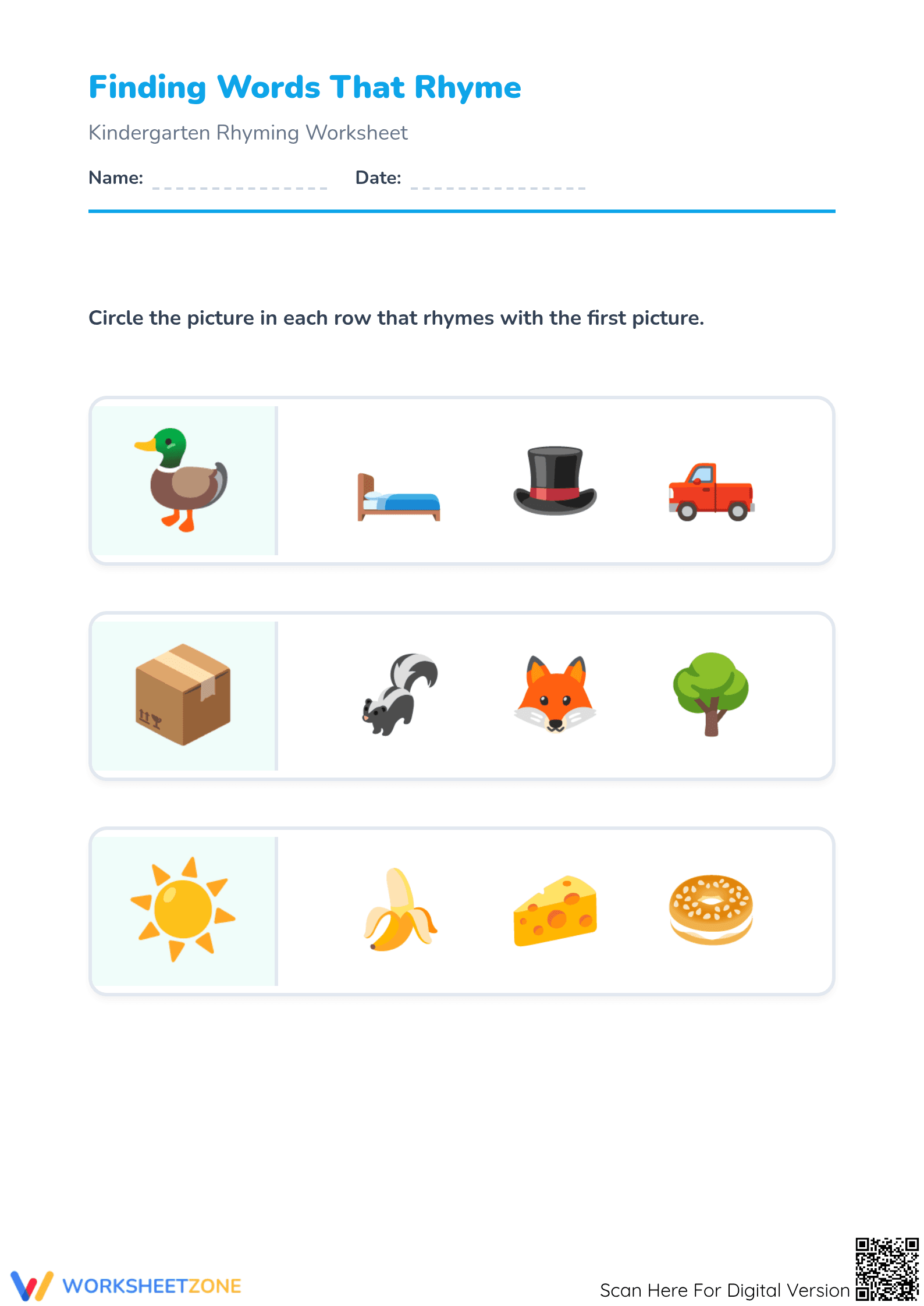


Finding Rhyming Words Worksheet | Essential Grade K-1
Paste this activity's link or code into your existing LMS (Google Classroom, Canvas, Teams, Schoology, Moodle, etc.).
Students can open and work on the activity right away, with no student login required.
You'll still be able to track student progress and results from your teacher account.
Rhyming is a foundational pillar of early literacy. This worksheet helps students identify similar ending sounds through visual association, bridging the gap between spoken language and reading readiness. By isolating phonemes, children develop the auditory discrimination necessary for decoding complex words later in their academic journey.
At a Glance
- Grade: Kindergarten · Subject: ELA
- Standard:
CCSS.ELA-LITERACY.RF.K.2.A— Recognize and produce rhyming words in spoken language- Skill Focus: Phonological Awareness
- Format: 2 pages · 4 problems · Answer key included · PDF
- Best For: Morning work or small group centers
- Time: 5–10 minutes
This resource contains two pages of high-quality visual exercises. Each page presents rows featuring a target image followed by three options. Students must identify which option shares the same rime. The use of clear, recognizable icons ensures that non-readers can participate fully without being hindered by text-heavy instructions. A complete answer key is provided for quick grading.
Zero-Prep Workflow
The zero-prep workflow is designed for busy educators. 1. Print: Select the two pages and hit print (30 seconds). 2. Distribute: Hand out the sheets during your phonics block (30 seconds). 3. Review: Use the included answer key to check student work or project it for a whole-class review (1 minute). Total teacher preparation time is under two minutes, making it an ideal choice for emergency sub plans.
Standards Alignment
This worksheet is specifically aligned to `CCSS.ELA-LITERACY.RF.K.2.A`, which requires students to recognize and produce rhyming words. It also supports RF.K.2.D by encouraging students to isolate and pronounce the initial, medial vowel, and final sounds. Both standard codes can be copied directly into lesson plans, IEP goals, or district curriculum mapping tools.
How to Use It
Use this as a formative assessment after a read-aloud of a rhyming book. Observe if students are sounding out the pictures or simply guessing based on visual similarity. It also works well as a quiet fast-finisher activity. Expect most students to complete the four rows within 5 to 10 minutes depending on their familiarity with the vocabulary and phonemic patterns.
Who It's For
This is designed for Preschool, Kindergarten, and early Grade 1 students. It is particularly effective for English Language Learners (ELLs) who need visual support to connect English vocabulary with phonemic patterns. Pair this with a rhyming anchor chart or a word family sorting activity for a comprehensive literacy lesson that supports diverse learners.
According to the RAND AIRS 2024 report on early childhood literacy, phonological awareness is one of the strongest predictors of later reading success. This worksheet targets the specific sub-skill of rhyme recognition, which allows students to manipulate the sounds of language before they begin formal phonics instruction. Research indicates that students who engage in regular, short bursts of phonemic practice—such as the 4-task sequence provided here—show significantly higher gains in decoding speed compared to those who do not. By using visual cues to represent the standard CCSS.ELA-LITERACY.RF.K.2.A, this resource ensures that the cognitive load remains focused on auditory discrimination rather than word recognition. This targeted approach is essential for building the orthographic mapping skills required for fluent reading in subsequent grades.


