Why a Daily Handwriting Routine Beats Occasional Practice
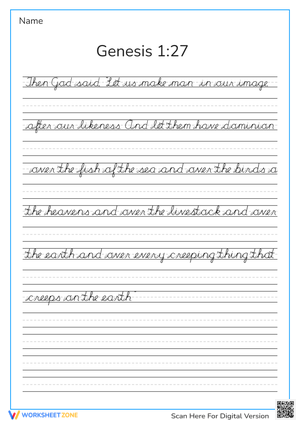
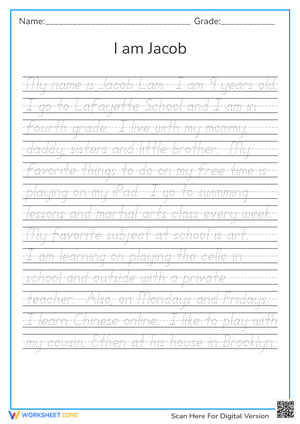
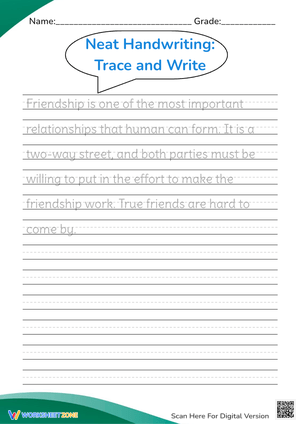
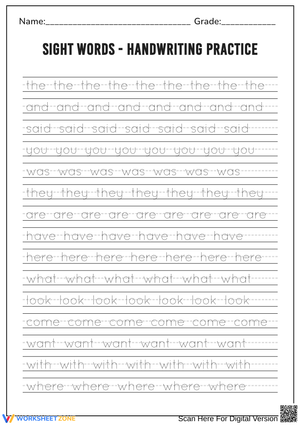
When handwriting instruction happens in a few scattered units each year, students rarely build the muscle memory that makes letter formation automatic. Daily handwriting practice worksheets solve a specific classroom problem: they turn penmanship into a short, repeatable habit instead of a one-time lesson. Ten to fifteen minutes at the start of the day gives young writers the steady repetition their hands and brains need, and that short block fits the tight schedule most K-3 teachers are actually working with.
The gap is stark. Experts recommend roughly 50 to 100 minutes of structured handwriting time each week in grades K-3, yet many classrooms devote only about 5 to 10 minutes a week, with almost none after grade 3. A daily worksheet routine is the simplest way to close that gap without stealing minutes from your reading or math blocks, and it gives every student the same consistent starting point each morning. That predictability matters as much as the practice itself.
How Daily Handwriting Builds Early Reading
Handwriting is not only about neat letters. Letter recognition, one of the skills daily worksheets reinforce, is described as the most reliable predictor of later reading success. When a student forms a b or a d by hand, they encode the shape, direction, and feel of that letter, and that motor memory strengthens the very recognition they rely on while decoding text. That connection is one reason handwriting keeps showing up in early literacy research.
This is why handwriting deserves a place inside your literacy block, not just a fine-motor corner. Reading Rockets and the Iowa Reading Research Center both connect handwriting directly to reading development, noting that writing letters by hand supports the letter knowledge beginning readers lean on. A daily sheet that pairs letter formation with the matching sound does double duty, and when you narrate the sound as students trace, you fold quick phonemic practice into a task their hands are already doing.
What to Look for in a Daily Handwriting Worksheet
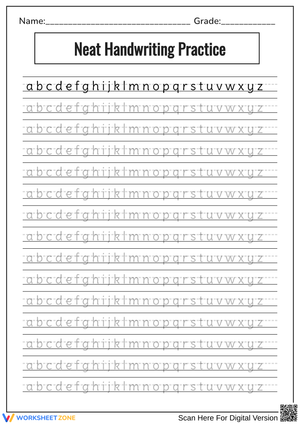
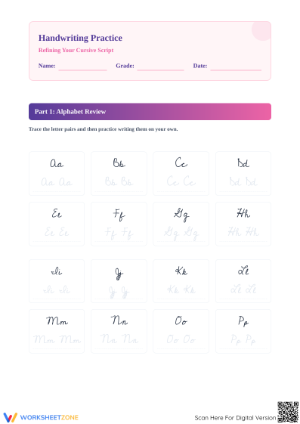
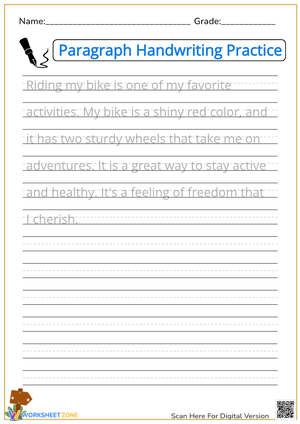
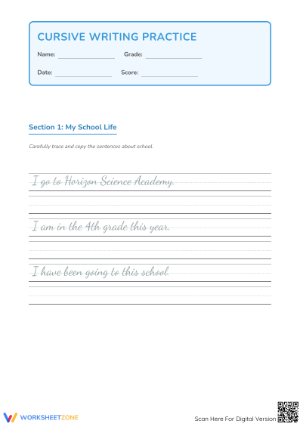
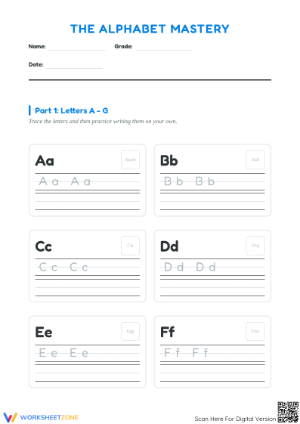
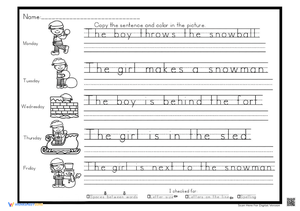
Not every worksheet earns its ten minutes. The most useful daily sheets are narrow, timed, and easy to check, so students get repetition on one skill and you get a quick read on progress. Before you print a stack for the week, look for a few features that separate practice with a purpose from simple tracing.
- A single clear target such as one letter, one join, or one number family per sheet.
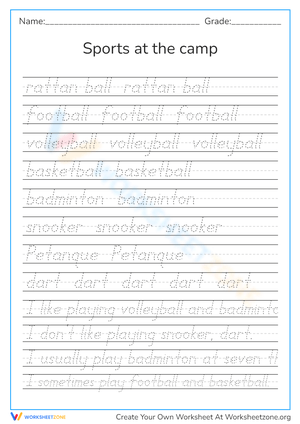
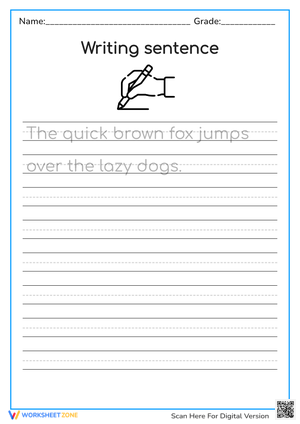
- A short timed section where students copy a word or sentence against the clock.
- Room for self-check so a student can mark their best and weakest letter.
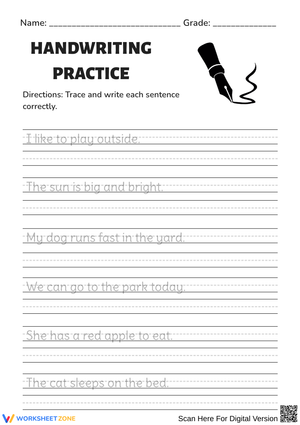
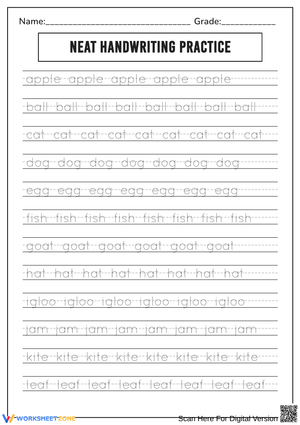
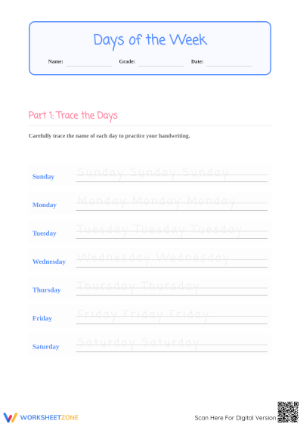
- Grade-appropriate lines with the baseline and midline support young writers need.
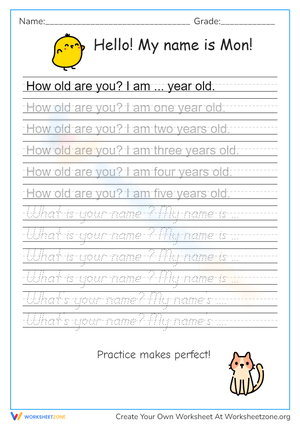
- Content tied to your units like current vocabulary or sight words.
Building Feedback and Timed Drills That Work
Not every handwriting minute carries equal weight. Among the intervention components researchers measured, timed transcription training carried an effect size of 0.49 and performance feedback carried 0.36, making them the two strongest individual levers a teacher can pull. In practice, that means a plain tracing page underperforms a worksheet built around a 60-second timed copy followed by quick, specific feedback about which letters landed on the line.
To build both in, add a small timed box to each daily sheet. Students copy a target word or sentence for one minute, then count how many letters are fully legible. You or a partner circles one letter they formed well and one to fix tomorrow. Over a week, those counts become a simple progress line you can share at conferences, and the short feedback loop is what turns routine copying into measurable growth.
Classroom Implementation
Treat the worksheet as a bell-ringer. As students settle in, they pull the day's sheet and begin without waiting for whole-group directions, which also smooths out your morning transition and buys you a few minutes for attendance.
- Keep it to 10-15 minutes. Short and consistent beats long and rare.
- Anchor each sheet to one target so your feedback stays specific.
- Include a 60-second copy drill to build fluency and generate a daily data point.
- Close the loop with 30 seconds of self-check or peer-check.
- Sample legibility on Fridays to show growth families can see.
Because the routine is predictable, substitutes and paraprofessionals can run it without a detailed plan, and students always know the first task of the day. The consistency also builds student ownership, since the expectation is the same every single day.
Using Daily Worksheets for Intervention Beyond Grade 3
Formal handwriting instruction usually fades after grade 3, yet plenty of fourth and fifth graders still write slowly or illegibly enough to slow down their composing. Daily worksheets are an easy small-group tool here: five focused minutes with a targeted sheet during intervention time can rebuild automaticity without singling anyone out in front of peers.
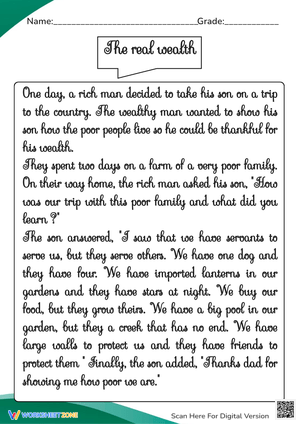
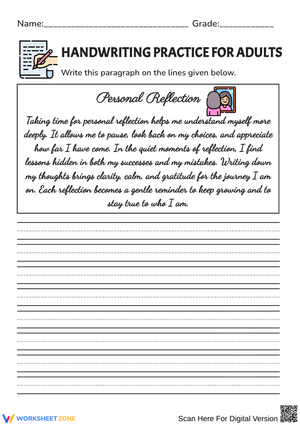
For these older writers, lean on the same high-leverage moves, timed copying and immediate feedback, but swap in grade-appropriate content such as vocabulary words or sentence frames from the current unit. The handwriting drill then reinforces the subject-area material they are already studying, so no instructional time is wasted. Because the format never changes, older students can run the drill independently while you work with another group, which keeps a multi-tier schedule moving.
Frequently Asked Questions
Here are the questions teachers ask most often when they start a daily handwriting routine.
1. How many minutes a day should elementary students spend on handwriting practice?
Aim for 10 to 20 minutes on most days. That lands you near the 50 to 100 minutes per week experts recommend for grades K-3, well above the 5 to 10 minutes many classrooms currently manage. A daily 10-15 minute worksheet is an efficient way to reach that target.
2. Do daily handwriting worksheets help with reading and spelling, or just penmanship?
Both. Letter recognition strengthened through handwriting is a top predictor of reading success, and forming letters by hand reinforces the letter-sound links students use to decode and spell. A daily routine supports literacy, not just neat writing.
3. Which grade levels benefit most from a daily handwriting routine?
Grades K-3 gain the most, because that is when letter formation becomes automatic. Struggling writers in grades 4 and up also benefit, especially in small-group intervention where formal handwriting instruction has usually stopped.
4. How can teachers fit daily handwriting practice into a full schedule?
Use the worksheet as a bell-ringer or morning-work routine. A predictable 10-15 minute sheet needs no whole-group setup, so it adds practice time without displacing your reading or math blocks.
5. What makes a daily handwriting worksheet effective for legibility and fluency gains?
The strongest sheets pair a short timed copy drill with quick, specific feedback, the two components research links to the biggest gains. One clear target plus a daily legibility self-check turns ordinary practice into measurable improvement.