


























Views
Downloads



Essential Cursive Alphabet Tracing | Grade 1-2 Ready
Paste this activity's link or code into your existing LMS (Google Classroom, Canvas, Teams, Schoology, Moodle, etc.).
Students can open and work on the activity right away, with no student login required.
You'll still be able to track student progress and results from your teacher account.
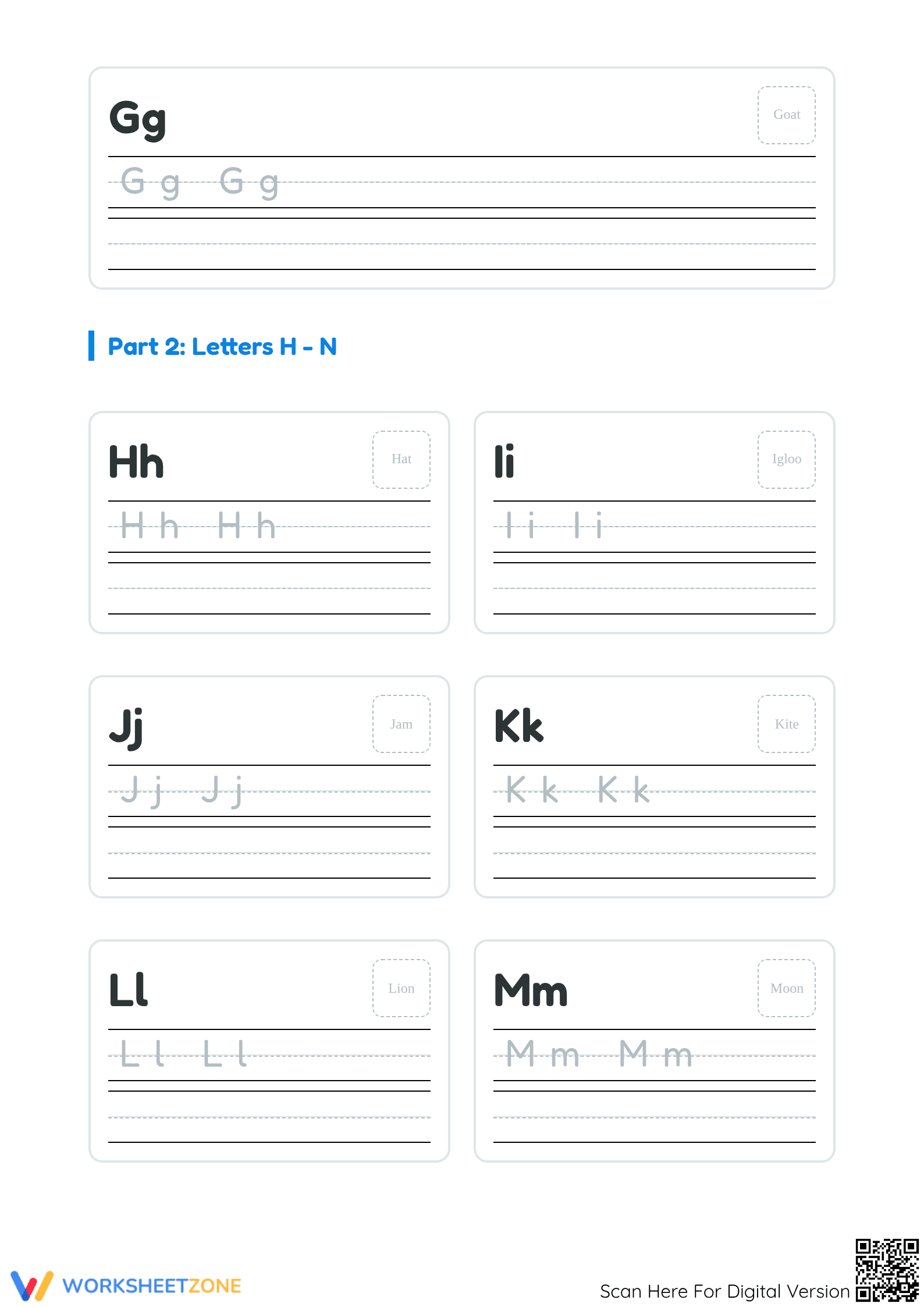
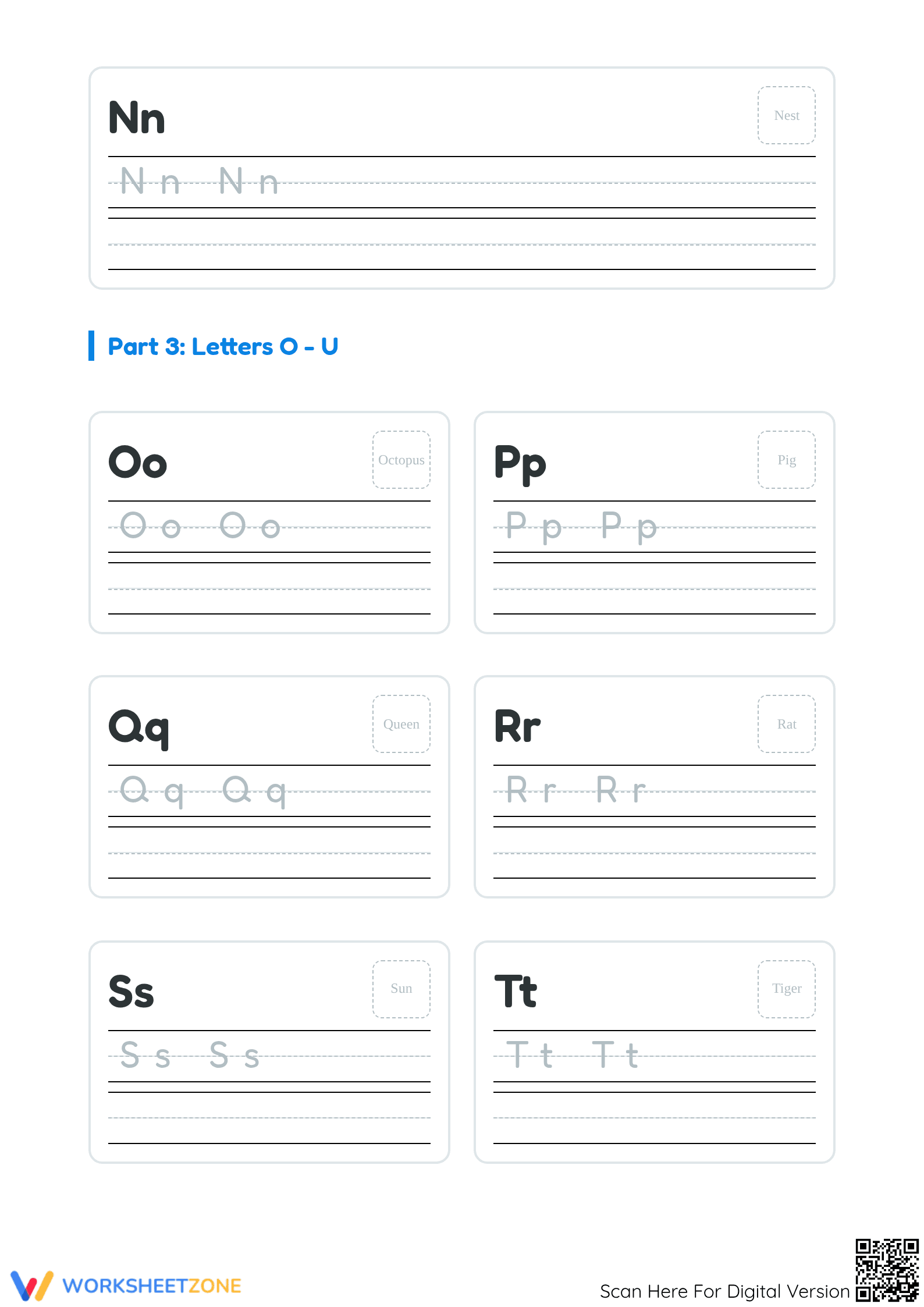
This Grade 1 and 2 cursive handwriting worksheet provides students with a structured path to mastering letter formation. By tracing uppercase and lowercase pairs, learners develop the fine motor control necessary for fluid, legible writing. It serves as a foundational tool for transitioning from print to cursive with confidence and precision.
At a Glance
- Grade: 1-2 · Subject: Handwriting
- Standard:
CCSS.ELA-LITERACY.L.1.1.A— Print all upper- and lowercase letters with proper formation- Skill Focus: Cursive letter tracing
- Format: 1 page · 26 tasks · No-prep · PDF
- Best For: Daily handwriting practice and morning work
- Time: 15–20 minutes
What's Inside
The worksheet features a clean, aesthetic layout containing all 26 letters of the alphabet in cursive script. Each row presents a solid reference letter followed by a dashed tracing guide for both uppercase and lowercase versions. This single-page PDF is designed for high-contrast printing, ensuring that students can clearly see the stroke paths without visual clutter.
Zero-Prep Workflow
- Print: Select the single-page PDF and print enough copies for your class in under 30 seconds.
- Distribute: Hand out the sheets as a "bell-ringer" or morning work activity with zero teacher setup required.
- Review: Walk the room to provide immediate feedback on grip and stroke direction, completing the cycle in 2 minutes.
Standards Alignment
This resource aligns with `CCSS.ELA-LITERACY.L.1.1.A`, which requires students to produce all upper- and lowercase letters. While the standard focuses on printing, this cursive variant supports the natural progression of fine motor development and literacy. Both standard codes can be copied directly into lesson plans, IEP goals, or district curriculum mapping tools.
How to Use It
Use this worksheet during the independent practice phase of a handwriting lesson. It is particularly effective as a quiet transition activity after recess or as a consistent part of a daily handwriting folder. Teachers should observe student posture and pencil grip, offering formative corrections to prevent the development of poor writing habits.
Who It's For
This resource is ideal for first and second-grade students ready to explore cursive, as well as older students requiring remedial handwriting support. It pairs naturally with alphabet anchor charts or a direct instruction lesson on letter slants and connections.
Handwriting remains a critical component of early literacy, as the physical act of forming letters reinforces letter recognition and phonological awareness. According to Fisher & Frey (2014), the gradual release of responsibility model—moving from guided tracing to independent production—is essential for motor skill acquisition. This worksheet utilizes that principle by providing clear visual scaffolds for all 26 letters of the alphabet. Research from the RAND AIRS 2024 report suggests that consistent, short bursts of handwriting practice (15-20 minutes) are more effective for long-term retention than infrequent, longer sessions. By aligning with CCSS.ELA-LITERACY.L.1.1.A, this resource ensures that students meet foundational expectations for letter formation while building the aesthetic neatness required for advanced composition. The 26 tasks included here offer a comprehensive review of the cursive alphabet, making it a reliable tool for classroom teachers and homeschool educators seeking evidence-based instructional materials.


