What Kinetic and Potential Energy Worksheets Cover
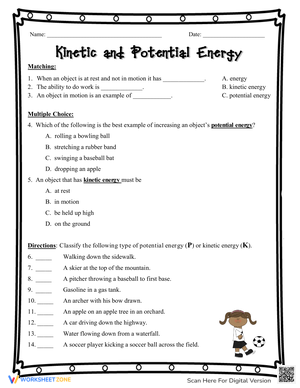
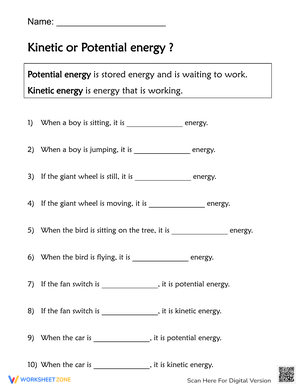
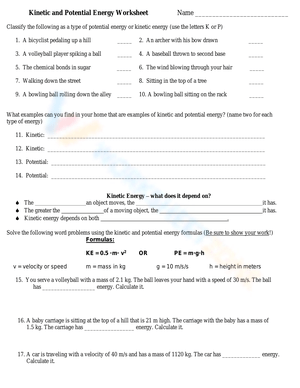
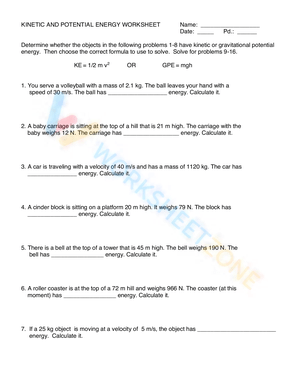
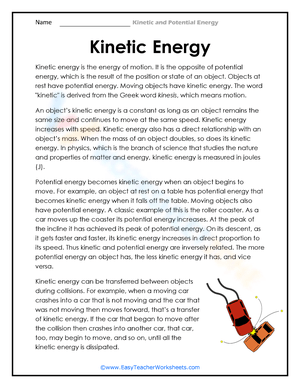
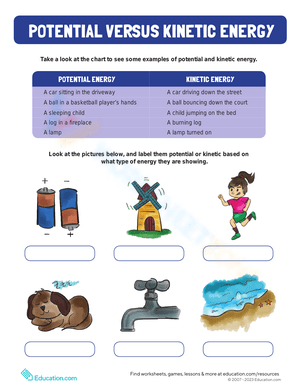
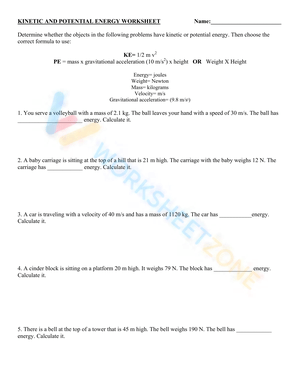
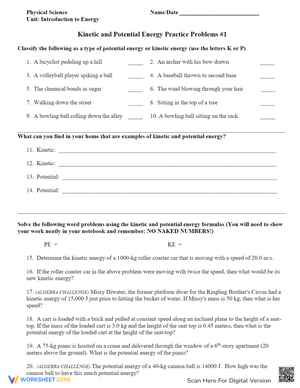
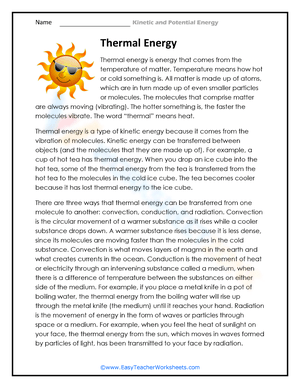
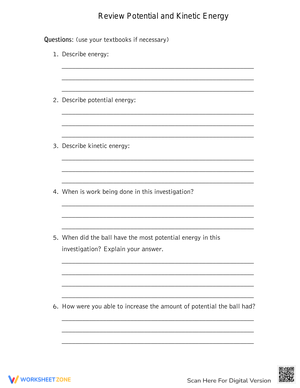
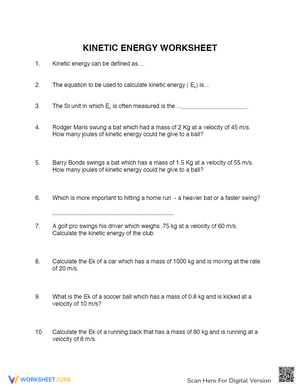
Kinetic and potential energy worksheets give your physical science students structured practice separating energy of motion from stored energy. Instead of re-teaching the same definition five times, you hand students scenarios, diagrams, and short calculations that force them to decide which type of energy is at work and why. That decision-making is where the real learning happens, and it's the part a lecture rarely reaches.
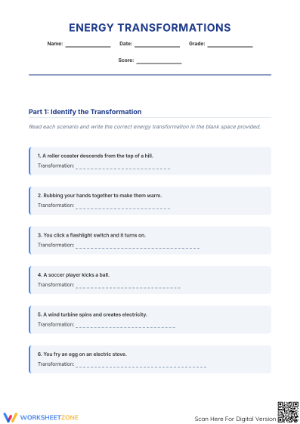
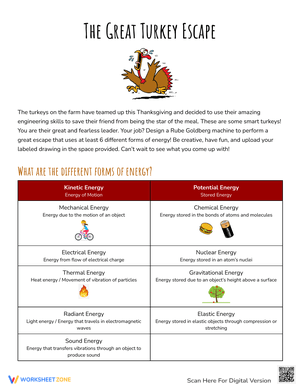
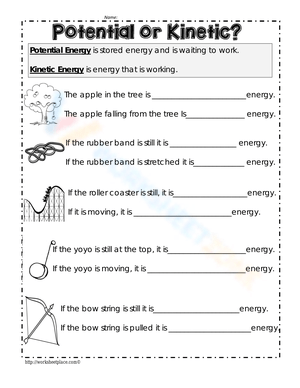
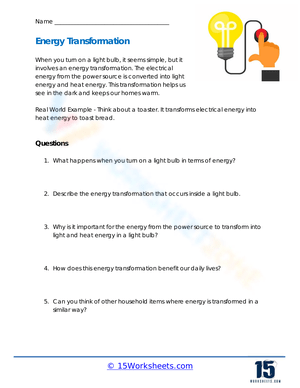
Most sets move from simple identification to applied reasoning. Early pages ask students to label a stretched spring, a raised book, or a moving bicycle. Later pages introduce systems where energy converts from one form to another, so students track how a value changes as an object speeds up or climbs a ramp. By the end of a well-built worksheet, students aren't just reciting terms; they're explaining what happens to energy inside a system.
Aligning Practice with NGSS Physical Science
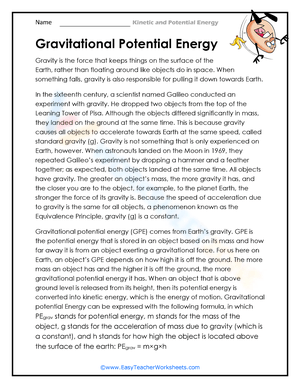
These worksheets fit squarely inside a middle school energy unit. NGSS MS-PS3-1 asks students to construct and interpret graphical displays that describe how kinetic energy relates to the mass and speed of an object, while MS-PS3-2 asks them to model how changing the arrangement of interacting objects stores different amounts of potential energy in a system. Worksheets that pair labeled diagrams with short graphing tasks let students rehearse both performance expectations before you grade them on a full lab report or test.
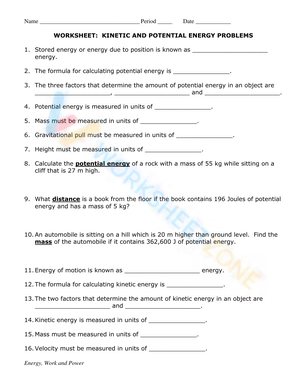
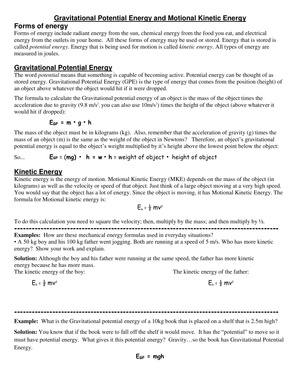
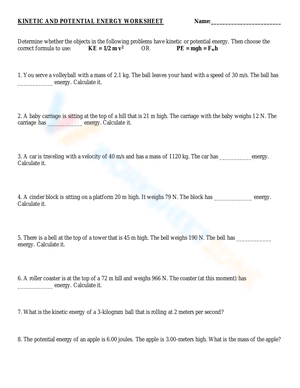
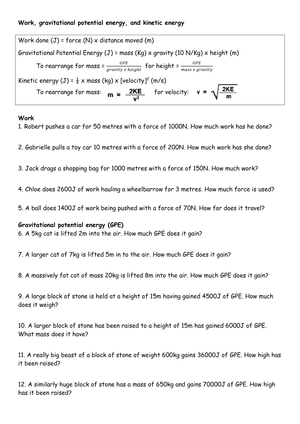
Here is where many units stall: students memorize that kinetic energy depends on mass and speed but never internalize that speed carries far more weight. Because kinetic energy scales with the square of speed, doubling an object's speed quadruples its kinetic energy, while doubling its mass only doubles it. A worksheet that asks students to compare a bicycle at 5 mph and 10 mph makes that non-linear relationship visible in a way a definition never will.
According to the NGSS Hub MS-PS3 Energy topic, middle school performance expectation MS-PS3-1 requires students to construct and interpret graphical displays of data describing the relationship of kinetic energy to the mass and speed of an object, making data-driven worksheets a direct match for the standard's graphing demand.
Real-World Examples That Make Energy Transfer Click
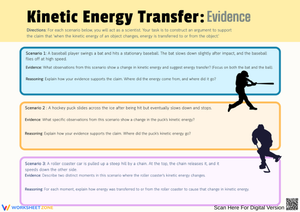
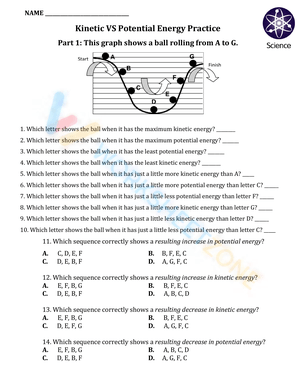
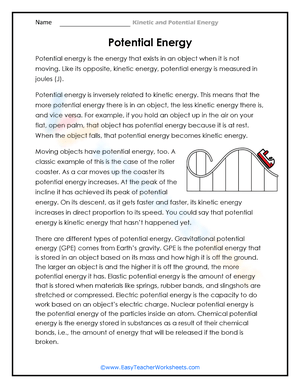
Abstract definitions stick better when they ride on a familiar system. A roller coaster is the classic model: potential energy peaks at the top of the first hill, then converts to kinetic energy as the car races down. Good worksheets ask students to rank points along the track by energy type, which forces them to reason about a whole system rather than a single snapshot.
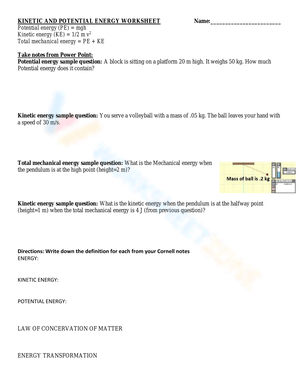
Pendulums, springs, and sports give you more options. A pendulum stores potential energy at the top of its swing and reaches maximum kinetic energy at the bottom. Comparing a wiffle ball and a tennis ball at impact, or rocks of different sizes rolling downhill, helps students connect mass and speed to the energy an object carries. When students match each scenario to a diagram, they practice the same transfer reasoning MS-PS3-2 expects.
Using These Worksheets In Science Classes
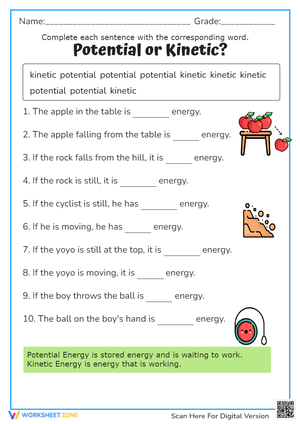
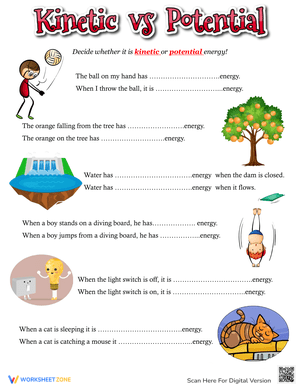
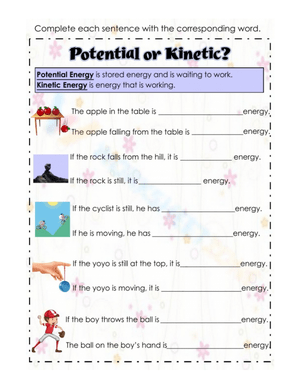
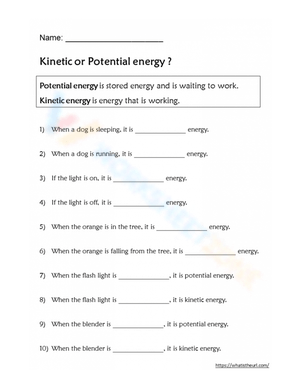
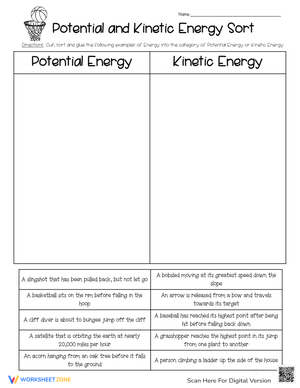
Slot these worksheets into a predictable rhythm so students know what to expect. Open with a five-minute warm-up page that asks students to sort ten everyday objects into kinetic or potential energy. Use the results to decide whether the class needs another example or is ready to move on. This quick sort doubles as a bell ringer and a diagnostic.
Pair the paper practice with a short hands-on station. A ramp with toy cars, a simple pendulum, or a stretched rubber band gives students something to measure and then explain on the worksheet. Ask them to predict first, run the trial, and revise their answer in a different color so you can see their thinking change. Close the lesson with a worksheet page students complete independently, which tells you who is ready for the assessment and who needs a small-group reteach the next morning.
Frequently Asked Questions
1. What grade level are kinetic and potential energy worksheets best suited for?
These worksheets fit middle school physical science best, roughly grades 6-8, where energy concepts introduced in elementary grades get revisited with more depth. The core ideas also work as an introduction for advanced upper-elementary students or as review for early high school physical science.
2. How do these worksheets align with NGSS middle school physical science standards?
They support MS-PS3-1, which centers on graphing the relationship between kinetic energy, mass, and speed, and MS-PS3-2, which focuses on modeling stored potential energy in a system. Diagram-labeling and graphing pages let students rehearse both expectations directly.
3. What are simple classroom examples to introduce kinetic versus potential energy?
Start with a raised book, a stretched rubber band, and a rolling bicycle. Then move to systems that show transfer, like a roller coaster hill or a swinging pendulum, so students see energy change form rather than stay fixed.
4. How can teachers use these worksheets to review before a unit test?
Turn the pages into a station rotation or a card sort, and have students defend their answers to a partner. Disagreements surface the exact misconceptions worth clearing up in a short whole-class debrief the day before the test.
5. Can these worksheets be adapted for small-group intervention or enrichment?
Yes. Trim a page to five clear examples with sentence frames for intervention, and add a design-your-own-system prompt for enrichment. Because both versions stay on the same topic, every student joins the same discussion.












 Interactive Worksheet Maker
 Quiz Maker
 Word Search Maker
 Crossword Puzzle Maker
 Word Scramble Generator
 Sentence Scramble Generator
 Handwriting Worksheet Generator
 Name Tracing Generator
 Fill In The Blank Generator