What waves worksheets actually cover
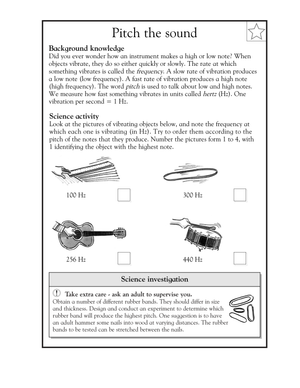
Waves appear twice in a typical K-8 science sequence. First graders meet them through sound and light, and middle schoolers return to them to measure amplitude, wavelength, and energy transfer. Strong waves worksheets serve both moments. The practice on this page moves students from 'sound is a vibration you can feel' to 'amplitude tells you how much energy a wave carries,' so you can build a vertical unit without hunting for a new resource at each grade band.
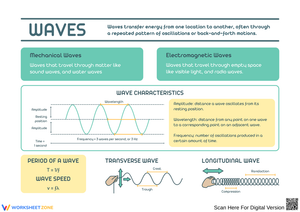
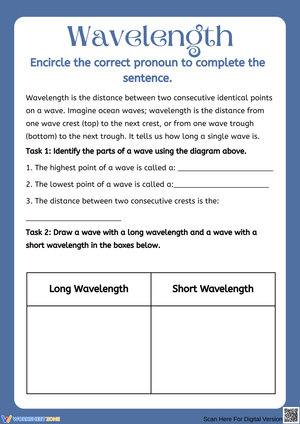
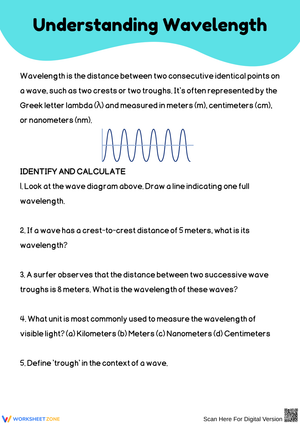
At the core sits one idea worth repeating on every worksheet: a wave is a repeating disturbance that transfers energy through a medium, like sound moving through air, or through empty space, like light from the sun. Classroom-friendly examples—a wiggling rope, ripples spreading across a water tray—give students a picture to label before they touch any vocabulary.
Because the same concepts return across grades, the worksheets are built to layer. A first-grade sheet might ask students to circle objects that vibrate; a middle-grade sheet asks them to graph how amplitude changes the energy delivered. Reusing the same core diagram at both levels means students recognize the structure and spend their attention on the new thinking instead of a new format.
Amplitude and energy: the MS-PS4-1 worksheets
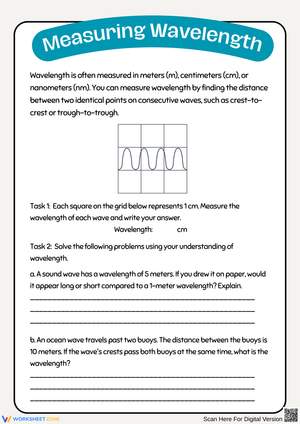
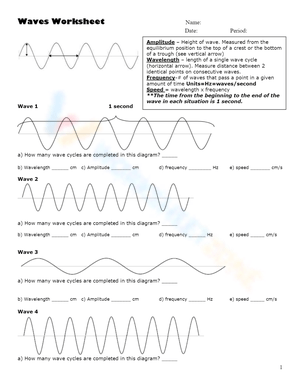
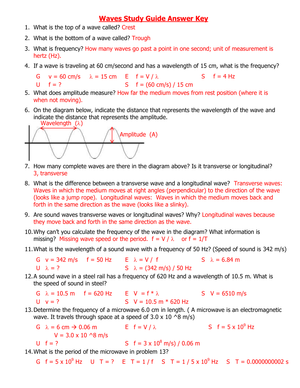
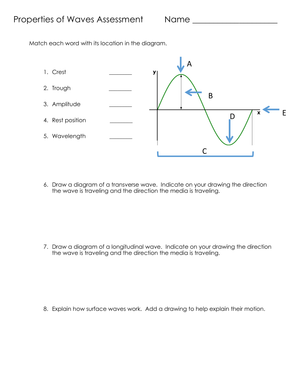
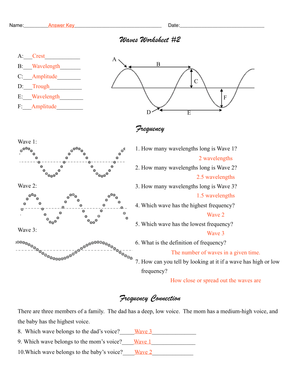
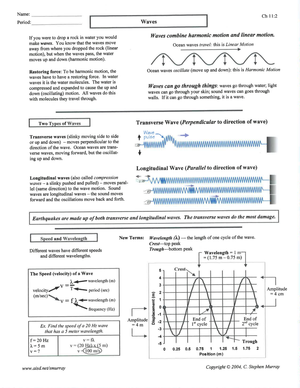
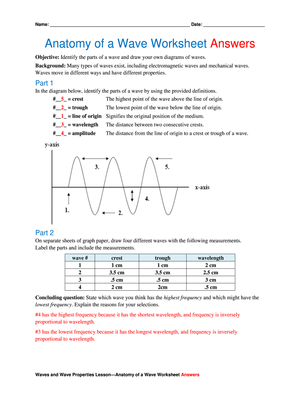
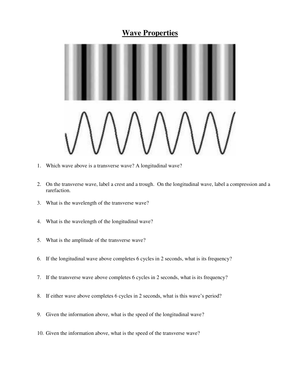
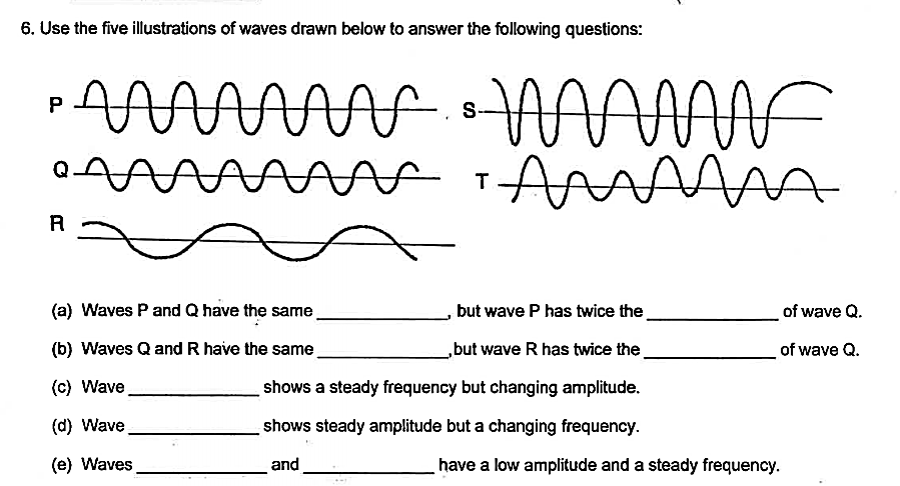
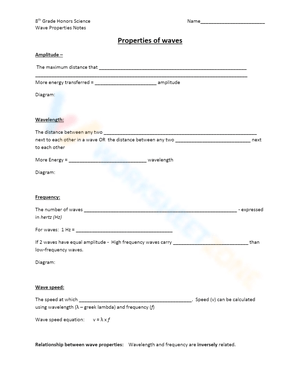
This is where many students stumble, so the worksheets earn their keep. Amplitude-focused practice asks learners to read a wave diagram, mark the resting line, and measure the height of the crest above it. The payoff is the relationship: taller amplitude means more energy. Pair a worksheet with a quick demo—shaking a rope gently, then hard—and students connect the math to something they just watched.
In practice, the fastest way to expose a misconception is to give two waves with the same wavelength but different amplitudes and ask which carries more energy. Students who confuse wavelength with amplitude will pick the wrong one nearly every time, and that single item tells you more than a full quiz about who needs a small-group reteach before you move on.
Reflection, absorption, and transmission: the MS-PS4-2 worksheets
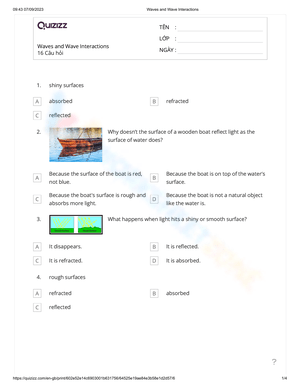
These worksheets ask students to predict and explain what happens when a wave hits a new material. A light ray meets a mirror and bounces; it meets black paper and is absorbed; it meets clear glass and passes through. Good practice sheets give students a material and a wave and ask them to sort the outcome into reflect, absorb, or transmit, then justify the choice in a sentence.
Building a simple model is the target skill, so leave room on the page for a labeled sketch. A worksheet that only asks for one-word answers misses the point of the standard; one that asks students to trace a ray and annotate what the material does hits it squarely.
A useful extension asks students to rank materials by how much of a wave they let through. Ordering glass, wax paper, and cardboard from most to least transmission forces them to reason about degree, not just category, and it produces a quick data set you can discuss as a class.
Classroom Implementation
Worksheets work best sandwiched between hands-on moments. Open with a slinky or a water tray so students have a shared experience, then hand out the diagram practice while the memory is fresh. Reserve the worksheet's final questions for after a second demo so students revise their first answers rather than guessing once and moving on.
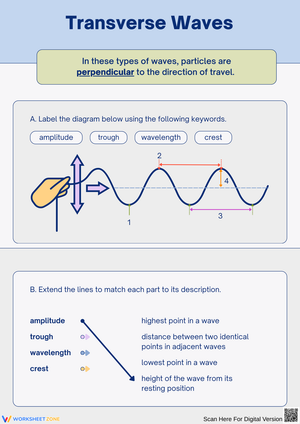
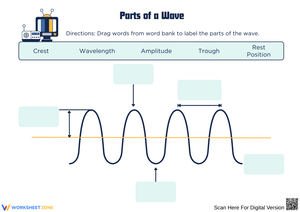
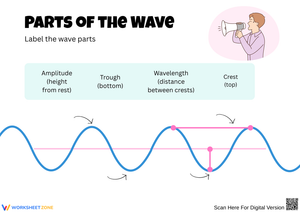
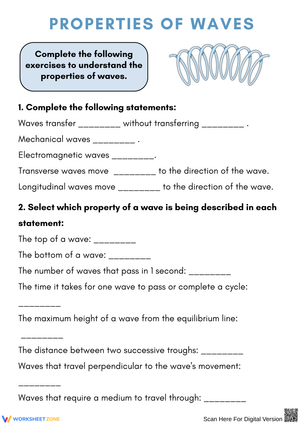
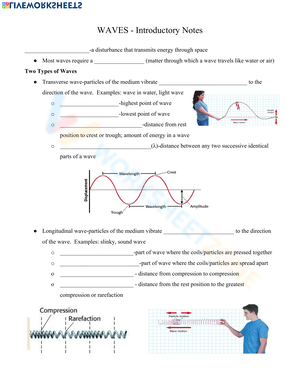
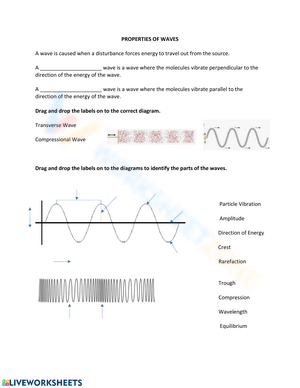
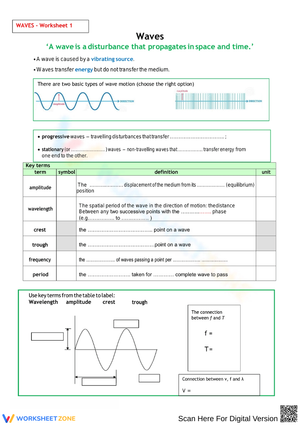
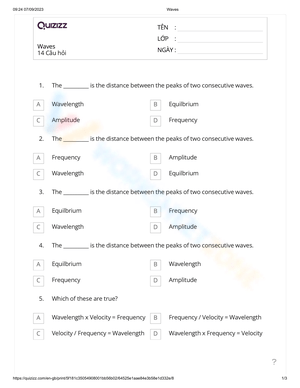
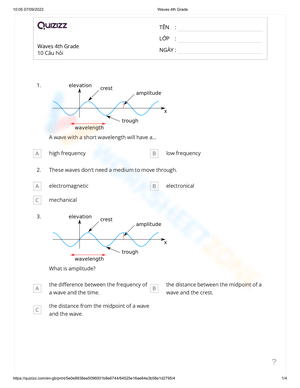
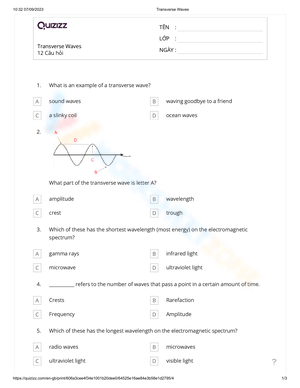
For small-group intervention, pull the vocabulary-heavy sheets—vibration, medium, crest, trough, amplitude, wavelength. Many students who 'don't get waves' are really tripping over the words. Fifteen minutes matching terms to labeled diagrams often clears the fog faster than another lecture.
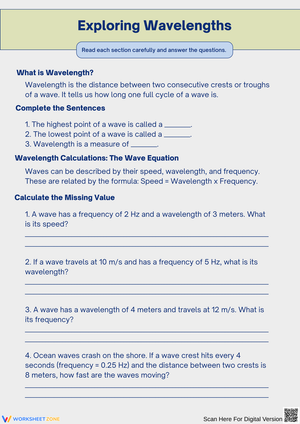
Pacing matters as much as sequence. Give students two or three focused items rather than a full page of repetition; waves reward depth over volume. If a sheet has twenty questions, assign the six that require a diagram or an explanation and skip the rote fill-ins, which rarely reveal whether a student understands energy transfer.
Using waves worksheets for formative assessment
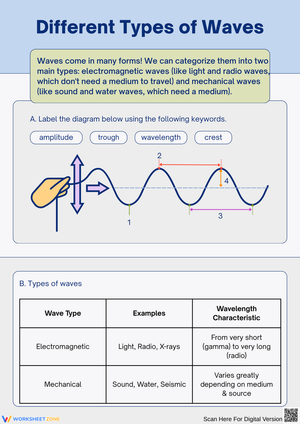
A single labeling worksheet is a low-stakes checkpoint. Before a unit test, hand students a blank wave diagram and ask them to mark crest, trough, wavelength, and amplitude. Score it in a glance: anyone who mislabels amplitude and wavelength gets a targeted mini-lesson the next day. This beats waiting for the test to find the gap.
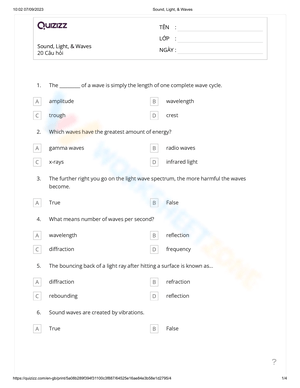
Exit-ticket versions work too. One wave diagram, one question—'Which wave carries more energy, and how do you know?'—gives you a stack of quick evidence about who is ready to move forward.
Frequently Asked Questions
1. What grade levels do waves worksheets target under NGSS?
Two main bands. First grade (1-PS4-1 through 1-PS4-4) covers sound as vibration and light for seeing objects, while middle school (MS-PS4-1 through MS-PS4-3) covers amplitude and energy, wave behavior in materials, and digital versus analog signals. Choose worksheets by the code you're teaching.
2. Can one set of worksheets cover both sound and light?
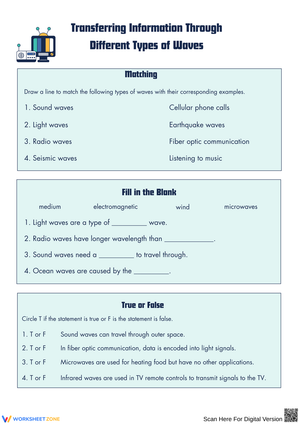
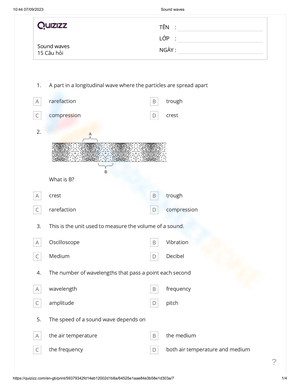
Yes. Sound and light are both waves that transfer energy, so many sheets teach the shared vocabulary—amplitude, wavelength, energy—then branch into sound, which needs a medium, and light, which travels through empty space. Teaching them together helps students see the pattern instead of memorizing two separate topics.
3. How do amplitude worksheets differ from reflection worksheets?
Amplitude worksheets aligned to MS-PS4-1 focus on measurement: read a diagram, compare wave heights, connect bigger amplitude to more energy. Reflection and absorption worksheets aligned to MS-PS4-2 focus on behavior: predict and model what a wave does when it meets a mirror, black paper, or clear glass.
4. How do waves worksheets support studying before a test?
Use a blank-diagram labeling sheet as a five-minute checkpoint. It surfaces the two most common mix-ups—amplitude versus wavelength—so you can reteach before the test rather than after. An exit-ticket version gives you daily evidence of who's ready.












 Interactive Worksheet Maker
 Quiz Maker
 Word Search Maker
 Crossword Puzzle Maker
 Word Scramble Generator
 Sentence Scramble Generator
 Handwriting Worksheet Generator
 Name Tracing Generator
 Fill In The Blank Generator