


























Views
Downloads

Kinetic and Potential Energy Worksheet | Grade 9 Printable
Paste this activity's link or code into your existing LMS (Google Classroom, Canvas, Teams, Schoology, Moodle, etc.).
Students can open and work on the activity right away, with no student login required.
You'll still be able to track student progress and results from your teacher account.
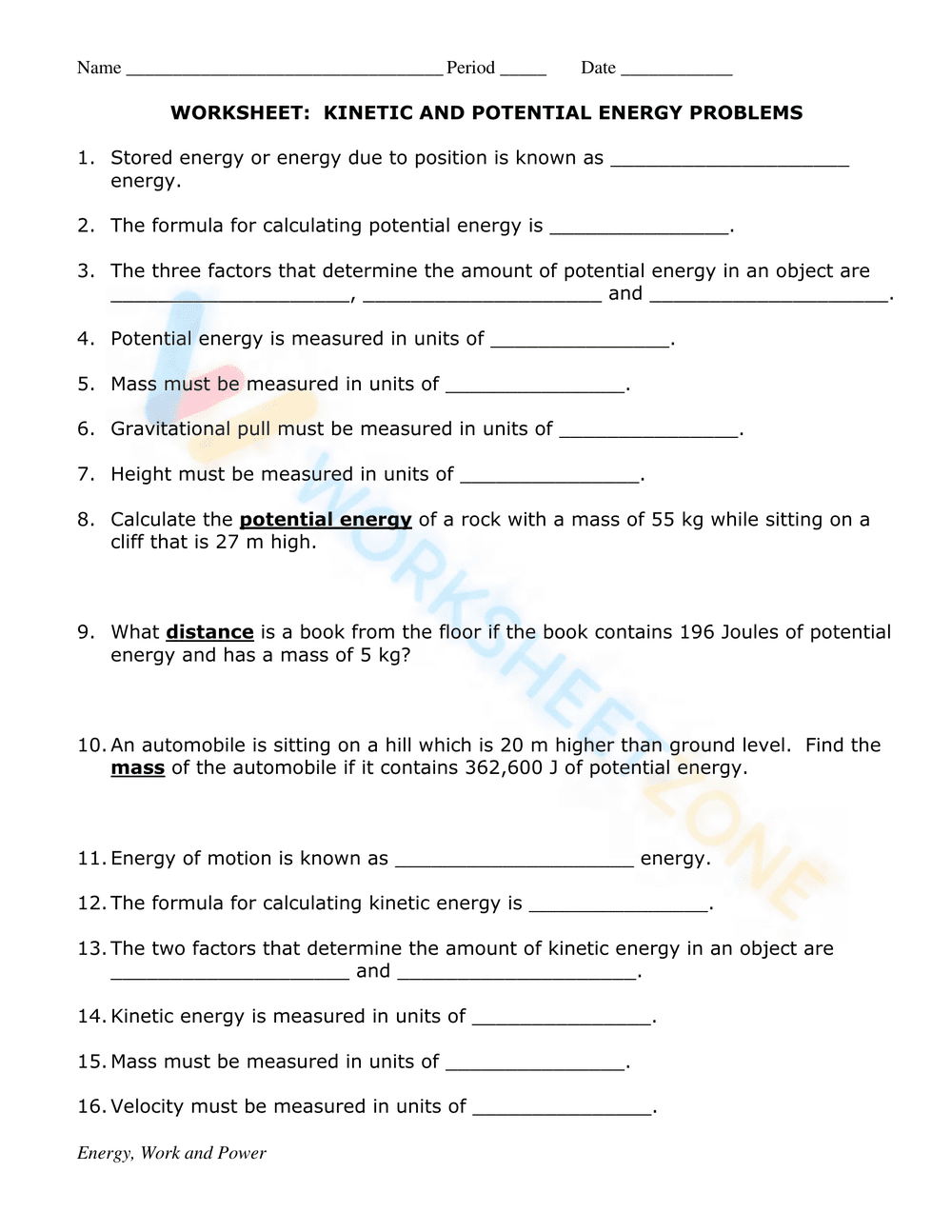
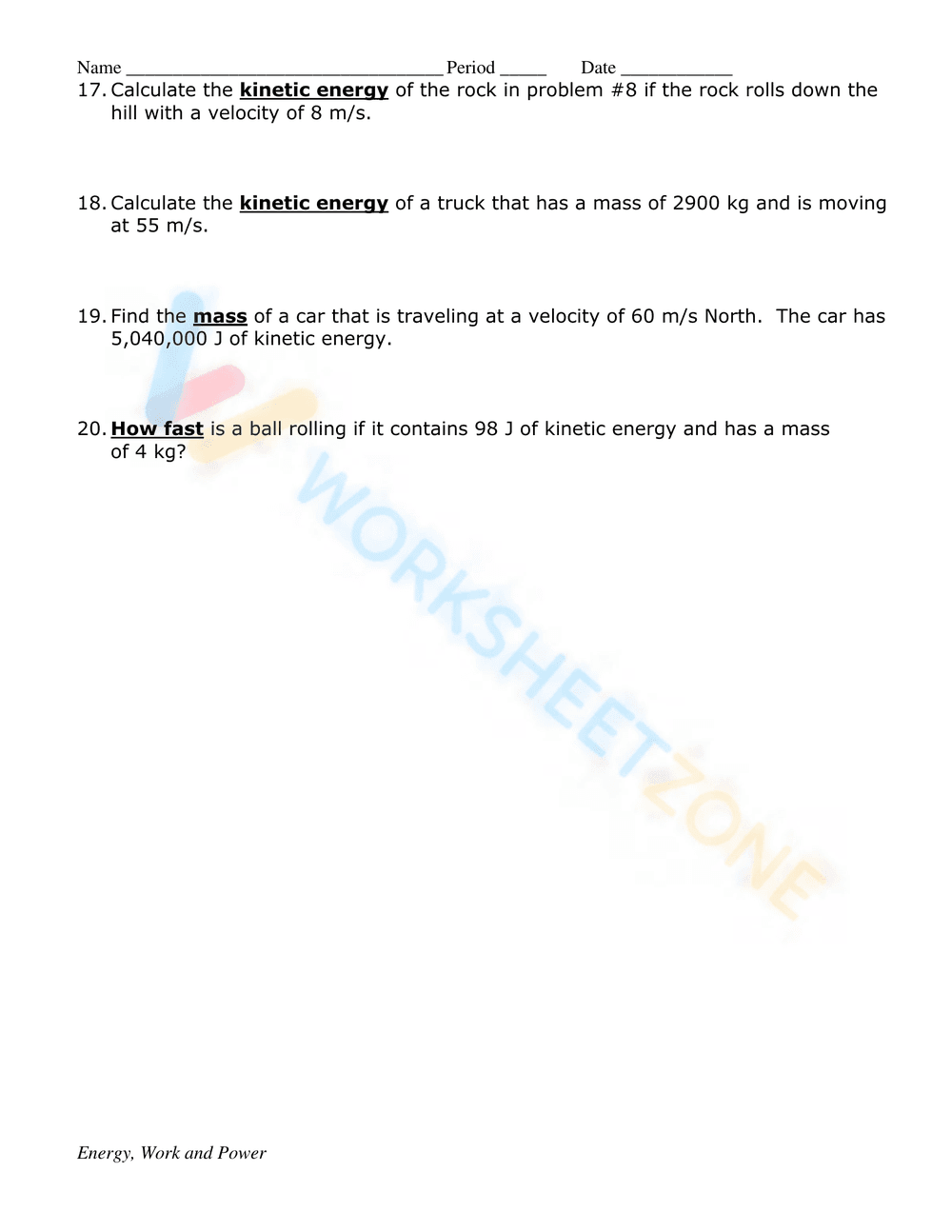
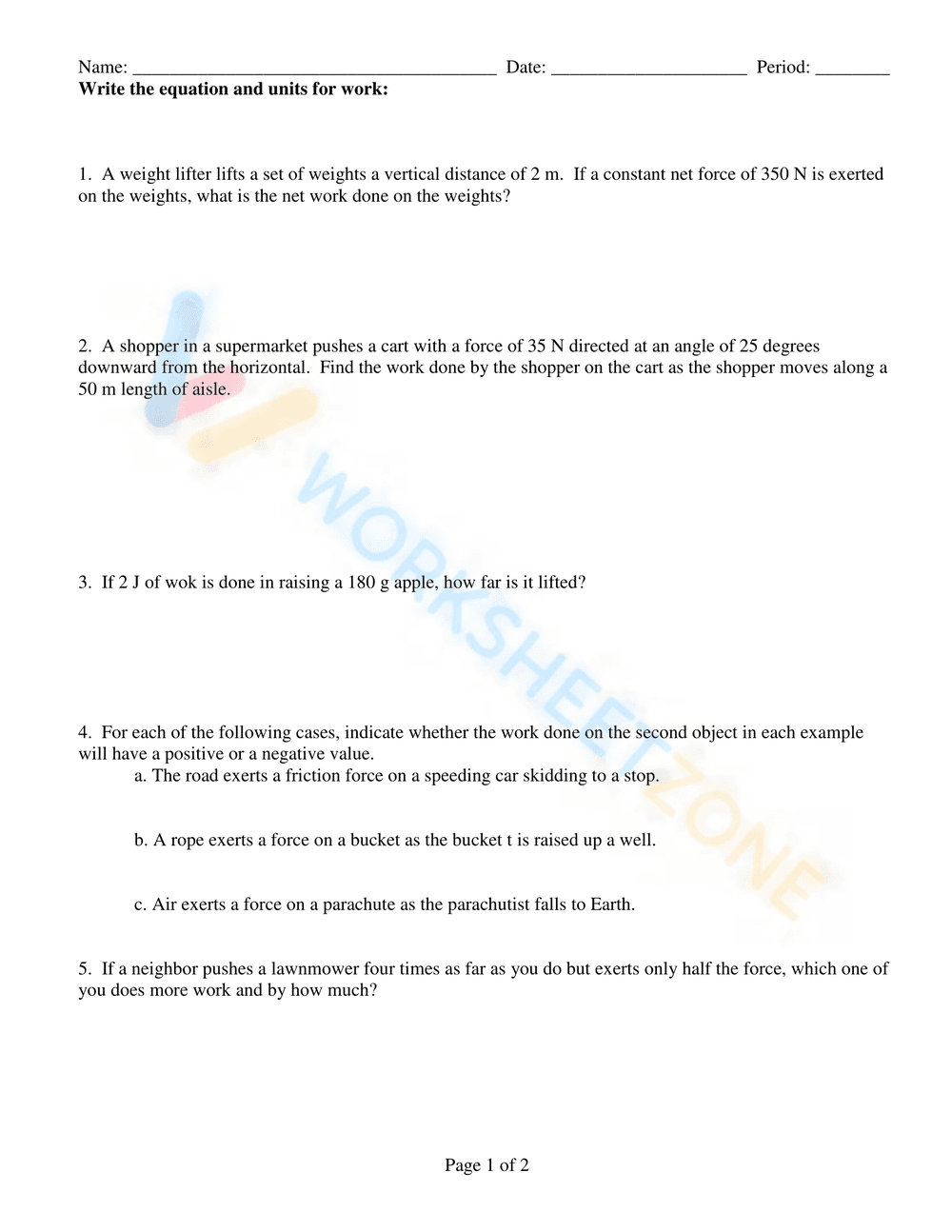
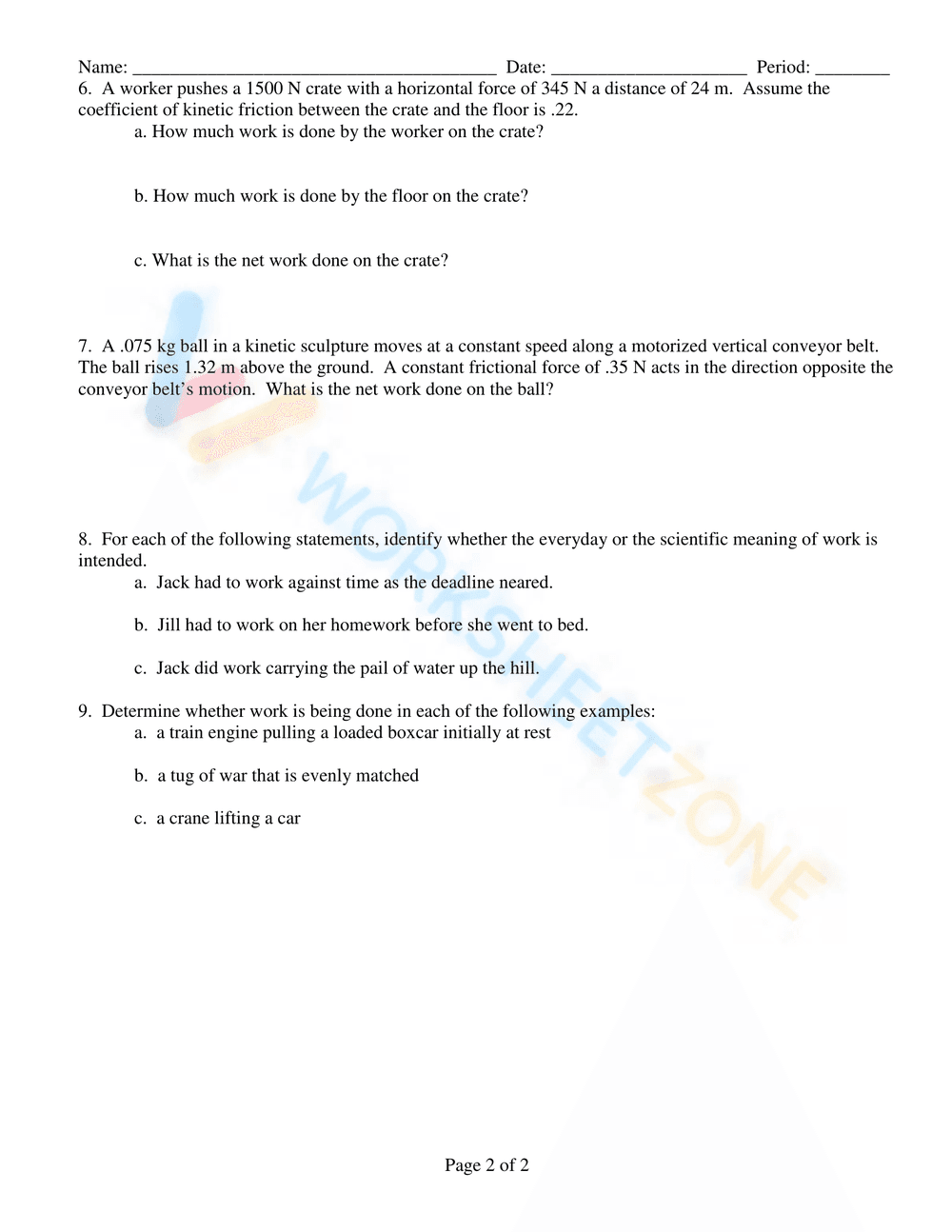
This Grade 9 physics worksheet provides extensive practice on calculating kinetic energy, potential energy, and work. Students will apply core formulas to solve real-world physics problems, reinforcing their understanding of mass, velocity, height, and force relationships.
At a Glance
- Grade: 9 · Subject: Physics
- Standard:
HS-PS3-1— Calculate energy changes in a system- Skill Focus: Calculating kinetic and potential energy
- Format: 8 pages · 58 problems · PDF
- Best For: Independent practice and homework
- Time: 45–60 minutes
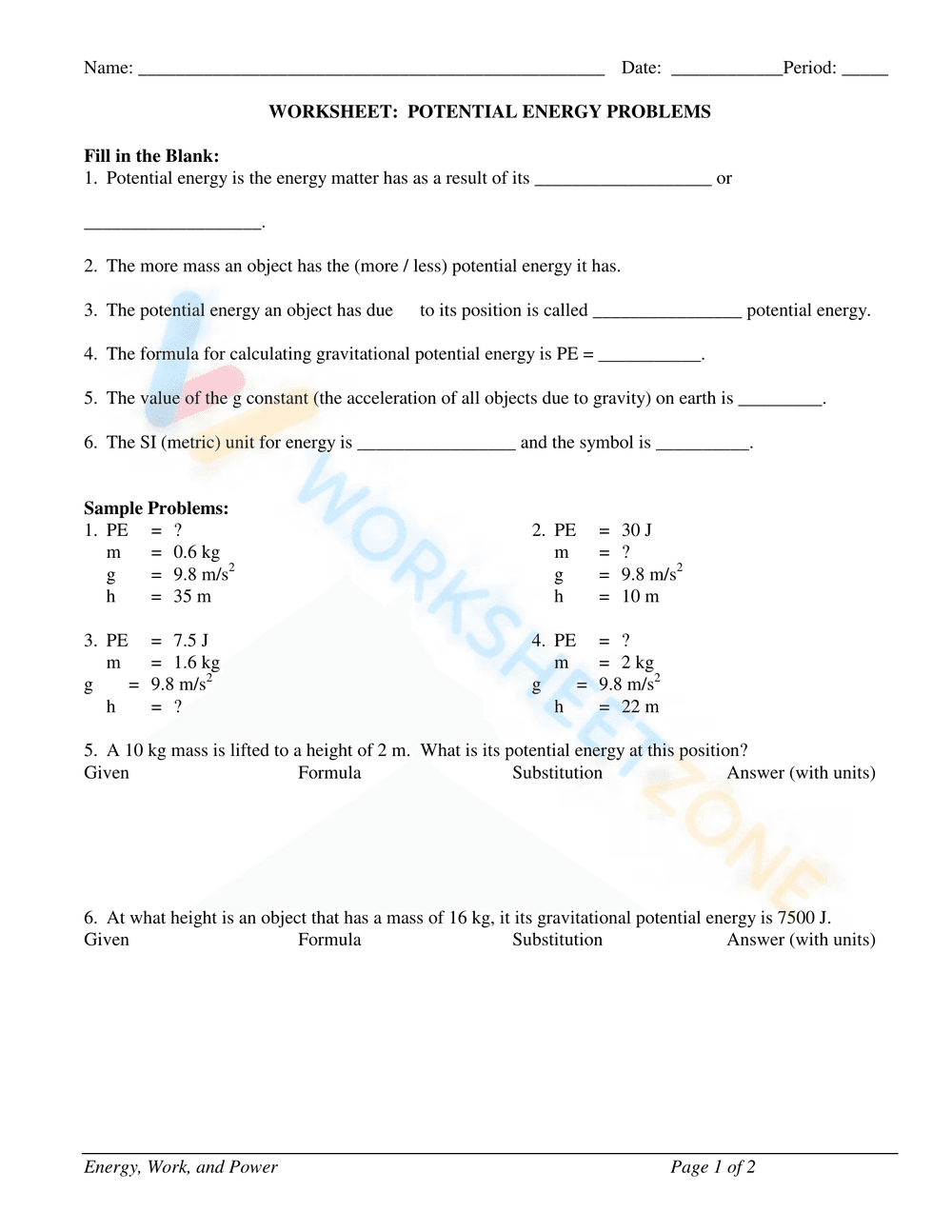
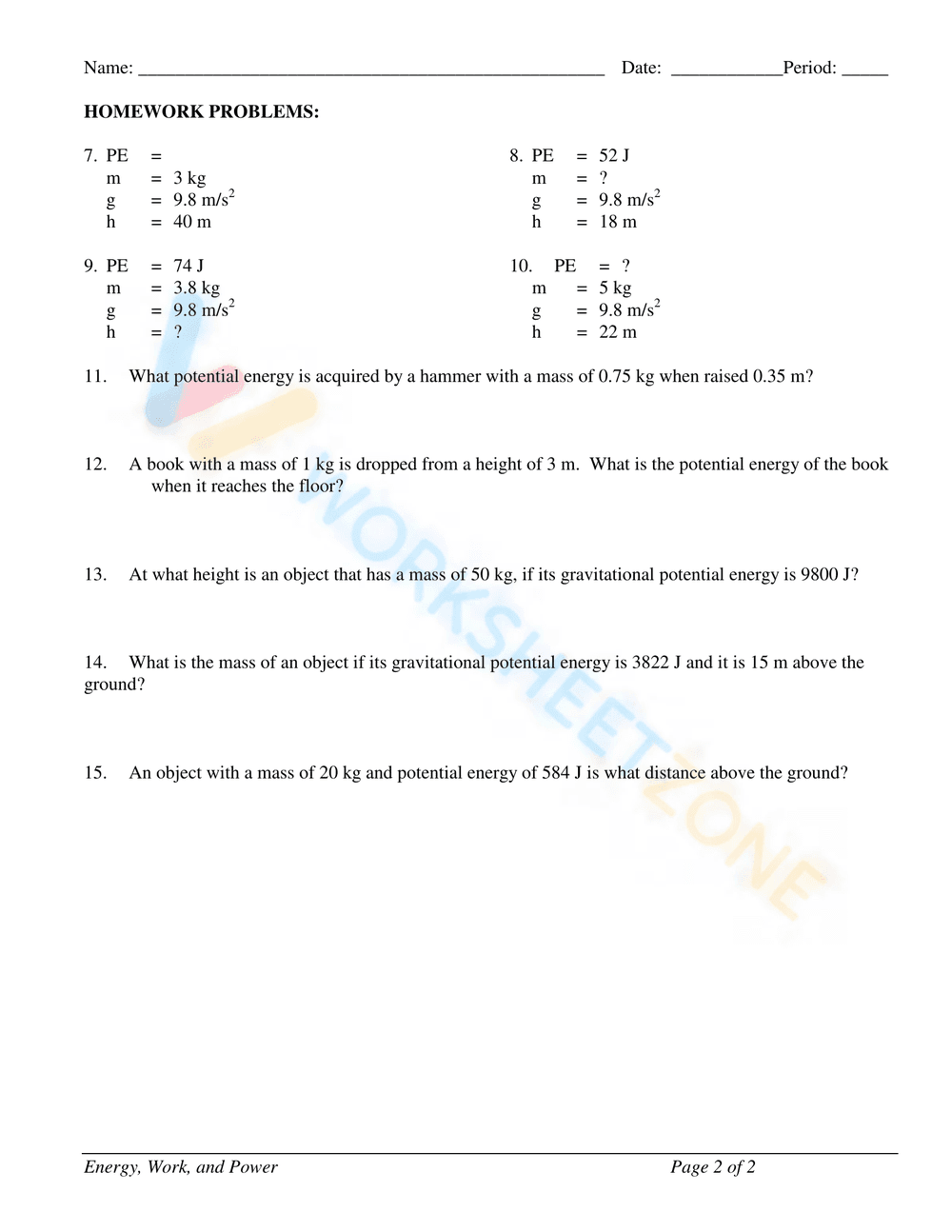
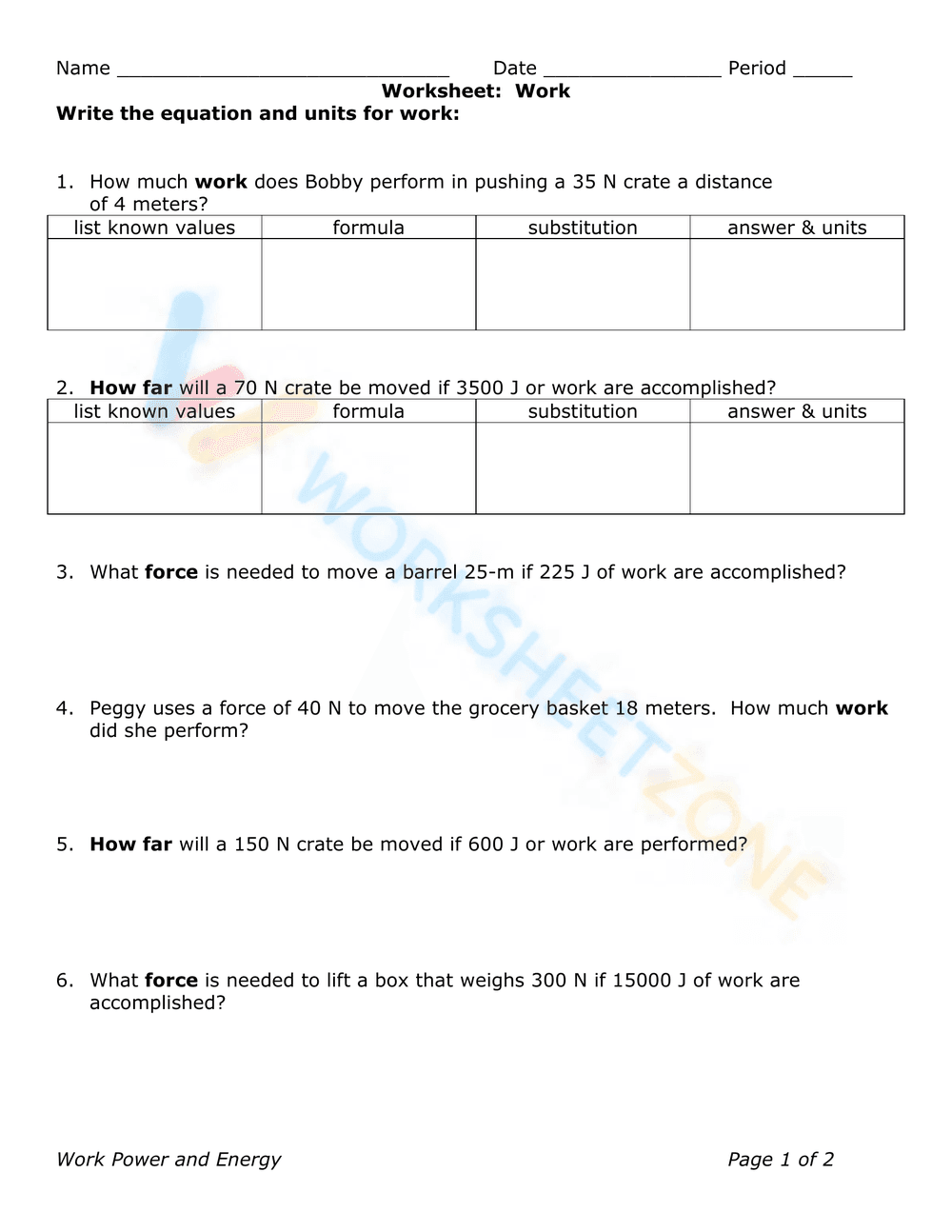
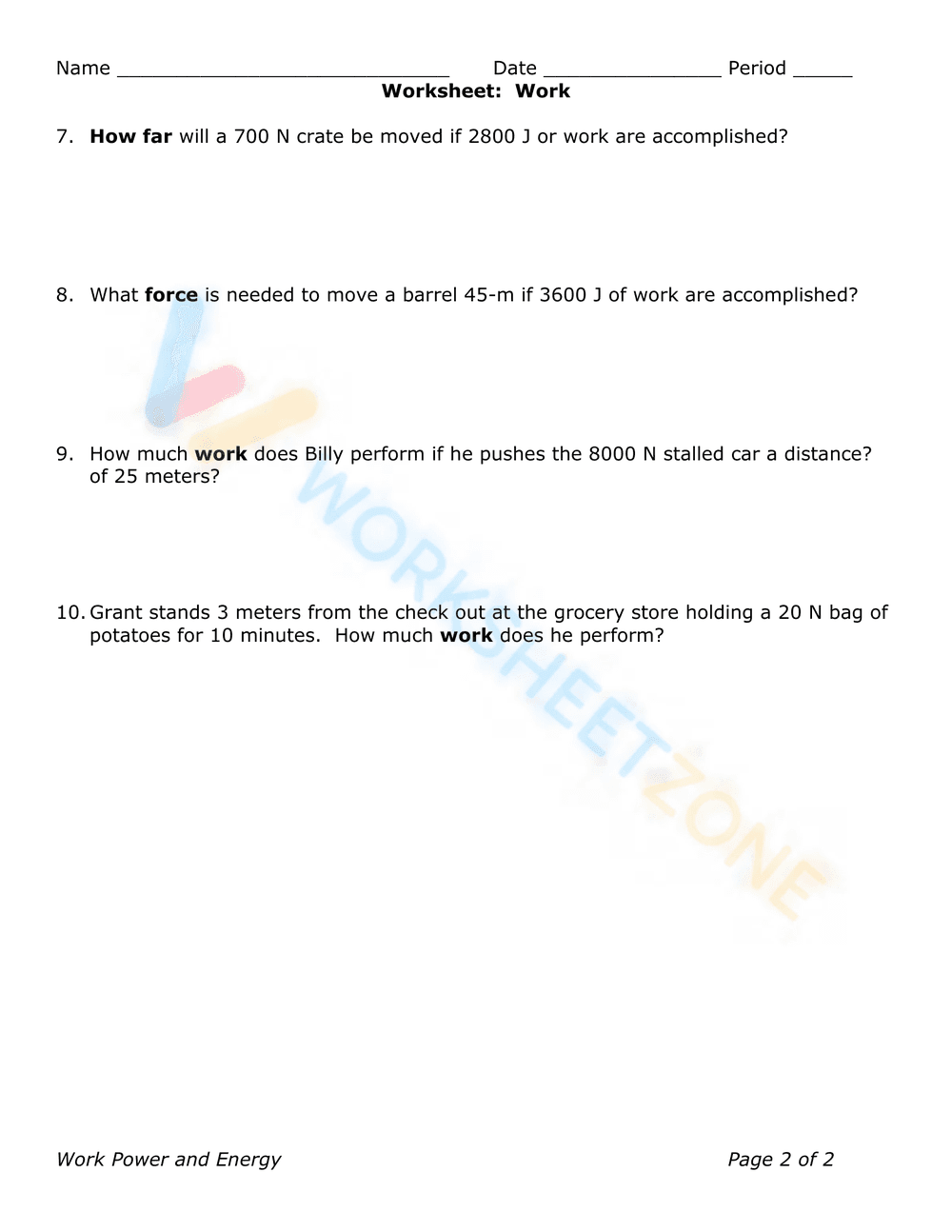
This comprehensive eight-page packet includes 58 distinct tasks ranging from vocabulary fill-in-the-blanks to multi-step word problems. Students will find structured calculation tables that require them to list known values, state the formula, show substitution, and provide the final answer with correct units. The resource is divided into specific sections for kinetic energy, potential energy, and work, making it easy to assign in chunks.
- Guided practice: The initial pages feature fill-in-the-blank questions to review key definitions, units of measurement, and formulas before moving into calculations.
- Supported practice: Students use structured tables that break down the problem-solving process into four clear steps: identifying variables, selecting the equation, substituting numbers, and solving.
- Independent practice: The final sections present complex word problems where students must independently determine whether to calculate work, kinetic energy, or potential energy based on the given scenario.
This gradual-release approach ensures students build foundational vocabulary before tackling rigorous mathematical applications.
Aligned to HS-PS3-1, this resource supports students as they create a computational model to calculate the change in the energy of one component in a system. It also reinforces foundational middle school physical science concepts regarding the relationship between mass, speed, and energy. Both standard codes can be copied directly into lesson plans, IEP goals, or district curriculum mapping tools.
Teachers can deploy this packet as a multi-day assignment during a unit on mechanical energy. Use the first few pages as guided notes and practice during direct instruction, then assign the "Homework Problems" section for independent reinforcement. As a formative assessment tip, review the "substitution" column in the structured tables to quickly identify if students are struggling with algebra or simply misidentifying the initial variables. Expected completion time is 45 to 60 minutes for the entire packet.
This resource is designed for high school physics or advanced middle school physical science students. The structured calculation tables provide excellent scaffolding for learners who struggle with multi-step math problems, ensuring they do not skip crucial steps. It pairs perfectly with hands-on labs involving ramps, rolling carts, or pendulums, allowing students to mathematically prove the concepts they observe in class.
Integrating structured problem-solving frameworks for calculating energy changes in a system (HS-PS3-1) significantly improves student accuracy and overall confidence in high school physics. According to EdReports 2024, providing explicit graphic organizers that require students to list known variables and formulas before solving reduces cognitive overload and minimizes computational errors. When learners are explicitly taught to isolate variables such as mass, velocity, and height before attempting to calculate kinetic or potential energy, they develop stronger analytical habits that transfer to more advanced scientific disciplines. By breaking down complex kinetic and potential energy word problems into manageable, sequential steps, this worksheet supports deeper conceptual understanding and mathematical fluency in physical science classrooms. Furthermore, utilizing these evidence-based scaffolding techniques ensures that all students, regardless of their initial math proficiency, can successfully engage with rigorous physics content. This deliberate approach to teaching energy calculations ultimately fosters a more inclusive learning environment where students master essential scientific principles.


