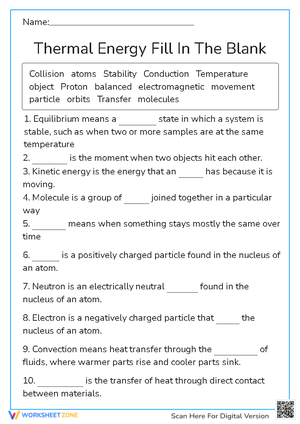
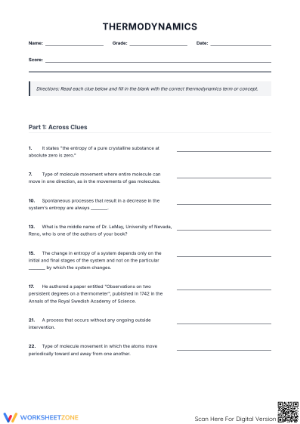
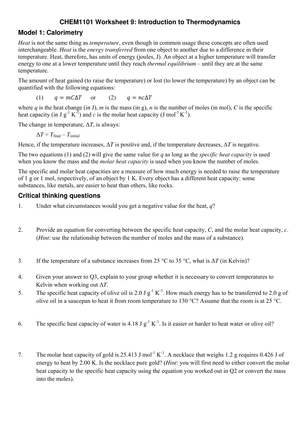
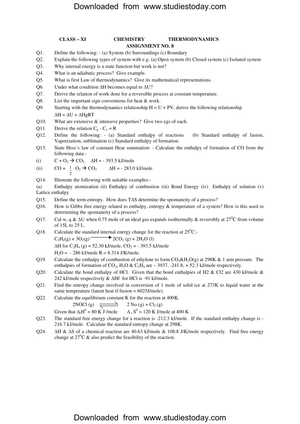
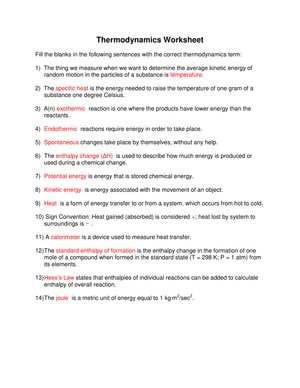
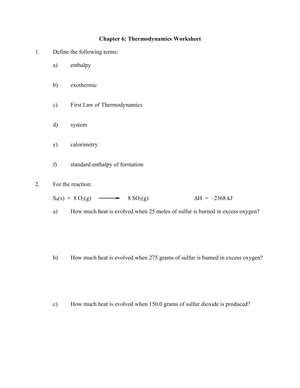
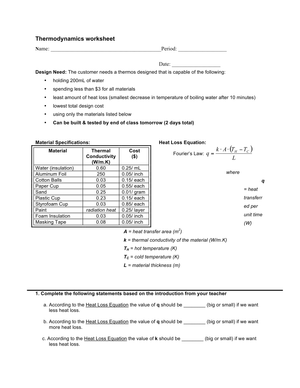
These thermodynamics printable worksheets give high school physics and chemistry teachers print-ready practice for one of the most conceptually dense units in physical science — a unit where students often arrive believing temperature and heat are interchangeable and leave still unsure what entropy actually measures. The set covers the four laws of thermodynamics, specific heat calculations, heat transfer mechanisms, and enthalpy diagrams, spanning the full range of what this unit demands. Each worksheet stands alone, so a single entry point into the set is enough to be useful.
The Specific Skills Each Worksheet Targets
The set contains four distinct worksheet types, each addressing a different dimension of the unit:
- Four laws matching and application — students match each law to its plain-language definition, then identify which law governs a described physical situation. This format surfaces whether students understand the law or have only memorized a phrase.
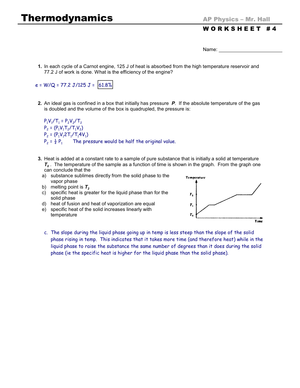
- Specific heat calculations — problems built around q = mcΔT, starting with single-variable problems and progressing to word problems where students must extract mass and temperature values from a paragraph description before they can calculate anything.
- Heat transfer sorting — students read brief scenario descriptions, mark the mechanism as conduction, convection, or radiation, and write a one-sentence justification for their classification.
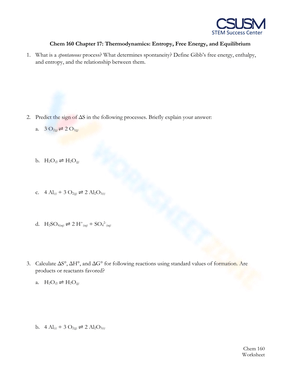
- Enthalpy diagrams and entropy prediction — students label activation energy, reactants, products, and ΔH on a provided reaction profile, then predict whether entropy increases or decreases based on the states of matter shown in the reaction.
The calculation worksheets include space for students to show each step of their work rather than just record a final answer — a format that makes it straightforward for teachers to identify exactly where a student's reasoning broke down.
Student Mistakes These Worksheets Help You Catch Early
The most persistent error in this unit is not a calculation mistake — it is a conceptual one. Students treat temperature and heat as synonyms in ordinary conversation, and that habit follows them into physics. It surfaces clearly when a student claims a thimble of boiling water "has more heat" than a bathtub of room-temperature water. The conceptual worksheets address this directly by presenting paired scenarios where temperature is higher in one case but total thermal energy is higher in the other, requiring students to distinguish the two ideas before any formula appears.
On the specific heat calculation worksheets, the most common arithmetic error is substituting T_final for ΔT. Students will correctly write the formula, correctly identify the given values, and then use 85°C where the problem requires 85 − 20 = 65°C. Asking students to underline the initial temperature in one color and the final temperature in another before they write down the formula catches this at the source. The entropy worksheets reveal a different problem: students import a colloquial definition of "disorder" — deciding that a messy room has high entropy — and miss that thermodynamic entropy describes a system's energy distribution, not a visual impression of tidiness.
Building These Worksheets Into Your Week
The thermodynamics printable worksheets in this set slot into several different moments across a standard unit. The four-laws matching worksheet works well as a Monday warm-up after students have completed a reading the night before — it takes about eight minutes, surfaces confusion before instruction begins, and gives teachers a quick read on which laws need more time before the class moves forward. The heat transfer sorting worksheet runs naturally as a brief station activity: students classify mechanisms they observed in a short video clip, then compare answers in pairs before a whole-class debrief.
The specific heat calculation worksheets are most effective on the day after a calorimetry lab, when students already have physical intuitions about measuring temperature change and mass. Connecting the worksheet to the lab means students are extending something they already observed rather than learning a new procedure and new math simultaneously — that separation meaningfully reduces cognitive overload. The enthalpy diagram worksheet works best as independent practice near the end of the unit, making a clean formative check before a summative assessment.
Standard Alignment
The four laws and heat transfer worksheets support NGSS HS-PS3-1, which asks students to create representations describing the relationship between the energy of a system and its objects, motion, and properties — exactly what the matching and scenario-application exercises target. The specific heat calculation worksheets address NGSS HS-PS3-2, which requires students to develop and use mathematical representations of energy transfer. The enthalpy and entropy worksheets connect to NGSS HS-PS3-4, focused on energy in chemical processes. Because the q = mcΔT problems require students to reason quantitatively and track units carefully, they also document alignment to CCSS Math Practice MP.2 (reason abstractly and quantitatively) and MP.6 (attend to precision) — useful if your department tracks cross-curricular standards coverage.
Adjusting the Worksheets for a Range of Learners
When you pull thermodynamics printable worksheets for a mixed-ability class, the calculation worksheets need adjustment on both ends. For students shaky on algebra, annotate the formula at the top of the page with unit labels beneath each variable — that single addition prevents the most common setup errors without giving away the answer. For students who move through problems quickly, remove the worked example, then provide q and ΔT and ask them to reverse-engineer the problem by identifying the unknown substance from a specific heat reference table. Require those students to write a sentence explaining the physical meaning of their calculated answer, which consistently reveals whether they understand the formula or are executing steps mechanically.
The conceptual worksheets lend themselves to tiered grouping without requiring separate printed versions. On the entropy prediction worksheet, pair students who are struggling so they can reason aloud before committing anything to paper. Give the same worksheet to advanced students with one additional prompt: describe a scenario where intuition about entropy leads to the wrong prediction, and explain why. That single follow-up question generates the kind of substantive disagreement that makes for a productive whole-class discussion.
Frequently Asked Questions
Do these worksheets cover both physics and chemistry content?
The four laws, specific heat, and heat transfer worksheets fit a high school physics course without modification. The enthalpy diagrams and entropy prediction worksheets are written for chemistry contexts, where students encounter reaction profiles and state-change problems. Teachers in AP Chemistry or AP Physics 2 can use the full set; teachers in a general physical science course may find the four laws and heat transfer worksheets most useful and skip the enthalpy diagrams entirely.
What should I do if my students are not strong in algebra before starting the calculation worksheets?
Start with the single-variable problems at the beginning of each worksheet, where all but one value is provided. For the word problem section, ask students to write their known and unknown variables in a labeled list before they touch the formula — this separates the reading comprehension step from the algebra step and cuts the frustration that comes from trying to manage both at once.
Can these be used for grades, or are they better suited to practice?
The calculation worksheets, which produce numerical answers that are straightforward to check, work well as quizzes or exit tickets. The conceptual worksheets — sorting, matching, predicting with a written explanation — are better suited to formative checks during instruction, because the written sentences reveal reasoning that a numerical answer cannot. The thermodynamics printable worksheets in this set were not built around summative test conventions, so if you need formal assessment documentation, pair them with a more structured test rather than substituting one for the other.












 Interactive Worksheet Maker
 Quiz Maker
 Word Search Maker
 Crossword Puzzle Maker
 Word Scramble Generator
 Sentence Scramble Generator
 Handwriting Worksheet Generator
 Name Tracing Generator
 Fill In The Blank Generator