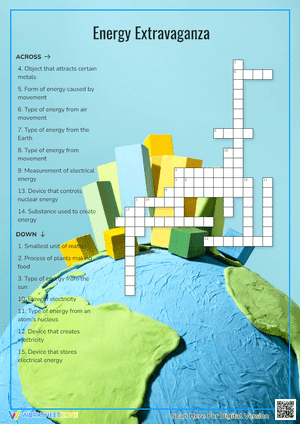
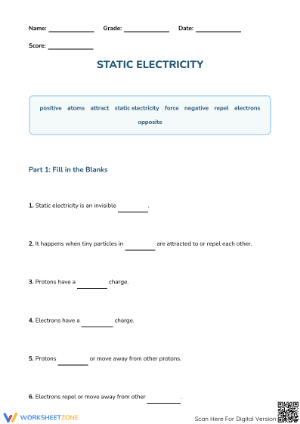
Elementary energy units cover a lot of ground fast: light, heat, sound, motion, and electrical energy all show up within a few weeks of instruction. Worksheets that ask students to sort examples by energy form, label diagrams, or fill in cause-and-effect sentences give you a quick way to check whether the vocabulary is sticking before you move into more complex transfer and transformation tasks. Unlike a quick verbal check or a show-of-hands assessment, worksheets give you a tangible artifact that shows exactly what each student understands. You can use this data to group students for small-group work, identify who needs reteaching, and build confidence in students who are on track.
Aligning Worksheets to NGSS 4-PS3 Energy Standards
The 4-PS3 Energy standard cluster from Next Generation Science Standards is the primary target for grades 3-5 energy units. Standard 4-PS3-2 asks students to use observations as evidence that energy moves from place to place through sound, light, heat, and electric currents. Worksheets built around this standard often include short scenarios, such as a speaker vibrating a table or a lamp warming a room, and ask students to identify which type of energy is being transferred and cite the evidence in the description. Standard 4-PS3-1 focuses on relating the speed of an object to the energy it has, so worksheets aligned to this standard might show two moving objects and ask which one has more energy or why. Standard 4-PS3-3 covers collisions and energy changes, making it a natural fit for prediction-based worksheets where students forecast what happens when a fast ball hits a stationary target or a pendulum swings down and up again.
One classroom pattern worth noting: energy transfer and energy transformation are the two concepts students confuse most often in grades 3-5. Transfer worksheets that keep the energy form constant, such as light moving from a bulb to a page, tend to produce fewer misconceptions than worksheets that jump straight to transformation examples, such as electrical energy becoming light and heat in a bulb, because the second skill depends on the first being secure. Sequence your worksheets intentionally: master transfer before moving to transformation, and you cut the confusion cycle significantly.
Classroom Implementation
Pair worksheets with short demonstrations rather than using them as standalone seatwork. A rubber band snapping, a tuning fork against water, or a flashlight in a darkened corner of the room gives students a shared reference point before they complete a worksheet describing what happened. Keep worksheet language consistent with the terms you use out loud during instruction, since inconsistent phrasing between a handout and a lesson is a common source of confusion in energy units. A student might understand the concept but fail a worksheet simply because the worksheet uses 'vibration' and your lesson used 'shaking.' Rotate worksheet formats across a unit: use diagram-labeling early, cause-and-effect writing midway, and short design-reflection tasks near the end, so students build from recognition toward more independent explanation. This progression mirrors how understanding actually develops in the classroom.
Frequently Asked Questions
1. What grade level are forms of energy worksheets best suited for?
These worksheets fit best in grades 3-5, with the core energy transfer and transformation content aligned to NGSS 4-PS3 in fourth grade specifically. Third graders can do foundational work identifying energy forms, and fifth graders can begin comparative and quantitative reasoning that prepares them for middle school.
2. How do these worksheets align to NGSS energy standards?
Worksheets can target 4-PS3-1 for relating speed to energy, 4-PS3-2 for evidence of energy transfer through sound, light, heat, and electric currents, 4-PS3-3 for predicting collision outcomes, and 4-PS3-4 for energy transformation design tasks. Each worksheet type supports a different part of the standard cluster.
3. What is the difference between energy transfer and energy transformation in these worksheets?
Transfer worksheets focus on energy moving between objects or places without changing form, like sound traveling from a speaker to an ear. Transformation worksheets focus on energy changing from one form into another, like electrical energy becoming light and heat in a bulb. Separating these on worksheets prevents the confusion students often develop when both concepts appear together.
4. How can teachers use these worksheets alongside hands-on experiments?
Use a short demonstration or simple device build first, then have students complete a worksheet that asks them to describe, label, or predict the energy changes they observed. You can also use a worksheet before a hands-on task as a prediction tool, then revisit it afterward to compare what students predicted with what actually happened.
5. How should teachers assess student understanding after using these worksheets?
Review completed worksheets for patterns in whole-class errors, then follow up with a brief formative check that isolates whichever concept—transfer or transformation—showed the most confusion before moving to a summative assessment. Look not just for correct answers but for the reasoning students write or draw; a student might guess correctly but misunderstand the why.















 Interactive Worksheet Maker
 Quiz Maker
 Word Search Maker
 Crossword Puzzle Maker
 Word Scramble Generator
 Sentence Scramble Generator
 Handwriting Worksheet Generator
 Name Tracing Generator
 Fill In The Blank Generator