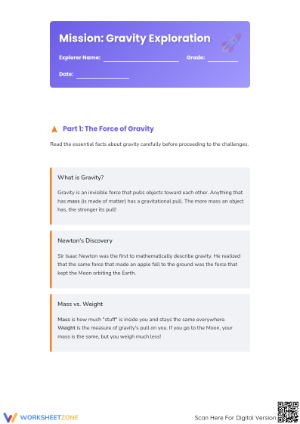
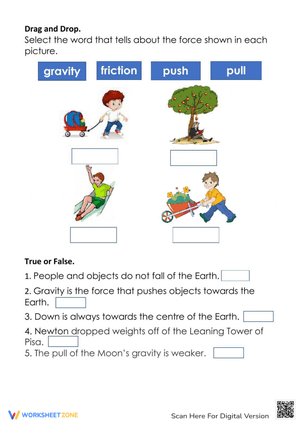
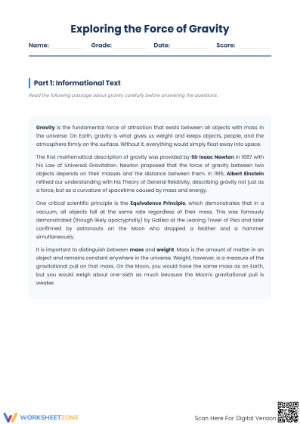
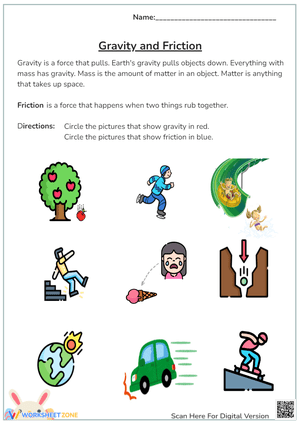
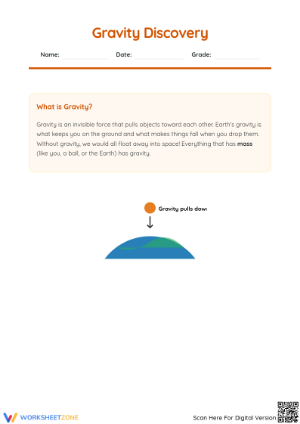
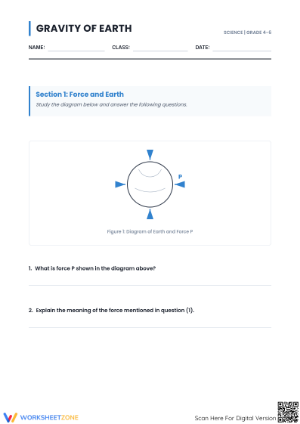
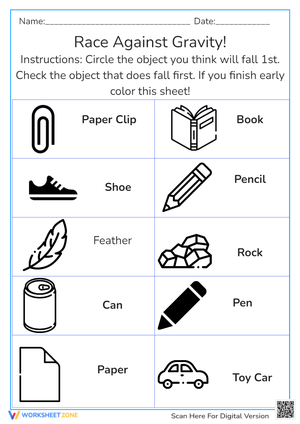
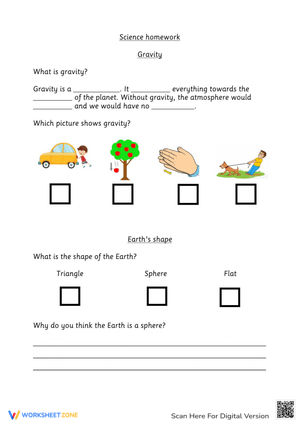
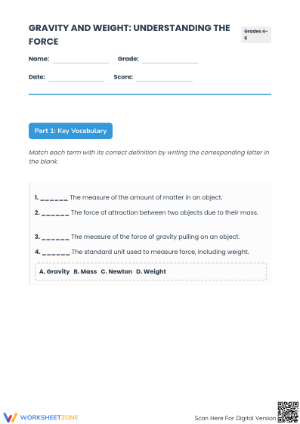
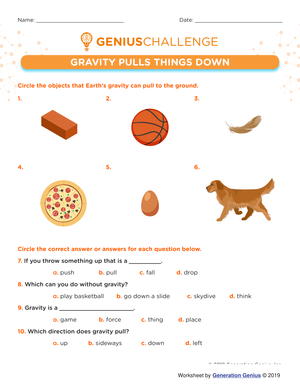
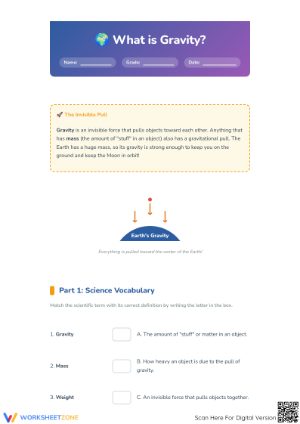
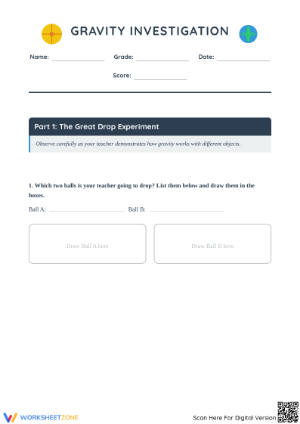
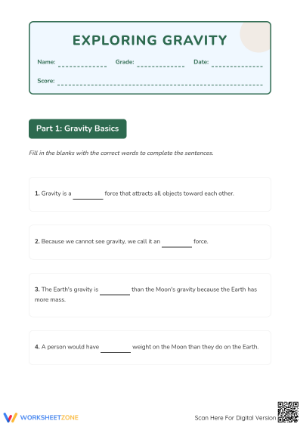
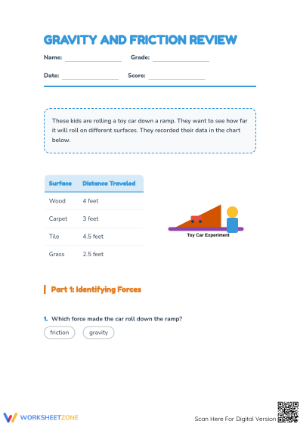
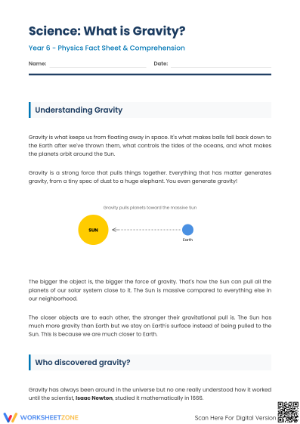
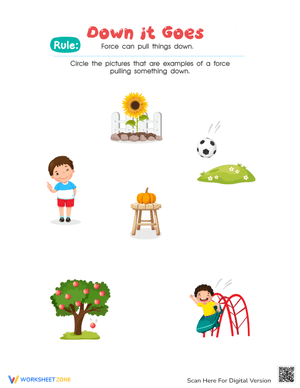
Gravity shows up in science standards long before students ever name it directly. By the time a class reaches a dedicated gravity unit, students have usually spent a full year describing pushes and pulls in general terms without pinning down what makes an object fall in the first place. Gravity worksheets close that gap by giving students a focused space to reason about one specific force instead of forces in the abstract. For a teacher planning a unit around the page linked above, that specificity matters: a worksheet built only around generic forces vocabulary will not prepare students for the argumentation work that gravity standards actually require.
Where Gravity Fits After Grade 3 Forces and Interactions
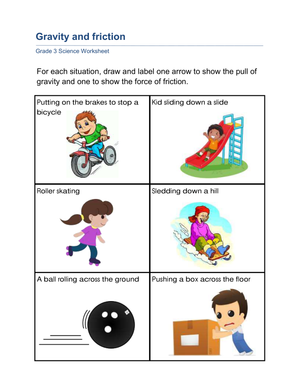
Grade 3 forces and interactions standards introduce students to the idea that objects can push or pull on one another without touching, using magnets as the primary example. That groundwork matters because it is the first time students separate contact forces from forces that act at a distance. Gravity worksheets that build on this foundation should explicitly call back to the third-grade language of pushes and pulls before introducing gravity as a specific, named force. Skipping that bridge is a common reason students struggle when gravity is introduced later as a distinct topic rather than an extension of familiar ideas.
The Grade 5 Performance Expectation Gravity Worksheets Should Target
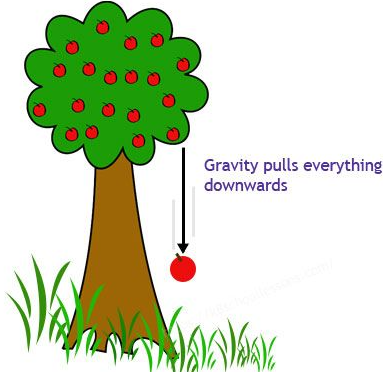
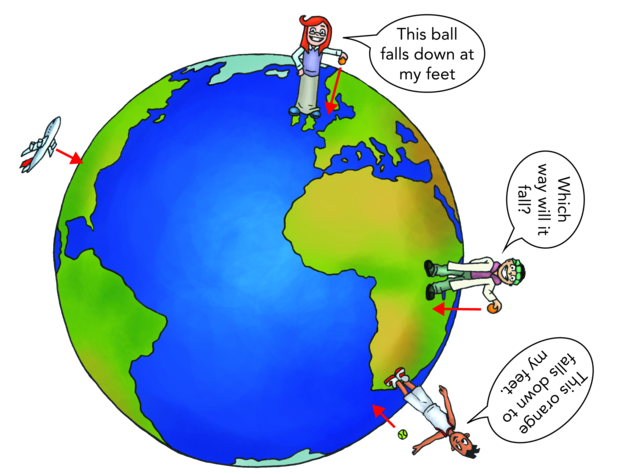
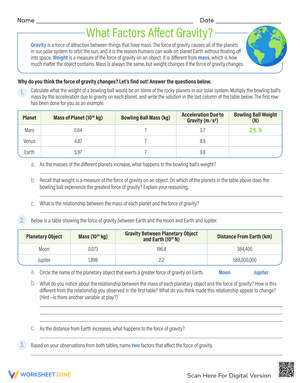
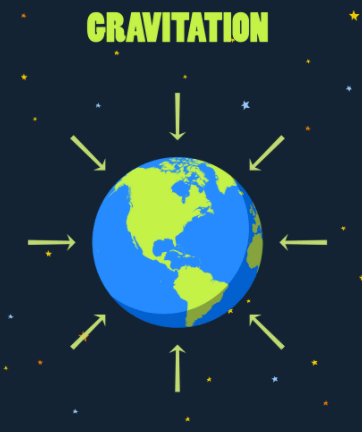
Grade 5 is where gravity becomes its own standard rather than an example inside a broader forces unit. The relevant NGSS performance expectation asks students to support an argument that the gravitational force exerted by Earth pulls objects toward the planet's surface. That single sentence changes what a worksheet needs to do. Instead of asking students to label a diagram, a strong Grade 5 gravity worksheet should ask them to construct a short written argument, cite an observation, and connect that observation back to the claim that Earth's gravity is responsible.
Many published worksheet sets treat gravity, magnetism, and general forces as interchangeable topics, but the NGSS progression actually separates them by grade band on purpose. Grade 3 covers forces broadly through magnet-based interactions, Grade 5 isolates gravity as its own performance expectation, and middle school reintroduces gravity a third time with a mass-dependent, evidence-based argument requirement. A gravity worksheet pulled from a generic forces packet often blurs these three stages into one, which makes it harder for teachers to tell whether a student's struggle is with gravity specifically or with argumentation skills that were never taught at the right grade level.
Middle School Gravity Worksheets and the Shift to Evidence-Based Argument
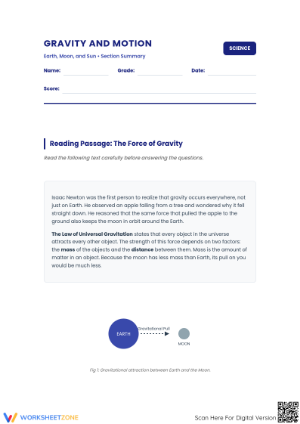
Middle school raises the bar considerably. Rather than a single observation-based argument, students are expected to construct arguments using evidence that gravitational interactions are attractive and that the strength of that interaction depends on the masses of the objects involved. This is a meaningful jump from the Grade 5 expectation, and gravity worksheets designed for middle school need to include prompts that ask students to compare scenarios, not just describe a single falling object.
According to the Next Generation Science Standards document 5-PS2 Motion and Stability: Forces and Interactions, Grade 5 students must support an argument that the gravitational force exerted by Earth pulls objects toward the planet's surface, a single performance expectation that anchors the entire elementary gravity sequence before middle school extends it into mass-dependent reasoning.
Pairing Gravity Worksheets With Mass-and-Motion Reasoning
Middle school gravity content rarely stands alone. A companion performance expectation asks students to plan investigations showing that an object's change in motion depends on the sum of forces acting on it and on the object's own mass. Gravity worksheets that ignore this connection miss an opportunity, since teachers are often teaching gravity and this motion standard back to back. Worksheets that ask students to predict how changing an object's mass affects its response to the same gravitational pull give students practice with both standards in a single task, which is efficient for teachers working through a tightly paced unit.
Classroom Implementation
Gravity worksheets work best when they are sequenced deliberately rather than assigned as a single standalone activity. A practical sequence starts with a quick recall check on Grade 3 push-and-pull vocabulary, moves into a Grade 5-style argument worksheet for elementary classrooms or a middle school evidence-based worksheet for older students, and closes with a short written reflection connecting the worksheet task to a simple classroom demonstration, such as dropping two objects of different mass from the same height. This sequence gives teachers a formative checkpoint after each step, which makes it easier to catch students who can describe gravity but cannot yet construct the argument the standard actually requires.
Frequently Asked Questions
1. What grade level typically introduces gravity as its own science topic?
Gravity becomes a distinct, named topic in Grade 5 under NGSS, after students have already explored general forces and interactions, including magnet-based pushes and pulls, in Grade 3.
2. How do gravity worksheets align with performance expectations like 5-PS2-1 and MS-PS2-4?
Grade 5 worksheets should target the specific expectation that students support an argument for Earth's gravitational pull, while middle school worksheets should shift toward evidence-based arguments about mass-dependent gravitational attraction.
3. Can the same gravity worksheet set be used for both introduction and review?
Yes, as long as the set includes tiered versions, since a diagram-based worksheet can introduce the concept while a constructed-response version of the same content supports later review or reteaching.
4. What classroom activities pair well with gravity worksheets?
Simple drop demonstrations comparing objects of different mass pair naturally with gravity worksheets, giving students a shared observation to reference when they write their argument or evidence-based response.












 Interactive Worksheet Maker
 Quiz Maker
 Word Search Maker
 Crossword Puzzle Maker
 Word Scramble Generator
 Sentence Scramble Generator
 Handwriting Worksheet Generator
 Name Tracing Generator
 Fill In The Blank Generator