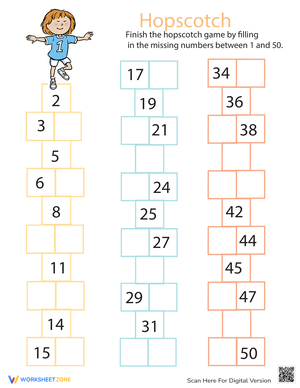
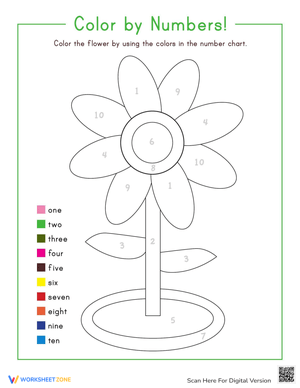
These identifying numbers 0-10 worksheets give PreK and Kindergarten teachers a structured set of printable practice activities covering numeral recognition, quantity matching, tracing, and visual discrimination—everything needed to move students from uncertain guessing to confident identification across the full single-digit range.
What Each Worksheet Targets
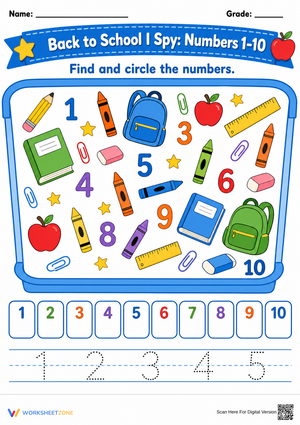
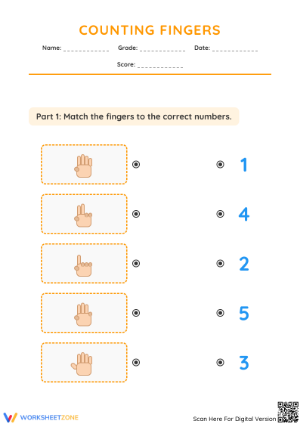
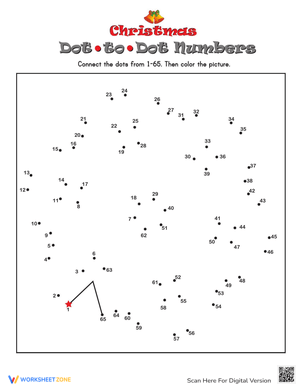
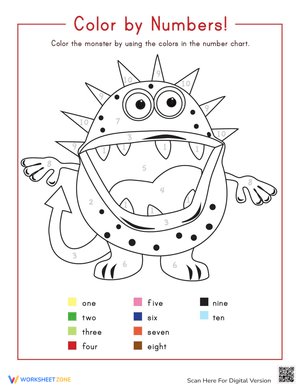
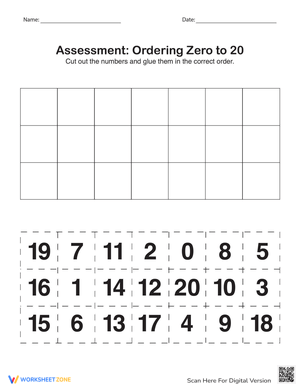
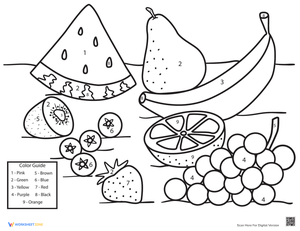
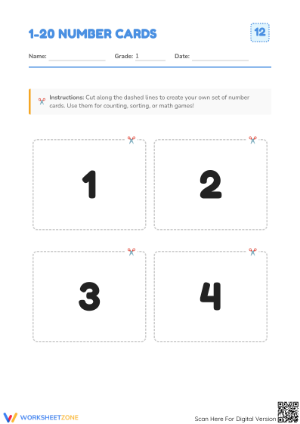
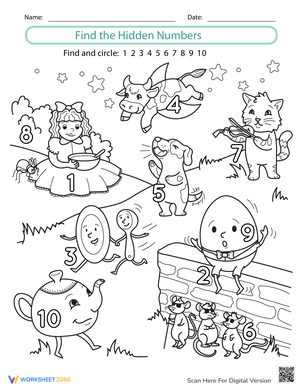
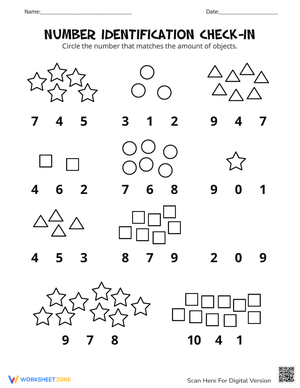
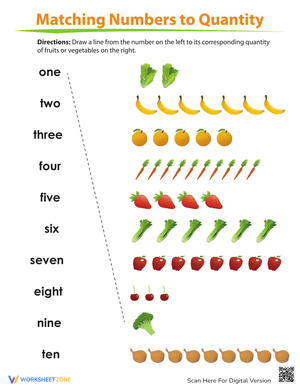
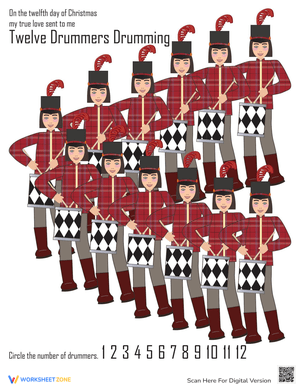
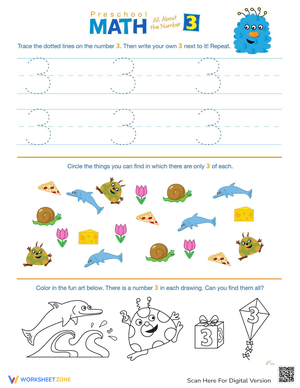
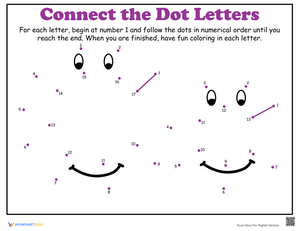
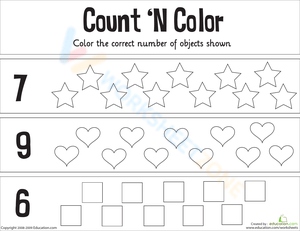
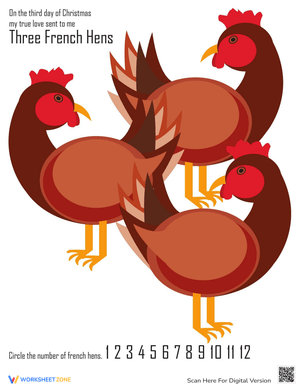
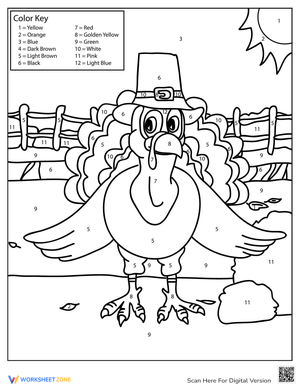
The set addresses several distinct but related skills that early number instruction requires. Students trace and write numerals with dotted-line guides, then reproduce them independently in blank spaces—building the fine motor memory that makes writing feel automatic rather than labored. Matching worksheets ask students to connect a printed numeral to a ten-frame, a dot array, or a small group of objects, reinforcing the idea that "6" is not just a shape to memorize but a specific quantity. Find-and-color worksheets place a target number among a field of similar digits—pairing 6 with 9, or 1 with 7—so students practice visual discrimination under mild pressure. Cut-and-paste sorting tasks give hands-on learners a way to work with number representations physically before anchoring them to the printed symbol.
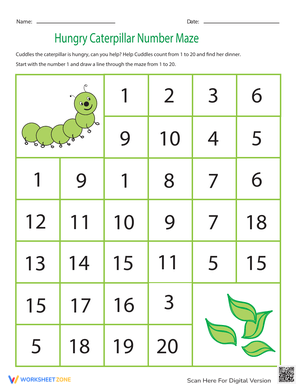
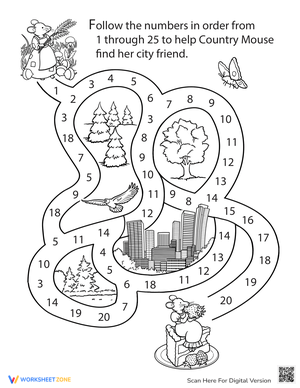
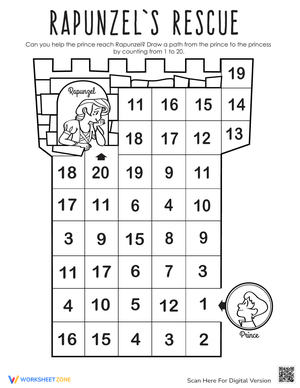
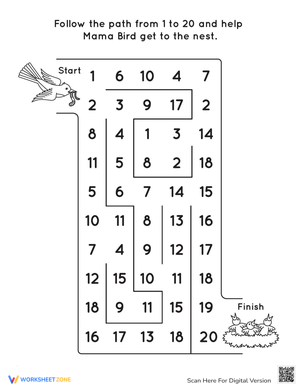
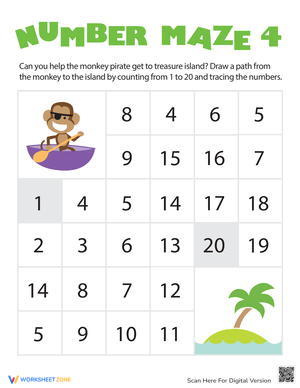
One worksheet format worth highlighting: number-path activities where students shade or trace a route by following a single numeral through a grid of mixed digits. Students who can recite numbers in sequence sometimes cannot pick out a standalone "4" on a crowded page—this format catches that gap directly.
Standard Alignment
These worksheets align to CCSS.MATH.CONTENT.K.CC.A.3, which requires students to write numbers from 0 to 20 and represent a number of objects with a written numeral 0–20. Within that standard, the 0–10 range is the appropriate instructional starting point in early-to-mid Kindergarten, before extending to teen numbers in the second half of the year. The matching and quantity-representation activities also support K.CC.B.4, which addresses understanding the relationship between numbers and quantities, including one-to-one correspondence. Teachers in PreK settings can use these worksheets to build readiness toward these standards before formal Kindergarten instruction begins.
Why This Skill Gets Its Own Dedicated Practice
Numeral recognition sits at an odd developmental intersection. A child can count ten objects by touching each one and still fail to connect the spoken word "eight" to the symbol 8. That disconnect is not a language problem or a counting problem—it is a symbol-mapping problem, and it requires its own repetition cycle separate from counting practice. The 0–10 range matters because these ten digits are the complete set from which every larger number is built; a student shaky on 3 and 7 will carry that uncertainty into place value, regrouping, and number line work in first grade.
The inclusion of zero often gets less instructional time than it deserves. Zero is the only numeral that represents the complete absence of quantity, and young children find that concept genuinely strange. Several worksheets in the set address zero explicitly with empty ten-frames and blank object groups so students build a correct, stable understanding of what zero means before they encounter it inside equations.
Lesson-Planning Ideas to Get the Most From These Worksheets
The most efficient slot for these in a daily schedule is the first five to eight minutes after morning meeting, before the cognitive demands of a full math block hit. A single worksheet used as a warm-up does two things: it settles students into math thinking and gives the teacher a fast visual sweep of who is still reversing numerals or skipping zero.
For small-group rotations, laminate one copy of each worksheet and keep them at a center with dry-erase markers and counting chips. Students place chips directly onto printed ten-frames to verify their answers, then write the numeral with the marker and wipe it clean for the next group. That setup runs all week without printing additional copies. For whole-group introduction of a new number, project the corresponding worksheet and trace it together before releasing students to work independently—this guided-then-independent sequence matches a gradual release structure that reduces the number of students who sit frozen because they are unsure how to begin.
Mistakes Students Make That These Worksheets Help You Catch
Numeral reversal is the most visible error—students write 3 facing the wrong direction, or flip 2 into a backwards curve—but the subtler mistakes are more instructionally important. Students frequently match a numeral to a group by counting only until the first familiar quantity appears, meaning a student shown the number 5 next to a scattered group of seven objects will mark it correct because they stopped counting at five and the objects "looked right." Worksheets that use irregular dot arrangements instead of neat rows expose this directly.
A second consistent error: students identify numbers correctly in isolation but fail to recognize them in a mixed-number context. A child who circles every "9" on a number-identification sheet will still write "9" when asked to record the number of bears in a picture showing six. The symbol and the quantity are stored separately and have not yet fused. Matching worksheets—where both the numeral and a quantity representation appear together—are the format that builds that connection most reliably. Teachers who use only tracing sheets and skip the matching work often discover this gap later, during addition readiness checks.
Adjusting the Worksheets for a Range of Learners
For students still consolidating the lower end of the range, restrict practice to 0–5 and pair each worksheet with a small set of physical counters. When a student hesitates on the numeral 4, placing four cubes beside the worksheet creates the concrete-to-symbolic bridge that purely visual practice cannot replicate. Tracing sheets work well for these students as an entry point, but the matching and sorting formats are where durable recognition actually forms.
Students who identify all ten numerals quickly need tasks that push toward number sense rather than just recognition. Ask them to write the numeral word beside the symbol, represent each number using tally marks without a visual guide, or mark which of two numbers is greater. These additions keep the worksheet purposeful rather than repetitive. For students receiving intervention support, the find-and-color format used as a brief daily probe—three minutes, one target number—gives a clean data point on whether recognition is holding or slipping without requiring a formal assessment.
Frequently Asked Questions
When in the school year should Kindergarten teachers introduce these worksheets?
Most Kindergarten teachers begin formal numeral recognition in the first two to three weeks of school, starting with 0–5 and expanding to the full 0–10 range by mid-fall. Students who arrive with prior preschool experience may be ready for the full set earlier; use a quick identification check on the first day to sort students before assuming a starting point.
What is the difference between number recognition and number sense, and do these worksheets address both?
Number recognition is the ability to name a printed symbol—seeing "7" and saying "seven." Number sense is the deeper understanding of what 7 means: that it is one more than 6, one less than 8, and represents a specific countable quantity. Recognition is a prerequisite for number sense, and the matching and ten-frame worksheets in this set push students toward the latter by pairing the symbol with its quantity every time.
How do I handle students who can count aloud to ten but still struggle to recognize the written numerals?
This is a common and specific gap—oral counting and numeral recognition are different cognitive tasks. These students benefit most from matching worksheets where they can count the objects in a group and then circle the numeral that matches, building the spoken-to-written connection through repeated pairing. Tracing sheets alone will not close this gap as efficiently.
Can these worksheets be used for homework?
Yes, and they travel well because the tasks are self-explanatory—a caregiver does not need instructional background to sit with a child and ask "which number is this?" Send home one worksheet per number rather than a bulk packet, and consider writing a brief note on the first one explaining that pointing out numerals on everyday objects (clocks, calendars, house numbers) reinforces what the worksheet is practicing.













 Interactive Worksheet Maker
 Quiz Maker
 Word Search Maker
 Crossword Puzzle Maker
 Word Scramble Generator
 Sentence Scramble Generator
 Handwriting Worksheet Generator
 Name Tracing Generator
 Fill In The Blank Generator