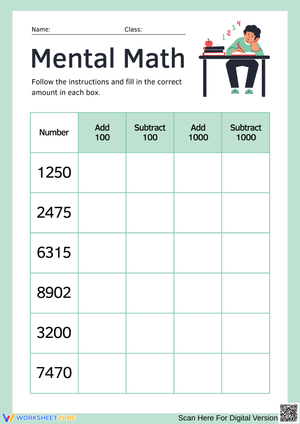
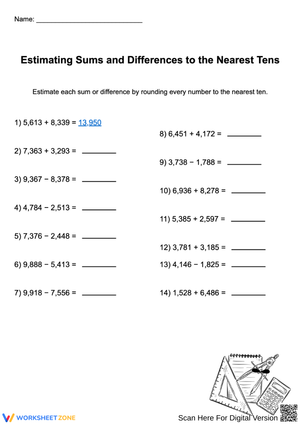
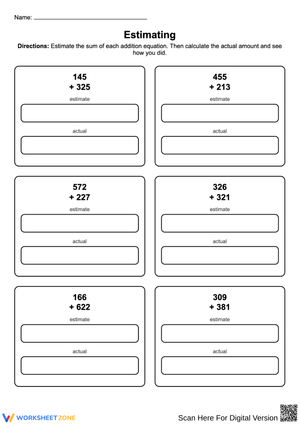
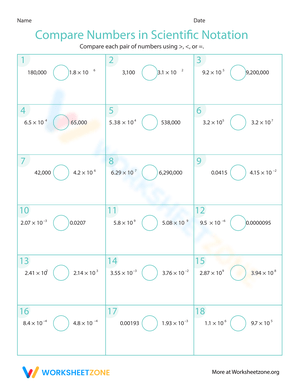
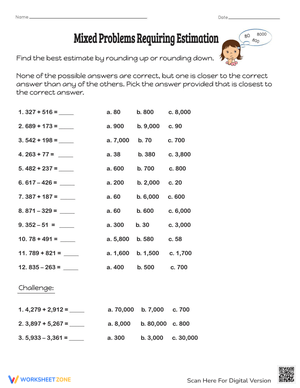
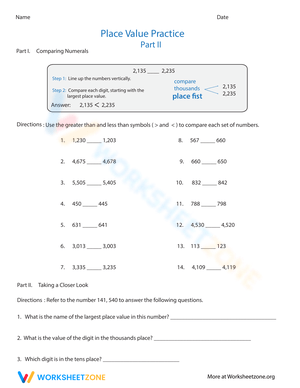
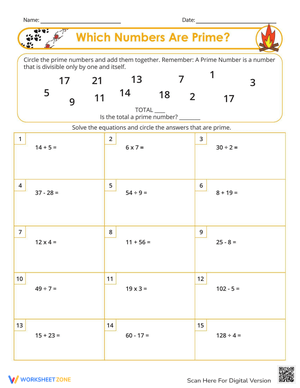
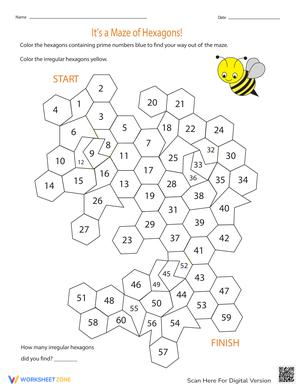
These multi digit numbers worksheets give grades 2 through 5 teachers a set of standalone, print-ready resources that span place value, all four operations with large numbers, and multi-step word problems — organized so teachers can match each worksheet to exactly where a class or small group currently is in the progression.
Skills These Worksheets Build
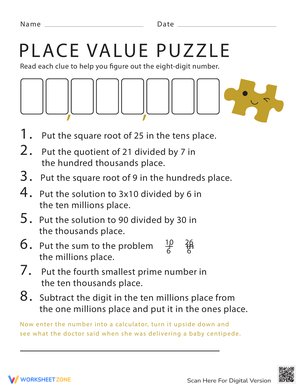
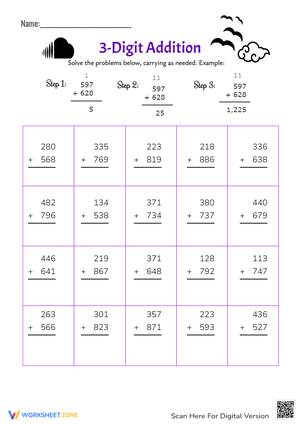
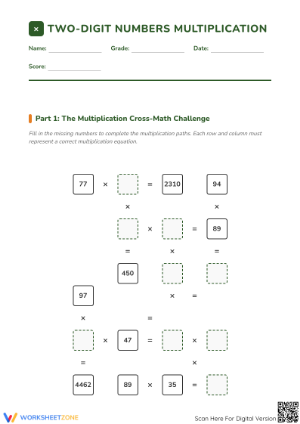
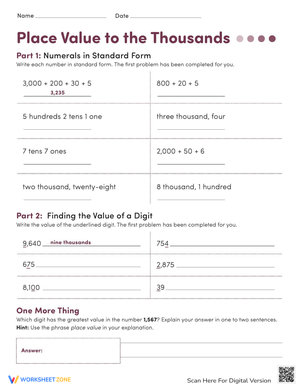
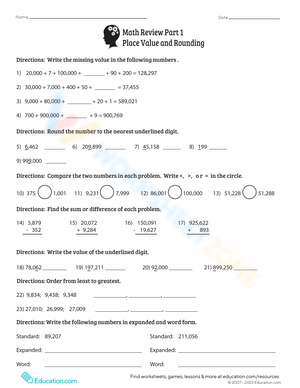
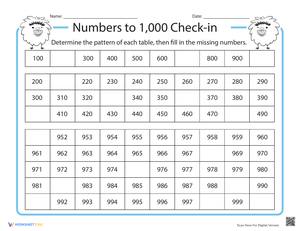
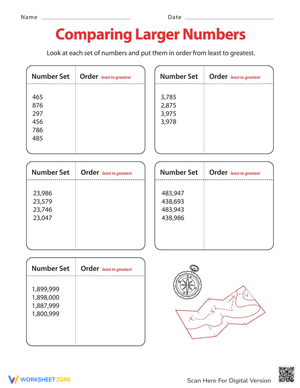
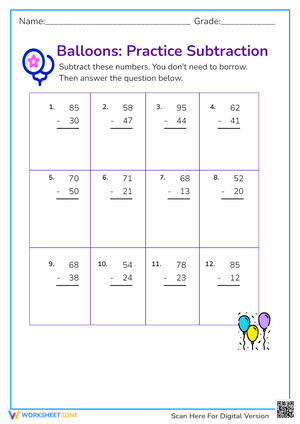
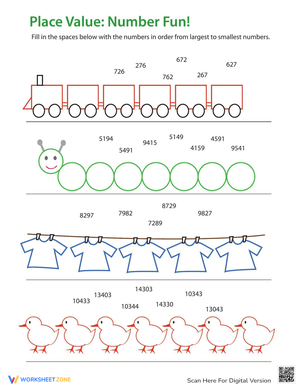
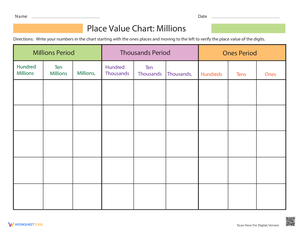
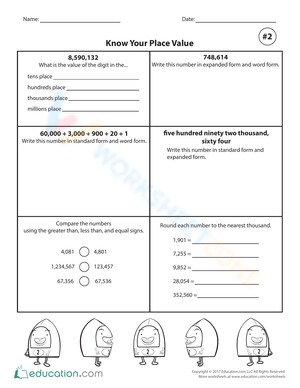
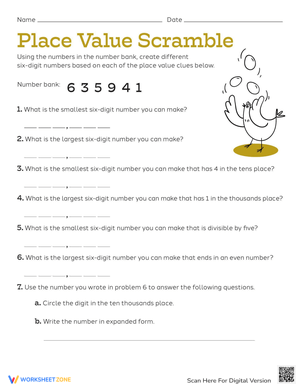
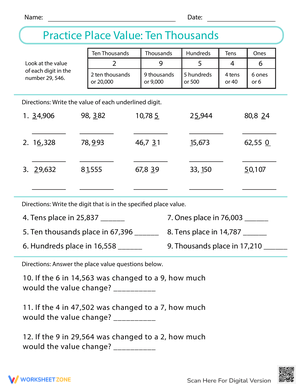
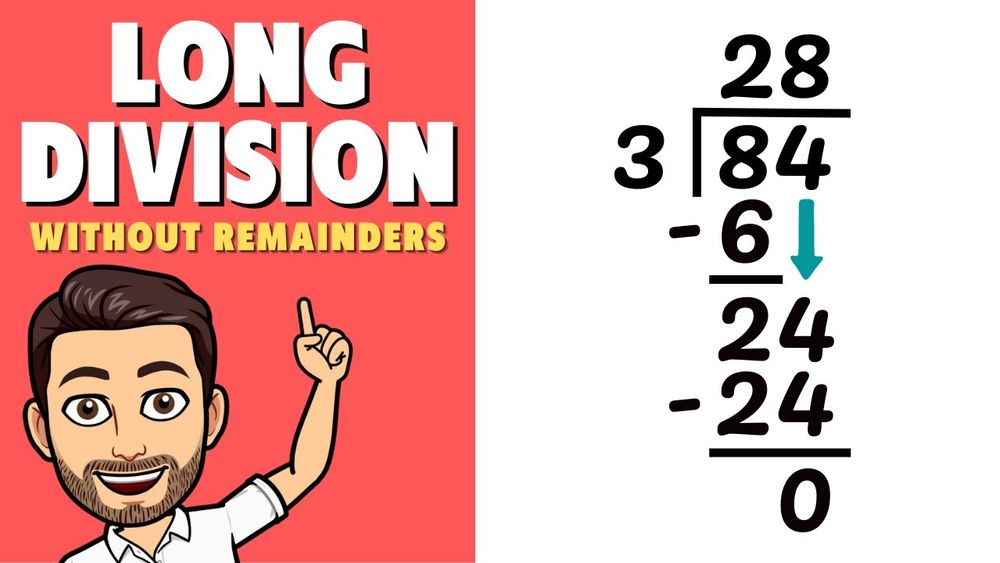
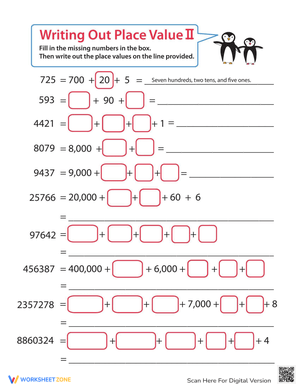
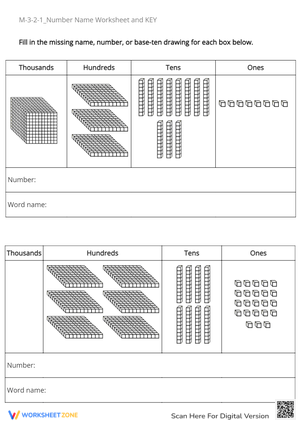
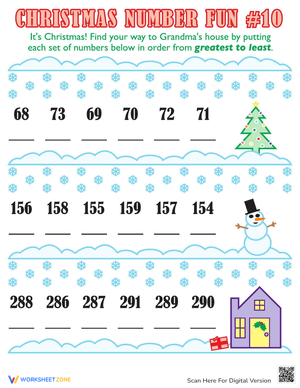
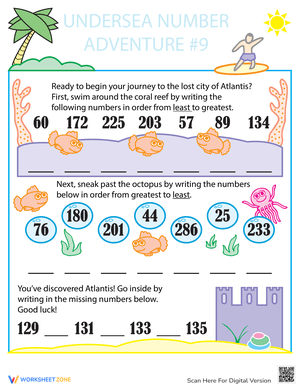
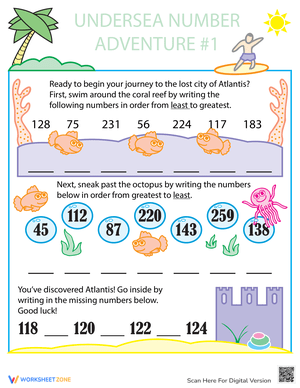
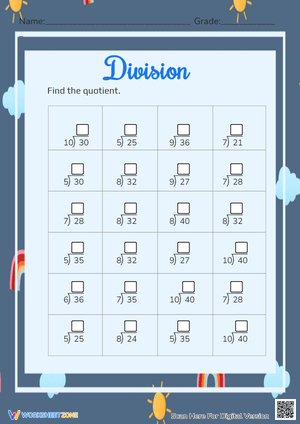
The set covers the full arc of multi-digit number work across the elementary grades. Place value worksheets ask students to write numbers in standard, expanded, and word form, compare and order multi-digit numbers, and round to specified place values. Addition and subtraction worksheets are grouped by digit count — two-digit through five-digit — with separate versions for regrouping and no-regrouping scenarios. Multiplication worksheets move from the area model to the standard algorithm, letting teachers assign both formats for the same problem set. Long division worksheets use a step-by-step column format that keeps the divide-subtract-bring-down sequence visible on the page. Word problem worksheets present real contexts where students decide which operation applies before computing.
Standard Alignment
These worksheets align to the Common Core State Standards for Number and Operations in Base Ten (NBT) across grades 2 through 5. Key standards include 2.NBT.B.7 (add and subtract within 1000 using models and strategies), 3.NBT.A.2 (fluently add and subtract within 1000), 4.NBT.B.4 through 4.NBT.B.6 (fluent addition and subtraction within 1,000,000; multi-digit multiplication; and division with four-digit dividends), and 5.NBT.B.5 through 5.NBT.B.7 (multi-digit multiplication and division fluency, operations with decimals). Within a unit, place value worksheets typically belong at the front of instruction where conceptual groundwork is laid; computation worksheets follow as students move from understanding to fluency.
Why Place Value Belongs at the Front of Any Multi-Digit Unit
When fourth graders misalign partial products in multiplication or subtract from the wrong column, the error usually isn't procedural — it's conceptual. The student has not fully internalized that a digit's value shifts by a factor of ten with each position. A child who writes 400 + 30 + 6 correctly in expanded form but then treats the 3 in 436 as "3" rather than "30" during subtraction has a gap in place value understanding, not a subtraction gap. Returning to place value charts and expanded-form exercises when those errors appear addresses the actual problem. These worksheets treat place value as foundational rather than as a one-and-done unit, so teachers can pull those exercises any time regrouping errors start clustering in student work.
Lesson-Planning Ideas to Get the Most From These Worksheets
A five-minute warm-up using a previously taught skill is one of the highest-leverage uses of this set. Rotating through place value, addition, subtraction, and multiplication across the week keeps earlier learning from fading without cutting into new instruction time — the kind of spaced retrieval that consistently outperforms massed practice for procedural fluency.
One approach worth building into a multiplication unit: assign an area model worksheet and the standard algorithm worksheet for identical problems on the same day. When students complete 34 × 27 using the rectangle model — four partial products from 30 × 20, 30 × 7, 4 × 20, and 4 × 7 — and then work the same problem using the standard algorithm, they can trace exactly where each partial product lands in the written steps. That side-by-side work removes the main complaint about the standard algorithm, which is that it feels like a sequence of arbitrary rules with no underlying logic.
For differentiated small groups, print the same skill at two or three digit-count levels simultaneously. One group works three-digit subtraction with regrouping; another works five-digit. The lesson structure stays the same, and the teacher can circulate without managing entirely different activities.
Common Student Mistakes Teachers Should Anticipate and Address
Digit misalignment is the most persistent error in multi-digit multiplication and long division, and it compounds quickly. A student who drifts the tens digit one column to the right produces an answer that is off by a factor of ten, with no visible calculation error to catch during a quick scan. Grid-format worksheets — where each cell holds exactly one digit — eliminate most of these errors mechanically, which matters because reducing alignment errors lets students direct cognitive effort toward the computation rather than toward page management.
In subtraction, the error that surfaces most reliably is subtracting the smaller digit from the larger regardless of position — writing 52 − 37 as if the ones column were 7 − 2. Students who have been told to "always subtract the bottom from the top" in earlier grades carry that rule forward incorrectly. The worksheets that include place value column boxes make the structure of regrouping visible and give teachers a concrete reference point during correction: "Show me what you did in the tens column before you moved to the ones."
In word problems, the dominant error isn't computational — students choose the wrong operation. Fourth graders in particular tend to default to multiplication when they see two large numbers together, even when the problem calls for division. Asking students to underline the action in the problem and write the operation before computing catches this early.
Adjusting the Worksheets for a Range of Learners
For students who are still building fluency, reducing the digit count by one level keeps the skill target intact while lowering the working memory load. A student who is not yet ready for four-digit subtraction can work the same regrouping concept with three-digit numbers and rejoin the class-level work once the pattern is automatic.
For students who are ready for more, the word problem worksheets are the most productive extension point. A student who can compute fluently but has not yet been asked to sequence two operations in one problem — finding a total and then finding how much more — is working at a genuinely higher level of mathematical reasoning, not just handling bigger numbers.
Students who freeze when given a worksheet with no visual scaffolding often do well when the place value columns are labeled at the top of each problem. That single addition removes the barrier without changing the mathematical demand.
Frequently Asked Questions
Which grade levels do these worksheets cover?
The set spans grades 2 through 5, covering two-digit through five-digit numbers. Skills at each level align with grade-band NBT standards, so teachers can use grade-level work for on-track students and pull from adjacent levels for students who need support or extension.
How should I sequence area model worksheets with standard algorithm worksheets?
Assign area model work first, until students can decompose both factors by place value and add the partial products accurately. Then introduce the standard algorithm on the same problem set so students can map what they already know onto the new format. Jumping to the standard algorithm before the area model is secure produces the rote-without-understanding pattern that is difficult to undo in later grades.
Why do some students keep getting long division wrong even after repeated practice?
The divide-multiply-subtract-bring-down cycle has four distinct steps, and students who are still slow with multiplication facts spend most of their working memory on the multiplication sub-step rather than tracking the overall procedure. Practicing with a multiplication reference chart alongside the division worksheets — temporarily — lets students build the procedural sequence before removing the support. Fluency with the algorithm and fluency with facts develop at different rates, and treating them as the same problem causes frustration on both ends.
Are these worksheets appropriate for intervention or only for grade-level instruction?
Both. Because each worksheet targets a specific skill at a specific digit count, an interventionist working with a fifth grader who has gaps in three-digit subtraction can pull that worksheet without the student working through an entire packet of grade-level material. The standalone structure makes targeted skill work practical in a pull-out or small-group setting.