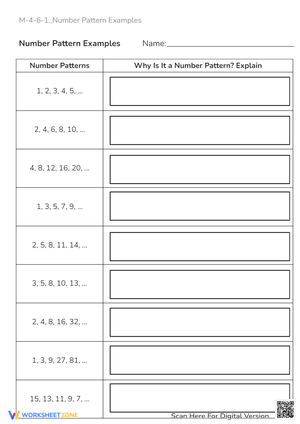
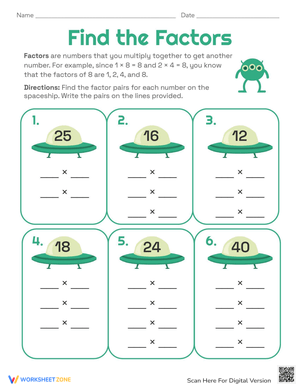
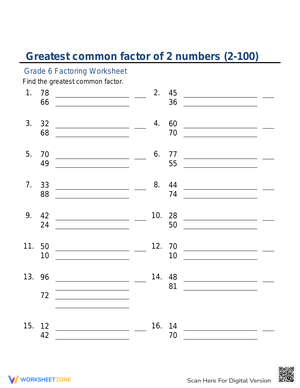
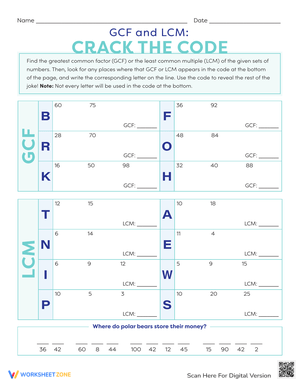
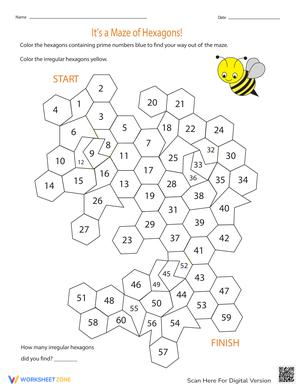
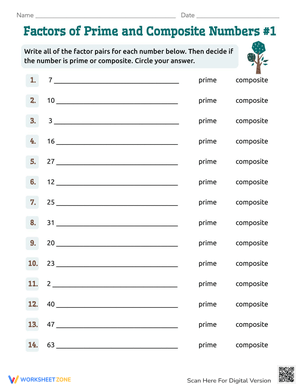
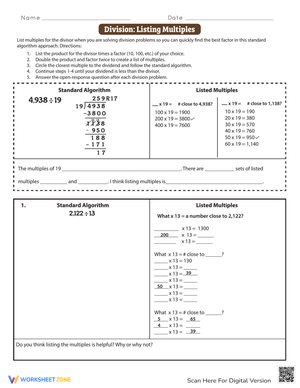
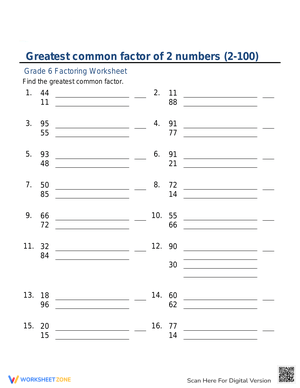
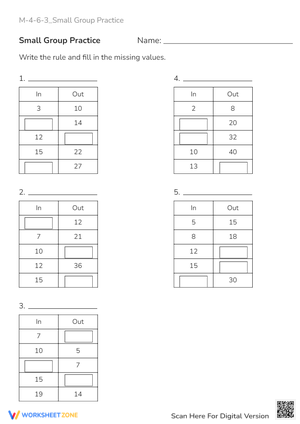
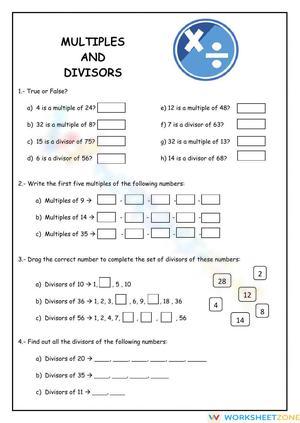
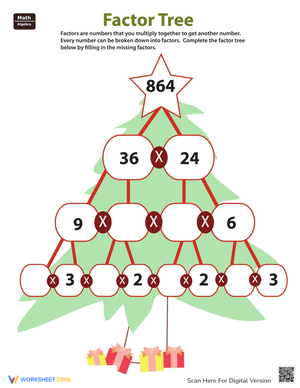
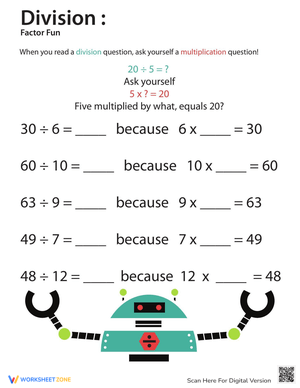
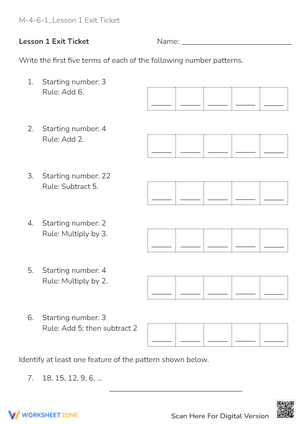
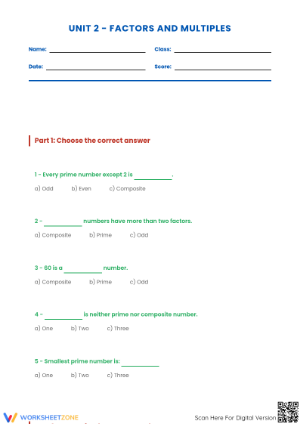
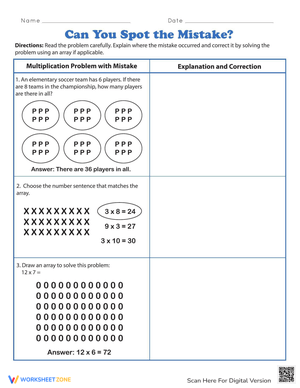
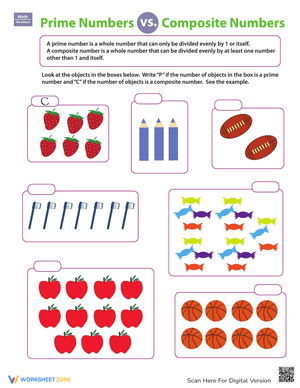
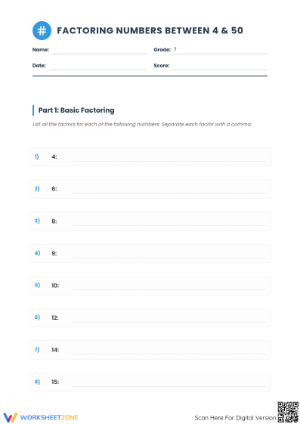
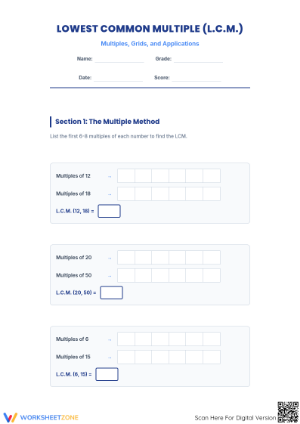
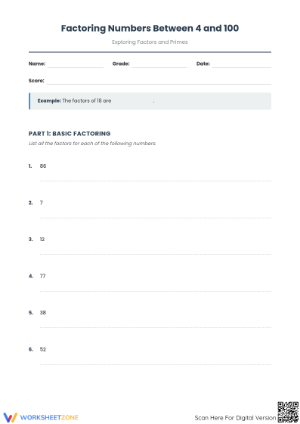
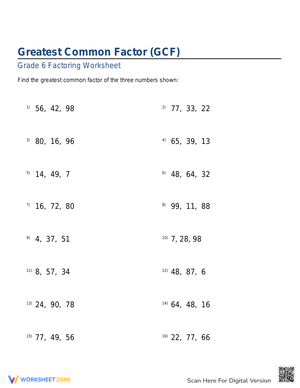
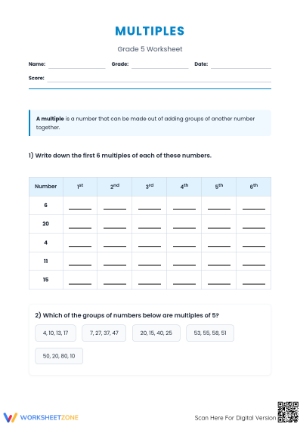
These number theory worksheets give grades 4–8 teachers ready-to-use practice for every concept in a standard number theory unit — prime and composite numbers, divisibility rules, factor trees, GCF, and LCM — without the hour of prep that comes with building materials from scratch. Each worksheet is formatted as a clean PDF, printable for classroom use or packaged into a homework set.
The Specific Skills Targeted Across the Set
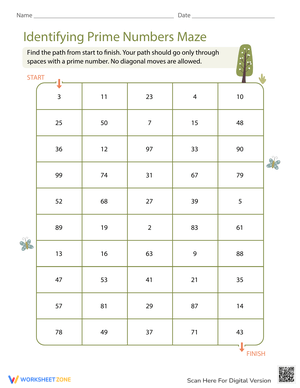
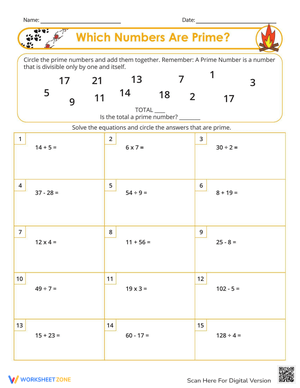
The worksheets cover the full arc of number theory as it develops from upper elementary into middle school. In grades 4–5, the focus stays on identifying prime and composite numbers, listing all factors of a given number, generating multiples in sequence, and applying divisibility rules for 2, 3, 5, 9, and 10. Students circle primes on a hundreds chart, sort numbers into factor lists, and mark divisibility without performing long division — concrete tasks that build fluency before abstraction enters.
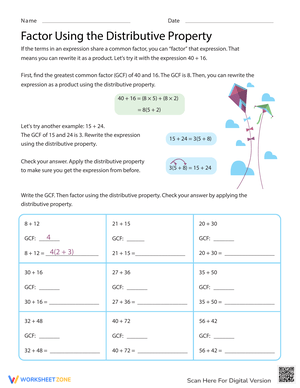
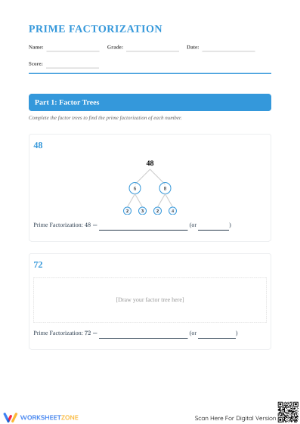
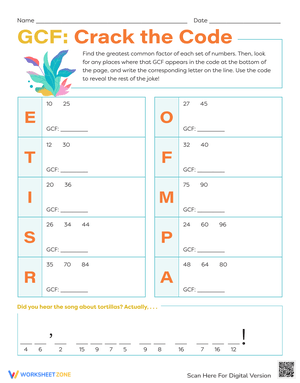
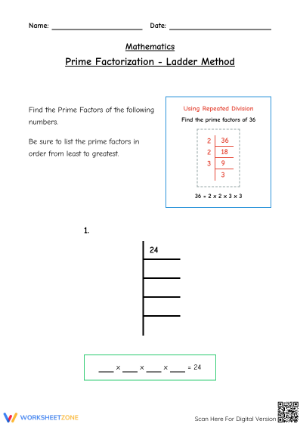
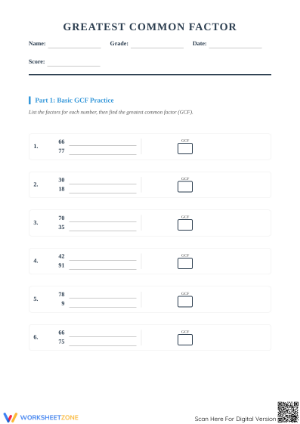
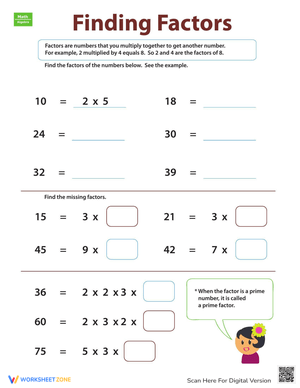
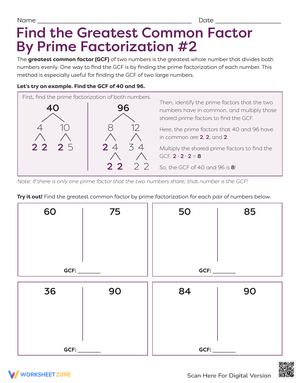
In grades 6–8, the worksheets shift toward greatest common factor and least common multiple, prime factorization using branching factor trees, and real-world word problems that require students to decide which concept a situation actually calls for. GCF and LCM problems appear in three formats: the listing method, prime factorization with Venn diagrams, and contextual scenarios involving equal grouping, tiling, and scheduling. Factor tree worksheets include partially completed examples before moving to blank templates students fill independently.
Standard Alignment
The grade 6 GCF and LCM worksheets address CCSS 6.NS.B.4, which asks students to find the greatest common factor of two whole numbers up to 100 and the least common multiple of two whole numbers up to 12, then apply those skills to fraction and ratio problems. This standard lands at grade 6 because students arrive with factor and multiple fluency from grades 4–5 and need GCF immediately for fraction simplification — it's a prerequisite skill, not a standalone topic. The grade 4–5 worksheets align with 4.OA.B.4, which establishes the vocabulary and procedures (prime, composite, factor pairs, multiples) that make 6.NS.B.4 possible. Teachers in states using non-Common Core frameworks will find the content consistent with their own grade-band expectations, since these are widely accepted benchmarks for upper-elementary and middle school math.
How to Build These Worksheets Into Your Lesson Plans
The most reliable entry point is a short direct-instruction block followed by immediate individual practice. Spend the first ten to twelve minutes of class on a single concept — say, the divisibility rule for 9 — then distribute the matching worksheet. Students who work quickly can move to the word problem extension at the bottom; students who need more time aren't rushed through a spiral. This structure works especially well at the start of a unit, when each rule or definition is genuinely new.
Later in the unit, mixed-skill worksheets earn their place as Friday review or Monday re-entry after a weekend gap. Pulling from primes, factor trees, GCF, and LCM in one worksheet activates spaced retrieval — students have to decide which procedure applies before they can begin, which is the actual cognitive work of number theory. For homework, single-skill sheets assigned the evening after instruction keep the load manageable and the feedback loop tight.
One underused approach: pair a divisibility rules reference chart with a timed practice sheet. Students work the first set of problems with the chart visible, then flip it over and attempt a second set from memory. The gap between those two rounds is a formative signal — if a student still reaches for the chart after four or five sessions, that's your indicator to address automaticity before introducing GCF, which depends on quick factor recognition.
Mistakes Students Make That These Worksheets Help You Catch
The most persistent confusion at the grade 5–6 boundary is the difference between factors and multiples. Students who can recite the definitions separately will still write "the factors of 8 are 8, 16, 24" without hesitation — they've slipped into listing multiples because both tasks ask them to "find numbers related to 8." Worksheets that place factor and multiple problems in adjacent columns, with both terms visible on the same sheet, force students to hold the distinction actively rather than rely on context.
With GCF and LCM word problems, the dominant error isn't calculation — it's identification. Students apply whichever operation came last in instruction, regardless of what the problem describes. A student who correctly calculates the GCF of 12 and 18 will still use LCM when a problem asks how many groups can be made from two unequal sets of objects, simply because LCM appeared in the previous problem. Word problem sets that interleave GCF and LCM scenarios without labeling which is which push students past this pattern.
A subtler issue appears in factor tree work: students who learn to split a composite number into any two factors — rather than always pulling out the smallest prime first — end up with structurally different trees and sometimes convince themselves they've made an error when the prime factorization is actually equivalent. Worksheets that include two completed trees for the same number, built along different branches but arriving at the same prime factorization, address this directly.
Frequently Asked Questions
What is the difference between factors and multiples, and how do these worksheets address both?
Factors divide evenly into a number; multiples are the products of that number and positive integers. The confusion between them is genuinely common at grades 4–6, so worksheets in this set label each task explicitly and include both types in the same problem set so students practice switching between the two. Several worksheets ask students to sort a list of numbers into "factors of 24" and "multiples of 24" simultaneously, which forces the distinction rather than letting context carry it.
How do I sequence GCF and LCM instruction effectively with these worksheets?
Start with the listing method for both GCF and LCM — it's slower, but students build genuine understanding of what the values mean. Once that's solid, introduce the prime factorization method and use Venn diagram worksheets to connect the two approaches visually. Save word problems for after students can calculate reliably, then use mixed-problem sets to build the identification skill of recognizing which concept a situation requires.
Do these worksheets work for students who struggle with multiplication fluency?
Yes, with some adjustment. Divisibility rule worksheets give those students a route into the material that doesn't depend on recall speed. For factor tree work, a multiplication table kept at the desk removes the barrier without removing the number theory task. The goal at grade 5–6 is that students understand the structure of factors and primes; automaticity with multiplication catches up through its own practice track.
Are the worksheets appropriate for both classwork and homework?
Shorter single-skill worksheets work best as classwork, warm-ups, or exit tickets where a teacher is present to catch errors before they calcify. Mixed-skill and word problem worksheets are better suited to homework once students have practiced each skill type in class — sending home a GCF word problem set before students have sorted the GCF-versus-LCM identification issue tends to produce a sheet full of the wrong operation done correctly.













 Interactive Worksheet Maker
 Quiz Maker
 Word Search Maker
 Crossword Puzzle Maker
 Word Scramble Generator
 Sentence Scramble Generator
 Handwriting Worksheet Generator
 Name Tracing Generator
 Fill In The Blank Generator