DISCOUNT UP TO 50%
BACK TOSCHOOL
28Days
:
11Hrs
:
33Mins
:
42Secs
BACK TOSCHOOL
UP TO 50% OFFUpgrade to Pro
Worksheetzone logo

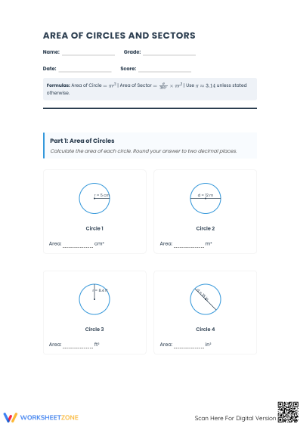
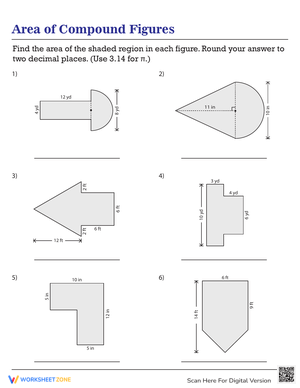
Area Worksheets That Build Real Understanding in Grades 3-6

What Grade 3-6 Area Worksheets Should Do

Area worksheets earn their place in a math block when they build spatial reasoning, not just when they hand students a formula to memorize. For teachers in grades 3-6, the goal is a page that moves a class from covering a rectangle with unit squares toward the length times width shortcut, with every step visible on paper. When you pick worksheets with that progression in mind, area worksheets become a teaching sequence instead of a stack of disconnected drills, and students end the unit able to explain what their answers mean.

This guide walks through how to sequence area worksheets, which pages fit which grade, and how to use them to head off the mix-ups that show up every year on measurement assessments. The through-line is simple: let students see the squares before you ask them to multiply, and keep that visual within reach even after the formula appears.

Start With Unit-Square Tiling, Not the Formula

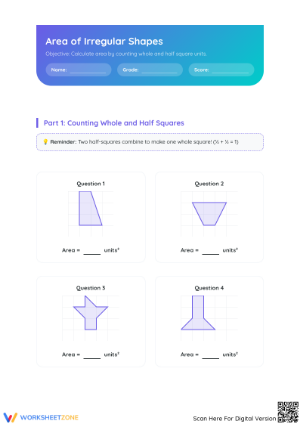
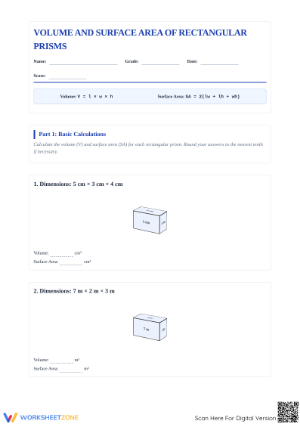
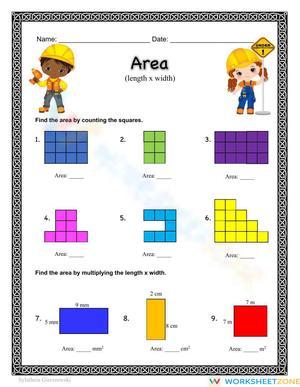
The most reliable way to teach area is to let students count first. Worksheets that ask learners to tile a rectangle with unit squares and count the total give them a concrete picture of what area means: the number of squares that cover a flat shape. CCSS 3.MD.7 is explicit about this, asking third graders to find rectangle area by tiling and then connect that count to multiplying the side lengths.

A strong early worksheet keeps the grid visible. Students count the squares in a single row, count how many rows there are, and only then notice that rows times columns gives the same answer as counting every square one by one. That noticing is the bridge to the formula, and worksheets that rush past it tend to produce students who can plug in numbers but cannot explain what the product actually represents. Spend more time here than feels necessary; the payoff arrives later.

Match Worksheets to the Grade and Standard

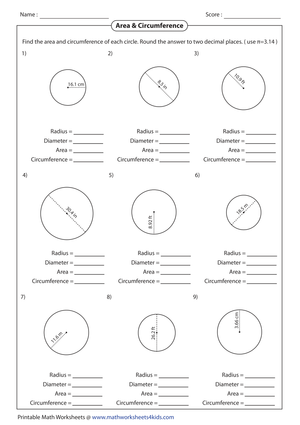
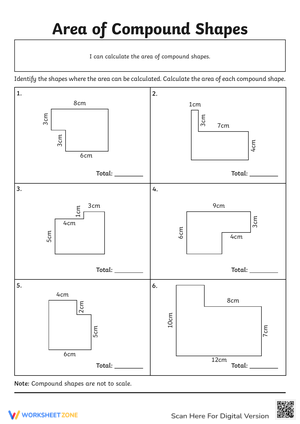
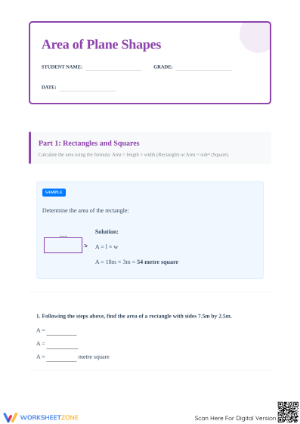
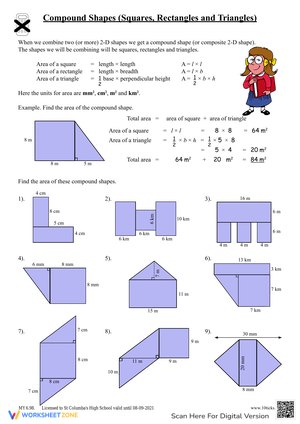
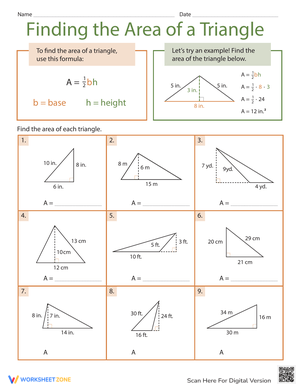
Not every area worksheet belongs in every grade. Grade 3 work should stay concrete: tiling, counting, and the first link to multiplication under 3.MD.7. By grade 4, students apply area and perimeter formulas to solve real-world and mathematical problems, which is the language of CCSS 4.MD.3. That shift in expectation should change what lands on desks.

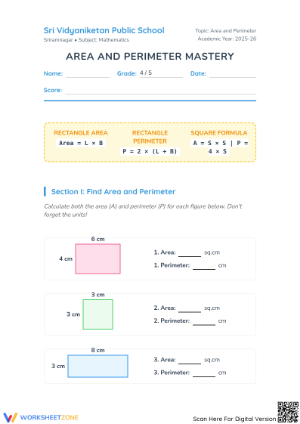
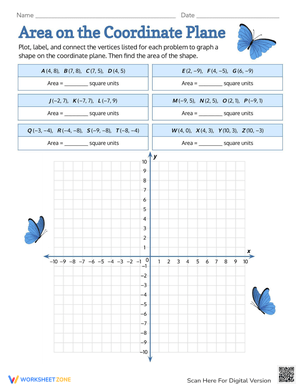
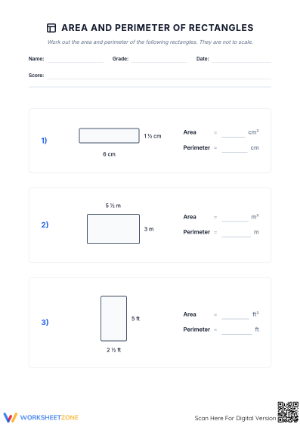
For a third-grade class, choose worksheets with printed unit squares and small whole-number dimensions students can count without losing track. For fourth and fifth graders, choose pages that present dimensions without a grid, ask for the formula, and then extend into word problems. Handing a grid-free formula page to students who have not done the tiling work is the fastest route to fragile, memorized-only understanding that falls apart the moment the numbers get larger.

Break the "Doubling Doubles Area" Misconception

One error shows up so consistently that it deserves its own slot on your worksheets. Students assume that if you double a rectangle's side lengths, you double its area. The area actually quadruples, and side-by-side rectangle comparisons on paper are the clearest way to show it.

According to NCTM's analysis of student misconceptions about area measure, most students in grades 5-8 believe that doubling a rectangle's side lengths doubles its area, when it actually quadruples. That single error explains why formula-first instruction so often produces confident but incorrect answers on measurement assessments, even from students who can recite length times width.

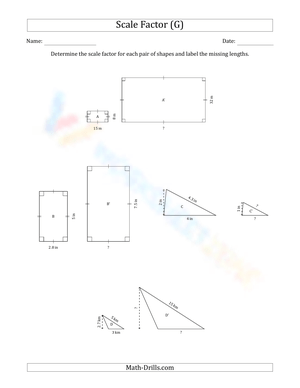
Here is the practical takeaway most formula sheets miss: when a shape scales by a factor, its area scales by that factor squared. Give students two rectangles, one that is 3 by 4 and one that is 6 by 8, and have them count or compute both. The first has an area of 12 square units; the second has 48, exactly four times as much, not two. Doing that comparison on a single worksheet turns an abstract rule into something students can see, defend, and remember past the test.

Keep Area and Perimeter on Separate Worksheets

Area and perimeter get taught close together, and that proximity is where confusion starts. Research on children's conceptions of area measurement shows that students routinely swap the two when formulas arrive before enough counting and tiling work. The fix is not to merge them onto one busy page but to contrast them deliberately across separate tasks.

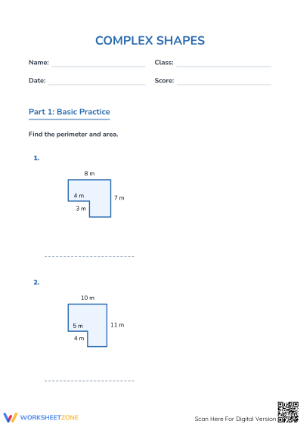
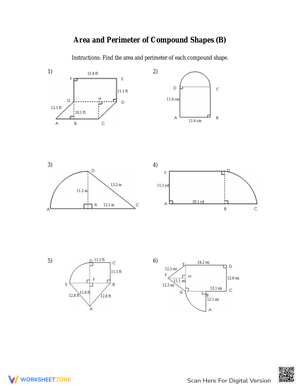
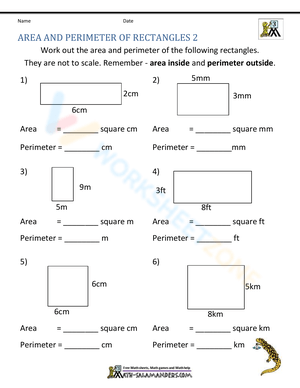
Use separate worksheets so each measurement builds its own schema before you ever compare them. When you do compare, put the same rectangle on both pages and ask two clearly different questions: how many squares cover the inside, and how long is the border all the way around. Keeping the visual constant while the question changes helps students see that area and perimeter answer different things and do not rise and fall together.

Classroom Implementation

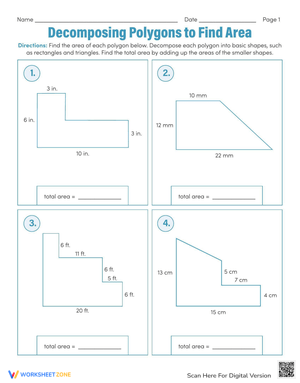
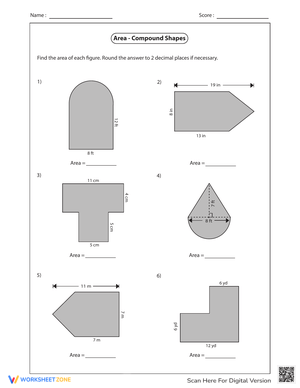
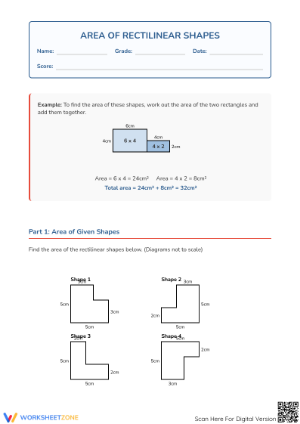
Sequence your area worksheets across a unit rather than assigning them at random. Open with two or three tiling pages where every square is visible and countable. Move to pages that still show a grid but ask students to reason by rows and columns instead of counting each square. Only then hand out grid-free pages that call for length times width on their own, and keep one gridded example posted for students who need to look back.

For small-group intervention, pull the students who answer formula questions correctly but freeze when the grid disappears or the numbers change. Those students usually have a memorized rule without the spatial picture underneath it. Send them back to counting worksheets for a session or two, then rebuild toward the formula step by step. For whole-class review before a unit test, a mixed page that includes one tiling item, one formula item, and one doubling comparison gives you a quick read on who is secure and who is still guessing.

Real-World Area Problems for Grades 4-5

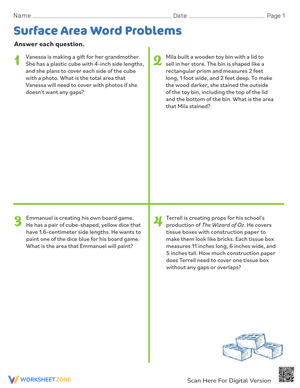
Fourth and fifth graders need area problems set in real contexts, which is exactly what 4.MD.3 calls for when it names real-world and mathematical problems. Flooring a room, planning a garden plot, and laying out a classroom reading corner all give students a reason to compute area and a way to check whether an answer is reasonable. A student who calculates that a small reading corner needs 4,000 square feet of carpet has a natural prompt to stop and reconsider.

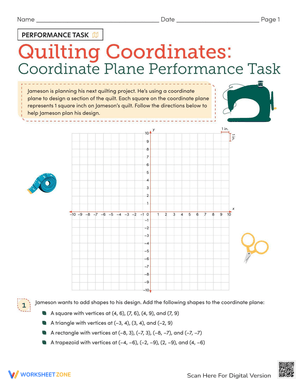
Look for worksheets that supply real dimensions and ask for a decision, such as how many square feet of carpet to order or which of two garden layouts covers more ground. Problems that end in a choice, not just a number, push students to interpret their result rather than stop at it. They also make area feel like a tool for planning a space rather than one more box to fill in on a page.

Frequently Asked Questions

1. Should area worksheets start with the formula or unit-square counting?

Start with counting. Grade 3 students should tile and count unit squares first under 3.MD.7, then connect that count to multiplying the side lengths. Introducing length times width before the counting work tends to create memorized answers without real understanding underneath them.

2. How can area worksheets fix the idea that area and perimeter change together?

Use separate pages, then a deliberate comparison. Put the same rectangle on an area task and a perimeter task and ask two different questions. Keeping the shape constant while the question changes helps students build distinct schemas for each measurement instead of blending them.

3. What Common Core standards do area worksheets usually align to?

In these grades, area worksheets align mainly to CCSS 3.MD.7, which covers tiling and connecting area to multiplication, and CCSS 4.MD.3, which asks students to apply area and perimeter formulas to real-world and mathematical problems. Naming those standards on your worksheet headers also makes lesson-plan documentation easier.

4. How should area worksheets differ for intervention versus whole-class use?

For intervention, lean on counting and tiling pages that rebuild the spatial picture behind the formula. For whole-class review, use a mixed worksheet with a tiling item, a formula item, and a doubling comparison to quickly spot who is secure and who is guessing.

Clear All

Need help finding the perfect worksheet?

AI Search Genie

Find perfect worksheets

*

Quick Finder

Grade + Topic search

Select your Grade level, Topic and Subject to find worksheets instantly or you can use keyword below to search what you need.