Where Circle Worksheets Fit in a Grade 7 Geometry Unit
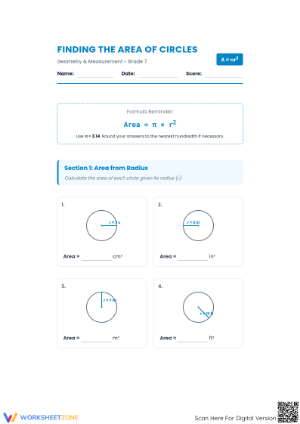
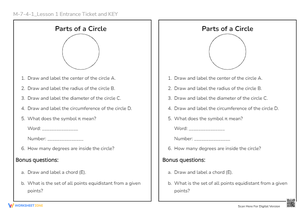
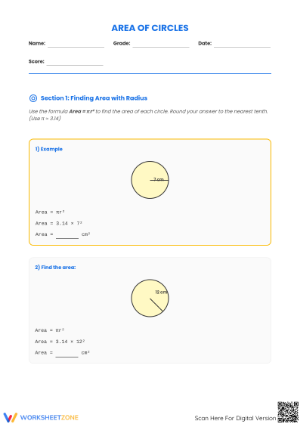
Area and circumference of a circle worksheets land squarely in the middle of the Grade 7 Geometry domain, and knowing exactly where they belong helps you plan a tight unit. Under CCSS 7.G.B.4, seventh graders are expected to know the formulas for area and circumference, use them to solve problems, and give an informal derivation of how the two relate. That single standard carries a lot of weight, so most teachers treat circles as a discrete mid-year block that sits alongside scale drawings and cross-sections in the wider 7.G cluster.
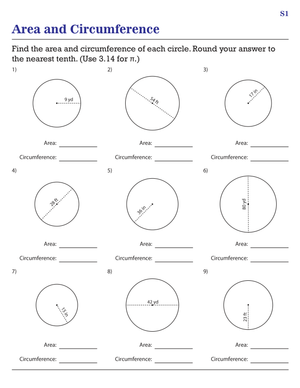
Because the standard bundles procedure and reasoning together, a worksheet set works best when it moves from concept to computation rather than starting with bare formulas. Use an early sheet to establish what pi represents, then progress to circumference, then area, and finally mixed problems that ask students to choose the right formula. Sequencing the printouts this way keeps the unit coherent and gives you clean checkpoints between each idea before you move on.
Mixing Radius-Given and Diameter-Given Problems
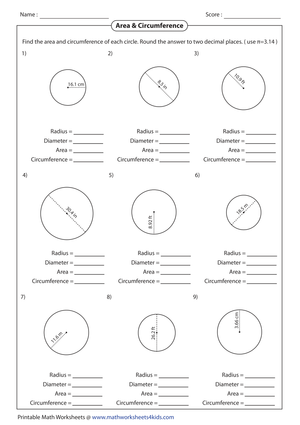
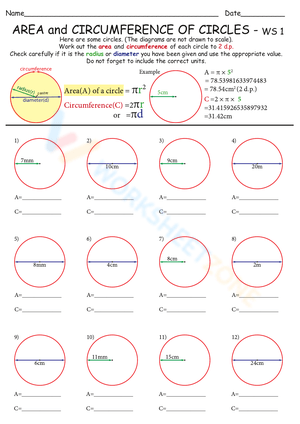
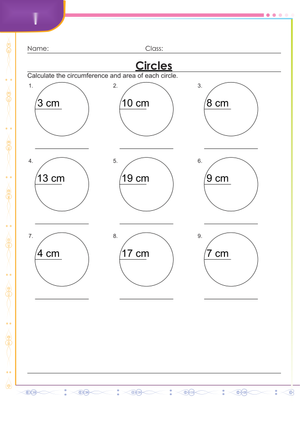
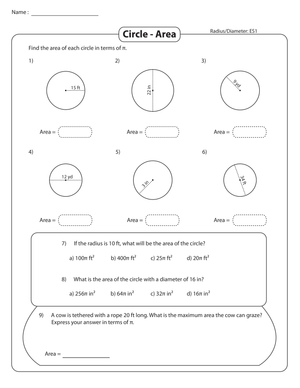
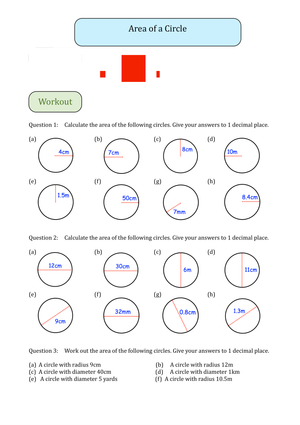
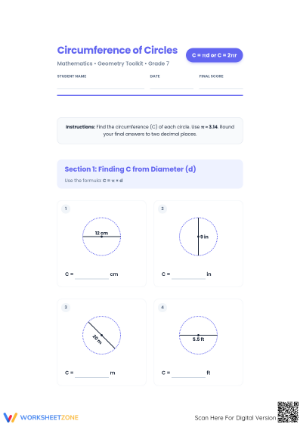
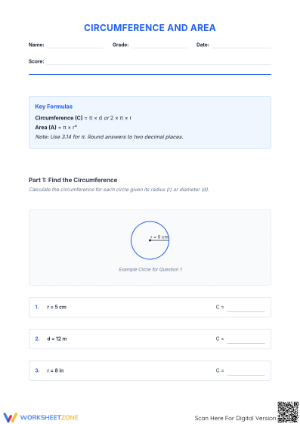
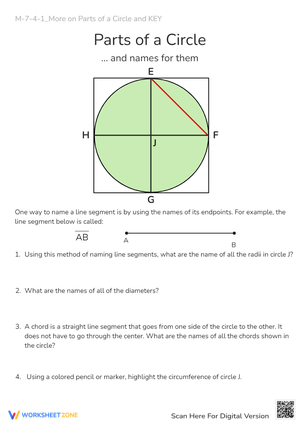
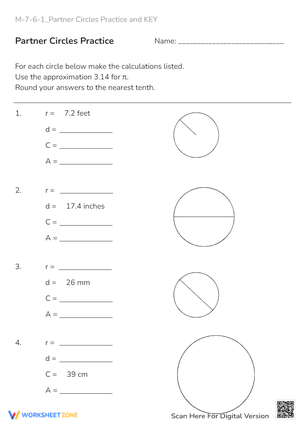
One of the most common stumbling blocks in this unit is not the formula itself but the input. A student who can compute circumference from a radius often freezes when the problem supplies a diameter instead. Good worksheets deliberately alternate between the two, so learners practice halving a diameter or doubling a radius before they ever plug numbers into a formula.
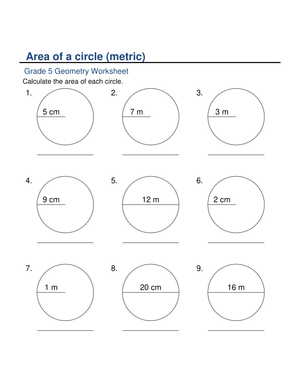
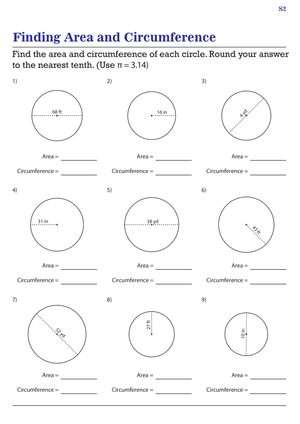
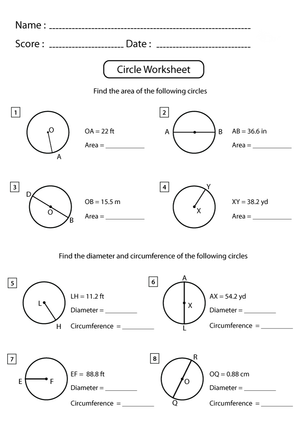
In practice, the single highest-leverage edit you can make to a circle worksheet is labeling roughly half the figures with a radius and half with a diameter, then scattering them out of order. When every problem gives the radius, students stop reading and drill a routine; when the given quantity changes without warning, they are forced to decide whether they need r or 2r first. That one design choice surfaces the radius-diameter confusion far earlier than a unit quiz ever would.
Answer keys should show the conversion step explicitly, not just the final value, so students who miss a problem can see whether the error was in the setup or the arithmetic.
Choosing Between 3.14 and 22/7 for Pi
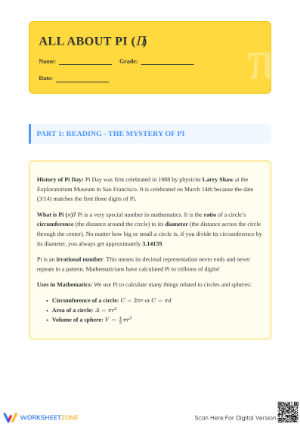
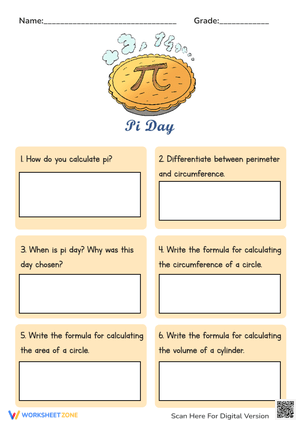
Circle problems commonly approximate pi as either 3.14 or 22/7, and worksheets that vary the approximation help students generalize the formula instead of memorizing one numeric routine. The decimal form pairs naturally with calculator-based practice and measurement contexts, while the fraction 22/7 keeps the arithmetic exact when radii are multiples of seven. Rotating between them signals that pi is a constant, not a calculator button.
The Common Core State Standards Initiative specifies in standard 7.G.B.4 that Grade 7 students must know the formulas for area and circumference of a circle, apply them to solve problems, and give an informal derivation of the relationship between a circle's circumference and its area.
Supporting the Informal Derivation Requirement
The part of 7.G.B.4 that teachers most often skip is the informal derivation, yet it is what separates a procedural unit from a conceptual one. A worksheet can scaffold this without heavy materials: have students imagine slicing a circle into thin wedges and rearranging them into a shape that approaches a rectangle. The rectangle's length is half the circumference, its height is the radius, and the resulting area, half of 2 times pi times r, times r, collapses to pi r squared. Seeing the formula fall out of a picture makes it far stickier than being handed a formula chart.
Pair a short derivation sheet with a reflection prompt asking students to explain, in their own words, why the area formula contains the radius twice. Their written responses double as evidence that they met the reasoning portion of the standard, not just the computation portion.
Classroom Implementation
To put these worksheets to work, stage them across a short arc rather than dropping a single packet. Open with a five-minute warm-up sheet that reviews radius, diameter, and pi vocabulary. Follow with a circumference-only set on day one and an area-only set on day two, keeping the operations separated long enough for each to stabilize. On day three, hand out a mixed sheet that interleaves both formulas and both given quantities, which is where genuine understanding shows.
Project one worked example under a document camera before releasing students to independent practice, and reserve the back page for two or three challenge items. For classes that move quickly, a stack of extension problems keeps early finishers productive without pulling you away from students who still need the conversion steps modeled step by step.
Formative Assessment and Small-Group Intervention
Short problem sets make efficient exit tickets. Three or four items covering circumference from a diameter, area from a radius, and one word problem give you a quick read on formula fluency before you commit to a quiz. Sort the exit tickets into two piles, and the students who mixed up the formulas or forgot to square the radius become your next small group.
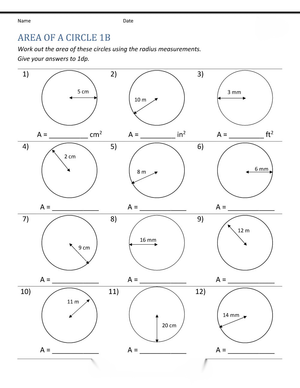
For that intervention group, worksheets that isolate one confusion at a time work best. If learners are substituting the diameter into the area formula, pull a sheet where every figure is labeled with a radius so the setup is removed as a variable and only the area procedure remains. Once that stabilizes, reintroduce diameter-given problems gradually so the harder decision comes back in small doses.
Extending to Real-World Word Problems
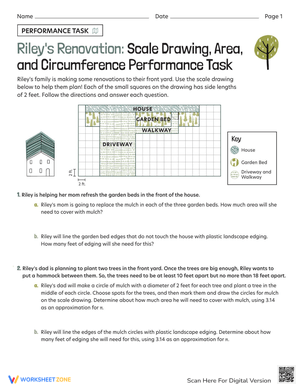
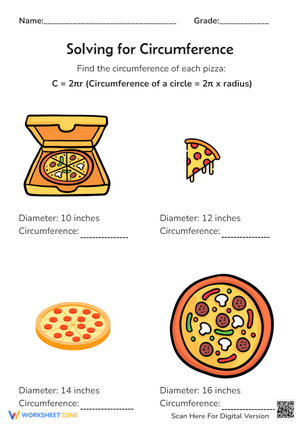
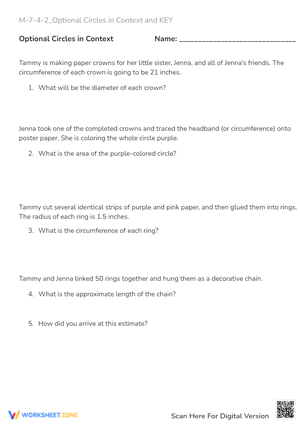
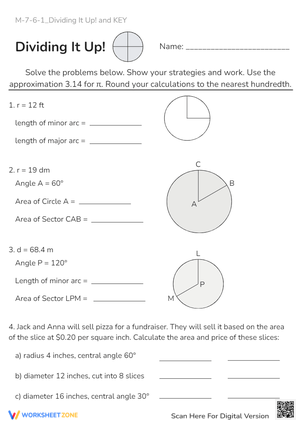
Once formulas are steady, word problems turn practice into application and reach your enrichment learners. Circular gardens, pizza and table tops, running tracks, and sprinkler coverage all map cleanly onto area and circumference and give students a reason to decide which formula the situation calls for. A problem that asks how much edging borders a circular flower bed is really a circumference question in disguise; one that asks how much mulch fills it is an area question.
These contexts also let you slip in a light unit-analysis habit, since circumference answers come in linear units and area answers in square units. Asking students to attach and justify units catches a whole category of errors that a bare-number worksheet never reveals. Reserve two or three of these applications as a challenge station for students who have already shown fluency, so enrichment does not stall the rest of the class.
Frequently Asked Questions
1. What grade level are area and circumference of a circle worksheets designed for?
They target Grade 7, where CCSS 7.G.B.4 introduces the formulas, though grade 6 enrichment and grade 8 review or intervention groups use them as well. The reasoning about pi and the derivation of the area formula fits squarely in a seventh grade geometry unit.
2. How should teachers sequence area versus circumference practice within a lesson?
Teach and practice circumference first, since it uses the radius or diameter directly, then move to area, which requires squaring the radius. Keep the two separated for a day or two before combining them on a mixed sheet so students learn to choose the correct formula.
3. Should worksheets use 3.14 or 22/7 for pi, and does it matter?
Use both across the unit. 3.14 fits calculator and measurement contexts, while 22/7 keeps arithmetic exact when radii are multiples of seven. Rotating between them helps students treat pi as a constant rather than memorizing one numeric routine.
4. How can these worksheets support students who mix up radius and diameter?
Choose sheets that alternate radius-given and diameter-given problems out of order and show the conversion step in the answer key. When the given quantity changes without warning, students must decide whether to halve or double before applying a formula, which exposes the confusion early.
5. How do these worksheets support the CCSS requirement to derive the relationship between circumference and area?
Look for a section that guides the circle-to-rectangle model, where wedges rearrange into a shape of length pi r and height r. Pairing that visual with a short written explanation gives you evidence students met the informal derivation part of 7.G.B.4, not just the computation.













 Interactive Worksheet Maker
 Quiz Maker
 Word Search Maker
 Crossword Puzzle Maker
 Word Scramble Generator
 Sentence Scramble Generator
 Handwriting Worksheet Generator
 Name Tracing Generator
 Fill In The Blank Generator