These line graph worksheets give students structured practice with one of the most conceptually demanding graph types in elementary and middle school math — not because the mechanics are complex, but because line graphs require students to hold two ideas simultaneously: what a single plotted point means, and what the shape of the connected line means as a whole.
What Each Page Asks Students to Do
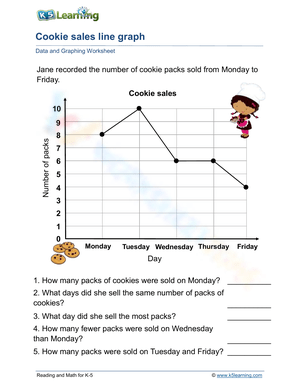
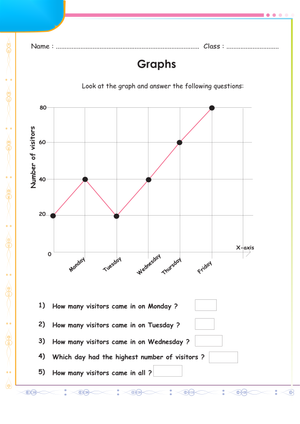
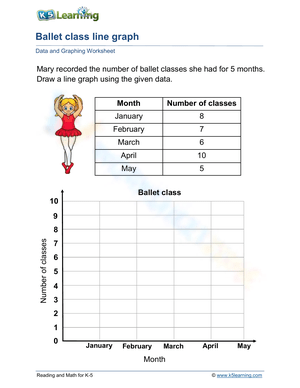
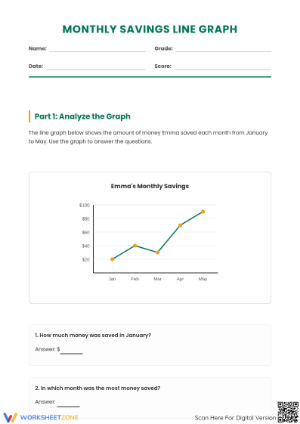
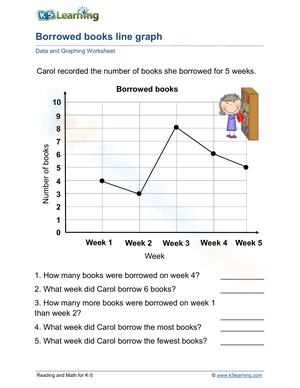
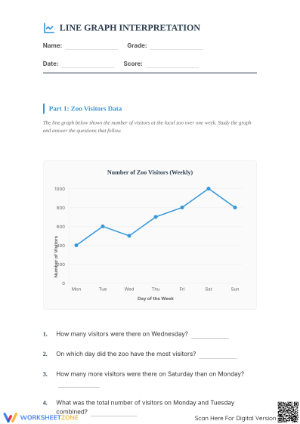
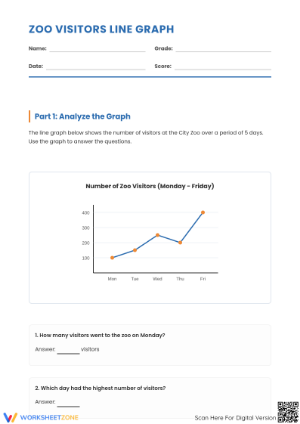
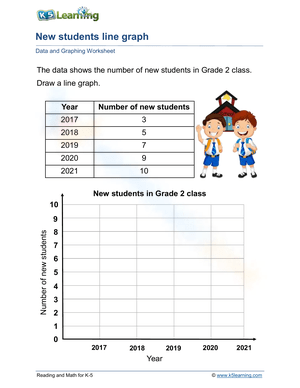
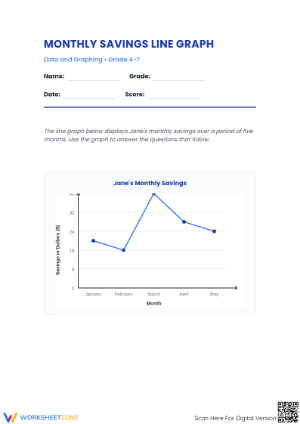
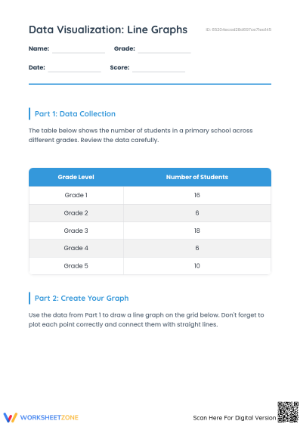
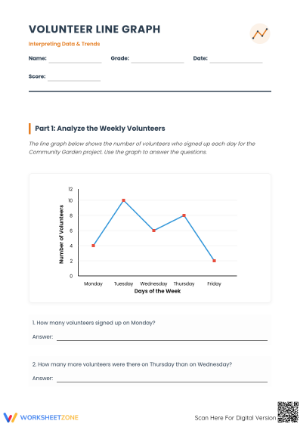
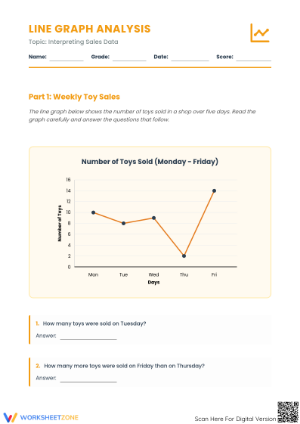
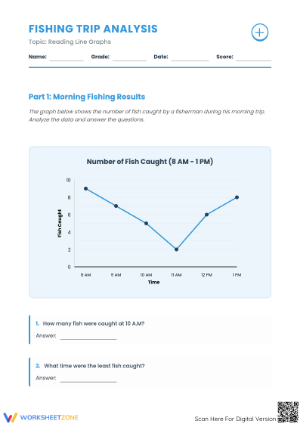
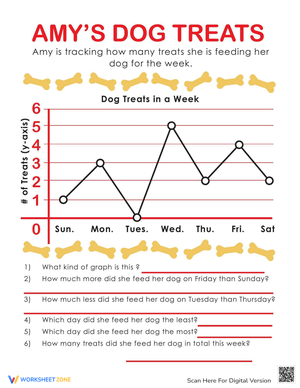
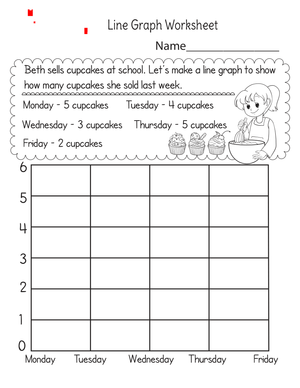
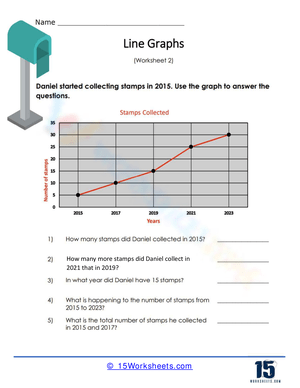
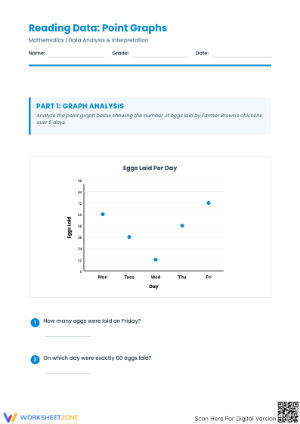
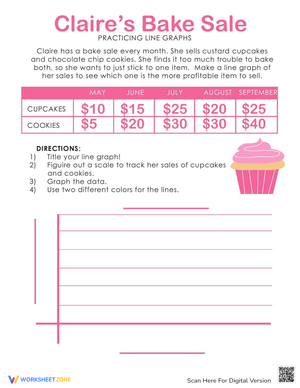
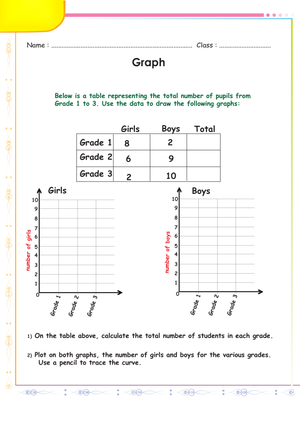
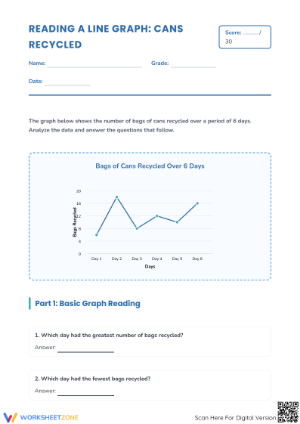
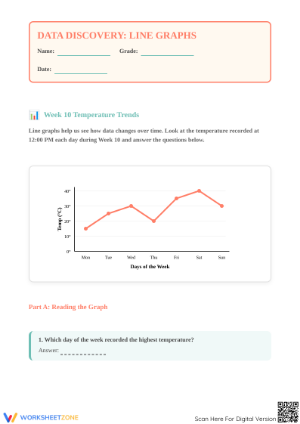
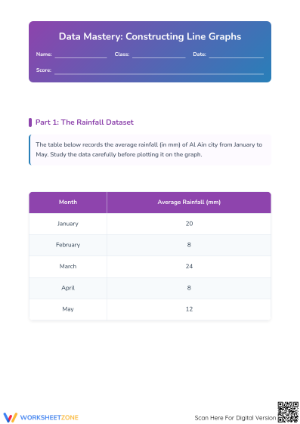
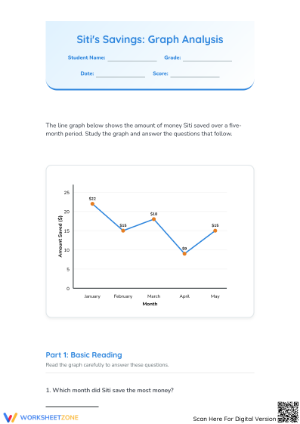
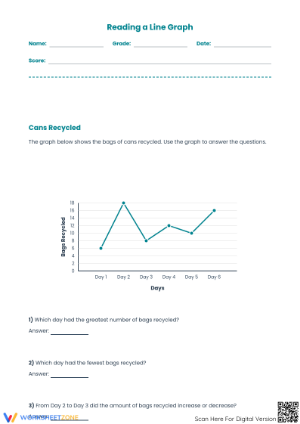
The set moves through four distinct task types, each targeting a different layer of graphing competence. Reading worksheets present a completed graph — a week of recorded temperatures, a month of library checkouts — and ask students to extract specific values, compare two points, or describe a trend in writing. Construction worksheets flip the task: students receive a data table and a blank grid, then must choose a scale, label both axes, write a title, plot each point, and connect them. The scale-selection step is where the real thinking happens. A student looking at values like 14, 27, 38, and 45 has to decide whether intervals of 5 or 10 make more sense given the number of grid lines available — a decision that involves proportional reasoning, not just arithmetic.
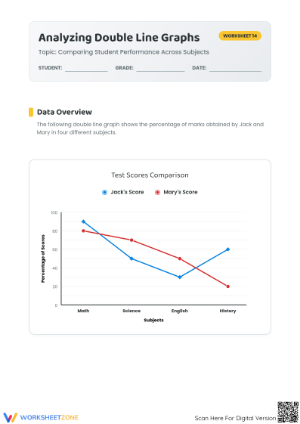
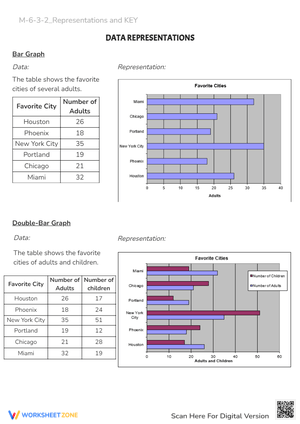
Double line graph pages appear in the upper portion of the set and add a second data set to the same grid. Students mark each series differently, complete a legend, and answer comparative questions: in which interval did the two lines converge, or when was the gap between them widest? A small number of pages ask students to identify and describe the overall shape of a graph in a sentence or two, which builds the interpretive language that shows up in state assessment constructed-response items.
Where This Skill Lives in the Standards
CCSS 3.MD.B.3 introduces scaled graphs in third grade, but line graphs proper arrive with 4.MD.B.4, which asks students to represent measurement data on a line plot and connect those representations to line graph conventions. By fifth grade, graphing sits inside the broader Number and Operations in Base Ten and Measurement clusters, where students are expected to construct and interpret graphs from multi-step data sets. In sixth grade, under Statistics and Probability (6.SP), students begin analyzing distributions and variability — skills that depend on students already being fluent with what a line graph's slope and shape communicate. The worksheets in this set are designed for grades 3 through 6, with the reading pages appropriate for late third grade and the double-line and interpretation pages reaching into sixth.
Patterns Worth Watching For in Student Work
The most persistent error in student-constructed graphs is an inconsistent vertical scale. A student will write 0, 5, 10, 15, and then — when the data jumps — write 25 on the next line, visually compressing the gap and distorting the graph's shape entirely. They do not always notice this themselves because they are focused on fitting the numbers rather than on what the spacing communicates. The construction worksheets address this explicitly by asking students to write their scale plan before they begin labeling.
A second reliable error involves misreading the x-axis on pre-made graphs. When the horizontal axis shows months or days, students who have mostly practiced with numeric axes will sometimes read the label below a tick mark rather than the space between tick marks, shifting every value one position to the right. Pointing this out before independent practice — and including one worksheet where the axis labels sit directly on the tick marks rather than between them — catches this confusion early.
Students constructing double line graphs frequently forget the legend entirely, then cannot explain which line represents which data set when answering the follow-up questions. Having students complete the legend before they plot anything, rather than after, closes this gap in most cases.
How These Fit Into the Instructional Week
The reading pages work well as Monday warm-ups during a graphing unit — five minutes of quiet work before the lesson proper, long enough for students to extract two or three values and write one sentence about the trend. Construction pages need more time and belong in a full practice block, typically after direct instruction on scale selection. Many teachers run scale selection as a whole-class activity first — projecting a data table and asking students to argue for different intervals before anyone picks up a pencil — then release students to the construction worksheet once the reasoning process is visible.
The double-line pages are well suited for partner work. Two students reading the same graph will often interpret the comparison questions differently, and that disagreement produces the kind of discussion that sharpens both students' thinking. Pulling a pair's worksheet for a brief share-out — "walk us through how you decided which month had the biggest difference" — gives the class a model for the interpretive language the pages require.
For early finishers, the construction pages double as extension tasks when the given data table is replaced with data students collect themselves: step counts from a fitness tracker, the class's spelling test scores over six weeks, or daily high temperatures pulled from a weather app. The blank grid is the same; the reasoning load increases because students own the data.
Adjusting the Pages for Different Learners
Students who struggle with the physical act of plotting — placing a point precisely at the intersection of two grid lines — benefit from receiving a partially completed graph where four of eight points are already plotted. The task shifts from execution to accuracy checking and completion, which keeps the cognitive focus on graph structure rather than fine motor precision.
For students working above grade level, the most productive challenge is removing the data table entirely and providing only the graph, then asking students to reconstruct a plausible data table that could have produced it. This reversal requires understanding of scale, interval, and what plotted points represent — and it surfaces assumptions students make about data that they would otherwise never articulate.
Students with IEPs that include graph paper accommodations can use the same pages with a larger-grid version; the scale intervals can remain identical, which preserves the mathematical demand while reducing the visual crowding that causes errors for students with certain processing difficulties.
Frequently Asked Questions
1. At what point should students move from reading graphs to constructing them?
Fluent reading is not a prerequisite for construction practice — most students benefit from doing both simultaneously. Reading a finished graph and building one from scratch reinforce different aspects of the same concept. A student who can answer questions from a pre-made graph but cannot yet select a working scale is ready for construction worksheets; the two tasks illuminate each other.
2. Do these work for science data recording, or are they strictly math practice?
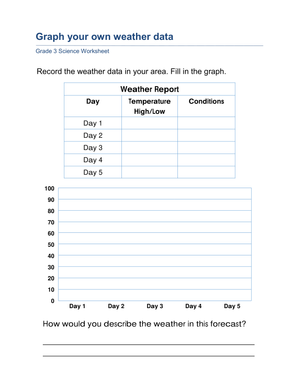
Several pages in the set use science-adjacent contexts — plant height measured over five weeks, air temperature recorded at three points during a school day — which makes them usable as science notebook supplements without any adaptation. The blank construction pages work directly as recording templates for classroom experiments where students generate their own data.
3. What's the best way to handle students who skip the title and axis labels every time?
Build a brief checklist into the page itself: before turning in, students mark off title, x-axis label, y-axis label, and consistent scale. Making it a physical checkbox rather than a verbal reminder moves the monitoring responsibility from the teacher to the student, and most students will catch their own omissions when the checklist is right in front of them.













 Interactive Worksheet Maker
 Quiz Maker
 Word Search Maker
 Crossword Puzzle Maker
 Word Scramble Generator
 Sentence Scramble Generator
 Handwriting Worksheet Generator
 Name Tracing Generator
 Fill In The Blank Generator