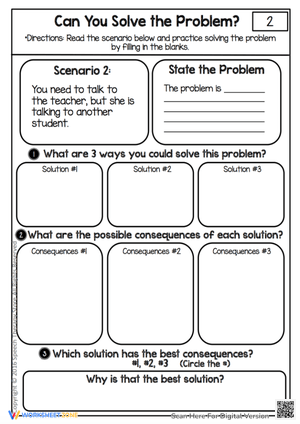
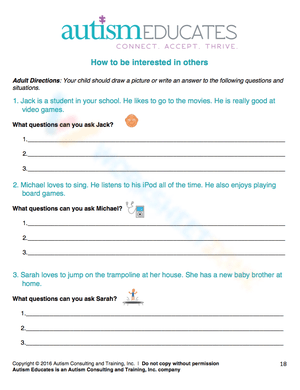
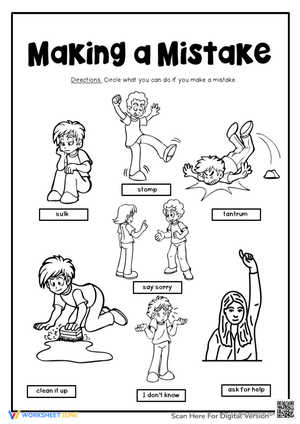
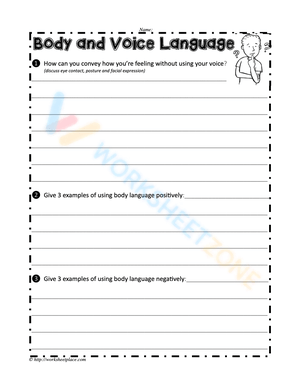
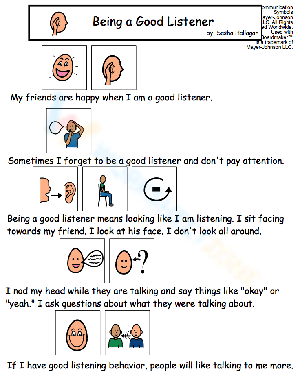
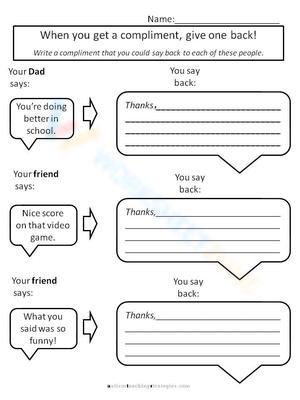
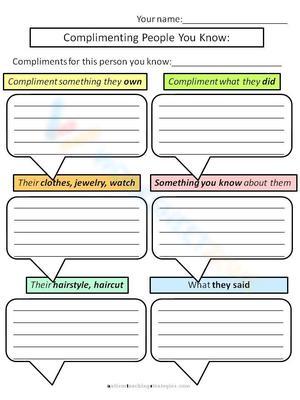
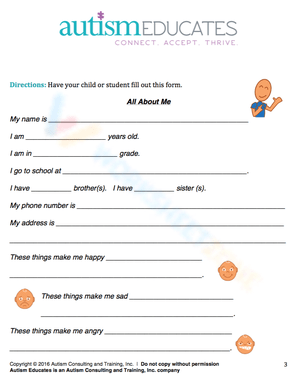
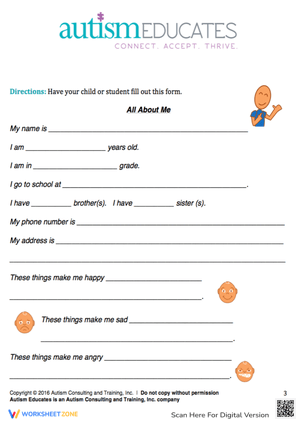
Social skills for autism pdf worksheets for 8th grade serve a specific instructional need that most general SEL materials skip: making unwritten social rules visible for students who need direct instruction to see what peers often absorb without being taught. This set gives teachers ready-to-use, printable practice built around situations that come up in the actual school day — group projects, digital communication, self-advocacy with unfamiliar adults, and managing the fallout when a social exchange goes sideways.
What Each Worksheet Targets
Eighth grade is a particular social landscape. Students move between five or six teachers, each with different norms for participation, eye contact, and when it's acceptable to ask a question. Group projects require negotiation and reading the room. Lunchrooms are loud and unstructured. Text messages arrive without tone. Autistic students navigate all of this while still being expected to pick up context that most of their peers absorbed through years of incidental exposure.
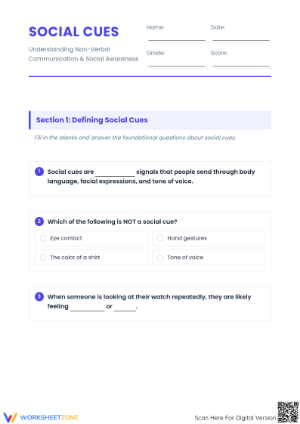
When teachers reach for social skills for autism pdf worksheets for 8th grade, the resources that hold up are ones anchored to those exact pressure points. Each worksheet in this set targets one of the following skills:
- Conversation entry and exit: starting a conversation without interrupting and wrapping one up without abruptly leaving
- Perspective-taking: generating more than one possible explanation for a classmate's behavior before reacting
- Tone and word choice: recognizing that "fine" or "whatever" reads differently depending on context and delivery
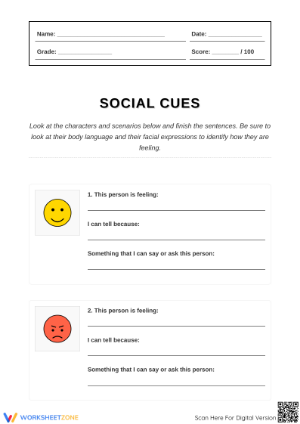
- Personal space and comfort signals: reading when someone steps back or looks away and treating that as information, not a verdict
- Self-advocacy: making a clear, specific request — "Can you say that again slower?" — rather than nodding and falling behind
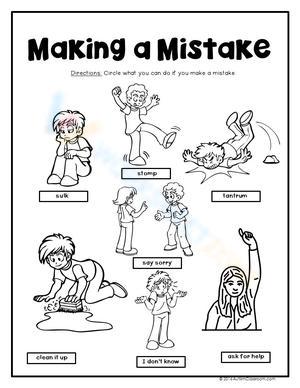
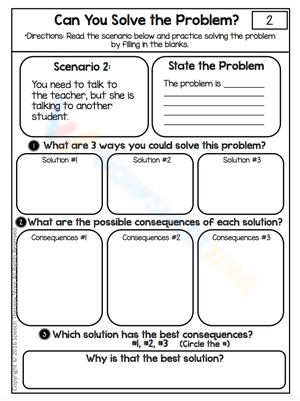
- Conflict and misunderstanding: working through a tense exchange in steps rather than going silent or escalating
- Digital communication: interpreting ambiguity in group chats, pausing before replying, and knowing what doesn't belong in a class thread
These are not abstract concepts. They are the specific moments that cause 8th graders to lose friendships, get in trouble, or feel blindsided by a social situation their peers saw coming.
Student Errors Worth Anticipating Before You Teach
Three predictable patterns appear in student work on social scenarios, and recognizing them in advance changes how you deliver instruction.
The most common is literal interpretation of a single cue. A student reads "Marcus looks at his phone while you're talking" and concludes Marcus is being rude — done. What's harder to hold is that Marcus might be anxious, waiting for a message, or checking the time. Reading one signal as definitive is a genuine cognitive challenge, not a reasoning failure. Teachers who name this explicitly — "one cue doesn't give us the full picture, what else could explain it?" — see far fewer stuck or extreme responses when that item type appears.
A second pattern is the gap between worksheet completion and in-the-moment behavior. A student writes that the best response to confusion is to ask the teacher for clarification, then spends the next period sitting silently lost. The written task and the live situation feel unrelated unless there's a deliberate bridge. A transfer prompt at the bottom of each worksheet — "When might this come up today? What's your plan?" — paired with a brief check-in at the end of the period makes the connection real rather than assumed.
Third: students who master compliance without developing awareness. They learn to say "okay" and nod, which looks like progress. But when you ask them how the other person felt during the exchange, they draw a blank. Reflection prompts that ask students to name the other person's likely experience — not just their own next move — build the perspective-taking muscle that surface compliance doesn't touch.
How to Work This Set Into Your Teaching Week
The most reliable instructional block runs 10 to 15 minutes: introduce one skill, model a scenario with a genuine think-aloud ("I see she crossed her arms — that could mean frustration, or she might just be cold. I need more information before I react"), work through the first item as a class, then let students finish independently or in pairs before a brief role-play. Feedback needs to be tied to the specific observable skill: "you named two possible reasons before choosing a response" lands differently than "great job with social skills."
In resource settings, these worksheets do the most work as pre-teaching tools. If a student has partner work during third period, seven minutes in resource during second period previewing the conversation entry worksheet gives them specific language to carry into the room. That's a more efficient use of support time than debriefing after something went wrong.
Counseling and social skills groups get strong results from scenario discussion. Presenting the same worksheet to three students and comparing responses turns their disagreements into instruction — when one student says she'd wait before replying and another says he'd ask for clarification immediately, the conversation about why produces more learning than either student would get working alone. In check-in/check-out structures, a completed worksheet reviewed at the end of the day with one question — "Did something like this come up today?" — connects paper practice to lived experience faster than most other reflection formats.
Adjusting the Set for Different Points of Readiness
For students who need more support processing a scenario, reading it aloud together and pausing after each sentence to name what's happening reduces working memory demand before anything gets written. Narrowing response options to two or three clearly distinct choices — rather than open-ended lines — keeps the focus on social reasoning rather than the mechanics of written expression. Some students also benefit from a visual support alongside the worksheet: a feelings chart or a simple sketch of the situation grounds the abstract in something concrete.
Social skills for autism pdf worksheets for 8th grade also hold up for students who are further along in their social awareness, if the task demand shifts. Asking a student to write two possible responses — one that improves the situation and one that makes it worse — and explain the difference moves the work from recognition into analysis. That's where more capable students need to spend their time, and the scenario format supports it without requiring a separate set of materials.
One adjustment that works across all levels is changing how the worksheet gets introduced. "We're figuring out what tends to work in situations like this" lands differently than "we're practicing correct social behavior." Students notice the framing. The first invites problem-solving; the second announces deficit correction. Students who feel the task is about strategy are more willing to take risks in their responses, which produces more useful information for the teacher anyway.
Frequently Asked Questions
Are these worksheets appropriate for autistic students who are academically on grade level?
Yes. Social communication skill gaps and academic ability are independent of each other. Many autistic 8th graders who read and write at or above grade level still need explicit instruction in social reasoning — gaps surface during group work, peer conflict, or any situation where the expected behavior isn't stated. The scenarios in this set are written at 8th grade reading level and assume cognitive ability. They make social reasoning visible without simplifying the content.
How often should students practice with these materials?
Spaced practice outperforms massed practice here. One skill per week, revisited across different settings — math class versus lunch versus an after-school club scenario — produces stronger generalization than covering six skills in a single session. Using a familiar worksheet format with a different scenario each time also reduces the overhead of figuring out the task itself, which frees up more thinking for the actual social content.
Can these worksheets support IEP progress monitoring?
Social skills for autism pdf worksheets for 8th grade generate written evidence of student reasoning — how a student interpreted a social scenario, what response they selected, and how they reflected on the outcome. That record is useful documentation for goals targeting social communication, perspective-taking, and self-advocacy. These resources are not a formal assessment instrument, but the responses they produce often show teachers exactly where a student's understanding breaks down and where instruction needs to go next.
How do these materials hold up across resource, inclusion, and counseling settings?
The use context changes more than the worksheet itself. In resource, these fit direct instruction and pre-teaching before a social situation the student is about to enter. In inclusion, they work as brief review tools — five minutes before group work to surface expected behaviors and language. Counseling groups use them most dynamically, as discussion anchors where comparing responses across students drives the conversation. The format travels across settings without needing to be modified for each one.












 Interactive Worksheet Maker
 Quiz Maker
 Word Search Maker
 Crossword Puzzle Maker
 Word Scramble Generator
 Sentence Scramble Generator
 Handwriting Worksheet Generator
 Name Tracing Generator
 Fill In The Blank Generator