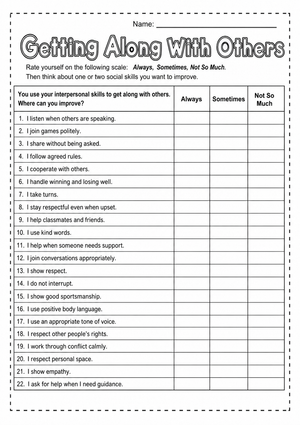
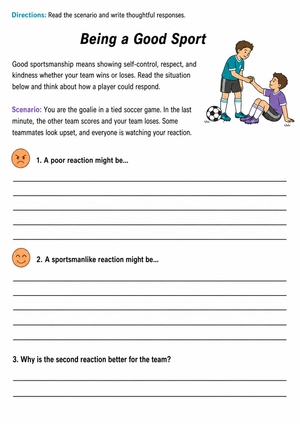
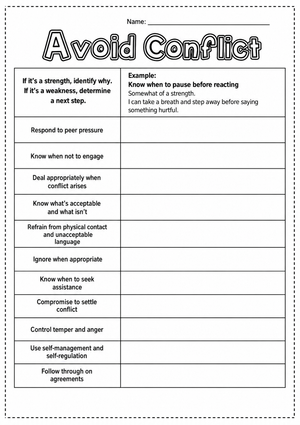
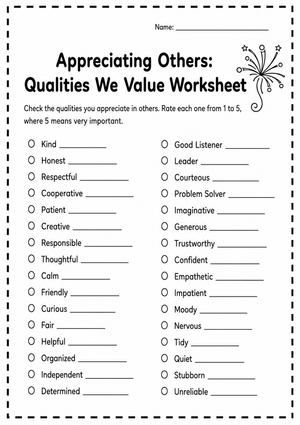
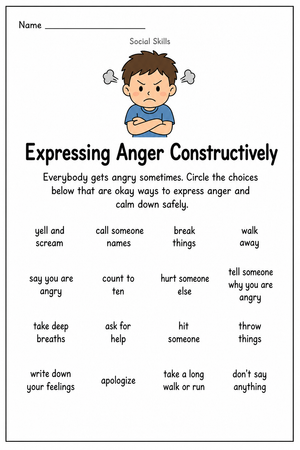
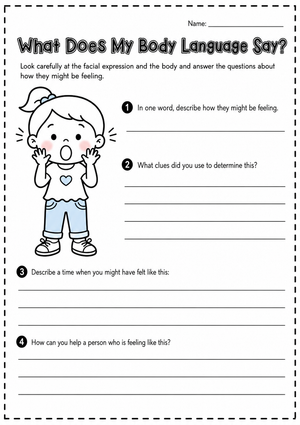
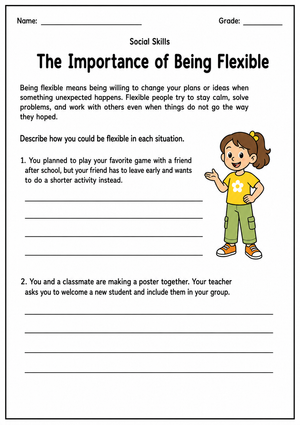
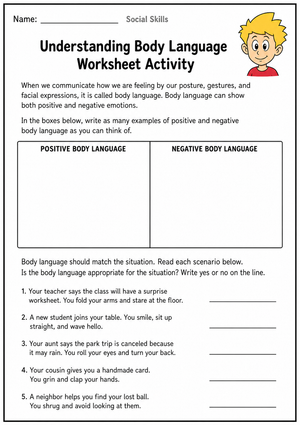
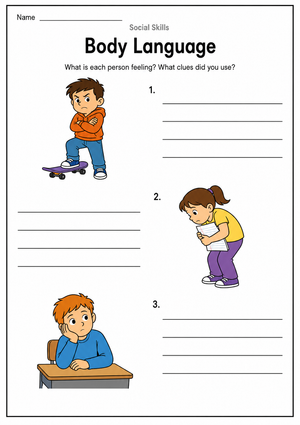
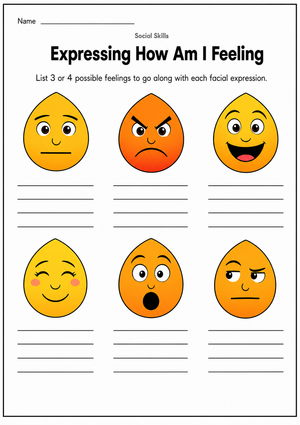
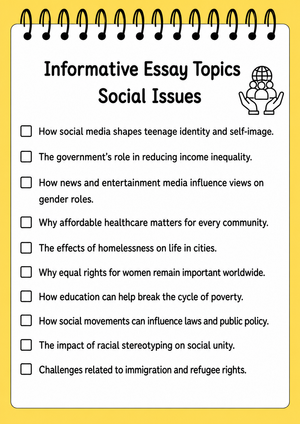
These social skills for middle school worksheets pdf for 8th grade give advisory teachers, school counselors, and special educators a direct path to practicing communication, conflict resolution, and peer decision-making — all framed around situations students recognize from their actual school day. Each worksheet centers a realistic scenario, guides structured reflection, and closes with a concrete action step students can apply immediately.
Skills These Worksheets Build
The set covers the social competency areas that show up most frequently in 8th grade classrooms and counseling referrals. Communication is the anchor — specifically the kind that breaks down during group projects, hallway confrontations, or misread text messages. Students practice identifying tone, choosing calmer language, and distinguishing between an impulsive reaction and a deliberate response.
Beyond communication, the worksheets target:
- Perspective-taking and empathy, with prompts that ask students to infer what a second person might be thinking rather than just restating what happened
- Conflict resolution as a step-by-step process: pause, name the problem, consider each side, choose language, decide on a next move
- Self-control under academic and social pressure, including frustration when group work feels unequal or directions are unclear
- Peer pressure and in-group decision-making — moments where going along with a crowd creates a problem
- Digital communication: misunderstandings that escalate because tone disappears in a message
- Teamwork breakdowns where one student dominates, one disengages, or two students simply talk past each other
Frequent Student Errors Worth Watching For and Addressing
The most persistent error pattern with 8th graders on social-skills work is conflating directness with respect. Students who write "I just told him the truth" after a group project blowup genuinely believe honesty exempts them from thinking about tone or timing. An effective worksheet surfaces that distinction by asking students to rate the same message delivered two different ways — same content, different framing — and explain what changed. That task cuts through the "I was just being real" defense faster than any lecture.
A second error shows up in conflict resolution scenarios: students treat them as debates. They argue for who was right rather than exploring what each person could do differently. A worksheet format that explicitly separates the two questions — what happened, and what each person's next move could be — stops students from collapsing analysis into blame.
When working on tone in written or digital exchanges, students tend to notice only the most extreme language and miss the earlier moment where escalation started. An 8th grader reading a scenario about a group chat argument will jump to the final insult and miss the passive-aggressive message three lines earlier that set everything off. Building in a step that asks students to mark where the conversation first went sideways trains a different and more useful kind of attention.
How to Work These Worksheets Into Your Lesson Plans
These worksheets work best in 10 to 15 minute windows — long enough for private writing followed by partner or small-group discussion, short enough to slot into advisory or homeroom without eating into other content. The sequence that tends to produce honest conversation is: read the scenario silently, annotate or answer independently for 4 or 5 minutes, then discuss in pairs before the class shares patterns. That order matters. When 8th graders write privately first, they commit to a position before peer pressure shapes their answer.
In special education settings, teachers can preteach three or four vocabulary terms — tone, perspective, de-escalate, consequence — before students work through the prompt. Offering two or three sentence starters for the reflection section reduces the writing barrier without watering down the thinking. In counseling groups, the worksheet serves as a launchpad: finish the written reflection in the first 8 minutes, then spend the remaining time in structured role-play grounded in the same scenario.
Other practical uses include:
- Post-conflict reflection — a student and teacher work through the worksheet together after an incident, framed as problem-analysis rather than consequence
- Substitute-day material, since the directions are self-contained and no setup is required
- Monday bell ringers as low-stakes re-entry before academic content
- Weekly check-ins embedded in behavior intervention support plans
Treating Scenarios Like Case Studies, Not Behavior Lectures
One instructional move that consistently raises the quality of 8th grade discussion is framing the scenario as a case to analyze rather than a lesson about right and wrong. When students are asked "what should Maya do?" they often perform the expected answer. When asked "what options does Maya have, and what's the likely result of each?" they actually think. The worksheets that hold up best in adolescent classrooms build that analytical distance into the question design itself, which keeps students from feeling lectured at while still doing the skill work.
This matters especially for students who have been through behavior intervention before and arrive primed to expect correction. Analyzing a fictional peer's choices rather than their own lowers defensiveness enough that genuine reflection can happen — and that is where the real learning sits.
Adjusting the Set for a Range of Learners
For students who need more support, the priority adjustments are reducing open-ended writing and increasing structure. Instead of a blank "what would you say?" prompt, offer three response options and ask students to choose one and explain it. Reading the scenario aloud before independent work removes a decoding barrier that can derail the social-skills thinking before it even begins.
For students who move through the core task quickly, each worksheet extends naturally. Ask them to write a follow-up message from the second character's perspective, draft a version of the conversation that starts differently, or identify the earliest decision point where the situation could have gone another direction. These are add-on prompts that deepen the same scenario — no separate worksheet needed.
For whole-class settings where ability levels vary, the private-writing-first structure handles much of the range automatically. A student who needs more time uses it quietly; a student who finishes early moves to the extension. Discussion then surfaces a spread of responses, which models for students that there is rarely one correct move in a social situation — an honest and developmentally appropriate message for 8th graders preparing for high school.
Frequently Asked Questions
Can these worksheets be used for whole-class instruction, or are they mainly for small groups?
Both settings work well. In whole-class advisory or homeroom, a single worksheet runs efficiently as a 12-minute cycle — individual writing, partner exchange, class debrief. In small counseling or intervention groups, teachers can slow down, role-play the scenario, and revisit the same worksheet across two sessions. The format stays the same; only the pacing and follow-up depth shift.
How do I use these worksheets after a conflict without it feeling like a punishment?
Frame it explicitly as problem-analysis. "I want to work through this with you because you think carefully about situations" lands differently than handing over a worksheet as a disciplinary consequence. When the debrief focuses on what each person's options were — rather than who was wrong — students engage more honestly. Social skills for middle school worksheets pdf for 8th grade work best as thinking tools, not compliance exercises.
Will 8th graders actually take these activities seriously?
The worksheets with realistic scenarios and clean formatting — yes, more often than teachers expect. The activities that fall flat are the ones that feel elementary: generic character traits, binary nice-or-mean choices, clip-art illustrations. When the scenario matches something that could have actually happened in the hallway or group chat last Tuesday, students engage because they recognize it. Pairing written reflection with discussion also helps, since it gives quieter students time to think before being asked to contribute aloud.
Are these worksheets appropriate for students on individualized behavior support plans?
These worksheets can be embedded directly into a behavior support plan as a weekly check-in activity or a structured reflection tool after an incident. The most effective use in that context is consistent repetition — using the same format across different topic areas so the student is not learning a new routine each week. Social skills for middle school worksheets pdf for 8th grade work especially well here when they connect to specific behavioral goals already named in the student's plan, such as responding to peer conflict without walking away or using a measured tone when frustrated with a group partner.
What's the best approach for getting reluctant students to engage?
Connect the scenario to something students actually care about — group project grades, a difficult friendship, a sports team dynamic. When the framing shifts from "today we're doing social skills" to "let's look at why this situation went sideways and what could have changed it," the activity feels like problem-solving rather than a lesson. The social skills for middle school worksheets pdf for 8th grade that land in resistant classrooms are often the ones a teacher can introduce without using the words "social skills" at all.












 Interactive Worksheet Maker
 Quiz Maker
 Word Search Maker
 Crossword Puzzle Maker
 Word Scramble Generator
 Sentence Scramble Generator
 Handwriting Worksheet Generator
 Name Tracing Generator
 Fill In The Blank Generator