These 7th grade social skills for middle school printable pdf worksheets give teachers a structured way to address the peer dynamics that quietly derail learning — the interrupted discussion, the group project standoff, the comment that landed wrong and spread across a class chat before third period. The set covers communication, active listening, empathy, self-management, conflict resolution, and responsible decision-making, with each worksheet built around realistic scenarios and guided reflection rather than rules to memorize. Teachers use them in advisory, counseling groups, behavior check-ins, and as independent activities that hold up just as well in a sub plan.
The Specific Skills Targeted
The worksheets focus on six high-impact behaviors that show up constantly during the school day — and stay grounded in the specific situations where those behaviors tend to collapse.
- Communication — choosing respectful words, reading tone accurately, and expressing a need without escalating the interaction
- Active listening — paraphrasing what a speaker said, asking follow-up questions, and holding the impulse to cut in
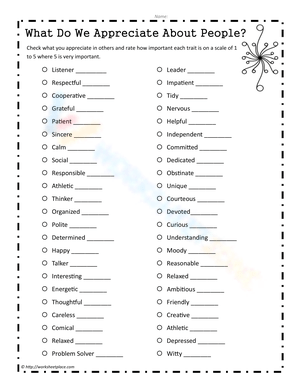
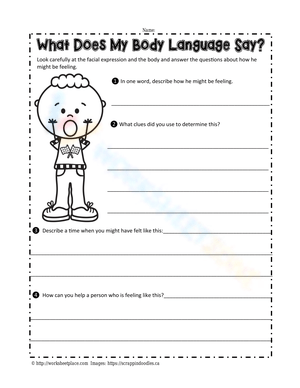
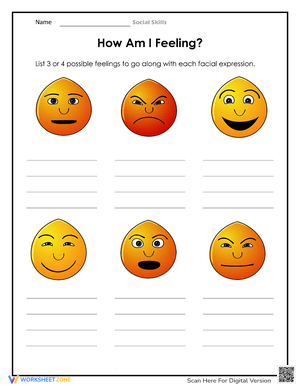
- Empathy — identifying what another person might be thinking or feeling before deciding how to respond
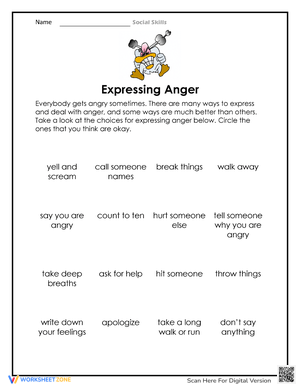
- Self-management — recognizing a trigger, pausing, and choosing a better response rather than the first one that surfaces
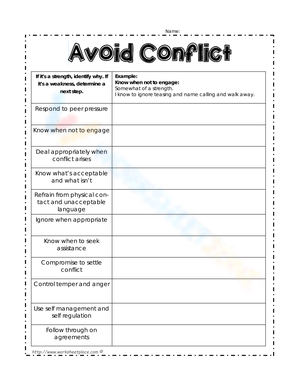
- Conflict resolution — using calm language, structured problem-solving steps, and repair phrases after a rupture
- Responsible decision-making — thinking through social and digital consequences before joining in, escalating, or posting
Every skill on that list shows up during partner reading in ELA, a science lab, a shared document comment thread, or a two-minute hallway exchange between periods. That range is why each worksheet stays anchored in school-day situations rather than hypotheticals lifted from a counseling manual.
Errors and Patterns Worth Anticipating
The most common problem in student work is not wrong answers — it is surface compliance. Students quickly figure out which response a worksheet seems to expect and write it without connecting to their own behavior. A student who writes "I would say, 'I understand how you feel'" in a scenario may still roll their eyes and walk away when that moment actually arrives. That gap between written response and in-the-moment behavior is the central challenge of social skills instruction at this age, and it is worth naming out loud with the class early in the year.
Watch for students who treat "just ignore it" as the answer to every conflict scenario. It works for some situations and fails badly in others, but for students who feel stuck or anxious, it becomes a universal escape hatch. Naming that pattern directly — and discussing why it does not transfer — tends to stick better than simply marking the response insufficient.
Empathy mapping activities reveal another consistent split: students accurately name the other person's feelings, then write a response that subtly reassigns blame anyway — "I understand she felt left out, but she could have asked to join instead of acting weird." The vocabulary is there; the perspective shift is not fully made. Catching that pattern on paper, before it shows up in a real conflict, is one of the clearest diagnostic uses of this kind of structured reflection.
What's Inside the Set
The 7th grade social skills for middle school printable pdf worksheets in this set include six formats, each suited to a different instructional moment and student need.
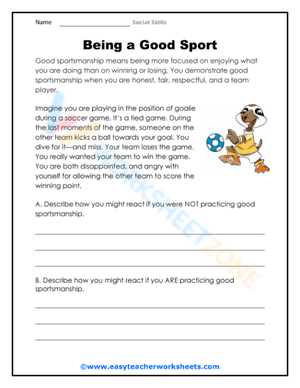
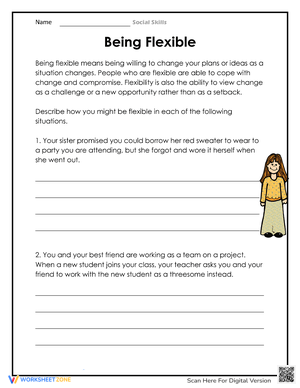
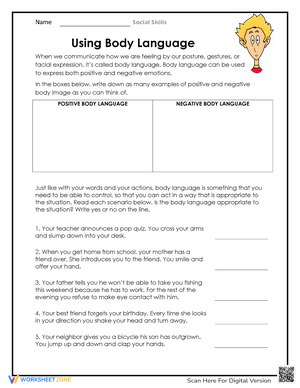
- Scenario analysis worksheets — students read a brief realistic situation and identify the problem, the feelings on both sides, unhelpful choices, and a better response. Situations include peer pressure, exclusion, sarcasm, rumors, and texting misunderstandings.
- Conversation starter worksheets — sentence frames and guided practice for joining a group, asking for clarification, disagreeing without attacking, and repairing a comment that landed badly.
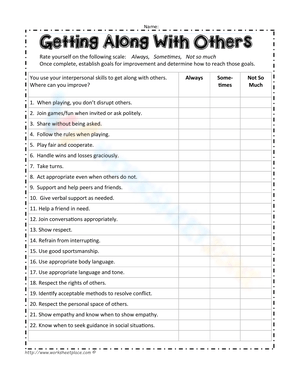
- Self-reflection worksheets — structured prompts that help students notice their own patterns, such as when they tend to interrupt, what usually triggers frustration, or how they recognize when a friend feels left out.
- Conflict script worksheets — sentence-frame sequences (I felt..., I need..., Next time we can...) that lower the pressure of face-to-face problem solving by making repair language concrete before the conversation happens.
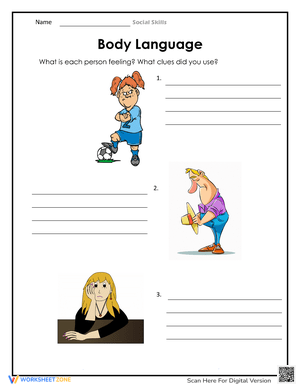
- Empathy mapping worksheets — students document what another person in a conflict scenario might be thinking, feeling, saying, and doing. This format shifts students out of one-sided accounts more reliably than open-ended discussion alone.
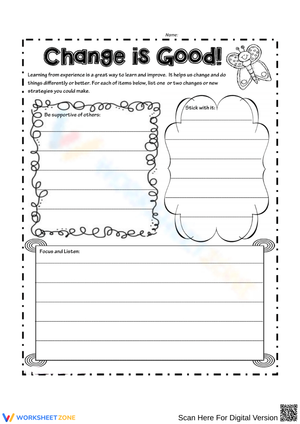
- Goal-setting and tracking worksheets — weekly trackers for students focusing on one target behavior, useful when a student is working on reducing blurting or contributing more equitably during group work.
Fitting These Worksheets Into the Week Without Losing Instructional Time
Ten to twenty minutes is enough. Advisory is the obvious home — one scenario worksheet per week, followed by a partner discussion and a short debrief, runs about twelve minutes and builds a routine students start to anticipate. The consistency matters: when students know they will always identify the situation, name two feelings, choose a helpful response, and write one actual sentence they could say, cognitive load drops and they spend more energy on the social thinking rather than on figuring out what to do on each worksheet.
Before a long-term group project launches, pull the respectful disagreement and fair-contribution worksheets. That pre-emptive move surfaces friction before it starts, and students enter the project with shared language for naming unequal workloads or calling out dismissive comments. After a hallway incident that bled into first period, use a conflict-repair or empathy mapping worksheet the same day rather than waiting for a formal counseling slot. The closer in time the reflection is to the event, the more honest students tend to be.
Sub plans are another reliable use case. Independent reflection worksheets produce written student thinking the classroom teacher can read and follow up on — a much better return than a movie or fill-in-the-blank busy work. Keep three or four printed and ready. These 7th grade social skills for middle school printable pdf worksheets are built so students can work through them independently without adult narration of each step.
Differentiating the Worksheets Across Student Readiness Levels
For students who struggle with written expression, the scenario analysis and conflict script formats work well orally. Read the scenario together, talk through the questions in conversation, and have the student write only the final sentence they would actually say. This keeps the cognitive focus on the social thinking rather than on the writing task itself — two distinct demands that, when combined, can cause shutdown before reflection even begins.
Students who are further along socially often find the basic scenarios too obvious and disengage quickly. Extend their thinking by asking them to write the other person's internal response to each possible choice — or to identify a situation where the "better" response could still backfire. That layer makes the analysis genuinely harder without changing the worksheet at all.
For students managing anxiety or a prior conflict history, scenarios that feel too close to their actual experience can shut down reflection rather than open it. Having a parallel group of scenarios set at a fictional school or with unfamiliar character names creates enough distance for honest thinking. The teacher decides how close to real the framing needs to be — and that decision changes student by student.
Frequently Asked Questions
Are these worksheets appropriate for both advisory and counseling group settings?
Yes. In advisory, they work as whole-class or partner activities followed by brief discussion. In counseling groups, they pair well with role-play so students rehearse the language they analyzed on paper. Self-reflection and goal-tracking worksheets are especially useful in one-on-one counseling check-ins because they give the conversation a concrete anchor and produce a written record of the student's thinking across sessions.
How do I keep 7th graders from feeling like the activity is too young for them?
Scenario content matters most. If students recognize the situations — group chat drama, blame-shifting on a shared assignment, a rumor that reached the wrong person — they engage even with a familiar format. Avoid any worksheet that frames the skill as a simple rule to follow. Seventh graders stay more honest when prompts invite judgment rather than obvious right-or-wrong answers. Gray areas hold their attention; neat moral lessons do not.
Can completed worksheets serve as documentation for a behavior support plan?
Goal-setting and tracking worksheets, along with completed self-reflection sheets, work well as supporting documentation in check-in/check-out routines or tier 2 behavior plans. They show the target skill, the student's self-assessment, and any pattern of change over time. Keep completed worksheets in the student's file rather than returning them if documentation is the goal — the written record is part of the value.
How many different worksheets should a teacher use per month?
Most advisory teachers use one scenario or reflection worksheet per week and rotate through different formats by month — scenario analysis early in the year to build shared vocabulary, then self-reflection and empathy mapping mid-year when students know each other well enough for honest answers. Four to six different worksheets per month gives steady, varied practice without repetition fatigue. The 7th grade social skills for middle school printable pdf worksheets in this set are sequenced to support exactly that kind of rotation across a full school year.












 Interactive Worksheet Maker
 Quiz Maker
 Word Search Maker
 Crossword Puzzle Maker
 Word Scramble Generator
 Sentence Scramble Generator
 Handwriting Worksheet Generator
 Name Tracing Generator
 Fill In The Blank Generator