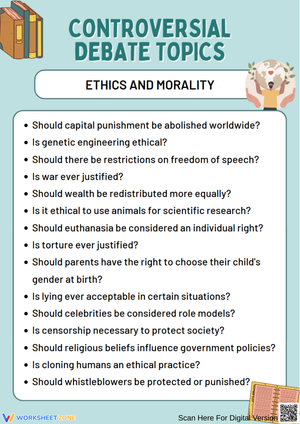
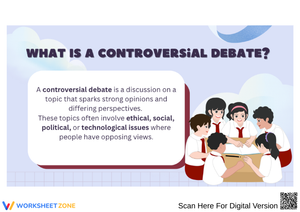
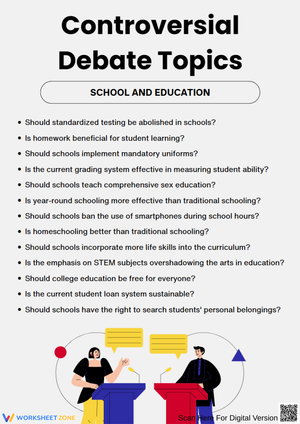
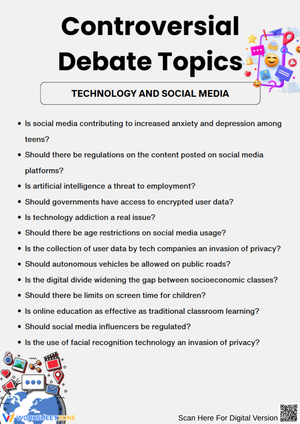
7th grade teaching communication skills pdf worksheets give teachers a ready library of structured practice tools covering the listening, speaking, and interaction habits that matter most before students leave middle school. The set addresses active listening, respectful disagreement, follow-up questioning, tone awareness, and conflict in group work — the moments where 7th grade conversation most often breaks down. Teachers can pull any worksheet into advisory, ELA, or a content class without building a full unit around it.
What Each Worksheet Targets
Each worksheet zeroes in on one communication subskill, keeping practice manageable and the teacher's facilitation job clear. The skills reflect actual grade 7 demands — not communication in the abstract, but the specific situations where 12- and 13-year-olds most often get stuck.
- Active listening: Students identify the main point of a partner's comment, write one genuine follow-up question, and self-rate their attention after a short exchange.
- Respectful disagreement: Students practice phrases like I see this differently because... and work on separating disagreement with an idea from dismissing the person who said it.
- Clarifying questions: Mini-scenarios ask students to choose between an assumption-based response and a clarifying one, then draft their own version.
- Reading tone and social cues: Students compare how the same message — delivered with flat affect, sarcasm, or genuine curiosity — lands differently depending on context and delivery.
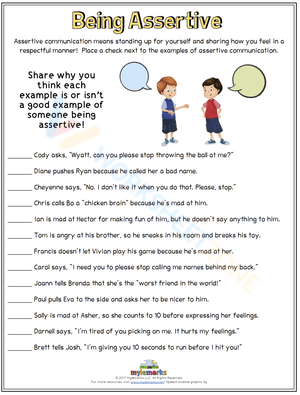
- Managing conflict in group work: Students read a project-scenario dispute, mark the escalating language, and rewrite the exchange using calmer, more specific phrasing.
- Speaking with purpose: Sentence frames help students organize spoken responses during discussion, not only during written tasks.
Several worksheets close with a brief self-assessment — typically a three- or four-item checklist students complete after a discussion or role-play. Reusing that same checklist across different lessons is more effective than introducing a new reflection format each week. Students who rate themselves on the same three habits across several weeks start tracking their own progress rather than treating each lesson as a one-day behavior reminder.
Communication Breakdowns to Watch for in Grade 7
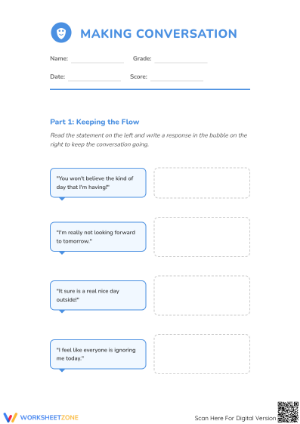
The most persistent pattern in 7th grade communication is the gap between written courtesy and spoken bluntness. A student who writes "I respectfully disagree" in a journal prompt will say "that's wrong" — or go entirely silent — when the same disagreement surfaces in group discussion. The sentence frames on each worksheet exist to close that gap. Students need the language available in a low-stakes practice moment before they can reach for it under social pressure.
A second pattern: students conflate talking with communicating. During group tasks, several will speak simultaneously, nod without processing what a peer said, and then respond to their own assumption rather than the actual comment. Worksheets that require students to restate what they heard — before adding their own idea — surface this habit quickly and give teachers a concrete moment to intervene. Watch specifically for students who paraphrase a peer's comment in ways that quietly shift its meaning; that is a different issue than simple inattention, and it needs its own follow-up conversation rather than a general reminder about listening.
Where These Worksheets Fit in Your Instructional Routine
The strongest use of 7th grade teaching communication skills pdf worksheets is as the middle section of a teach-model-practice-reflect sequence, not as a standalone independent task. Name the skill in plain student language before distributing anything — "today we're working on how to ask a question that actually moves a conversation forward" — then model one strong example and one weak one. Hand out the worksheet after the modeling, so students arrive at the page with a clear target already in view.
In terms of placement in the school day, these fit naturally as advisory warm-ups, as ELA discussion preparation, and as reteaching tools when a class period has broken down. If a group project devolves into students talking past each other or one person dominating, a focused worksheet on active listening or speaking with purpose resets the dynamic in 10 to 12 minutes without derailing the larger work. Keeping a small set of reliable worksheets in a folder means no setup time when those moments arrive unannounced.
One routine worth building: use the same reflection checklist at the close of every communication lesson for four to six weeks. When students track the same three habits across different practice contexts — whole-class discussion one week, peer review the next, group project the following — they start treating communication as something they can deliberately improve, not a fixed trait they either have or don't.
Standard Alignment
These worksheets address CCSS.ELA-LITERACY.SL.7.1, which expects seventh graders to engage effectively in collaborative discussions across a range of settings while following agreed-upon norms. The sub-standards are worth naming in classroom terms: SL.7.1b covers collegial discussion rules and tracking progress toward goals; SL.7.1c addresses posing questions that elicit elaboration rather than yes-or-no answers; SL.7.1d covers acknowledging new information and revising positions when evidence warrants it. That maps directly onto what each worksheet prompts — listen before responding, ask questions that open rather than close a conversation, and separate the content of a disagreement from its emotional charge. Most ELA teachers first encounter SL.7.1 through literature circles or Socratic seminars, but teachers who reach for 7th grade teaching communication skills pdf worksheets in science, history, or advisory will find these standards apply equally to any task requiring sustained peer-to-peer exchange.
Using These Worksheets Across Readiness Levels
For students who need more language support, the sentence frames on each worksheet carry most of the weight. Directing these students to treat the frames as required starting points — not optional suggestions — keeps them producing language during discussion rather than going silent. Pairing them with a more confident communicator for the initial practice round, then moving to same-readiness pairs for the application task, gives them a working model before independent use.
Students who communicate confidently in low-stakes settings often hit their hardest moments during authentic pressure: the group-project argument, the class discussion where an unpopular idea gets quickly dismissed. For these students, remove the sentence frames and ask them to generate three of their own before the discussion begins. Or assign them the observer role — they track instances of strong listening or respectful disagreement during a group conversation and report out at the end. That moves them past surface fluency and into noticing how communication actually works in real, unscripted exchanges.
For mixed-readiness whole-class work, structured turn-taking built into the worksheet format reduces the dominance problem common in 7th grade group talk. When each worksheet assigns distinct roles — one speaker, one listener, one questioner — the teacher does not have to manage participation equity in real time.
Frequently Asked Questions
Do these worksheets work in advisory, or are they meant for ELA?
They work in both. The scenarios pull from everyday school situations — group projects, peer conflict, class discussion, and digital messaging — so they fit naturally into advisory or homeroom without requiring any ELA curriculum connection. ELA teachers can tie each worksheet directly to Speaking and Listening standards; advisory teachers can use the set as social-skill instruction with no standards framing needed.
How long does each worksheet take to complete?
Most run 10 to 15 minutes when paired with brief modeling and a follow-up discussion. Advisory blocks and class warm-ups are the most natural fit. Skipping the discussion component and having students work independently will shorten the time — but the skill practice is meaningfully less effective without an applied speaking piece at the close.
Can I use these for students who read significantly below grade level?
The reading level is pitched at grade 7 but kept direct — scenario sentences are short and directions avoid compound instructions. For students reading well below grade level, reading the scenario aloud before independent work removes the decoding barrier without changing the communication task itself. Teachers who find this set while searching for 7th grade teaching communication skills pdf worksheets sometimes use this read-aloud approach for inclusion classrooms where reading levels span several grades.
Are there answer keys for the scenario-based tasks?
The scenario and revision tasks are open-ended by nature, so traditional answer keys do not apply. Each worksheet includes brief teacher notes on what strong responses typically contain, which makes discussion facilitation and quick formative checks straightforward without requiring a full scoring rubric for every exchange.












 Interactive Worksheet Maker
 Quiz Maker
 Word Search Maker
 Crossword Puzzle Maker
 Word Scramble Generator
 Sentence Scramble Generator
 Handwriting Worksheet Generator
 Name Tracing Generator
 Fill In The Blank Generator