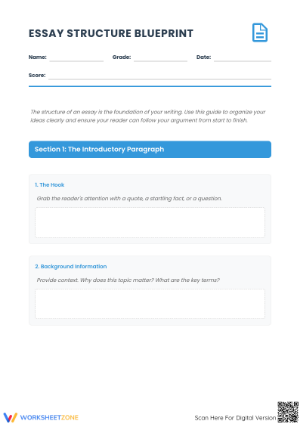
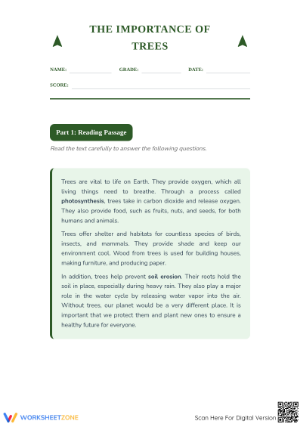
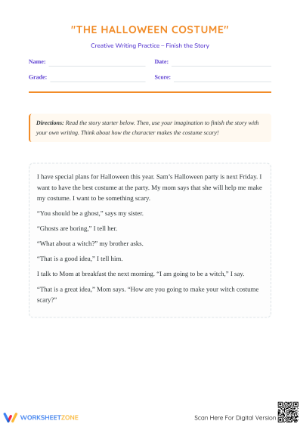
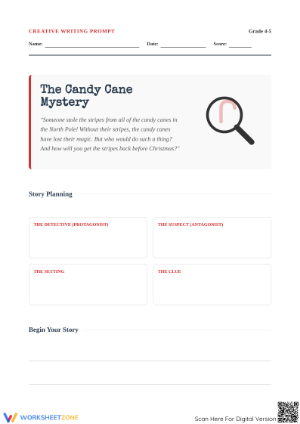
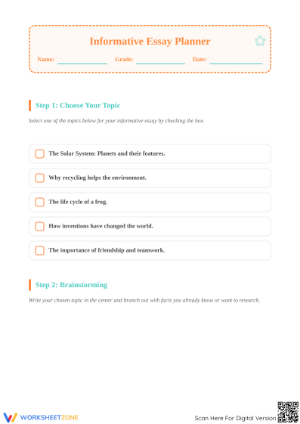
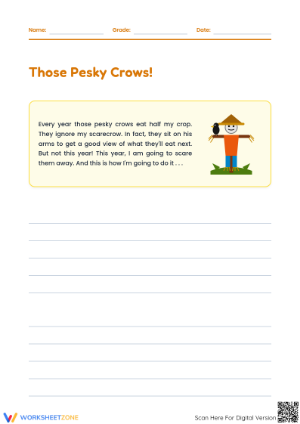
Essay worksheets for 5th grade give teachers a concrete way to break full-draft writing into the moves students actually need to practice — building a thesis, grouping evidence by reason, and revising for meaning rather than just mechanics. This set covers opinion, informative, and narrative writing and includes materials for every stage of the process from initial planning through final editing.
What the Set Covers
Fifth grade is the point where students shift from paragraph-length responses to multi-paragraph essays, and each of the three major types asks something genuinely different of a writer. Students who have drilled opinion writing all semester often struggle when the prompt changes to informative or narrative — not because the new task is harder, but because the internal logic is differently shaped.
- Opinion essays: Students take a clear position, arrange reasons in a logical order, and support each one with facts, text evidence, or concrete examples rather than restating the same point in new words.
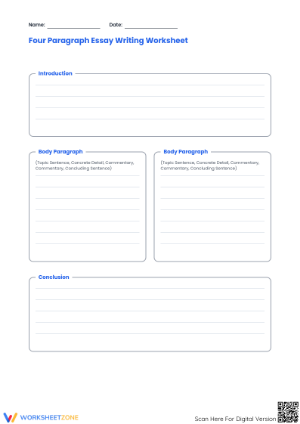
- Informative essays: Writers define a topic, group related facts into separate body paragraphs, and explain ideas clearly enough for a reader who knows nothing about the subject.
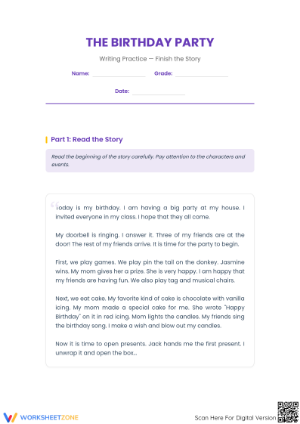
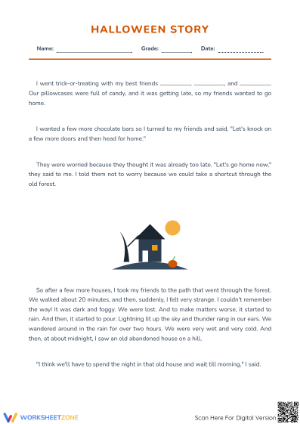
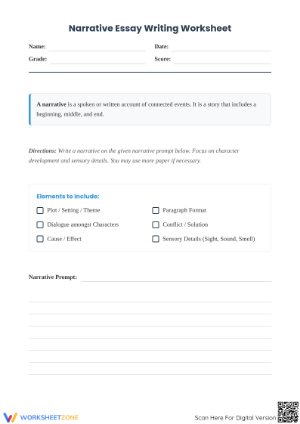
- Narrative essays: Even in personal writing, structure matters. The narrative worksheets include scene planners, event timelines, and reflection prompts that push students toward a story arc with a resolved ending rather than a bare sequence of what happened.
Each type comes with matching planning organizers, evidence-collection worksheets, and revision tools so the process can run from start to finish within one format.
The Error Patterns Teachers See Most Often in Fifth-Grade Essays
The most persistent problem in fifth-grade essay writing is not grammar — it's underdeveloped evidence. Students understand they need to support their opinions, but in practice they drop a fact or example onto the page without explaining the connection. A student arguing that the school lunch menu should change might write: "Studies show that students who eat healthy food do better in school." That sentence sits alone in a paragraph — no link to the claim, no explanation of what the finding actually means for the argument. The evidence is technically present but does no argumentative work.
Two other patterns show up reliably. In informative writing, students often confuse "related fact" with "supporting detail," gathering several pieces of information from the same source without checking whether each one actually belongs to the paragraph's main idea. In conclusions across all three essay types, many students rewrite the introduction nearly word-for-word instead of synthesizing or reflecting. Both errors become easier to catch once the planning and drafting worksheets are in hand, because the problem usually appears in the organizer before it surfaces in the draft.
Using Planning Pages Before Any Draft
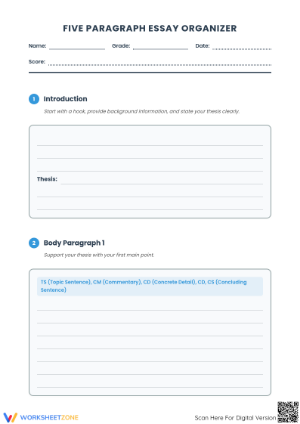
For most fifth graders, the quality of the final essay is largely settled before they write a sentence of prose. Students who skip planning tend to drift — the paragraph follows whatever thought occurred to them mid-sentence rather than a committed structure. A planning worksheet gives students a place to settle on a thesis, sort reasons into separate sections, and assign evidence to each section before drafting begins. The cognitive load of producing organized, supported writing drops considerably when those decisions are already made on a dedicated organizer.
During small-group work, planning worksheets function as quick diagnostics. A teacher can scan four students' organizers in under two minutes and spot the same pattern across all of them: reasons that overlap, evidence assigned to the wrong paragraph, or a thesis that quietly shifted from the organizer to the first draft sentence. That kind of targeted conferencing is harder to run when the only artifact is a blank notebook page, which is precisely where essay worksheets for 5th grade that include strong planning organizers earn their classroom time.
Revision as Content Work, Not Cleanup
The biggest missed opportunity at this grade level is treating revision like a second editing pass. When the only revision task students ever get is fixing capitals, punctuation, or spelling, they skip the part of writing that most changes essay quality. A strong revision checklist asks whether the introduction makes a clear claim the rest of the essay follows through on, whether each body paragraph stays on one idea, and whether evidence is explained or just cited. Those questions address the message of the piece before the surface.
The IES guide Teaching Elementary School Students to Be Effective Writers, based on a review of 26 studies, recommends explicit instruction in evaluating and revising as core components of writing process work — not optional additions. The revision worksheets in this set reflect that priority: checklists push students to strengthen ideas and organization first, then move to editing for surface errors in a separate pass. Keeping those two jobs on separate worksheets helps students understand that fixing a run-on is a different task from reconsidering whether their main claim is clear enough to follow.
Fitting These Worksheets Into Your Teaching Week
Most teachers do not have dedicated writing periods every day, which means these materials need to fit into partial blocks, writing workshop rotations, and occasional longer periods when a unit is underway. A planning worksheet pairs naturally with the lesson right after a prompt is introduced — students complete it independently or in pairs while the teacher circulates. Revision checklists anchor a revision day mid-unit or serve as a peer-review guide during writing workshop. Single-skill worksheets on topic sentences, evidence explanation, or transitions work well alongside a brief mini-lesson at the start of a writing block.
- Bell ringers: Assign one narrow revision task — "underline your evidence in body paragraph two, then write a sentence explaining what it shows" — to open a writing day without losing the period to setup.
- Small-group reteach: Pull students who share the same gap, such as weak introductions or missing topic sentences, and work through a focused worksheet together while the rest of the class drafts independently.
- Centers: Rotate through prompt analysis, planning organizers, and peer revision checklists, keeping each task tied to the current essay type.
- Sub plans: A planning or revision worksheet gives a substitute a clear, self-contained writing task with no instructional ambiguity.
Used consistently, essay worksheets for 5th grade become part of a repeatable routine — prompt, plan, draft, revise, edit — rather than isolated assignments that appear whenever writing comes up on the schedule. Students who run that sequence across multiple units internalize the stages faster than students who write only on demand.
Adjusting the Set for Different Levels of Readiness
Students with low writing stamina or blank-page anxiety do best when the task is narrow and the structure is explicit. An organizer that asks for a thesis, three reasons, and one piece of supporting evidence per reason gives those students a complete thinking task they can finish before moving to a full draft. The labeled sections reduce the number of decisions they have to make at once. For multilingual learners, the planning and evidence-collection worksheets are especially useful because the structure of the argument becomes visible before students have to produce extended prose in English.
Students who are further along in their writing development move through those same worksheets quickly as a logic check before drafting more independently. The revision checklists extend capable writers by asking them to evaluate the strength of their evidence and consider whether a counterargument would weaken their claim — a move that goes well beyond what most fifth graders attempt without a direct prompt. These essay worksheets for 5th grade hold up across a wide ability range because the core work — claim, evidence, explanation — is genuinely demanding even for strong writers, not just additional practice for students who already understand the basics.
Standard Alignment
These worksheets address CCSS W.5.1 (opinion writing with organized reasons and evidence), W.5.2 (informative writing with grouped information and elaboration), W.5.3 (narrative writing with developed events and clear sequence), and W.5.5 (planning, drafting, revising, and editing as distinct process stages). In classroom terms, W.5.5 is the standard that makes process-based worksheet practice most defensible: it explicitly names each stage of the writing process as a grade-level expectation, not just a teaching preference. Teachers who need to document that students receive explicit writing process instruction can point directly to W.5.5 when building these materials into a unit sequence.
Frequently Asked Questions
Do these worksheets cover all three essay types equally?
Yes. The set includes planning organizers, drafting supports, and revision tools for opinion, informative, and narrative writing. Teachers can work through all three types across the year or concentrate on one when it aligns with a current content-area unit.
Can these be used in a writing center rotation?
They work well in centers when one task is assigned per rotation rather than asking students to complete a full sequence in one sitting. A planning organizer, a body paragraph draft, or a revision checklist each works as a self-contained station task. Rotating across all three essay types over a multi-week unit keeps the center purposeful without requiring new materials each week.
How do these materials support students with low writing stamina?
Breaking the process into separate worksheets — planning in one, drafting in another, revising in a third — makes each phase manageable and gives teachers a concrete artifact to respond to after each step. A student who produces a fully developed planning organizer has done real thinking before the draft begins, and that organizer gives the teacher something specific to address in a conference rather than starting from a finished or unfinished essay with no record of what the student was trying to do.
What is the difference between the revision and editing worksheets?
Revision worksheets focus on ideas, organization, and evidence — content-level decisions. Editing worksheets address grammar, capitalization, punctuation, and spelling. Students who receive only an editing checklist tend to stop after fixing surface errors and never reconsider whether their argument is clear or their evidence is explained. Using revision first and editing second, with separate tools for each, gives students a concrete reason to treat them as two different jobs rather than collapsing both into one proofreading pass.












 Interactive Worksheet Maker
 Quiz Maker
 Word Search Maker
 Crossword Puzzle Maker
 Word Scramble Generator
 Sentence Scramble Generator
 Handwriting Worksheet Generator
 Name Tracing Generator
 Fill In The Blank Generator