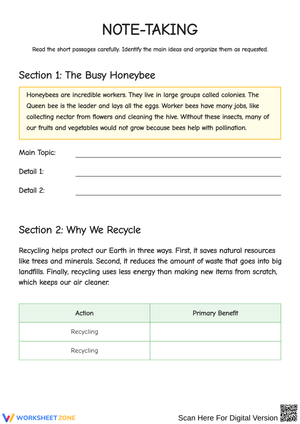
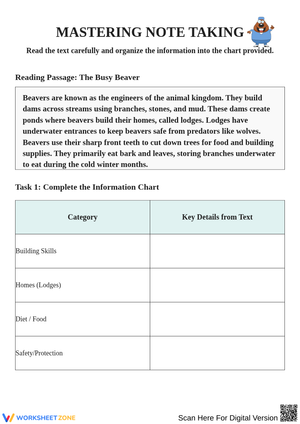
These 5th grade research strategies pdf worksheets give teachers a concrete tool for breaking research into steps students can genuinely practice: writing researchable questions, checking whether a source is worth using, taking notes in brief phrases, comparing information across sources, and turning collected evidence into a short written response. The set is built around the observation that many fifth graders can discuss a topic fluently but stall when asked to organize what they have read from two or three sources into something coherent on the page.
The Specific Skills Targeted in Each Worksheet
Rather than repeating the same generic graphic organizer with different clip art, each worksheet in the set handles one distinct thinking move. Teachers can assign them in sequence during a research unit or pull individual worksheets to address a specific skill gap during centers or small-group work. The resources cover:
- Topic narrowing and question writing: Students move from a broad subject to two or three questions specific enough to actually answer from sources.
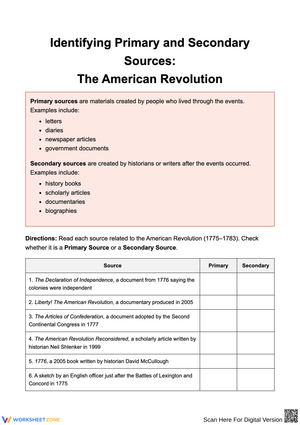
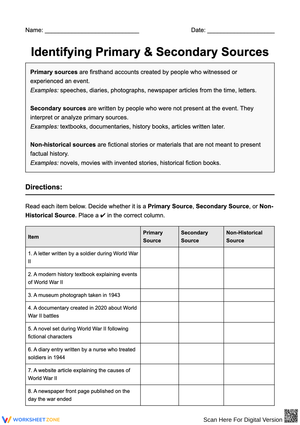
- Source credibility checks: Worksheets prompt students to ask whether a source is readable at their level, whether it addresses their actual question, and whether it appears trustworthy — three filters upper-elementary students can apply without teacher direction once they have practiced them.
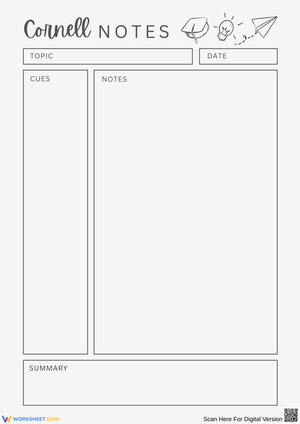
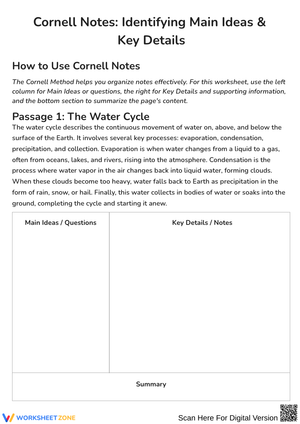
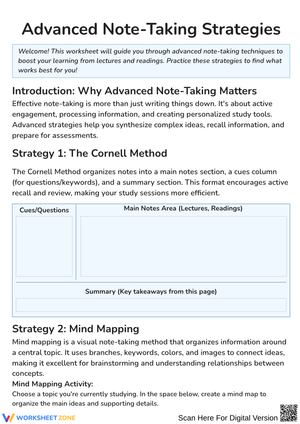
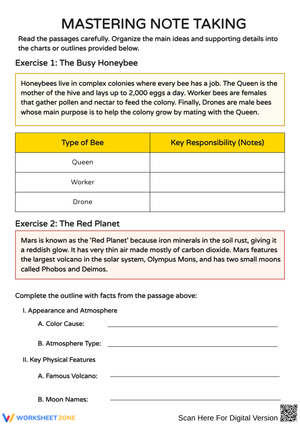
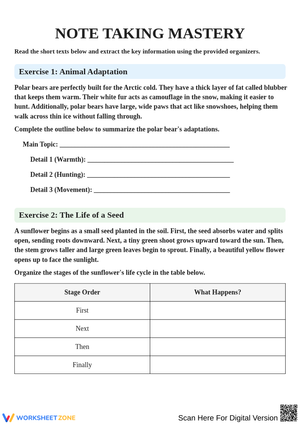
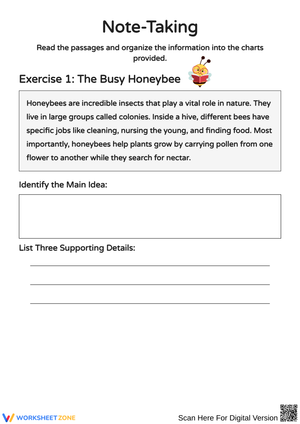
- Structured note-taking: Separated fields for key fact, what it means, and a restatement in the student's own words make paraphrasing a required step rather than an optional one.
- Inquiry charts: Students record and compare what two or three sources say about the same categories before they begin drafting — a move that pushes them to synthesize rather than summarize a single article.
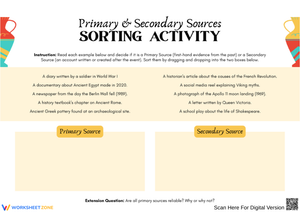
- Evidence sorting: Students group their notes under subtopics so the written response has a logical order before a single sentence is composed.
- Source-list recording: Simple title-and-type fields that students complete during research, not reconstructed from memory the night before a project is due.
- Summary and response writing: A short written product built directly from sorted evidence rather than from the original source text.
Student Errors Worth Watching For — and Addressing Early
The most consistent problem in fifth-grade research is that students treat the first source they find as the whole answer and copy it word for word rather than paraphrasing. This happens less from laziness than from the structure of the task: when a notes page has no field constraints and sits right next to the source, students fill it with lifted sentences because that is the path of least resistance. The note-taking worksheets here address this directly by limiting how much text fits in each box and by requiring a "what it means" restatement before students record their own wording. That two-step friction slows down the transcription habit enough to require actual processing.
A subtler error appears during source selection. Students taught to check for an author name or a publication date often mark a source as trustworthy based on those surface features alone — even when the content is inaccurate or tangential to their question. In actual student work, this produces research responses built entirely on a source that was adjacent to the topic but never quite on it. The credibility-check worksheet adds a prompt that asks whether the source actually addresses the research question, which catches that problem before note-taking begins rather than during revision.
Building These Worksheets Into a Research Mini-Lesson Sequence
The most effective approach spreads the worksheets across five or six short sessions rather than distributing the whole set at once. A workable day-by-day sequence: Day 1 focuses on topic narrowing and question writing; Day 2 introduces the credibility check alongside one or two sample sources; Day 3 uses the note-taking worksheet with a single article, modeled by the teacher first; Day 4 moves to the inquiry chart with two sources; Day 5 uses the evidence-sorting worksheet to group notes before writing; Day 6 completes the summary response. Each session ends with a natural formative checkpoint — question quality, note relevance, source variety, paraphrase accuracy — before a full draft is ever attempted.
Across that sequence, the release of responsibility can follow a deliberate pattern: teacher modeling on the first worksheet, partner completion on the second, independent work on the third. When the sequence is built that way, the breakdown point becomes visible — whether the struggle is reading the source, deciding what is relevant, restating in their own words, or organizing ideas before writing. These 5th grade research strategies pdf worksheets separate those moves into distinct, observable tasks rather than collapsing them into a single report template that only reveals a problem at the end.
Adjusting the Set for a Range of Learners
Students who are ready to move quickly can condense the early worksheets and spend the bulk of their time on the inquiry chart and evidence sorting, which carry the most cognitive weight and remain useful even when the question-writing and credibility-check steps no longer require structured support. For students who are still building stamina with informational text, the note-taking worksheet works well with one short article and a brief teacher-led vocabulary preview before students begin recording — five minutes of front-loading that prevents the worksheet from sitting blank while a student struggles with the source text itself.
Multilingual learners often record both a home-language term and an English restatement in their notes, and the three-field format on the note-taking worksheet has enough room to accommodate that without requiring a modified version. For students in intervention groups, the evidence-sorting worksheet can serve as a re-entry point: students bring notes they have already gathered and use the sorting worksheet to organize what they have instead of restarting from question writing. Teachers also use these 5th grade research strategies pdf worksheets as structured homework, giving families a specific task with clear inputs rather than a vague project assignment.
Standard Alignment
These worksheets align directly with CCSS.ELA-LITERACY.W.5.7 and CCSS.ELA-LITERACY.W.5.8. W.5.7 calls for short research projects that use several sources to investigate a topic — that is the unit-level standard governing the arc of the research sequence. W.5.8 addresses gathering relevant information from print and digital sources, summarizing or paraphrasing, and maintaining a list of sources — that is the skill-level standard that justifies dedicated instructional time on individual note-taking, source evaluation, and paraphrasing worksheets. Teachers who document standards coverage in lesson plans can attach each worksheet to one of those two codes without any stretch. The 5th grade research strategies pdf worksheets also support CCSS.ELA-LITERACY.RI.5.9, which asks students to integrate information from several texts on the same topic — precisely what the inquiry chart and evidence-sorting worksheets address.
Frequently Asked Questions
What research skills should fifth graders practice before they draft a report?
Before drafting, students need practice narrowing a topic, writing focused questions, evaluating whether a source is worth using, taking notes in their own words, comparing what two sources say about the same point, grouping evidence by subtopic, and recording source information as they work. Each of those moves appears on a separate worksheet in this set, which makes it possible to identify exactly where a student is struggling rather than treating the whole research process as a single undifferentiated task.
How do these worksheets reduce copying from source texts?
The note-taking worksheet limits how much text students can record in each field and requires a restatement step before they move on. That structure slows the transcription habit and forces meaning-making before writing begins. The inquiry chart adds a second layer: once students are recording what two sources each say about the same category, they write from comparison rather than from a single lifted sentence. The two formats work together to make paraphrasing the path of least resistance rather than an additional burden.
Can these worksheets be used in science and social studies units, not just during the ELA block?
Yes — and cross-curricular use is where the repetition pays the biggest dividend. When students use the same question sheet, note organizer, inquiry chart, and summary worksheet during a science investigation that they used during ELA research, the process becomes familiar enough that the worksheet stops being the hard part. The content becomes the hard part, which is exactly where students' attention should be. Over time, students internalize the sequence and apply it without needing every worksheet in front of them.
What should a fifth-grade source-list worksheet actually include?
It should capture source title, source type, and enough identifying detail for a teacher to verify what students actually used — and for students to reconnect notes to a source during revision. Formal citation format is not the goal at this level. The goal is making source use visible during the research process itself, not reconstructed from memory after the fact. A source-list worksheet completed in real time also makes classroom conversations about trustworthiness more concrete: teachers can look at what students recorded and ask follow-up questions about specific sources rather than speaking in generalities.












 Interactive Worksheet Maker
 Quiz Maker
 Word Search Maker
 Crossword Puzzle Maker
 Word Scramble Generator
 Sentence Scramble Generator
 Handwriting Worksheet Generator
 Name Tracing Generator
 Fill In The Blank Generator