


























Views
Downloads

Essential Essay Structure Blueprint | Grades 4-7 Ready
Paste this activity's link or code into your existing LMS (Google Classroom, Canvas, Teams, Schoology, Moodle, etc.).
Students can open and work on the activity right away, with no student login required.
You'll still be able to track student progress and results from your teacher account.
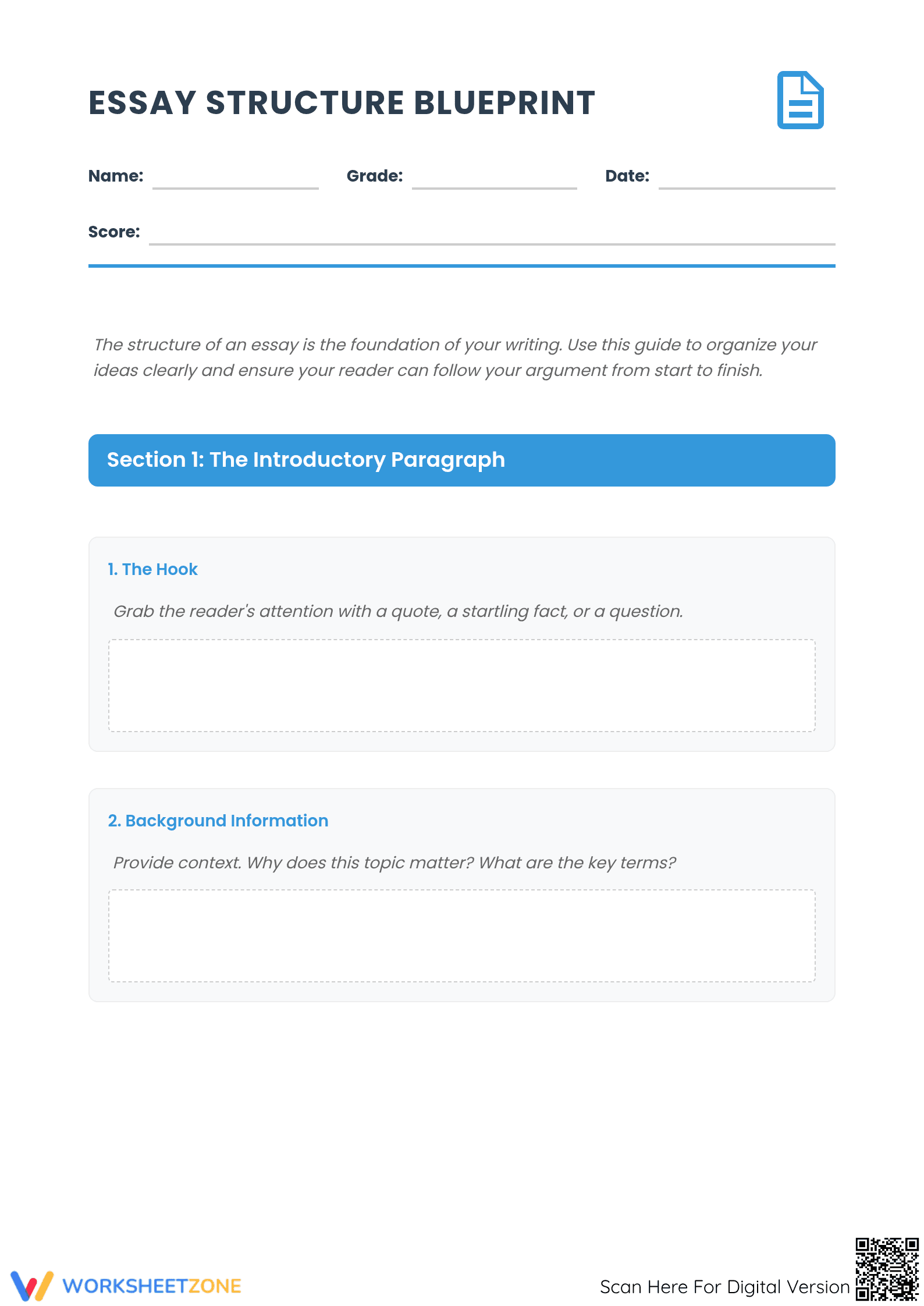
This Grade 4-7 essay structure worksheet provides a comprehensive blueprint for students to organize their thoughts into a cohesive five-paragraph essay. By breaking down the writing process into manageable sections, students learn to construct logical arguments with clear evidence. This resource ensures that every essential component of a strong essay is addressed before the final draft.
At a Glance
- Grade: 4-7 · Subject: ELA Writing
- Standard:
CCSS.ELA-LITERACY.W.5.2.A— Introduce a topic clearly and group related information logically in writing.- Skill Focus: Essay Organization
- Format: 4 pages · 10 tasks · Answer key included · PDF
- Best For: Drafting and organizing multi-paragraph essays
- Time: 45–60 minutes
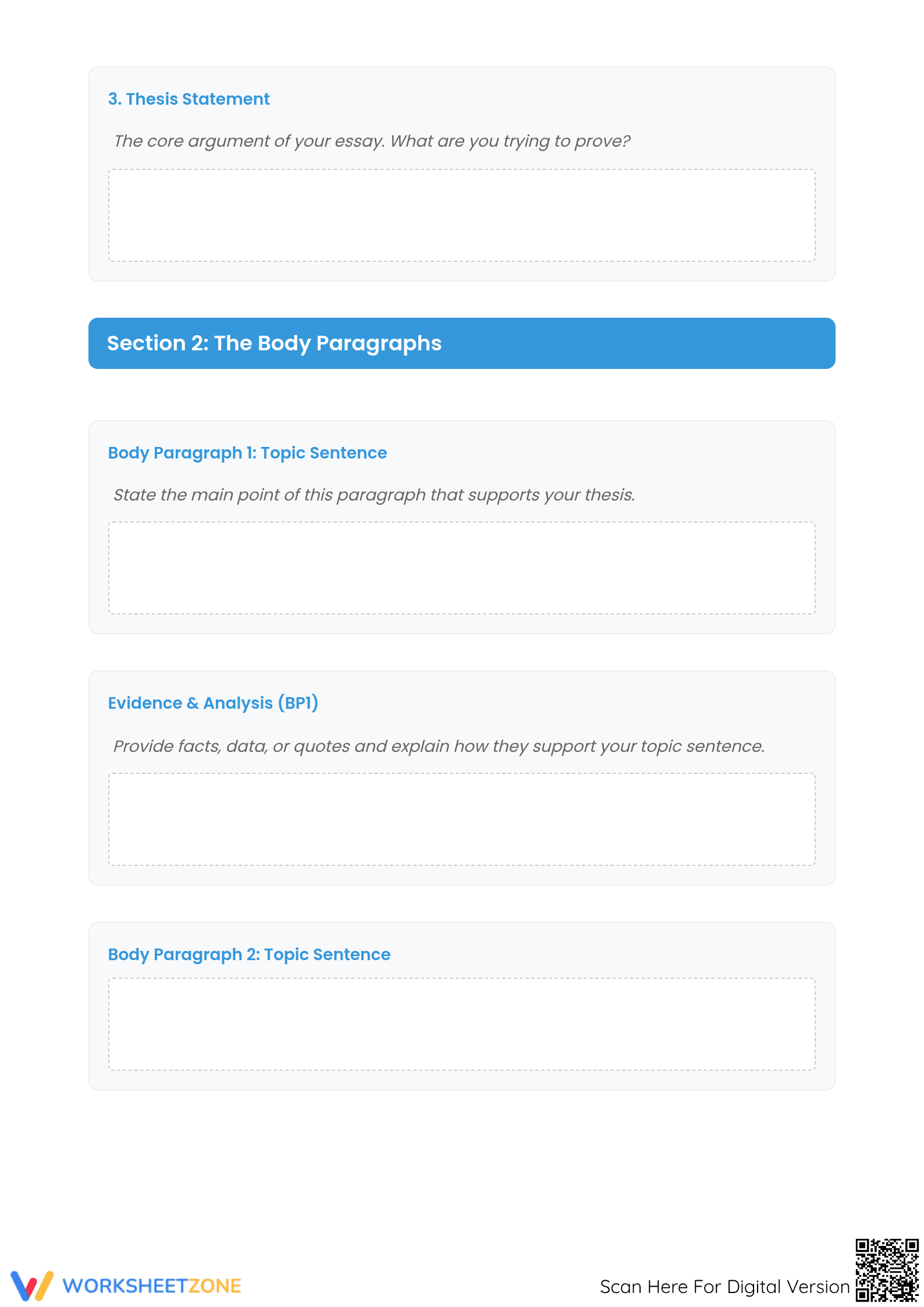
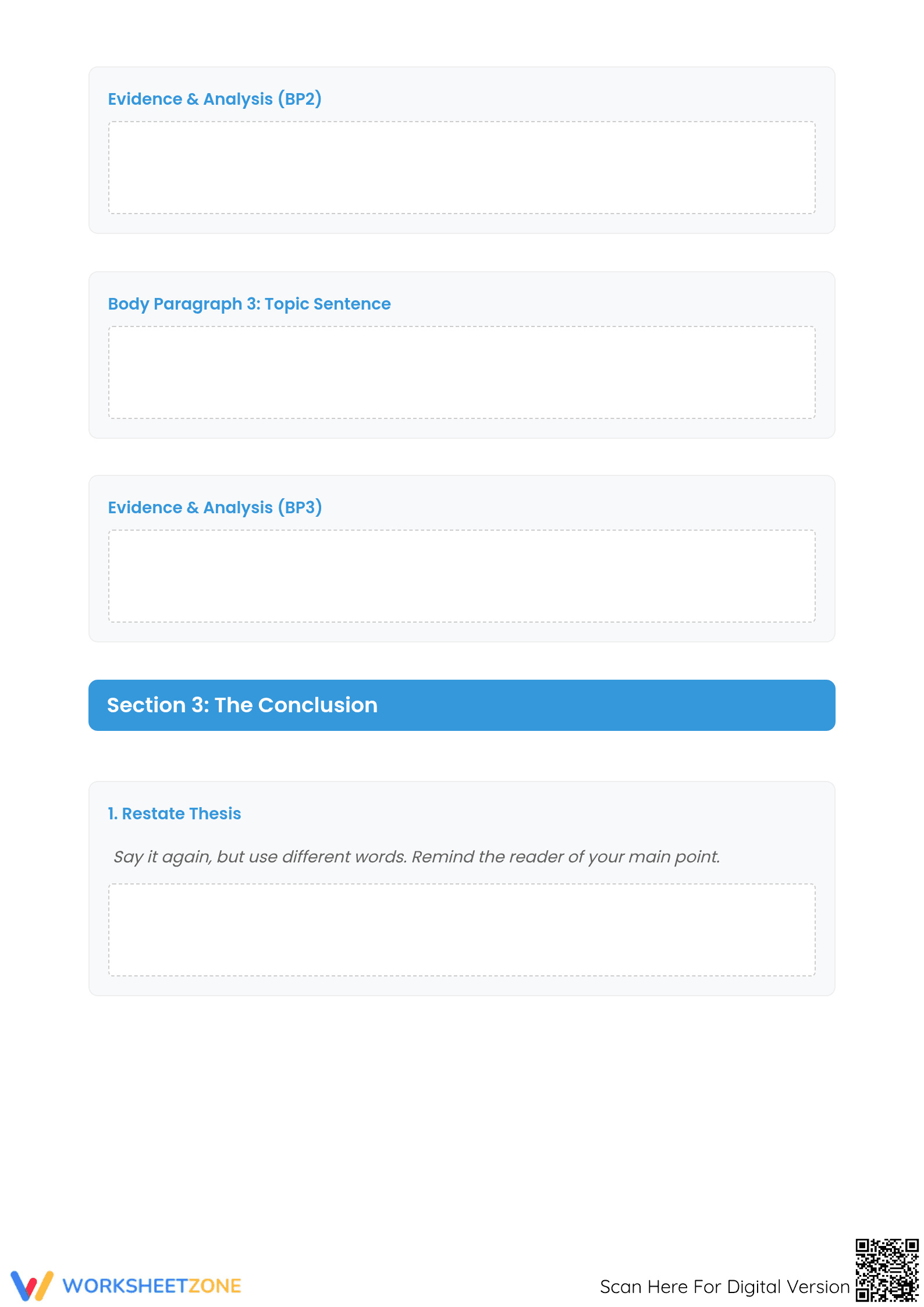
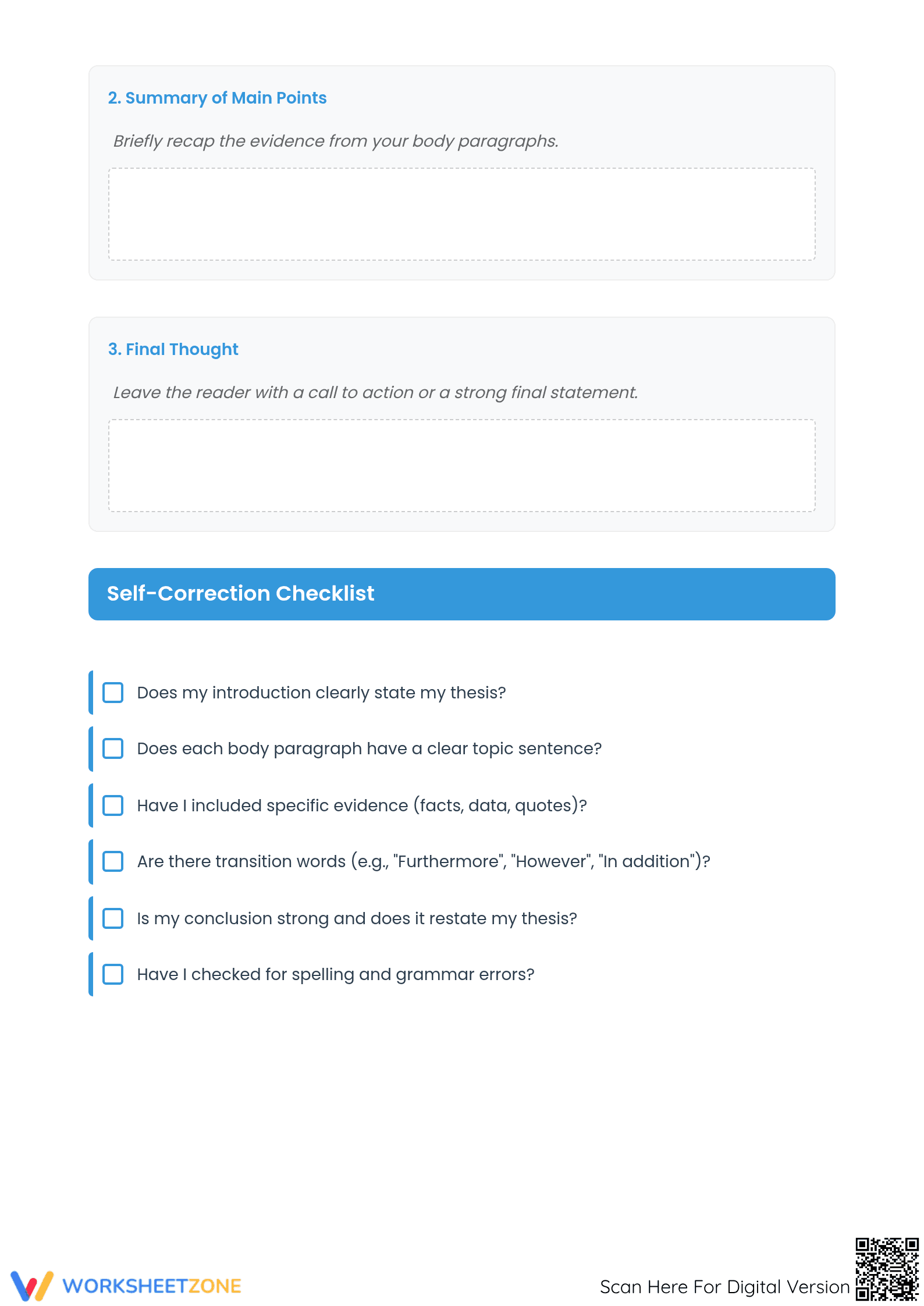
This 4-page PDF includes a structured "Essay Structure Blueprint" covering the introductory paragraph, three body paragraphs, and a conclusion. It features dedicated spaces for hooks, thesis statements, topic sentences, and evidence analysis. A final self-correction checklist ensures students review their work for transitions, specific evidence, and grammar before submission. The layout is designed to guide students through the writing process step-by-step.
- Print: Select the 4-page PDF and print enough copies for your class. This takes less than 1 minute of teacher preparation.
- Distribute: Hand out the blueprint during the pre-writing or drafting phase of your essay unit to provide immediate structure.
- Review: Use the included answer key or the self-correction checklist to provide feedback on student organization in under 5 minutes.
This resource aligns with `CCSS.ELA-LITERACY.W.5.2.A`, which requires students to introduce a topic clearly, provide a general observation and focus, and group related information logically. It also supports W.6.2.A by emphasizing the use of formatting and graphics to aid comprehension. Both standard codes can be copied directly into lesson plans, IEP goals, or district curriculum mapping tools.
Use this blueprint as a scaffolding tool during the drafting phase of a persuasive or informative essay. It is particularly effective after direct instruction on thesis statements. Formatively assess students by checking their "Evidence & Analysis" sections to ensure they are connecting facts back to their main claims. Expected completion time ranges from 45 to 60 minutes depending on the complexity of the topic.
This worksheet is designed for upper elementary and middle school students (Grades 4-7) who need a visual guide for essay construction. It is an excellent resource for English Language Learners (ELLs) and students with executive functioning needs. Pair this with a mentor text or an anchor chart on transition words to maximize student success.
According to Fisher & Frey (2014), providing students with structured graphic organizers like this "Essay Structure Blueprint" significantly improves the logical flow and evidence integration in student writing. This 4-page resource targets CCSS.ELA-LITERACY.W.5.2.A by guiding students through the essential components of an essay, from the initial hook to the final thought. Research from the NAEP indicates that students who utilize organizational frameworks during the writing process score higher on clarity and coherence metrics. By explicitly labeling sections for hooks, background information, and evidence analysis, this worksheet reduces the cognitive load on Grade 4-7 learners, allowing them to focus on content quality. The inclusion of a 6-point self-correction checklist further reinforces metacognitive skills, ensuring that students take ownership of their revision process before final submission. This tool is a reliable asset for any writing-intensive classroom.


