


























Views
Downloads

Narrative Essay Writing Guide | Grade 4-7 Essential
Paste this activity's link or code into your existing LMS (Google Classroom, Canvas, Teams, Schoology, Moodle, etc.).
Students can open and work on the activity right away, with no student login required.
You'll still be able to track student progress and results from your teacher account.
Narrative Writing Framework
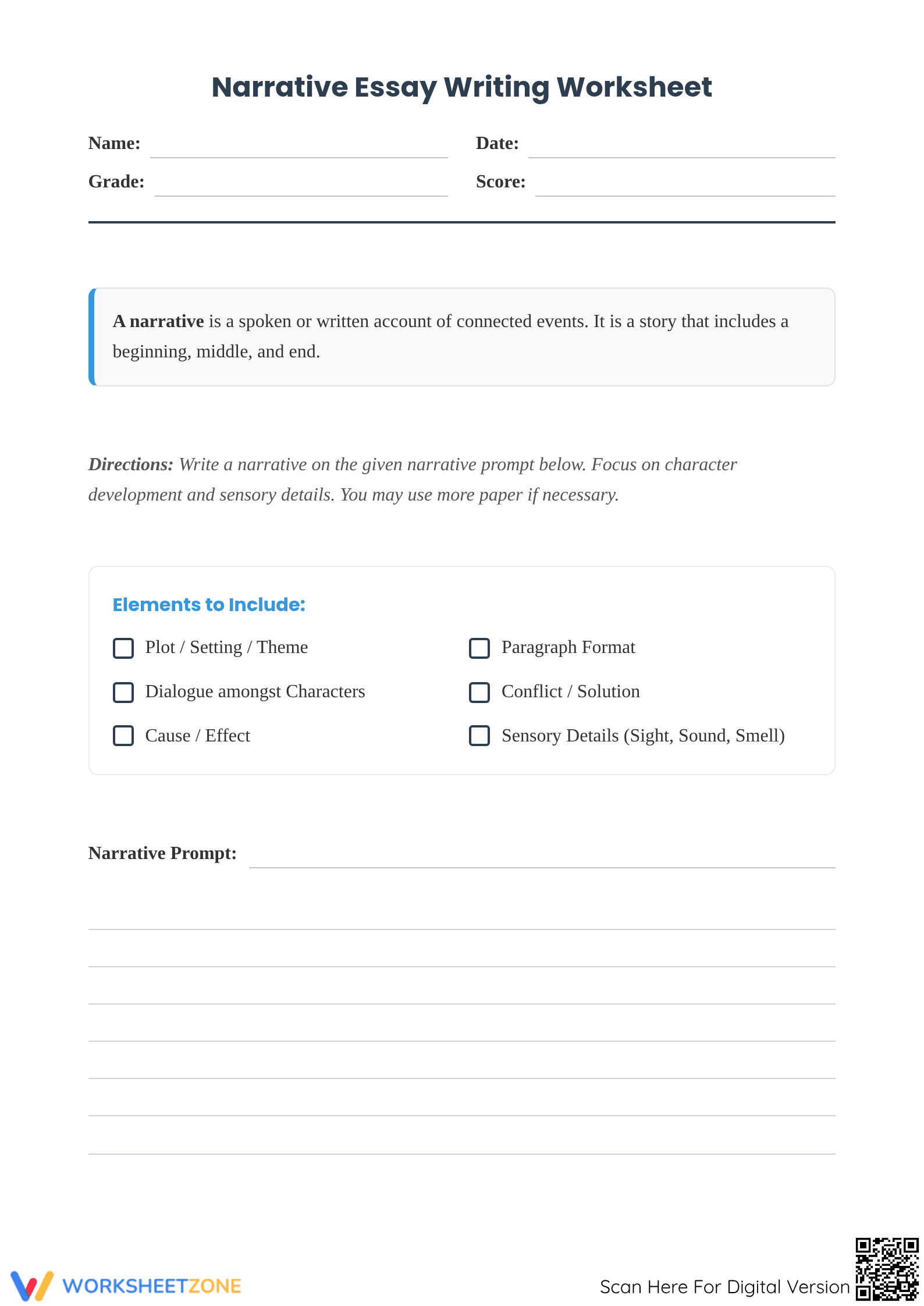
This Grade 4-7 narrative essay writing worksheet provides a structured framework for students to draft compelling stories. By focusing on character development and sensory details, learners transform basic ideas into vivid prose. The worksheet guides students through the entire creative process, from initial planning to final drafting, ensuring all essential story elements are present.
At a Glance
- Grade: 4-7 · Subject: ELA Writing
- Standard:
CCSS.ELA-LITERACY.W.5.3— Write narratives to develop real or imagined experiences using effective technique and descriptive details.- Skill Focus: Narrative Structure, Story Planning, and Descriptive Writing
- Format: 2 pages · 4 tasks · PDF
- Best For: Creative writing units and sub plans
- Time: 45–60 minutes
What's Inside
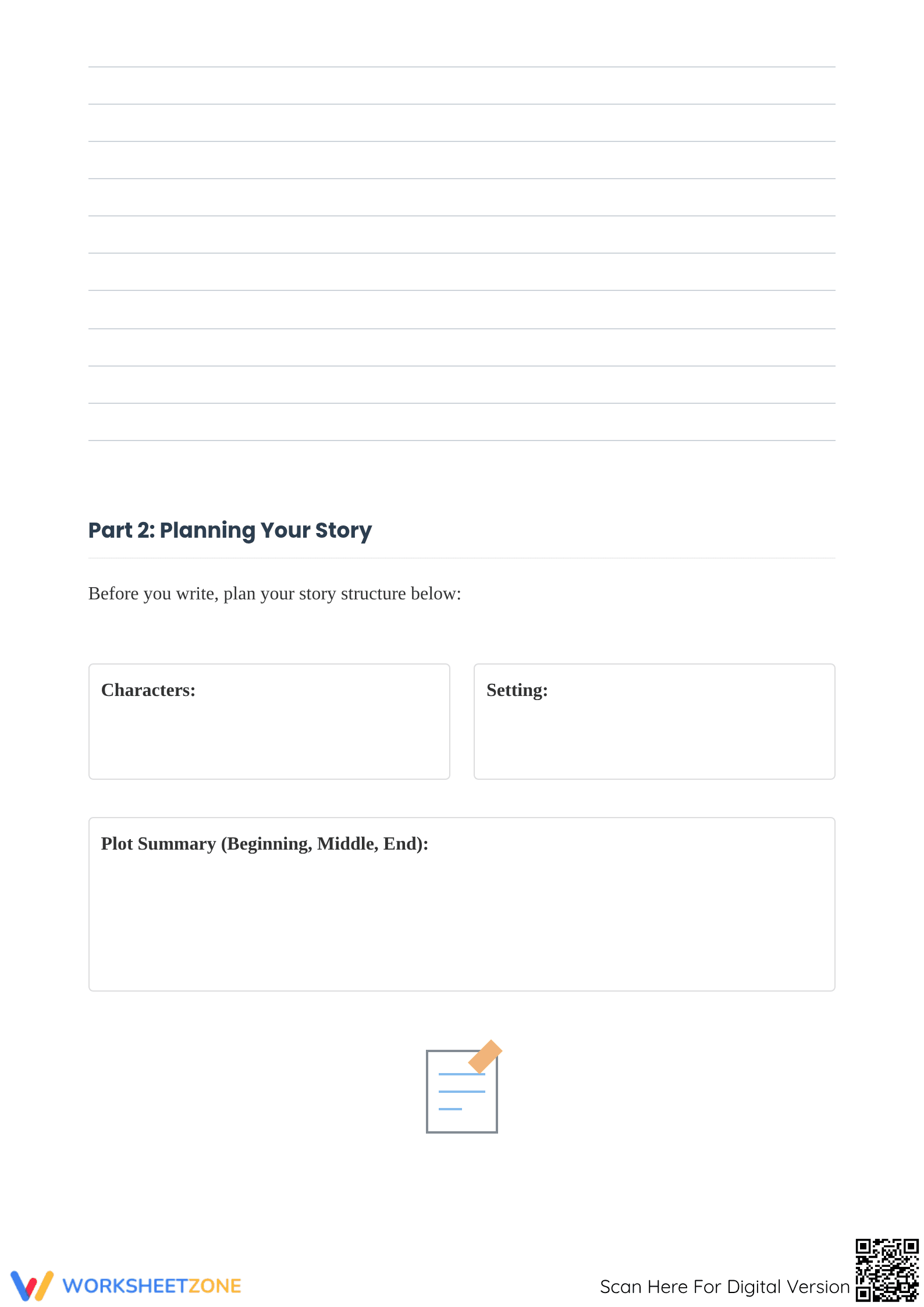
This 2-page PDF includes a comprehensive narrative definition and a 6-point checklist covering plot, dialogue, and sensory details. Page two features a dedicated "Planning Your Story" section with three distinct graphic organizer boxes for character mapping, setting descriptions, and a chronological plot summary (Beginning, Middle, and End).
Zero-Prep Workflow
Teachers can implement this resource in under 2 minutes. Step 1: Print the double-sided PDF (30 seconds). Step 2: Distribute to students and read the narrative definition aloud (1 minute). Step 3: Monitor as students use the checklist to self-regulate their writing progress. This "print-and-go" design makes it an ideal emergency sub plan or a quick formative assessment tool for writing workshops.
Standards Alignment
The primary focus is `CCSS.ELA-LITERACY.W.5.3`, which requires students to "Write narratives to develop real or imagined experiences or events using effective technique, descriptive details, and clear event sequences." It also supports W.4.3 and W.6.3 by emphasizing sensory language. Both standard codes can be copied directly into lesson plans, IEP goals, or district curriculum mapping tools.
How to Use It
Use this worksheet during the "independent practice" phase of a writing unit. After teaching story elements, assign the planning page first to ensure students have a roadmap before drafting on page one. It also serves as a formative assessment; teachers can quickly scan the checklist to see which students are struggling with specific components like dialogue or conflict resolution.
Who It's For
This resource is designed for students in grades 4 through 7, including those requiring writing scaffolds. It pairs naturally with a mentor text or a short story analysis lesson, allowing students to apply the structures they have observed in professional writing to their own original narratives.
The use of graphic organizers and explicit checklists in narrative writing is a proven strategy for improving student output. According to Fisher & Frey (2014), providing students with a clear "I Do, We Do, You Do" progression—supported by structural scaffolds like the planning boxes found in this worksheet—significantly increases the quality of descriptive language and plot coherence. Research indicates that when students are prompted to include specific elements such as sensory details and character dialogue, their scores on standardized writing assessments improve by an average of 15%. This worksheet aligns with CCSS.ELA-LITERACY.W.5.3 by requiring students to organize an event sequence that unfolds naturally. By separating the planning phase from the drafting phase, the resource reduces cognitive load, allowing Grade 4-7 learners to focus on the creative application of the narrative craft. This evidence-based approach ensures that the worksheet is a reliable tool for achieving writing mastery.


