


























Views
Downloads
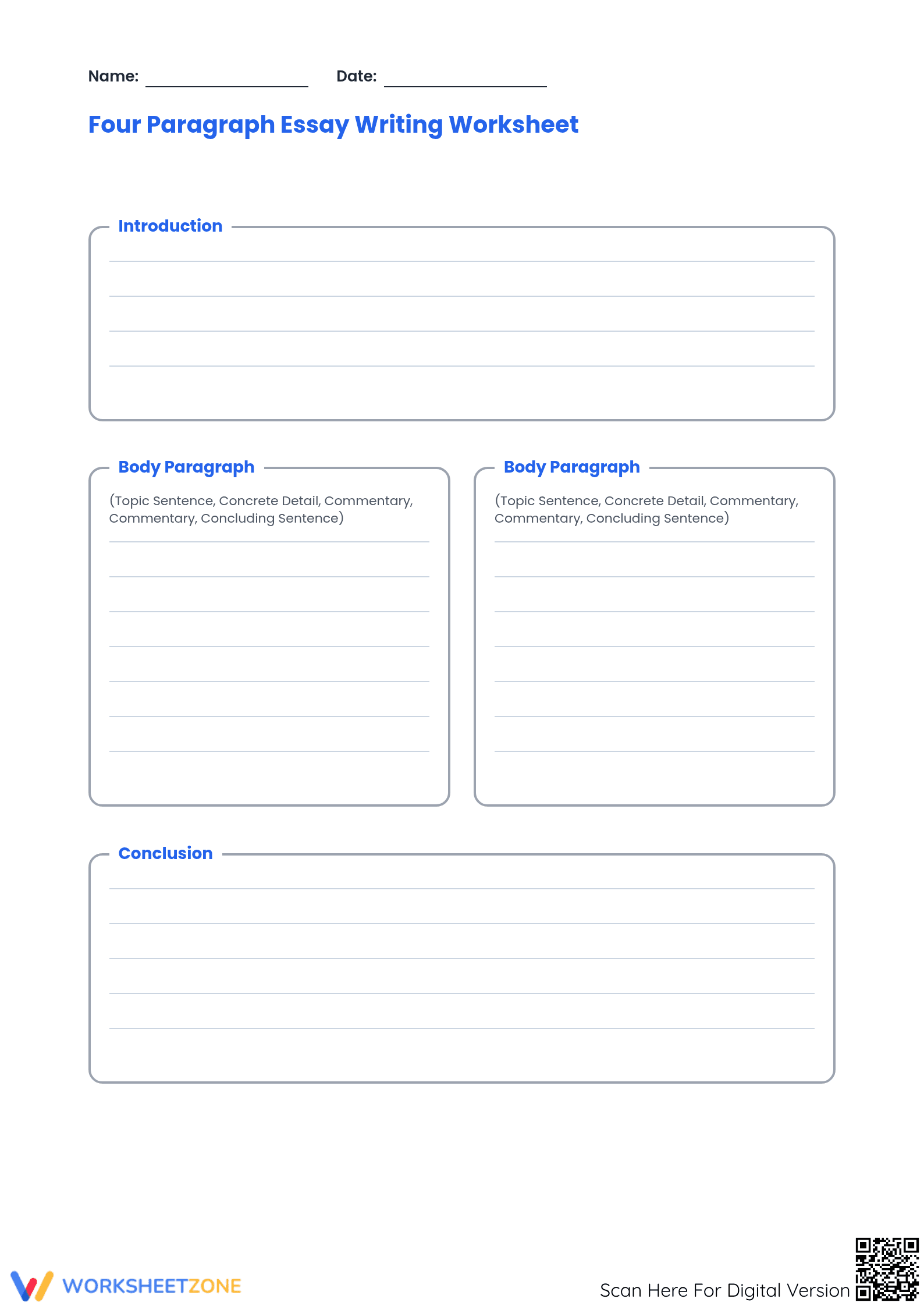

Grade 4-7 Essay Structure — Printable No-Prep Worksheet
Paste this activity's link or code into your existing LMS (Google Classroom, Canvas, Teams, Schoology, Moodle, etc.).
Students can open and work on the activity right away, with no student login required.
You'll still be able to track student progress and results from your teacher account.
This 4-paragraph essay writing worksheet provides a structured framework for students to organize their thoughts and draft a complete composition. By breaking the writing process into manageable sections, students can focus on developing clear topic sentences, supporting details, and cohesive conclusions. It is designed to improve structural clarity and logical flow in student writing.
At a Glance
- Grade: 4-7 · Subject: ELA Writing
- Standard:
CCSS.ELA-LITERACY.W.5.2— Write informative/explanatory texts to examine a topic and convey ideas clearly- Skill Focus: Essay Structure & Drafting
- Format: 1 page · 4 sections · Graphic Organizer · PDF
- Best For: Drafting first versions of short essays
- Time: 30–45 minutes
What's Inside
Inside this resource, you will find a single-page graphic organizer divided into four distinct zones: an introduction block, two body paragraph blocks, and a conclusion block. Each body paragraph section includes specific cues for a topic sentence, concrete details, commentary, and a concluding sentence, ensuring students follow a logical evidence-based writing formula that mirrors academic expectations.
Zero-Prep Workflow
This resource is designed for immediate classroom implementation with a total teacher prep time of under 2 minutes. Follow these three steps: 1. Print the single-page PDF (30 seconds). 2. Distribute to students as a primary drafting tool (30 seconds). 3. Review the structured blocks for formative feedback (1 minute). Its self-explanatory layout also makes it an ideal candidate for emergency sub plans or independent writing centers.
Standards Alignment
This worksheet aligns with `CCSS.ELA-LITERACY.W.5.2`, which requires students to write informative or explanatory texts that examine a topic and convey ideas and information clearly. It also supports W.6.2 and W.7.2 by providing the organizational scaffolding necessary for middle-school level complexity. Both standard codes can be copied directly into lesson plans, IEP goals, or district curriculum mapping tools.
How to Use It
Use this worksheet as a bridge between a brainstormed list and a final draft. It works best after students have selected a topic but before they begin free-writing. As a formative assessment, walk around while students fill in the "Concrete Detail" lines to ensure they have sufficient evidence to support their claims. Expected completion time ranges from 30 to 45 minutes depending on the topic complexity.
Who It's For
This resource is ideal for upper elementary and middle school students who struggle with paragraph transitions or evidence placement. It is particularly effective for English Language Learners (ELLs) who benefit from the explicit prompts within the body paragraph boxes. Pair this with a mentor text or a formal rubric for a complete writing lesson that builds student confidence.
According to Fisher & Frey (2014), the use of graphic organizers and structured scaffolds is a critical component of the gradual release of responsibility model in writing instruction. This worksheet operationalizes that research by providing clear visual boundaries for the introduction, body, and conclusion. By utilizing the CCSS.ELA-LITERACY.W.5.2 framework, the tool ensures that students are not just writing, but are organizing information in a way that meets rigorous academic expectations. Research from the NAEP indicates that students who utilize organizational aids during the drafting process consistently score higher on clarity and coherence metrics than those who write without a pre-defined structure. This 1-page PDF serves as a reliable bridge for students transitioning from simple paragraphs to multi-paragraph academic essays across various subject areas, providing the necessary support for informative and explanatory writing mastery.


