


























Views
Downloads


Halloween Reading & Writing | Grade 5 Printable
Paste this activity's link or code into your existing LMS (Google Classroom, Canvas, Teams, Schoology, Moodle, etc.).
Students can open and work on the activity right away, with no student login required.
You'll still be able to track student progress and results from your teacher account.
This Grade 5 Halloween reading and writing packet gives students an engaging seasonal story to build reading comprehension and narrative writing skills. Students will read an original suspenseful text, answer text-dependent questions, define vocabulary in context, and creatively finish the story using provided prompt phrases.
At a Glance
- Grade: 5 · Subject: ELA
- Standard:
CCSS.ELA-LITERACY.RL.5.1— Quote accurately to explain text and draw inferences- Skill Focus: Reading Comprehension & Narrative Writing
- Format: 4 pages · 13 problems · Answer key included · PDF
- Best For: Independent practice or sub plans
- Time: 30–45 minutes
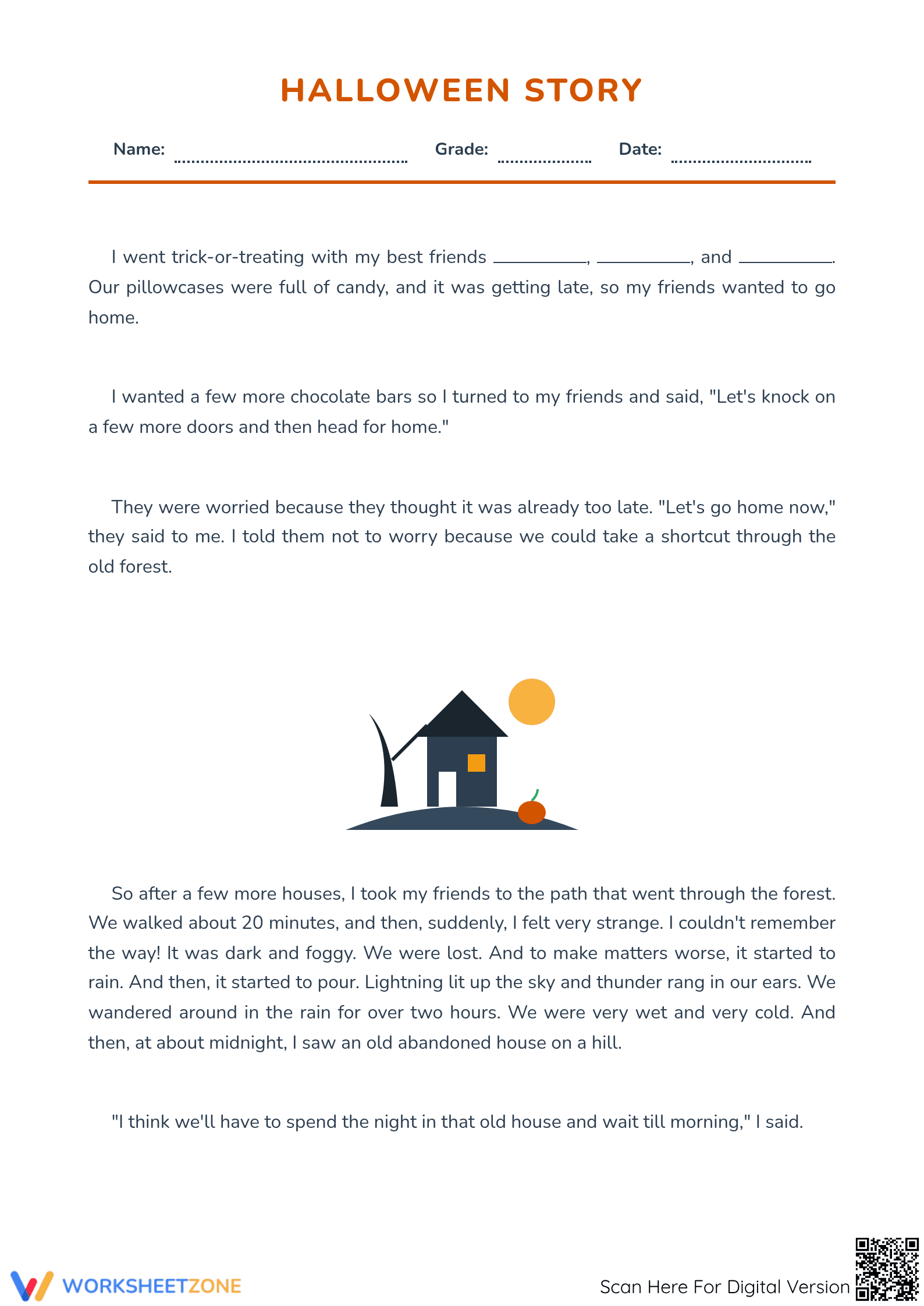
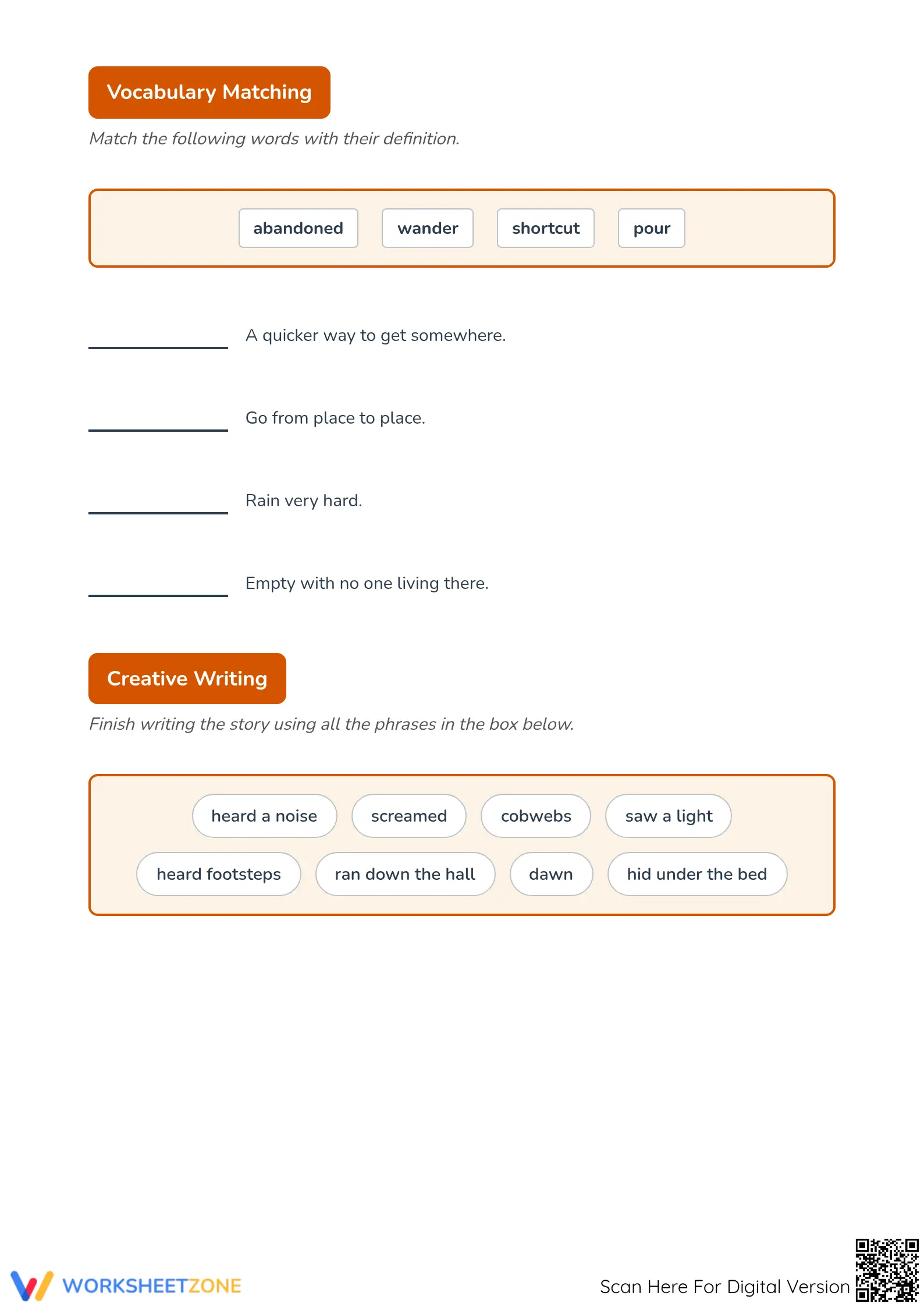
This comprehensive four-page packet includes an original two-page Halloween story about a trick-or-treating adventure gone wrong. Following the text, students tackle eight reading comprehension questions, a four-word vocabulary matching section, and a creative writing extension. The writing task provides a word bank of eight suspenseful phrases (like "heard footsteps" and "cobwebs") that students must incorporate into their own story ending on the provided lined paper. A complete answer key is included for easy grading.
- Print (1 minute): Simply print the four-page PDF packet double-sided. No additional texts or materials are required.
- Distribute (1 minute): Hand out the packets to students for independent work, literacy centers, or as a highly engaging holiday activity.
- Review (5 minutes): Use the included answer key to quickly check the comprehension and vocabulary sections, then enjoy reading the students' creative story endings.
With under two minutes of total teacher prep time, this resource is an ideal zero-prep solution for busy October days or emergency substitute teacher plans.
Aligned to primary standard CCSS.ELA-LITERACY.RL.5.1: Quote accurately from a text when explaining what the text says explicitly and when drawing inferences from the text. The creative writing extension also supports CCSS.ELA-LITERACY.W.5.3 by having students develop imagined experiences using descriptive details and clear event sequences. Both standard codes can be copied directly into lesson plans, IEP goals, or district curriculum mapping tools.
Use this packet during your ELA block as an independent reading and writing assessment in the days leading up to Halloween. It also works perfectly as a quiet afternoon activity after a class party. As a formative assessment tip, observe how students integrate the required vocabulary phrases into their creative writing; this will show their grasp of context clues and narrative pacing. Expected completion time is 30 to 45 minutes.
This resource is designed for 4th through 7th-grade ELA students, with a primary focus on 5th-grade standards. The built-in word bank for the creative writing section provides excellent scaffolding for English Language Learners and students who struggle with generating ideas from scratch. Pair this packet with a mini-lesson on building suspense in narrative writing to maximize the creative writing output.
Integrating seasonal themes into standard-aligned literacy practice can significantly boost student engagement during high-distraction periods like Halloween. By targeting CCSS.ELA-LITERACY.RL.5.1, this worksheet requires students to quote accurately to explain text and draw inferences, grounding their holiday excitement in rigorous academic skills. According to a RAND AIRS 2024 report, providing students with structured, text-dependent questions alongside creative extension tasks improves both reading comprehension and narrative writing fluency. The combination of explicit vocabulary instruction and a scaffolded writing prompt ensures that students are not just consuming a fun story, but actively analyzing its components and applying those techniques to their own writing. This balanced approach helps maintain academic momentum while acknowledging the seasonal context.


