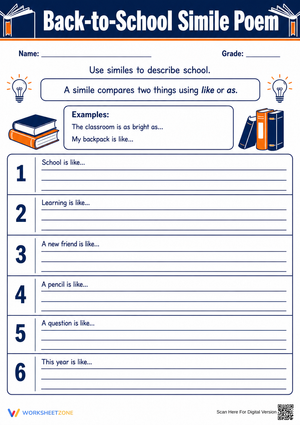
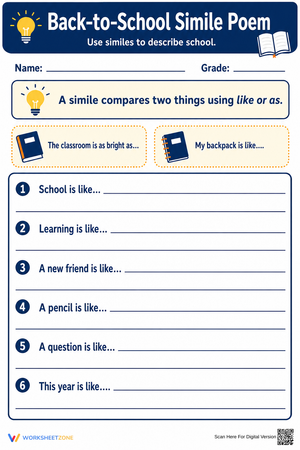
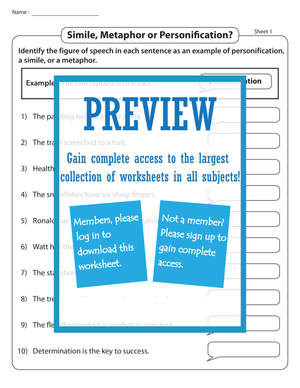
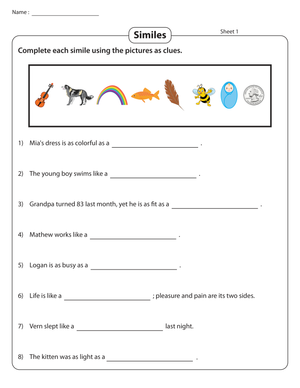
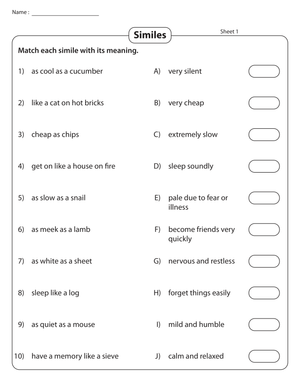
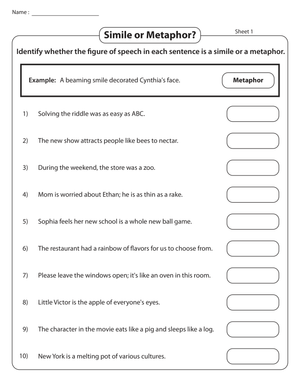
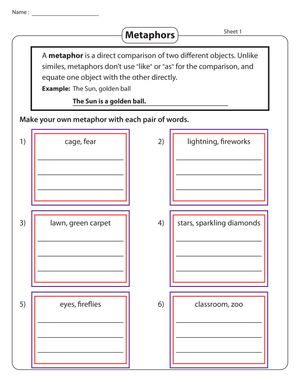
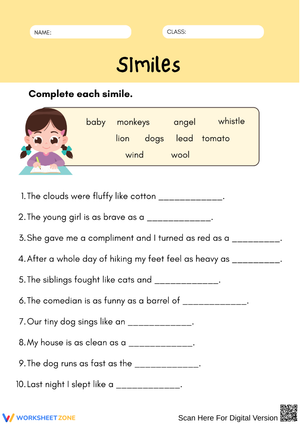
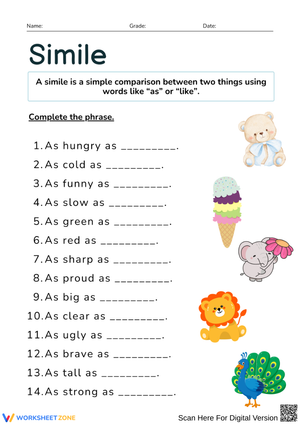
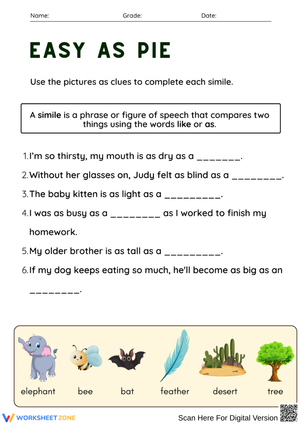
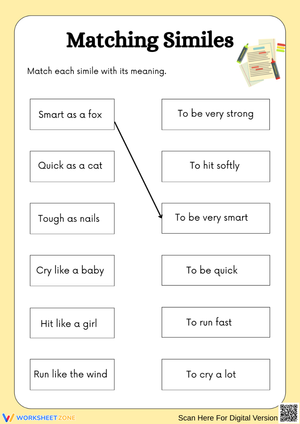
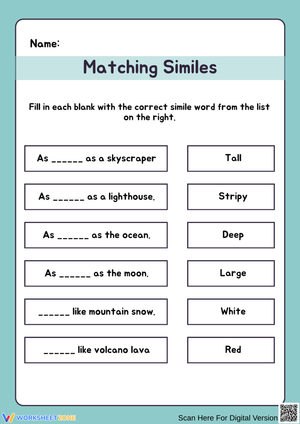
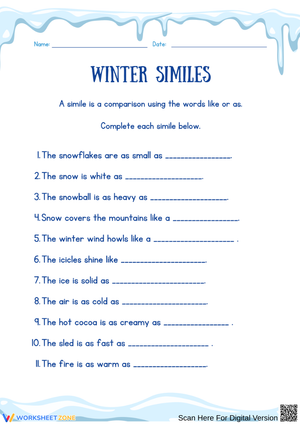
These simile and metaphor worksheets for 5th grade give teachers a ready-to-print set that moves students past memorized definitions and into the harder interpretive work Grade 5 actually requires. Each worksheet in the set targets a specific part of the figurative language progression — identification, contextual meaning, and original writing — so teachers can match the task to where the class is, not just hand out the next item in a stack.
What's Inside the Set
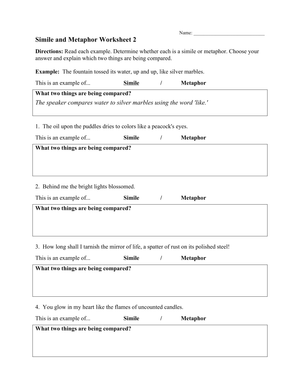
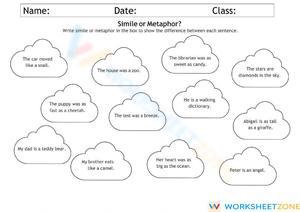
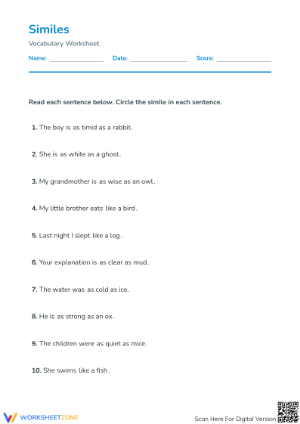
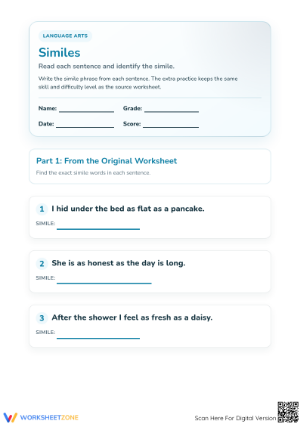
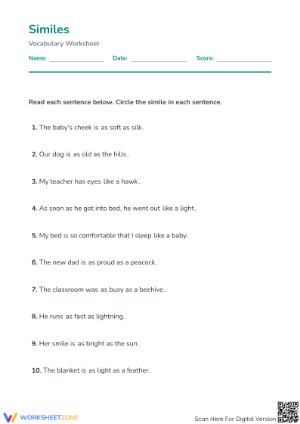
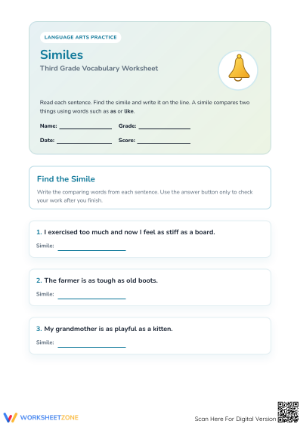
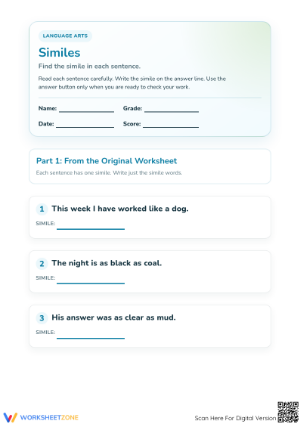
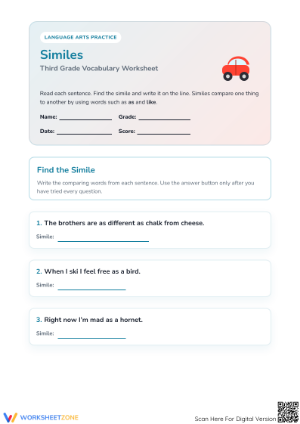
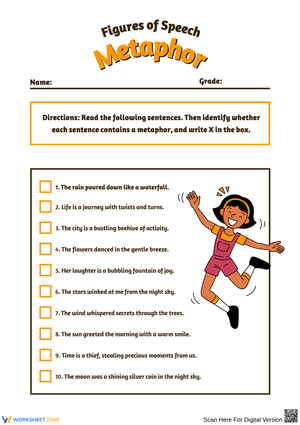
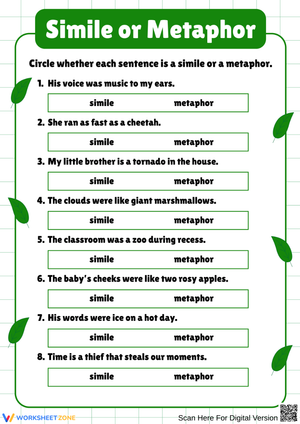
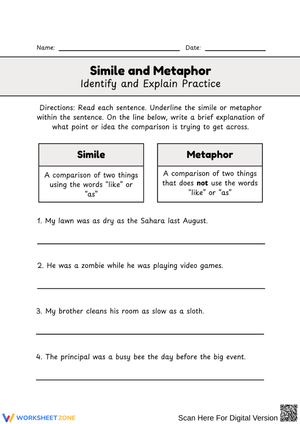
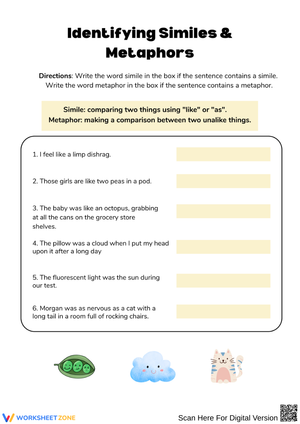
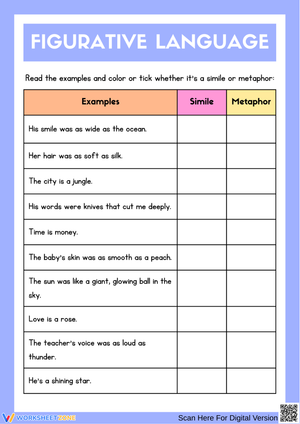
The set opens with identification practice: students read sentences, mark each as a simile or a metaphor, and circle the word or phrase that helped them decide. That first step is low-floor but not trivial — it surfaces whether students have a working definition before the more demanding tasks begin. From there, each worksheet raises the pressure. Students move from isolated sentences into short passages, where the comparison is embedded in narrative or descriptive prose rather than standing as a neatly labeled example. They write brief explanations of what the comparison actually suggests — not just "it means she was fast," but what specific quality the author chose to highlight and why that comparison earns its place in the sentence.
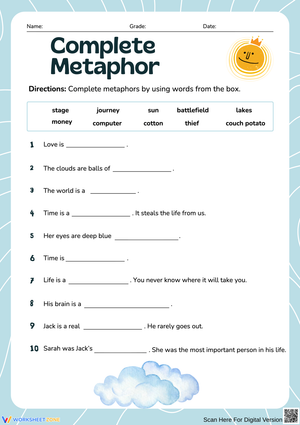
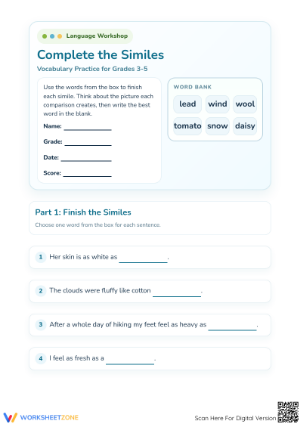
The final tier in the set asks students to write original similes and metaphors tied to a topic: a comparison describing a difficult problem, a metaphor woven into a short narrative paragraph, a simile pulled from a reading response. That writing step is where students who have only memorized signal words begin to show what they actually understand. Finding a simile and metaphor worksheets for 5th grade set that moves through all three of those task types — identification, interpretation, and original writing — addresses the full depth of Grade 5 expectations rather than skimming the surface.
Mistakes Students Make That These Worksheets Help You Catch
The most reliable breakdown point at this level is not confusing "like" with "is" — students usually sort that distinction quickly after direct instruction. The real gap appears when a comparison is embedded inside a longer sentence rather than standing cleanly alone. A student who correctly labels "She ran like the wind" as a simile will often miss "The cafeteria became a battlefield every Tuesday" as a metaphor, because the comparison arrives inside a narrative clause and nothing about it looks like a vocabulary exercise. Worksheet items drawn from paragraph-level prose rather than isolated sentences are exactly what separates students who understand the device from students who have learned to pattern-match on signal words.
The second persistent error is shallow explanation. Students identify the device correctly, then write responses like "it means it was loud" — technically true at the surface, but not interpretive. The standard asks students to explain what the comparison does in context: what quality it emphasizes, what feeling it creates, why the author reached for a comparison instead of a literal description. The explanation lines built into these worksheets make this gap easy to catch — a quick sort of the class set takes under a minute, and papers showing real interpretation separate cleanly from those showing recognition only.
Standard Alignment
Two Common Core standards anchor this work at Grade 5. L.5.5.a (Language, Grade 5) asks students to interpret figurative language — including similes and metaphors — in context, not merely identify it. RL.5.4 (Reading Literature, Grade 5) expects students to determine the meaning of figurative language as it functions in text. Together, those two standards explain why worksheets that stop at labeling leave a gap: both codes require the interpretive step, and identification-only practice covers only part of what the standards demand.
Because both standards appear on most state ELA assessments and in standards-based observation rubrics, teachers have a clear justification for using this resource across language mini-lessons, reading response work, and pre-assessment review. A well-targeted simile and metaphor worksheets for 5th grade set fits across all three of those instructional moments without requiring separate practice materials for each.
Recommended Lesson-Planning Strategies for These Worksheets
The clearest integration point is matching each worksheet to a specific moment in the lesson cycle. Use an identification worksheet as a warm-up immediately after the initial direct instruction — students need low-stakes retrieval early, before the definitions fade. Move to the meaning-explanation worksheets during independent practice while the teacher circulates and confers. Save the writing-application worksheets for a session after the class has demonstrated solid identification, when students are ready for a more demanding task. For teachers running literacy centers, the consistent format of each worksheet means students can work without stopping to decode new directions — the task structure is familiar, so the cognitive effort goes to the figurative language itself rather than to figuring out what the activity asks.
- Open with an identification worksheet as a bell ringer during the first week of instruction.
- Assign meaning-explanation worksheets as independent practice during the ELA block.
- Reserve writing-application worksheets for lessons focused on author's craft or narrative writing.
- Use a shorter review section during the 8–10 minutes before whole-class wrap-up.
- Collect a completed worksheet on Friday, sort by response quality, and use that sort to plan Monday's small-group reteach.
Differentiating These Worksheets Across Ability Levels
Students reading below grade level engage well with the identification-level worksheets — the sorting and circling tasks are accessible without requiring strong reading fluency, and they still build the conceptual foundation both standards expect. Grade-level students get the most from the meaning-explanation prompts, where close reading and precise written response are the actual demands. Advanced students benefit most from the writing-application tasks, particularly when the teacher raises the bar for what counts as a strong metaphor: a generic comparison like "the sun was bright" earns far less credit than one tied specifically to a character, a setting, or a moment in a story.
For students who freeze on the explanation prompts, a bracketing move helps: have them mark the two things being compared, identify one quality those things share, then draft the explanation from that observation. That three-step sequence turns an open-ended prompt into a manageable task without altering the worksheet itself.
Frequently Asked Questions
What is the difference between a simile and a metaphor, and how should I teach that distinction at Grade 5?
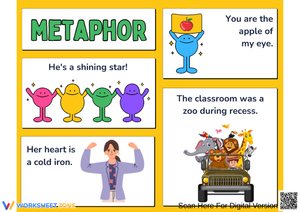
A simile makes a comparison using like or as — "The argument was like a storm that wouldn't pass." A metaphor makes the comparison directly, without those signal words — "The argument was a storm." At Grade 5, the definitional distinction is quick to teach; the harder instructional work is moving students toward explaining what each comparison means and why the author used it, which is what L.5.5.a and RL.5.4 both require.
My students can identify similes and metaphors but can't explain what they mean. What helps?
This is the most common Grade 5 gap with figurative language. The explanation step becomes more manageable when students answer two concrete questions before they write: What two things is the author comparing? and What quality do those two things share? Answering those first gives students the raw material for an interpretation rather than a blank line. Worksheets that include dedicated write-on space for the explanation — not just a circle-and-label format — create the conditions for that kind of response and make the gap visible in student work.
Do these worksheets align to Common Core standards?
Yes. The identification and meaning-explanation tasks connect directly to L.5.5.a, which asks students to interpret figurative language in context. The reading passage items connect to RL.5.4, which expects students to determine the meaning of figurative language in text. Teachers who document standards coverage for lesson plans or instructional reviews can point to both codes without needing to stretch the connection.
Can these resources be used for homework or intervention groups?
The simile and metaphor worksheets for 5th grade resources work well in both settings. For homework, the clear directions and predictable task types mean students rarely get stuck on logistics. For intervention groups, the identification-level worksheets give teachers a low-floor entry point, while the explanation prompts reveal exactly where a student's understanding breaks down — which is more useful diagnostic information than a multiple-choice score.












 Interactive Worksheet Maker
 Quiz Maker
 Word Search Maker
 Crossword Puzzle Maker
 Word Scramble Generator
 Sentence Scramble Generator
 Handwriting Worksheet Generator
 Name Tracing Generator
 Fill In The Blank Generator