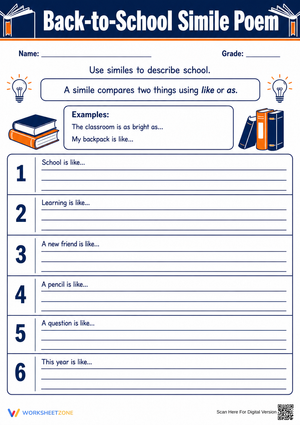
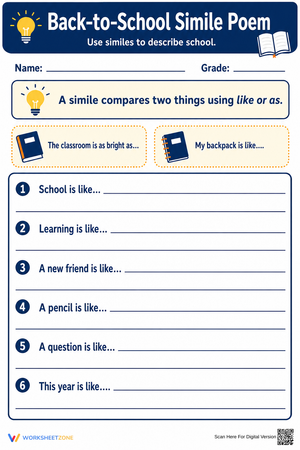
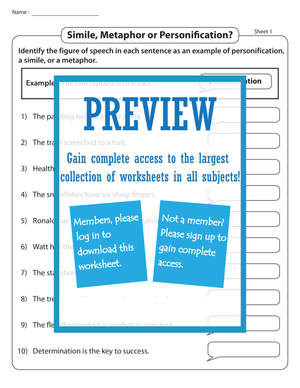
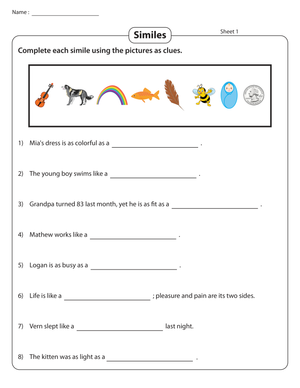
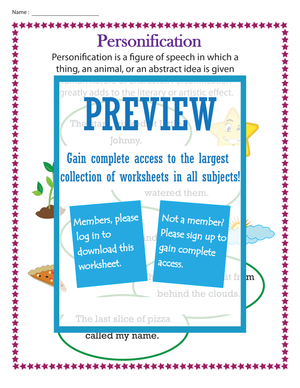
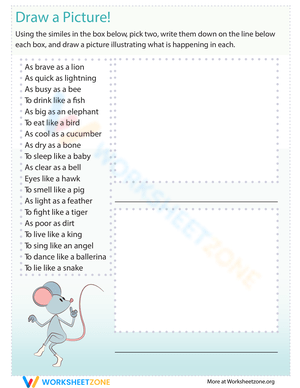
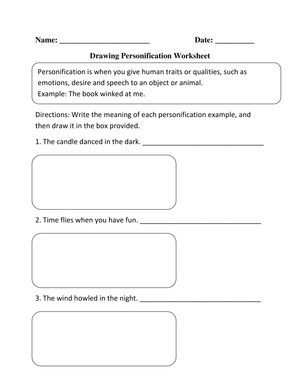
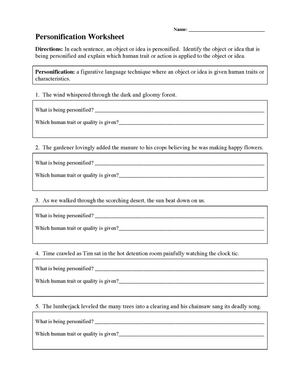
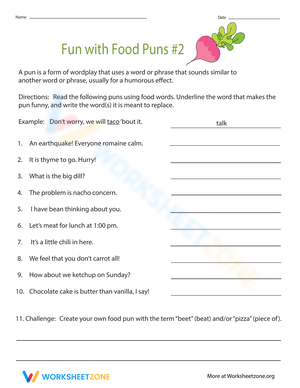
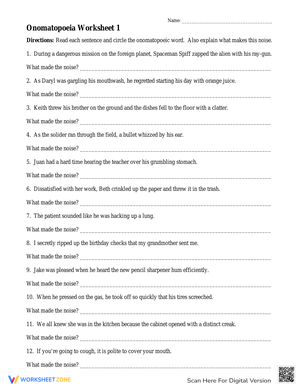
These figurative language printable worksheets for 5th grade give teachers a ready rotation of practice that moves past labeling devices on a list — students identify figurative language inside sentences and short passages, restate literal meanings, and explain what the language communicates in context. That shift is the real instructional goal at this grade level: not just marking a simile correct, but reading it the way a writer intended it to land. The set covers the six devices most likely to appear in classroom texts and on standardized reading passages, with task formats that fit everything from a bell ringer to a small-group pull.
What's Inside the Set
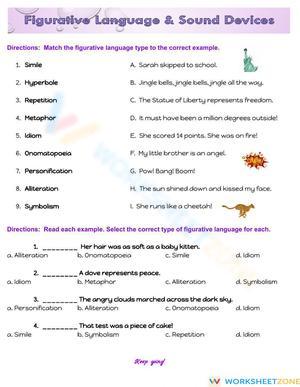
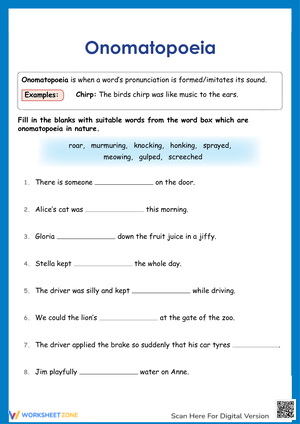
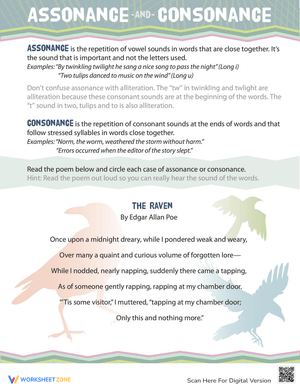
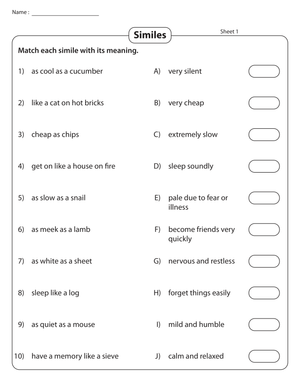
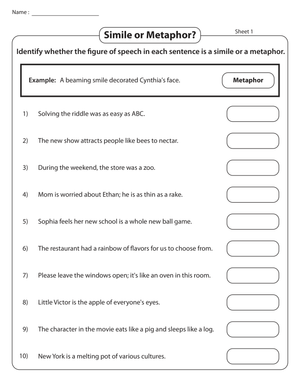
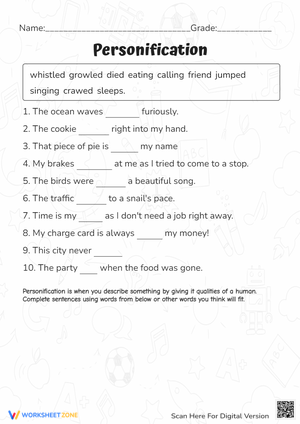
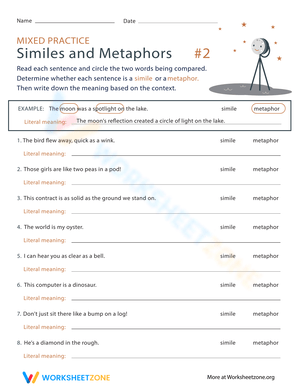
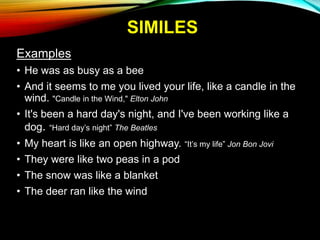
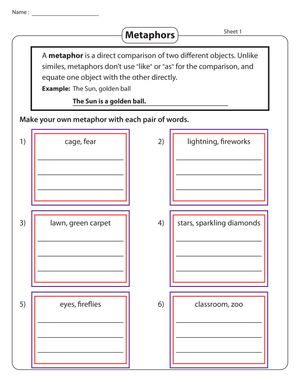
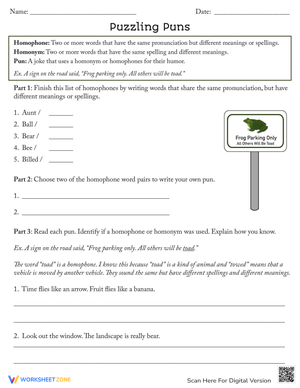
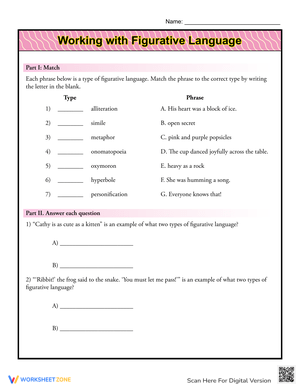
Each worksheet targets one of six figurative language types or combines several in a mixed review format. Those six — similes, metaphors, idioms, hyperbole, personification, and alliteration — are the ones that surface most often in the narrative and informational texts fifth graders encounter across the school year. Within each type, the task demands vary: students underline a figurative phrase, mark whether a comparison uses "like" or "as" to distinguish simile from metaphor, rewrite an idiom in plain language, or write a sentence explaining how a hyperbole shapes the reader's impression of a subject.
Focused worksheets and mixed review worksheets serve different instructional moments. A full worksheet on idioms belongs early in a teaching sequence, when students need enough repetition to stop guessing and start reasoning from context. Mixed review belongs after students have encountered multiple types — it forces the discrimination work that happens in actual reading, where the text does not announce which device is coming. Both formats are present here, which means figurative language printable worksheets for 5th grade can carry different phases of instruction without requiring teachers to source materials separately.
Frequent Errors Worth Anticipating Before Students Sit Down
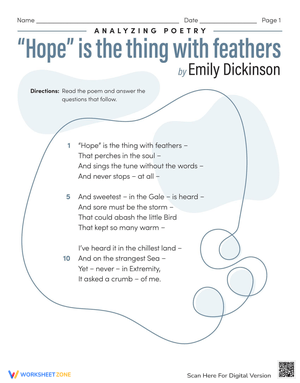
The most persistent confusion at this grade level is not between simile and metaphor — most fifth graders have heard those terms since third grade. The real sticking point is that students identify the device correctly and then stop, as if naming it were the whole task. A student circles "the sky was a gray blanket," writes "metaphor" beside it, and moves on. When asked what the comparison communicates, they write "the sky is like a blanket" — restating the image without interpreting it. The actual interpretation, something like the sky felt heavy, sealed in, oppressive, is the step that feeds into reading comprehension and written response. Worksheets that require a second line of response — explain what this phrase means — surface that gap in roughly the first five minutes of independent work.
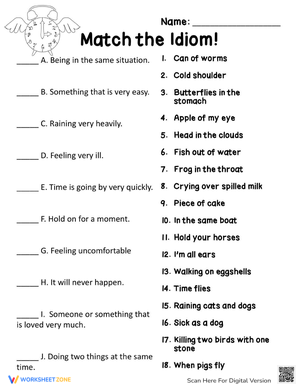
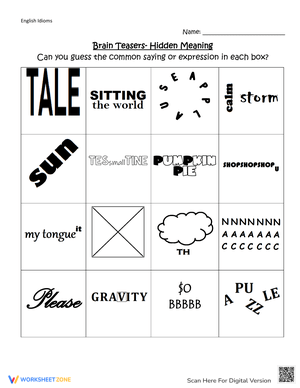
Idioms produce a different error. Students pattern-match from memory rather than read for context clues. "Break a leg" gets correct answers because the phrase is familiar, but "bite off more than you can chew" or "the ball is in your court" get guessed rather than reasoned through. When a worksheet places an idiom inside a short paragraph, students have to use surrounding language — which is uncomfortable for students who have learned to rely on recognition. Worth naming that expectation aloud before students begin.
With hyperbole, the error runs in the other direction: students apply the label too broadly. Any exaggerated description becomes hyperbole, including similes that use exaggeration. "She ran faster than lightning" gets marked as hyperbole because students remember that hyperbole means exaggerated language. Spending two minutes before the worksheet on the difference between an exaggerated comparison and a direct exaggeration prevents most of the re-teaching that otherwise shows up at the end of the period.
Standard Alignment
The primary standard is CCSS.ELA-LITERACY.L.5.5, which addresses understanding of figurative language, word relationships, and nuances in word meanings. Specifically, L.5.5a asks students to interpret figurative language — including similes and metaphors — in context, and L.5.5b asks students to recognize and explain common idioms, adages, and proverbs. Both sub-standards require interpretation within context, not identification alone, which is why worksheets that embed figurative language in sentences or short passages align more directly than those that present isolated examples with no surrounding text. A worksheet asking students to match a list of idioms to their definitions addresses vocabulary knowledge but does not yet meet the standard's demand. A worksheet asking students to read a short paragraph and explain what an idiom means from the surrounding context does. That distinction matters when you are planning instruction toward L.5.5 specifically, rather than using these resources as a supplement to a broader reading unit.
How to Work These Worksheets Into Your Lesson Plans Without Overthinking It
The most efficient use of this set is a short, recurring routine rather than an isolated figurative language unit. Pull a focused worksheet during the 10 to 12 minutes before specials or at the opening of reading block on Monday after morning meeting — not as filler, but as a low-stakes retrieval moment. Students work independently, you circulate and scan responses, and you close with one question: "What does this phrase actually mean in plain English?" That question consistently reveals who understood the task and who finished quickly by pattern-matching.
Passage-based worksheets belong later in the week, when students have already had instruction on the device type. They take roughly 15 minutes when you include a short debrief, but they produce better preparation for text-based discussion and written response. If your class is reading a shared novel or mentor text that contains figurative language, assign the passage-based worksheet the same day students encounter those lines. The connection between the practice worksheet and the classroom text is what makes the skill transfer.
For sub plans, figurative language printable worksheets for 5th grade work cleanly because the directions are self-contained and the task has a visible endpoint. Students circle, underline, or rewrite — they are not waiting for teacher modeling to begin. Pair the worksheet with a direction on the board and an answer key, and a substitute can manage the routine without additional explanation.
Adjusting the Set for a Range of Learners
For students still building reading fluency, the most useful adjustment is reducing text density. Choose worksheets with sentence-level examples rather than paragraph-length passages — the figurative language task stays intact, but the reading demand drops enough that the language work stays in focus. A brief reference card listing each device name and one example is not a shortcut; it is a working memory support that keeps students in the task instead of stalling on recall.
Students ready for more challenge benefit from a writing layer added to any identification task. After marking and explaining three metaphors on a worksheet, ask them to write an original metaphor that follows the structure of one of the examples. That addition shifts the work from interpretation to production — a harder cognitive demand that also feeds directly into writing instruction. Removing the answer structure entirely, by pulling a passage from a current classroom novel and asking students to annotate figurative language on their own, raises the difficulty further without adding new content.
Multilingual learners need the most deliberate preparation before idiom worksheets specifically. Many figurative language printable worksheets for 5th grade include idioms that are deeply culturally embedded in English — "hit the nail on the head," "the whole nine yards," "costs an arm and a leg" — and inferring meaning from context only works if there is enough surrounding context to infer from. For these students, a two-minute introduction to an unfamiliar idiom before independent work removes a guessing problem without removing any of the interpretation practice.
Frequently Asked Questions
Which figurative language types are most important to cover in 5th grade?
Similes, metaphors, and idioms generate the most useful classroom work because they appear constantly in the texts students read and they produce the most instructive misconceptions to correct. Hyperbole and personification fit naturally into a poetry unit or shared-reading sequence. Alliteration is quick to teach and makes a strong center activity or warm-up. The sequence matters less than ensuring students practice explaining what each device means — not just identifying what it is.
How long does each worksheet take to complete?
Focused worksheets run 10 to 15 minutes for on-grade-level fifth graders. Mixed review and passage-based worksheets take closer to 15 to 20 minutes when reading time and a brief debrief are included. That range makes the set flexible — short enough for a bell ringer, substantial enough for a full practice block.
Do these worksheets work for students reading below grade level?
Yes, with targeted adjustments. Choose sentence-level worksheets rather than passage-based ones for students who find sustained reading difficult. Pairing any worksheet with a device reference card keeps the focus on figurative language interpretation rather than reading demand. The differentiation section above covers specific strategies by learner type.
Which format works best for test prep?
Passage-based worksheets are the strongest choice. Standardized reading assessments do not present figurative language in isolation — they embed a phrase in a paragraph and ask what it means or why the author used it. Any worksheet that includes that two-part demand (identify the device, then explain its meaning in context) mirrors actual test conditions more closely than identification-only practice.












 Interactive Worksheet Maker
 Quiz Maker
 Word Search Maker
 Crossword Puzzle Maker
 Word Scramble Generator
 Sentence Scramble Generator
 Handwriting Worksheet Generator
 Name Tracing Generator
 Fill In The Blank Generator