




























0
Views
0
Downloads

0.0
0
Save
0 Likes
Share
Figurative Language – Simile or Metaphor Sorting Worksheet
0 Views
0 Downloads

Paste this activity's link or code into your existing LMS (Google Classroom, Canvas, Teams, Schoology, Moodle, etc.).
Students can open and work on the activity right away, with no student login required.
You'll still be able to track student progress and results from your teacher account.
Information
Description
What It Is:
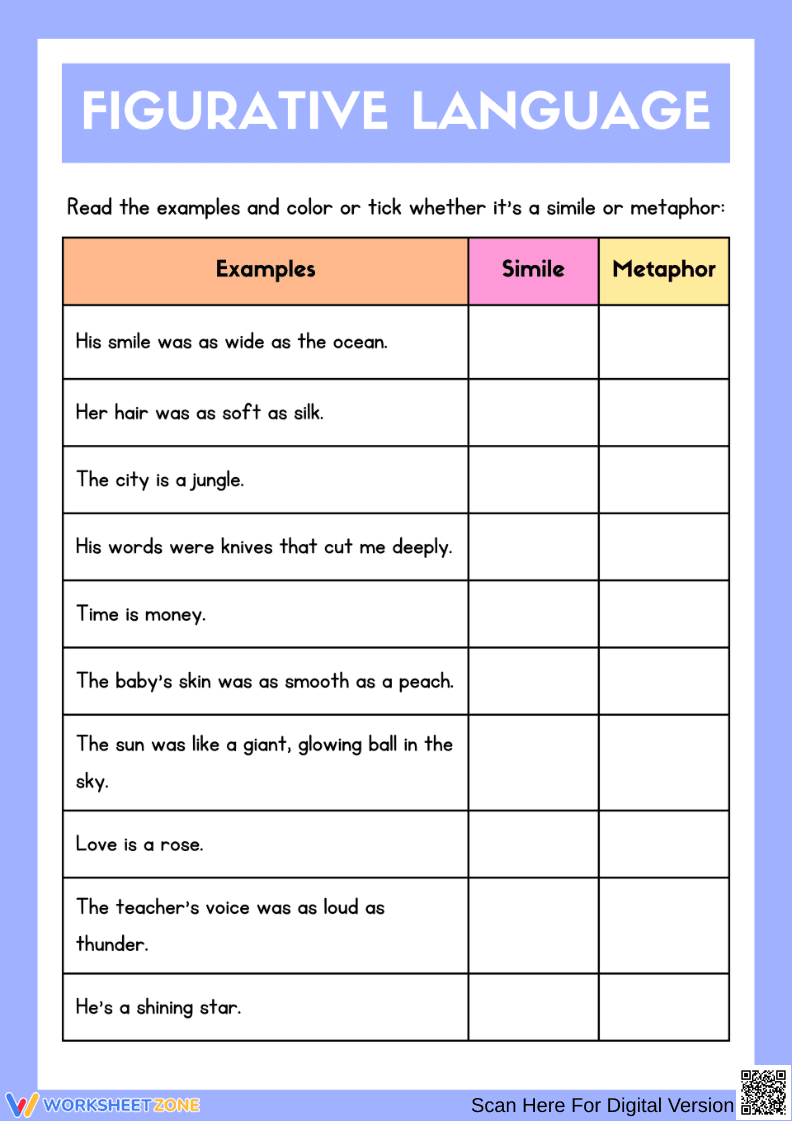
This worksheet helps students practice identifying similes and metaphors by reading sentences and marking the correct column. Each example uses descriptive comparisons that strengthen figurative language understanding.
Why Use It:
It improves students’ ability to distinguish between similes (using “like” or “as”) and metaphors (direct comparisons). This boosts comprehension, writing skills, and confidence in recognizing figurative language in stories and assignments.
How to Use It:
• Students read each sentence in the Examples column.
• Color, tick, or mark whether the sentence is a simile or a metaphor.
• Use as a literacy warm-up, center activity, assessment, or homework practice.
Grade Suitability:
Best for Grades 3–6.
• Grade 3: Simple guided practice with teacher support.
• Grades 4–6: Independent work and skill reinforcement.
Target Users:
Teachers, homeschool parents, tutors, and students practicing figurative language skills.
This worksheet helps students practice identifying similes and metaphors by reading sentences and marking the correct column. Each example uses descriptive comparisons that strengthen figurative language understanding.
Why Use It:
It improves students’ ability to distinguish between similes (using “like” or “as”) and metaphors (direct comparisons). This boosts comprehension, writing skills, and confidence in recognizing figurative language in stories and assignments.
How to Use It:
• Students read each sentence in the Examples column.
• Color, tick, or mark whether the sentence is a simile or a metaphor.
• Use as a literacy warm-up, center activity, assessment, or homework practice.
Grade Suitability:
Best for Grades 3–6.
• Grade 3: Simple guided practice with teacher support.
• Grades 4–6: Independent work and skill reinforcement.
Target Users:
Teachers, homeschool parents, tutors, and students practicing figurative language skills.


