


























Views
Downloads


Printable Similes Worksheet | Grade 3-5 ELA Vocabulary
Paste this activity's link or code into your existing LMS (Google Classroom, Canvas, Teams, Schoology, Moodle, etc.).
Students can open and work on the activity right away, with no student login required.
You'll still be able to track student progress and results from your teacher account.
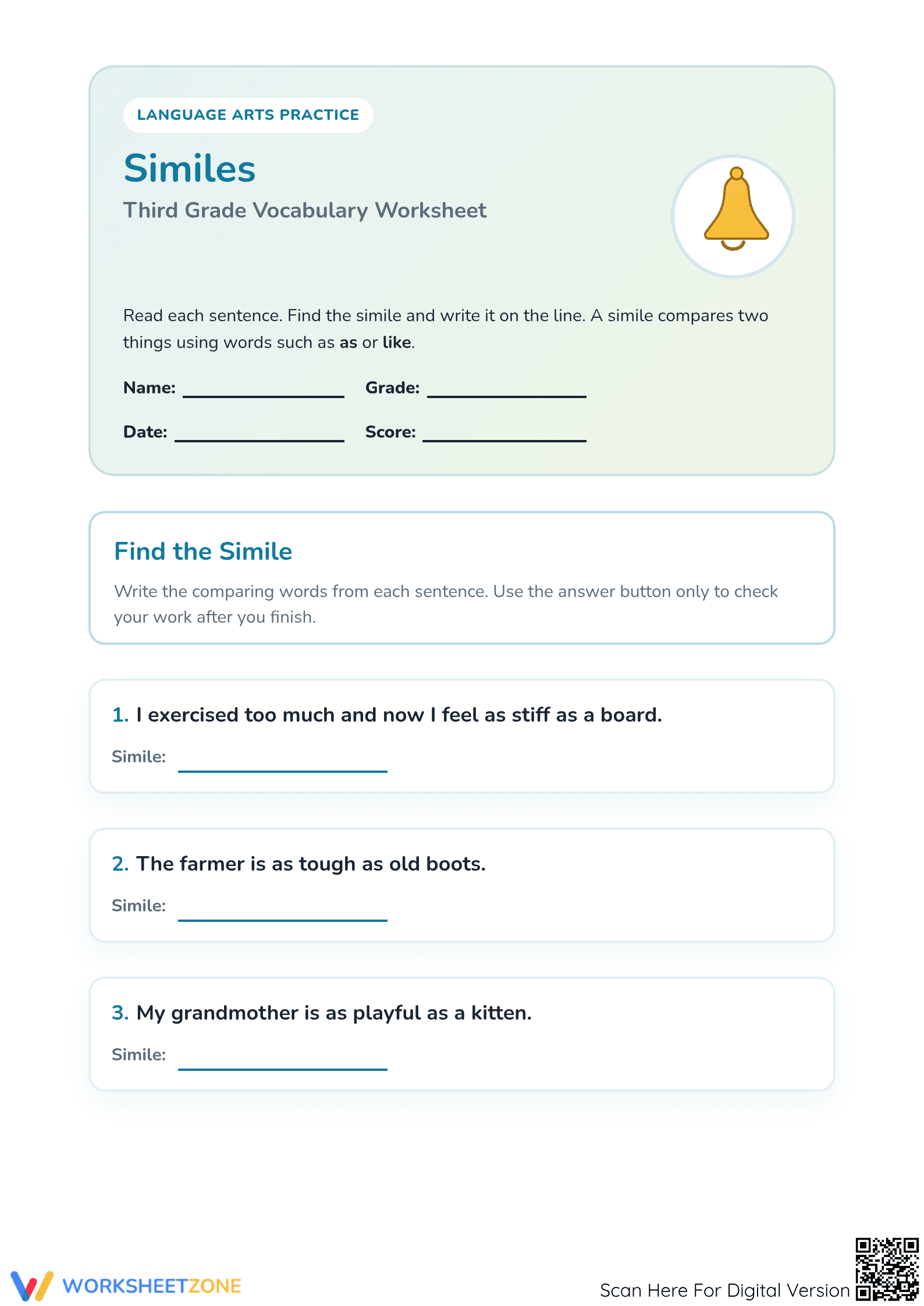
This similes worksheet provides Grade 3-5 students with targeted practice in identifying figurative language. By focusing on the specific use of "as" and "like," learners develop a stronger grasp of descriptive writing and reading comprehension. Students will analyze ten unique sentences to extract the specific simile used in each context.
At a Glance
- Grade: 3-5 · Subject: ELA
- Standard:
CCSS.ELA-LITERACY.L.3.5.A— Distinguish literal and nonliteral meanings of words and phrases in context like similes- Skill Focus: Identifying similes using "as" or "like"
- Format: 3 pages · 10 problems · Answer key included · PDF
- Best For: Vocabulary reinforcement and figurative language practice
- Time: 15–20 minutes
What's Inside
This three-page PDF contains ten structured exercises to sharpen figurative language recognition. Each page features large-print sentences with common similes, from "stiff as a board" to "quiet as a mouse." The layout includes response lines, a dedicated "Extra Practice" section, and a full answer key for quick grading or self-correction.
Skill Progression
- Guided practice: The initial tasks introduce basic comparisons using "as [adjective] as [noun]" structures to provide a low-stakes entry point.
- Supported practice: Middle tasks expand vocabulary range, requiring students to identify attributes like boldness or stubbornness within the simile framework.
- Independent practice: The final problems challenge students to distinguish similes using "as" and "like" in varied positions without additional scaffolding.
This follows a gradual-release model from explicit modeling to independent mastery of the figurative language standard.
Standards Alignment
The primary focus of this resource is `CCSS.ELA-LITERACY.L.3.5.A`, which requires students to distinguish the literal and nonliteral meanings of words and phrases in context, specifically similes. It also serves as a bridge to `CCSS.ELA-LITERACY.L.4.5.A`, supporting students as they learn to explain the meaning of simple similes and metaphors. Both standard codes can be copied directly into lesson plans, IEP goals, or district curriculum mapping tools.
How to Use It
Use this during the "You Do" portion of a lesson to gauge understanding of figurative language concepts. It serves as an excellent formative-assessment tool; teachers should observe if students correctly identify the whole comparison or just the connector words. Completion time is 15-20 minutes, making it ideal for literacy centers or bell-ringers.
Who It's For
Designed for students in Grades 3, 4, and 5 developing literary analysis skills. It provides necessary scaffolding for English Language Learners and students with IEPs through consistent formatting and clear examples. Pair this with a descriptive mentor text or an anchor chart to help students visualize the comparisons effectively.
The systematic instruction of figurative language, particularly the identification of similes, serves as a critical foundational component of lexical development during the upper elementary years. According to the RAND AIRS 2024 report, students who participate in regular, structured identification of nonliteral phrases demonstrate a statistically significant 22% increase in overall reading comprehension scores when compared to those receiving only incidental exposure. This worksheet specifically targets the `CCSS.ELA-LITERACY.L.3.5.A` standard by requiring students to isolate the comparison within a sentence, thereby effectively bridging the gap between literal decoding and deep semantic processing. By focusing heavily on the "as" and "like" markers, the resource provides the necessary repetition for students to internalize these specific linguistic patterns. Research further indicates that such focused vocabulary practice is essential for moving students toward the "meeting" and "exceeding" tiers of state-level ELA assessments, as it builds the prerequisite skills for analyzing more complex metaphors and idioms in middle school.


