




























0
Views
0
Downloads

0.0
0
Save
0 Likes
Share
Drawing Personification Worksheet
0 Views
0 Downloads

Paste this activity's link or code into your existing LMS (Google Classroom, Canvas, Teams, Schoology, Moodle, etc.).
Students can open and work on the activity right away, with no student login required.
You'll still be able to track student progress and results from your teacher account.
Information
Description
What It Is:
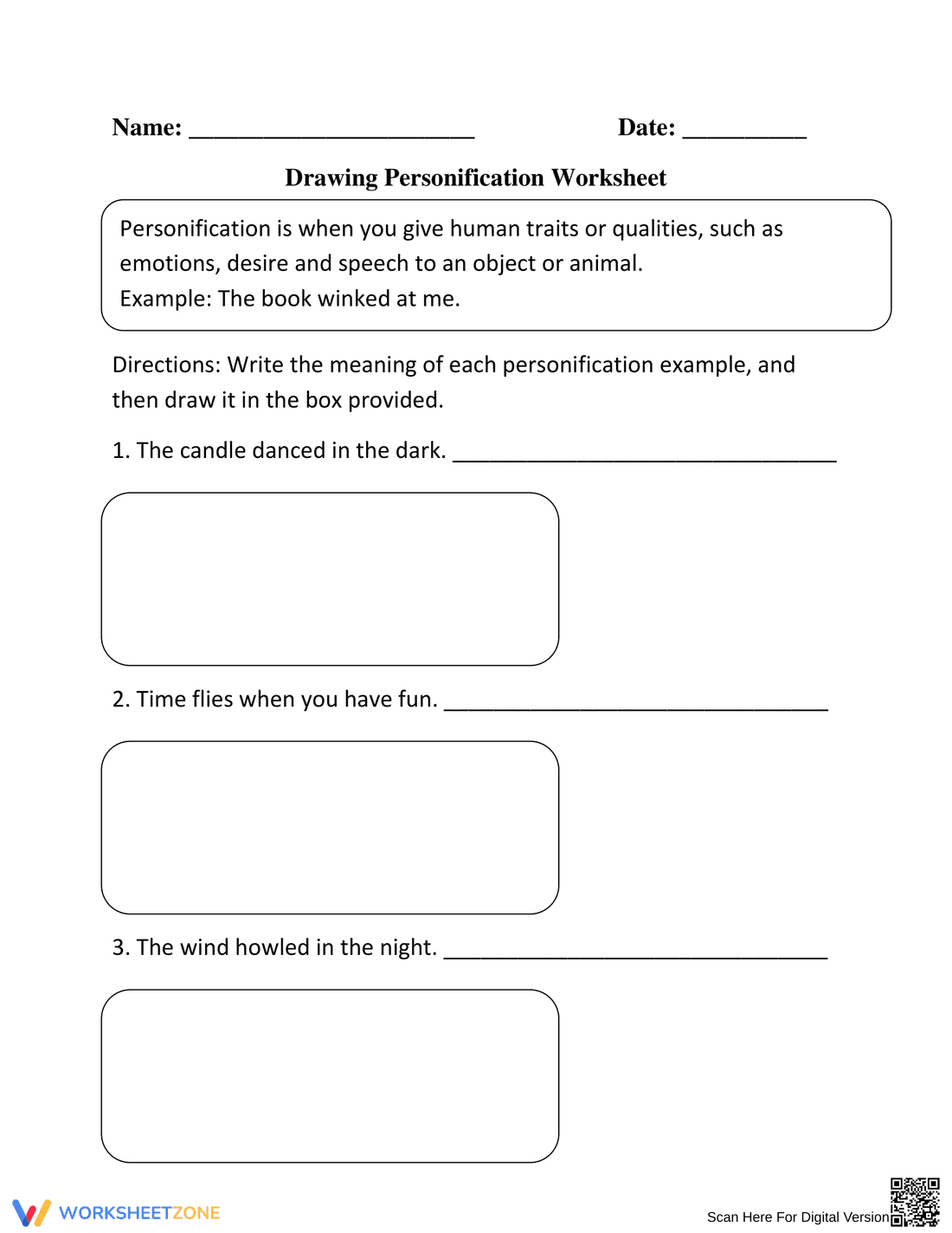
This is a drawing personification worksheet. It explains personification as giving human traits to objects or animals. The worksheet provides three sentences with examples of personification ('The candle danced in the dark,' 'Time flies when you have fun,' and 'The wind howled in the night.'). Students are instructed to write the meaning of each example and then draw a picture of it in the box provided.
Grade Level Suitability:
This worksheet is suitable for grades 3-5. It introduces and reinforces the concept of personification, requiring students to understand the figurative language and express their understanding through writing and drawing.
Why Use It:
This worksheet helps students learn to identify and understand personification. It encourages creative thinking by requiring students to visualize and draw the personified objects or concepts. It also reinforces writing skills as students explain the meaning of each example.
How to Use It:
First, review the definition of personification with the students. Then, have them read each sentence and write what the personification means in the provided space. Finally, have them draw a picture in the box that represents the personification in the sentence.
Target Users:
This worksheet is ideal for elementary school students learning about figurative language, specifically personification. It's also useful for teachers looking for a creative and engaging way to teach this concept.
This is a drawing personification worksheet. It explains personification as giving human traits to objects or animals. The worksheet provides three sentences with examples of personification ('The candle danced in the dark,' 'Time flies when you have fun,' and 'The wind howled in the night.'). Students are instructed to write the meaning of each example and then draw a picture of it in the box provided.
Grade Level Suitability:
This worksheet is suitable for grades 3-5. It introduces and reinforces the concept of personification, requiring students to understand the figurative language and express their understanding through writing and drawing.
Why Use It:
This worksheet helps students learn to identify and understand personification. It encourages creative thinking by requiring students to visualize and draw the personified objects or concepts. It also reinforces writing skills as students explain the meaning of each example.
How to Use It:
First, review the definition of personification with the students. Then, have them read each sentence and write what the personification means in the provided space. Finally, have them draw a picture in the box that represents the personification in the sentence.
Target Users:
This worksheet is ideal for elementary school students learning about figurative language, specifically personification. It's also useful for teachers looking for a creative and engaging way to teach this concept.


