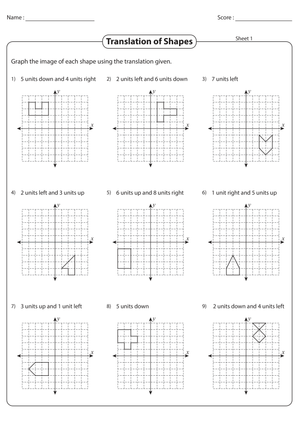
These 4th grade geometry printable worksheets give teachers a focused set of practice resources covering the three Grade 4 geometry benchmarks — identifying geometric figures, classifying two-dimensional shapes, and recognizing line symmetry — along with the angle-measurement work from 4.MD that belongs alongside geometry instruction in any real lesson sequence. Each worksheet targets one concept, so teachers can assign exactly what a lesson requires rather than sorting through a mixed-topic review.
Concepts Each Worksheet Addresses
The geometric figures worksheets start where the 4.G standards start: teaching students to distinguish lines, line segments, rays, and angles by their defining attributes. Students label diagrams using correct notation — double-headed arrows for lines, single arrows for rays, tick marks at endpoints — and draw each figure from a written description. The notation piece is harder than it appears in the planning stage; these conventions are new to most fourth graders, and written description tasks reveal quickly which students understand the definitions versus those who are pattern-matching from class diagrams.
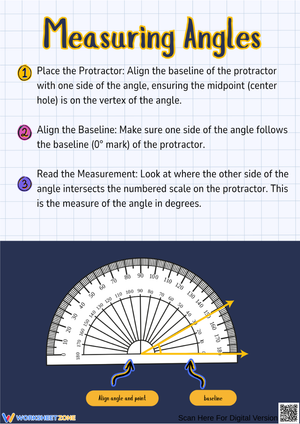
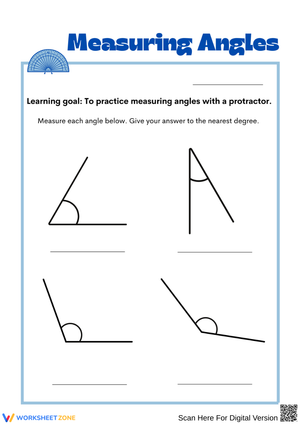
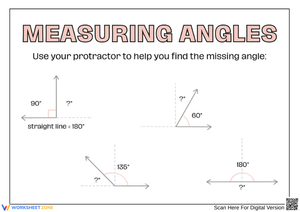
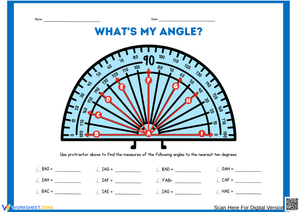
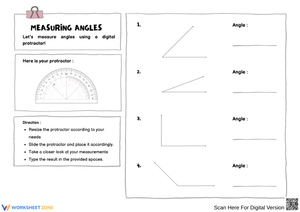
Angle work spans multiple worksheets in a deliberate sequence. Early worksheets ask students to classify angles as acute, obtuse, right, or straight by sight alone, building visual estimation before any measuring tool enters the picture. Later worksheets introduce protractor reading — students measure pre-drawn angles, then draw their own to specified degree measurements. The angles are drawn with rays long enough to reach the protractor scale cleanly, a formatting detail that matters more than it sounds when students are first learning to align the baseline.
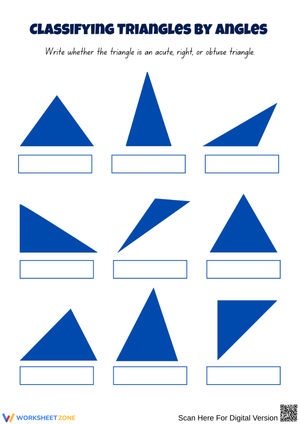
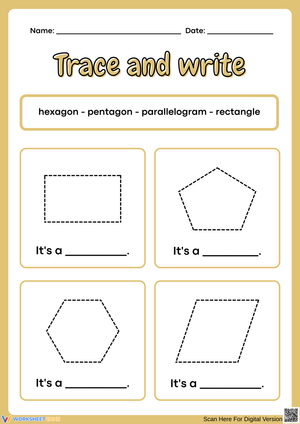
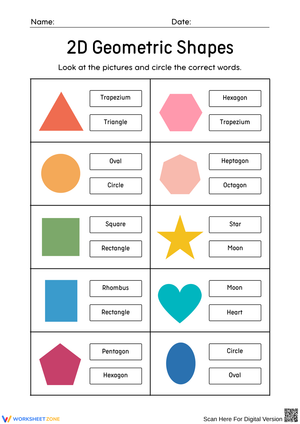
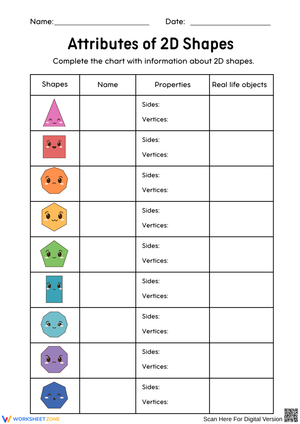
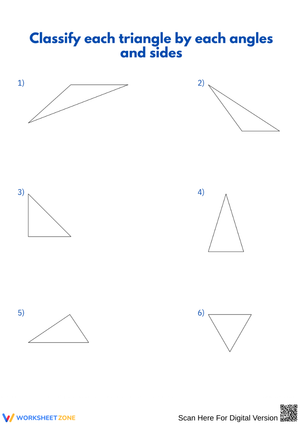
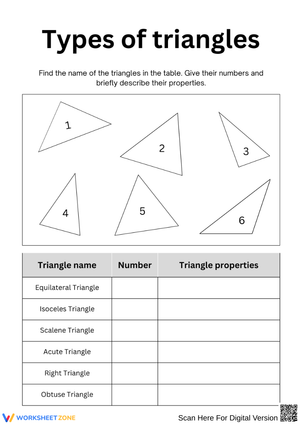
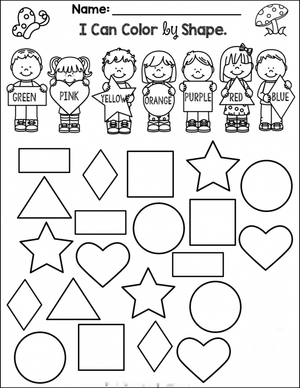
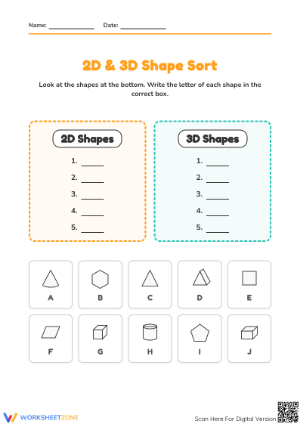
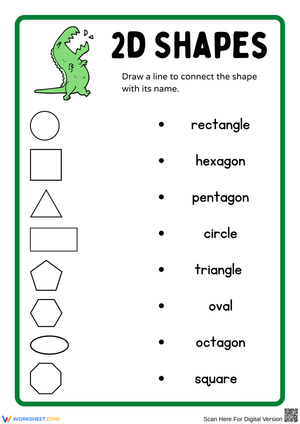
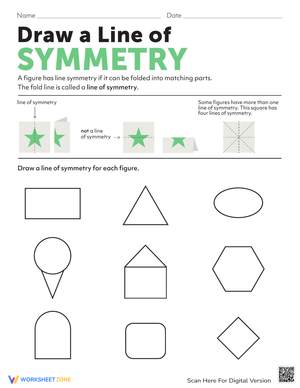
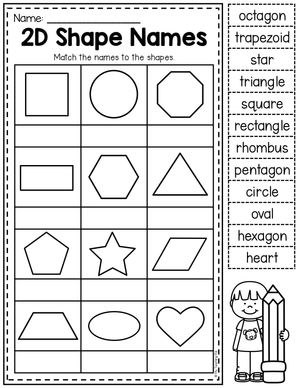
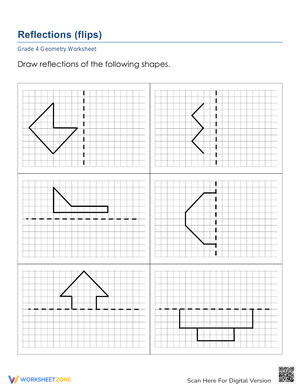
Shape-classification worksheets ask students to sort quadrilaterals and triangles by properties rather than overall appearance. Fourth graders default to visual sorting — a parallelogram that isn't tilted gets called a rectangle — so worksheets requiring written justification push students toward reasoning about attributes rather than gestalt. The symmetry worksheets close the set, asking students to draw lines of symmetry on polygons and reconstruct the missing half of a symmetrical figure using grid lines as a guide.
Errors That Surface Reliably in Grade 4 Geometry Work
The protractor error is nearly universal during initial measurement practice. When students measure an obtuse angle — one that opens to about 130°, for example — they read the inner arc of the scale and record 50°. The number is the supplement, and students land on it because they start counting from the wrong baseline without realizing it. Each measurement worksheet pairs the protractor task with a prior classification step: students mark the angle as acute or obtuse before picking up the tool. That one prior step makes the wrong reading obviously wrong before they write it down.
Symmetry generates a different and equally predictable error. Students accept horizontal and vertical lines of symmetry without much resistance, then balk at diagonal ones even when the diagonal clearly works — a square is the standard case where this breaks down. The pushback often sounds like "that's not a fold line" or just a refusal to draw diagonally. A separate error runs in the opposite direction: students draw a symmetry line through the center of an asymmetrical figure because the line looks visually balanced. Both patterns appear in the worksheets and are worth addressing whole-class before students move to independent work.
On notation worksheets, students frequently draw rays with arrows on both ends, carrying over what they just practiced with lines. It is a direct interference effect from the instructional sequence — lines are taught first, rays second — rather than a genuine conceptual misunderstanding. Catching it in the first worksheet prevents it from hardening into a habit that persists across the unit.
Where These Worksheets Fit in a Geometry Unit
The angle-identification worksheets work well as an opening warm-up in the first week of the unit — about eight minutes of independent work while morning routines wrap up. The task is visual and accessible enough that students who arrive unsettled still engage, and it surfaces anyone who is uncertain about acute vs. obtuse before the day's main lesson begins. These 4th grade geometry printable worksheets also hold up well at the end of a lesson block, giving teachers a quick read of where students stand before the next day's planning decisions need to be made.
Shape-classification worksheets run cleanly as math center tasks because students can work through sorting and justification steps without teacher facilitation once the criteria are clear. Setting the worksheet out alongside a set of shape attribute cards gives students a physical reference while they write. The symmetry worksheets work as extension tasks for early finishers — they are engaging enough that students who complete main tasks quickly will keep working without prompting.
Standard Alignment
The figure-identification and classification worksheets address 4.G.A.1 (draw and identify points, lines, line segments, rays, angles, and perpendicular and parallel lines) and 4.G.A.2 (classify two-dimensional figures by the presence or absence of parallel or perpendicular lines, or angles of a specified size). In a standard unit sequence, 4.G.A.1 work precedes 4.G.A.2 by roughly a week — solid notation is a prerequisite for classification tasks to make sense. The symmetry worksheets address 4.G.A.3. The 4th grade geometry printable worksheets in this set note each standard code in the footer, so teachers can log coverage for planning records without cross-referencing separately.
The protractor worksheets connect to 4.MD.C.5, 4.MD.C.6, and 4.MD.C.7, covering the angle concept, measurement with a protractor, and additive angle relationships. These standards carry a measurement domain code but belong in geometry instruction — most teachers fold them into the geometry unit rather than treating them as a separate measurement sequence, and the worksheets are sequenced accordingly.
How to Adapt These Resources for Different Learner Readiness
Students who struggle with notation benefit from a small reference card kept at their workspace during figure-identification work — a visual showing a line (arrows on both ends), segment (endpoints only), and ray (one endpoint, one arrow). That reference reduces the memory demand so students can focus on applying the definitions rather than retrieving them mid-task. Once the notation is automatic, the card comes away.
For students who move through classification and symmetry quickly, open-ended construction tasks hold their attention better than additional sorting. Asking a student to name a quadrilateral with exactly one pair of parallel sides and no right angles — and then draw it — requires deeper geometric thinking than any fill-in task in the set. Students who find the standard exercises too mechanical tend to engage seriously with constraints like these.
Students who stall on protractor worksheets are often carrying too many procedural steps in working memory at once. Having them write out a four-step process — estimate the type, align the center point, read the correct scale, check against the estimate — and mark each step before moving to the next angle is more effective than a second verbal walkthrough of how the tool works.
Frequently Asked Questions
Do these worksheets include answer keys?
Yes. Each worksheet in the set comes with a corresponding answer key. The protractor keys note an acceptable range of plus or minus 2 degrees rather than a single target number, which accounts for realistic variation in how students align the tool to a printed diagram.
How are the angle worksheets ordered within the set?
Six worksheets cover angle work in sequence: two focus on visual classification of angle types without any measurement, two address protractor reading with pre-drawn angles, and two require students to draw angles to specified degree measurements. Teachers working through the unit typically use the visual classification worksheets before introducing the protractor, then move into measurement and drawing once students can sort angles by type reliably.
Can individual worksheets be pulled out for reteaching after a quiz?
Each worksheet addresses a single skill, which makes targeted reteaching straightforward. A teacher who reviews quiz data and sees that the class is solid on shape classification but uncertain on symmetry can assign just the symmetry worksheets for the next practice block. A full 4th grade geometry printable worksheets set where each resource is self-contained saves significant planning time when instruction needs to shift based on what the assessment data shows.
What file format does the download use?
The set is available as a PDF. Each worksheet prints cleanly at standard letter size, and the diagrams maintain their proportions — which matters for the protractor work, where scaled-down or distorted rays make accurate angle measurement unreliable.













 Interactive Worksheet Maker
 Quiz Maker
 Word Search Maker
 Crossword Puzzle Maker
 Word Scramble Generator
 Sentence Scramble Generator
 Handwriting Worksheet Generator
 Name Tracing Generator
 Fill In The Blank Generator