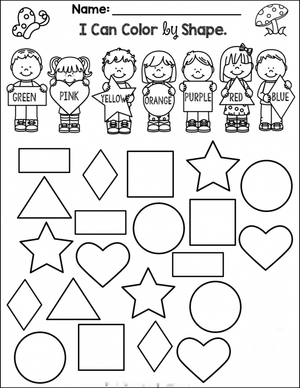
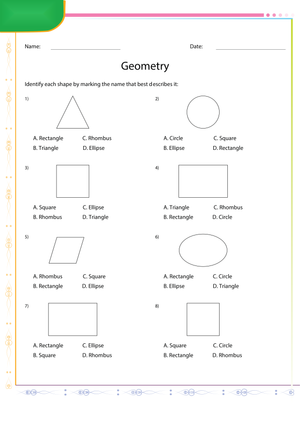
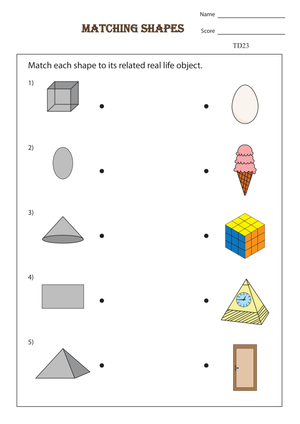
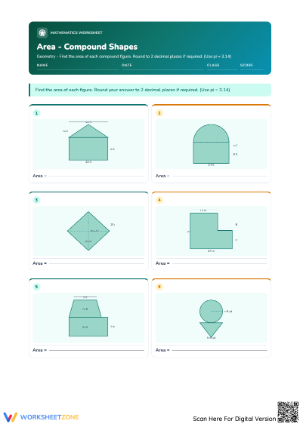
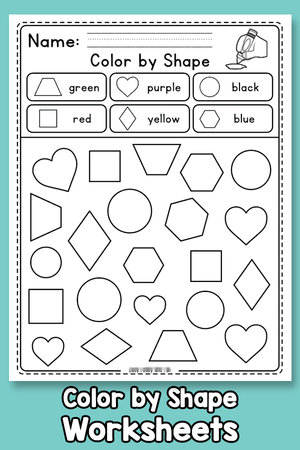
These 4th grade shapes worksheets resources shift geometry practice from passive recognition to active analysis — the exact cognitive move Grade 4 math demands. Students at this level are no longer simply labeling a rectangle; they are identifying that it has two pairs of parallel sides and four right angles, then using those properties to sort it within a family of quadrilaterals. The set covers that analytical work across plane figures, angle classification, symmetry, and basic three-dimensional vocabulary.
The Specific Skills Targeted
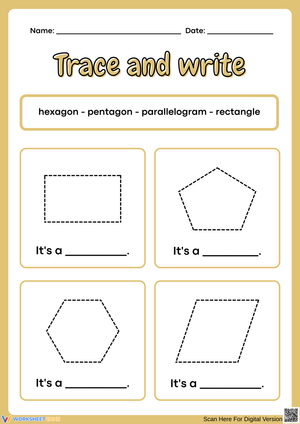
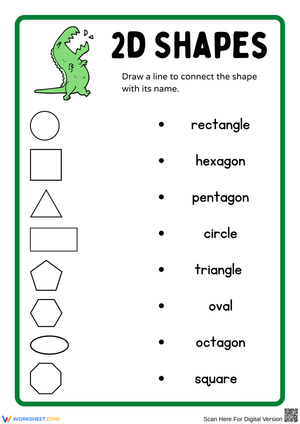
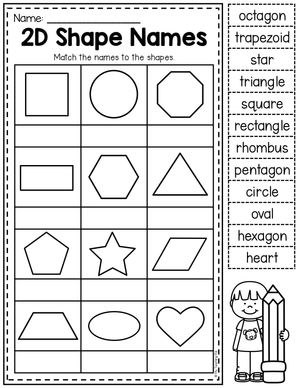
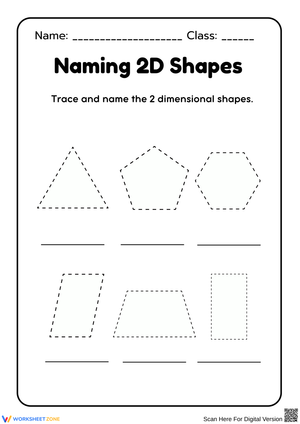
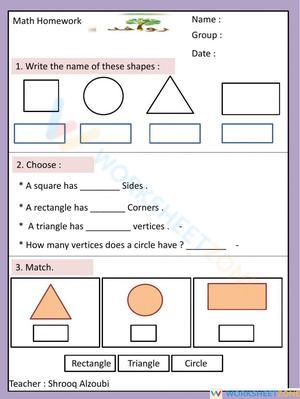
Quadrilateral classification takes up substantial space in the Grade 4 geometry standard, and for good reason — the hierarchy is genuinely confusing to nine- and ten-year-olds. Each worksheet in this strand asks students to sort shapes by whether they have parallel sides, right angles, or both, building toward the insight that squares are a subcategory of rectangles, which are in turn a subcategory of parallelograms. That nested relationship is not intuitive at this age; it requires repeated, deliberate exposure before it settles into reliable understanding.
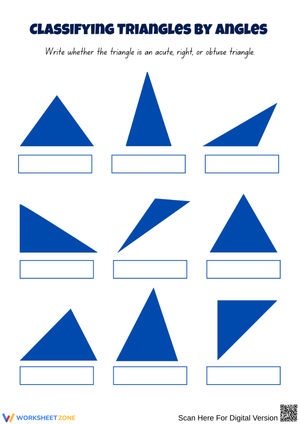
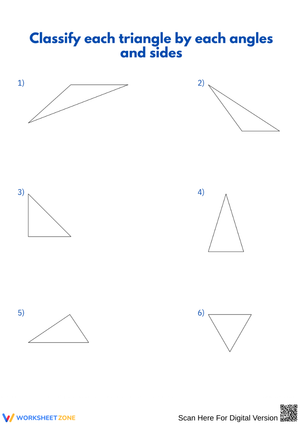
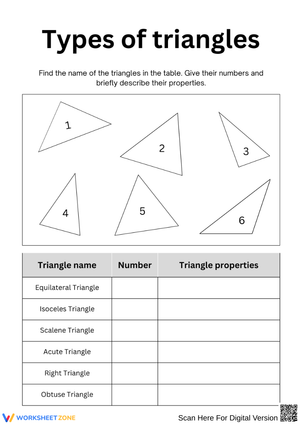
Triangle classification runs alongside the quadrilateral work. Students classify triangles by angle type (acute, right, obtuse) and separately by side length (equilateral, isosceles, scalene). The two systems are independent — an obtuse triangle can be scalene or isosceles — and the worksheets keep these classification systems distinct rather than blending them, which matters because conflating them is exactly what generates errors in student work.
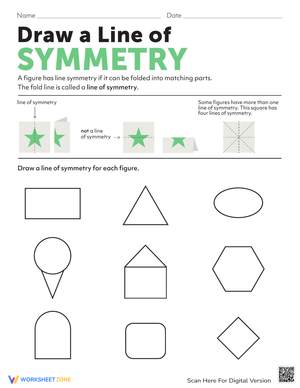
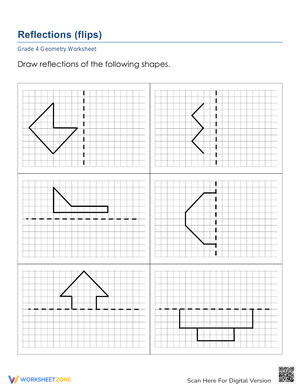
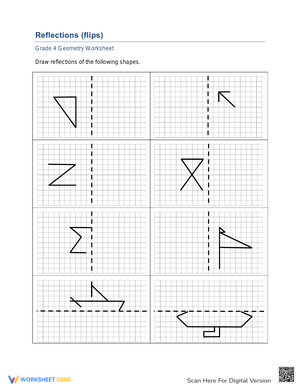
- Lines of symmetry: Students draw, count, and verify lines of symmetry across a range of polygons, including figures with zero lines of symmetry, which students consistently find surprising.
- Angle identification in context: Rather than marking angles in isolation, students locate right, acute, and obtuse angles within composite figures where orientation varies.
- Area and perimeter of rectangles: Formula application is embedded in shape-analysis tasks, keeping multiplication practice tied to geometric reasoning rather than treated as a separate drill.
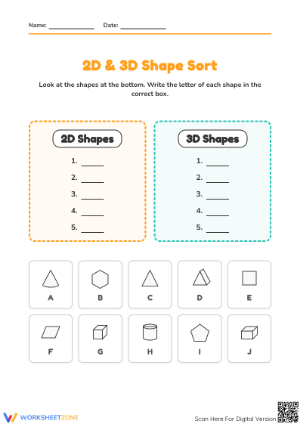
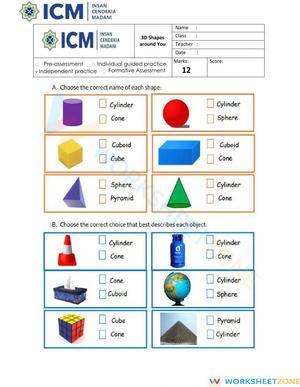
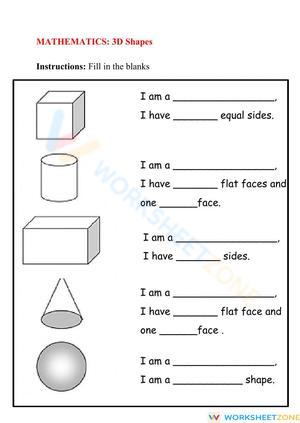
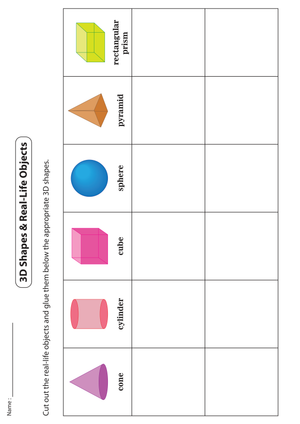
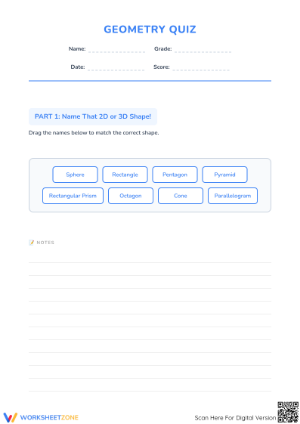
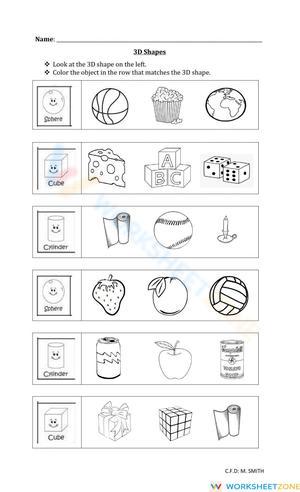
- 3D figure vocabulary: Students count faces, edges, and vertices on cubes, rectangular prisms, and pyramids, building the descriptive language used in later geometry work.
Student Errors Teachers Should Be Ready to Catch in This Unit
Orientation confusion is the most persistent problem in Grade 4 geometry. Rotate a square 45 degrees and ask students to name it — a notable portion will say "diamond" without hesitation, not because they have forgotten the definition, but because their mental image of "square" is locked to a specific visual position. Worksheets that present shapes in non-standard orientations throughout the unit force students to separate the definition from the picture across multiple practice sessions, not just once during the lesson introduction.
The square-rectangle relationship generates a particular kind of confusion worth understanding before you teach it. Students who accurately identify that a rectangle requires four right angles and two pairs of parallel sides will often sort a square into the rectangle column correctly on a classification chart — and then be genuinely surprised they did. That surprise is useful data: the student has solid property knowledge but hasn't yet built the concept that geometric categories can nest inside each other. A brief conversation prompted by what you see on the worksheet usually resolves this faster than reteaching the classification rules from the beginning.
Symmetry errors take a recognizable form. Students draw a diagonal line from corner to corner on a rectangle and mark it as a line of symmetry. The two resulting triangles look roughly equal at a glance. Ask those students to fold the printed worksheet along that diagonal — the halves won't align. The physical test is more persuasive than any explanation, because students feel the mismatch rather than simply being told it exists.
How to Work These Worksheets Into Your Planning
Slipping a 4th grade shapes worksheets printout into a clear dry-erase pocket turns a single-use handout into a reusable center station. Students use whiteboard markers and a ruler to draw lines of symmetry, trace parallel sides, or mark angles directly on the sleeve, then wipe it clean for the next group. Math centers that would otherwise require printing fresh copies every day run on the same set of worksheets all week.
For whole-group instruction on quadrilateral classification, a color-coding step before sorting pays dividends. Ask students to highlight parallel sides in one color and mark right angles with a small corner square in another. That annotation forces them to verify each property before writing a classification — which cuts down on the reflexive "it looks like a rectangle" answers that appear when students work too quickly. The marking becomes the thinking, not a decoration added after the fact.
A short worksheet also works well as a lesson-closing formative check. Ten targeted questions on angle types at the end of a lesson give you readable data within a few minutes. A student who confuses acute and obtuse vocabulary responds well to an anchor chart; a student who knows the vocabulary but misidentifies angles drawn in non-standard positions needs more visual practice. Those are different instructional next steps, and the worksheet tells you which student needs which.
Standard Alignment
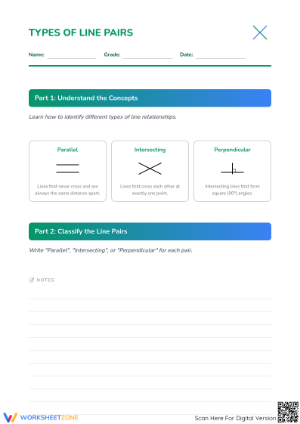
The worksheets map to CCSS.MATH.CONTENT.4.G.A, the full Grade 4 geometry domain. 4.G.A.1 — drawing and identifying points, lines, line segments, rays, angles, and perpendicular and parallel lines — appears in the early worksheets of the unit, when teachers are building foundational vocabulary before moving into classification work. 4.G.A.2 is the classification standard for triangles and quadrilaterals and anchors the largest portion of the set; most teachers spend the bulk of their geometry unit here before moving on. 4.G.A.3 covers lines of symmetry, which typically lands at the end of the unit as a natural conceptual close, and the symmetry worksheets sequence from regular polygons — where symmetry lines are easier to locate — toward irregular figures where students must test rather than estimate.
Differentiating the Set for a Range of Learners
Students who are still building shape vocabulary benefit from working alongside a reference card that lists each shape name and its defining properties. The goal isn't to reduce challenge — it's to make sure vocabulary gaps don't obscure conceptual understanding. A student who understands what parallel means but confuses "rhombus" and "parallelogram" at the word level produces the same wrong answer as a student with no idea what parallel means. The reference card helps you tell them apart, which matters for choosing what to reteach.
For students who move through classification work quickly, the next step is written justification. Once they can sort quadrilaterals accurately, push them to write one sentence explaining why a square belongs in the rectangle column — using property-based language, not just shape names. Students who can produce that explanation are ready to engage with open-ended classification problems: could a given shape belong to two different categories at the same time, and what properties would it need? Some worksheets in the set include response items that support exactly this kind of extended reasoning.
Frequently Asked Questions
What shapes are the focus of Grade 4 geometry?
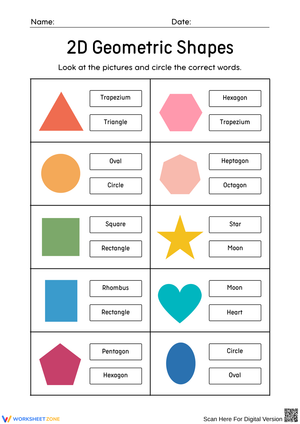
The primary focus is two-dimensional polygons, especially quadrilaterals and triangles. Students work with parallelograms, rectangles, squares, rhombuses, and trapezoids in the quadrilateral strand, and classify triangles by both angle type and side length. Lines of symmetry apply across a broader range of figures. Three-dimensional shapes — cubes, prisms, pyramids — appear as vocabulary and descriptive practice rather than formula application at this grade level.
Can these worksheets serve as standalone review tools outside of a geometry unit?
Each worksheet covers a focused skill, so they work well for targeted review — before a unit test, as end-of-year practice, or as make-up work for a student who missed a specific lesson. A 4th grade shapes worksheets makes a reliable homework tool as well, because the geometric figures are clearly drawn and static; students can interpret what they're looking at without a teacher nearby to clarify.
How do these resources work for students who need extra visual support?
Printed worksheets carry a practical advantage here: students can physically rotate them to view a shape from a different angle, use a ruler to measure and compare sides directly on the paper, or fold along a proposed symmetry line to test whether the two halves actually align. A 4th grade shapes worksheets pairs especially well with pattern block manipulatives during quadrilateral classification work — students build a shape with blocks, then annotate the matching figure on the worksheet, connecting physical construction to written analysis.
Do these worksheets align to CCSS geometry standards for Grade 4?
The set maps directly to 4.G.A.1, 4.G.A.2, and 4.G.A.3 — the three standards that make up the Grade 4 geometry domain. Each worksheet targets a specific standard, so teachers can pull individual worksheets based on where their students are in the unit rather than working through the full set in a fixed order.













 Interactive Worksheet Maker
 Quiz Maker
 Word Search Maker
 Crossword Puzzle Maker
 Word Scramble Generator
 Sentence Scramble Generator
 Handwriting Worksheet Generator
 Name Tracing Generator
 Fill In The Blank Generator