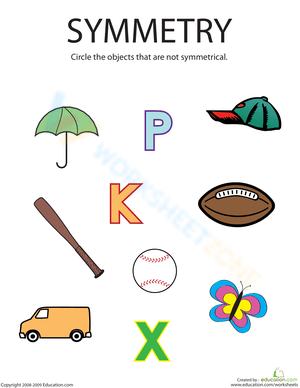
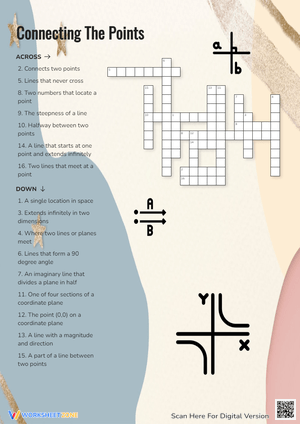
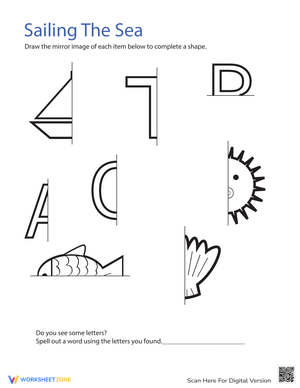
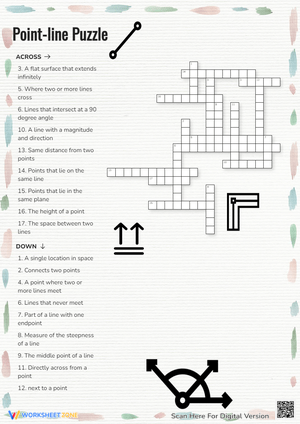
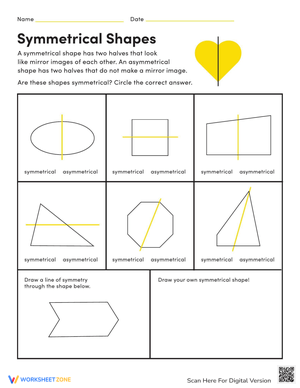
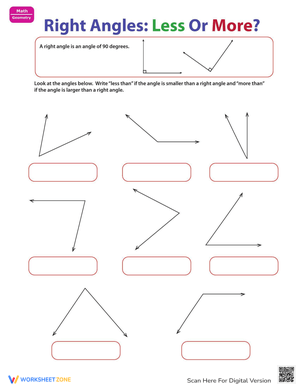
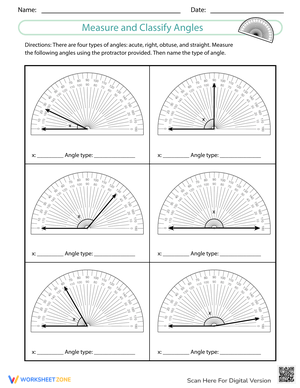
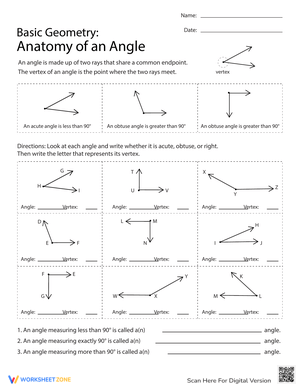
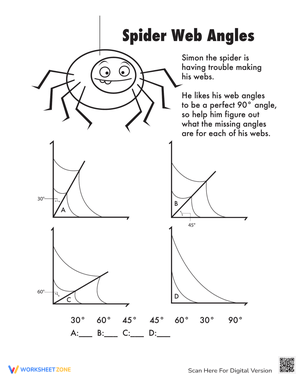
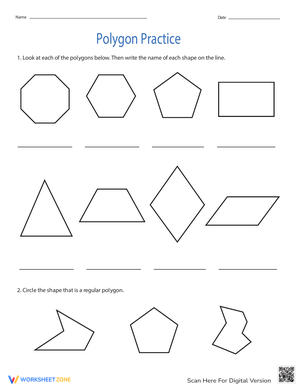
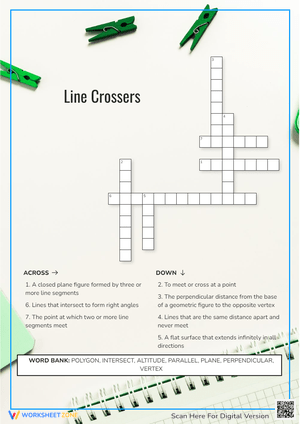
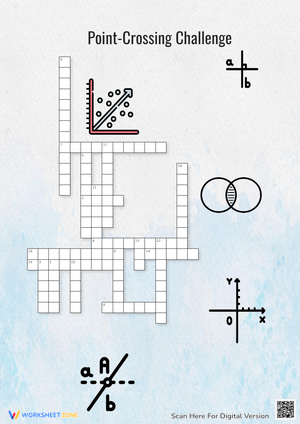
These 4th grade lines worksheets resources give teachers a print-ready way to address one of the most vocabulary-dense units in elementary geometry — the stretch where students must hold six terms in working memory simultaneously and apply them correctly to both labeled diagrams and original drawings. Each worksheet focuses on a single skill category rather than cramming everything into one task, which keeps cognitive load manageable and makes it much easier to pinpoint exactly where a student is getting stuck.
Concepts Each Worksheet Addresses
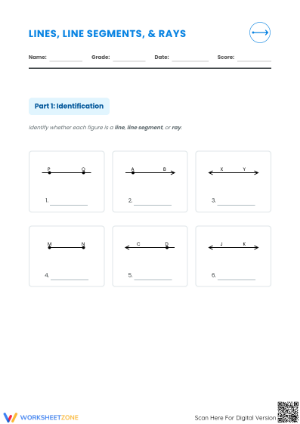
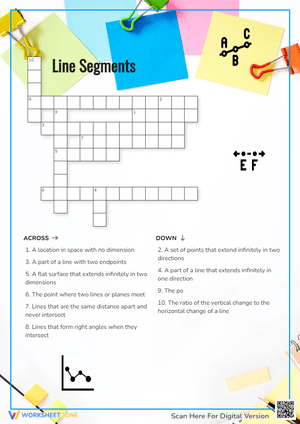
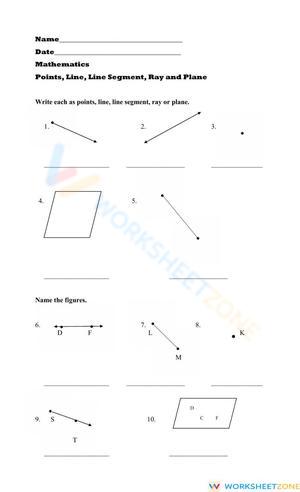
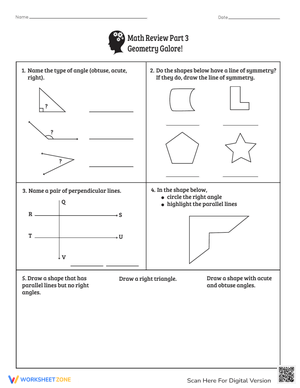
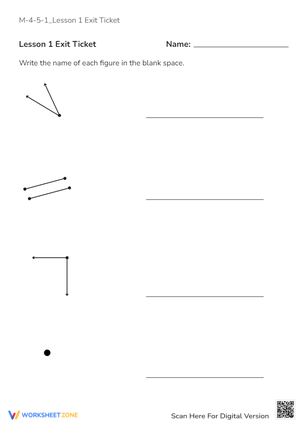
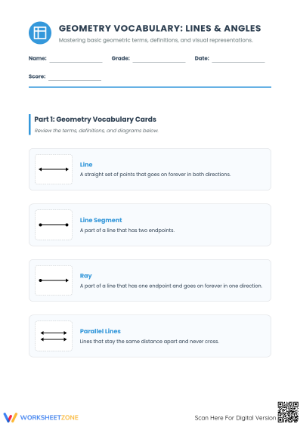
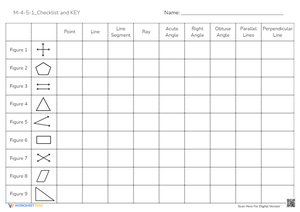
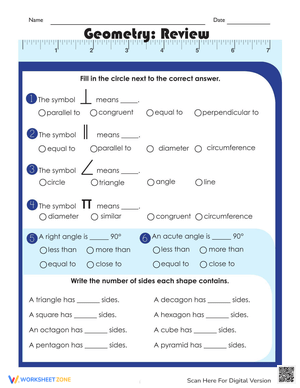
The resources in this 4th grade lines worksheets collection work through three content categories, each with its own dedicated worksheet or pair of worksheets. The first covers the line, line segment, and ray distinction: students identify each figure from a diagram, write the correct name, and draw each one using accurate notation — double arrows for a line, a single arrow for a ray, and closed dots marking endpoints on a segment. The second category focuses on classifying line pairs as parallel, perpendicular, or intersecting, with several worksheets requiring written justification rather than just a check mark. The third category embeds line types inside two-dimensional shapes, asking students to identify the parallel sides of a trapezoid, mark the perpendicular corners of a rectangle, or locate the intersecting diagonals inside a quadrilateral. That third group covers the part of the standard that is easiest to skip — recognizing line relationships inside figures, not only in clean isolation.
Predictable Errors in Lines and Classification Work
The most durable misconception is treating intersecting and perpendicular as synonyms. Students see two lines crossing and automatically write "perpendicular" — because so many introductory diagrams do show tidy right angles. The worksheets that show oblique intersecting lines correct this directly: students must explain in writing why a given pair is not perpendicular, which forces engagement with the actual definition rather than matching a familiar visual pattern.
Notation errors are a second reliable problem. A student will correctly identify a figure as a ray but sketch it without an arrow, or draw a line with an arrow on only one end. On its own, that kind of slip is ambiguous — it could reflect a conceptual gap or just a careless moment. The drawing worksheets address this by including a small notation check beside each prompt, where students indicate whether their figure has zero, one, or two arrows and zero, one, or two endpoints before they draw. That step turns notation from an afterthought into a thinking task.
Fitting These Worksheets Into Your Geometry Block
The labeling worksheets work best at the very start of a lesson — before direct instruction — as a quick pre-assessment move. What students mark correctly, or mismark, tells you which misconceptions to address in the next fifteen minutes. Sorting worksheets (parallel vs. perpendicular vs. intersecting) fit better after vocabulary instruction, during guided practice while you are still circulating and listening to student reasoning. The drawing worksheets belong later in the week, once students have had two or three encounters with the terms and can apply them without glancing at the anchor chart every thirty seconds.
A brief launch routine that sharpens transfer: before students sit down with the classify-and-sort worksheet, give them three minutes to sketch or point out line-type examples from the room — the parallel rungs of a chair, the perpendicular corner where wall meets floor, the oblique lines of a window grid at an angle. When they return to their seats, they match one real-world sketch to each category on the worksheet. It takes almost no preparation and grounds the abstract classification in something physical. These 4th grade lines worksheets resources integrate into that kind of routine without any modification to the worksheet itself.
Standard Alignment
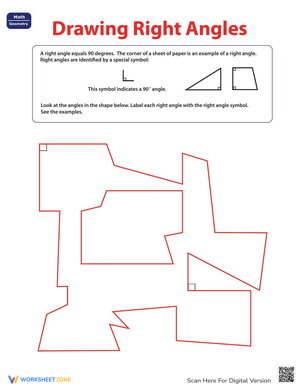
CCSS.MATH.CONTENT.4.G.A.1 asks students to draw and identify points, lines, line segments, rays, and both perpendicular and parallel lines — and then to recognize these elements within two-dimensional figures. The second half of that requirement is the one most teachers need extra worksheets for. Students who can label a ray from an isolated diagram often cannot locate the parallel sides of a given polygon without prompting. The worksheets that embed line types inside shapes, rather than presenting only clean, standalone figures, give students enough repetition with that recognition task to make it reliable before the unit assessment. Because the standard lives in the 4.G domain rather than 4.MD, it sometimes gets compressed into fewer class days than it warrants — having worksheets ready at multiple difficulty levels helps teachers move efficiently through the content without sacrificing depth.
Making the Set Work Across Learner Levels
For students still building the vocabulary, a reference card at the desk — showing each figure with its name, its notation, and one real-world example — does more than repeated teacher explanation. It keeps all six terms visible during the classification or drawing task, so students spend working memory on the actual reasoning rather than on retrieval. For on-level students, the worksheets run without modification.
Students who move through the tasks quickly and accurately are well suited for the drawing worksheets' built-in extension: construct a single diagram that contains at least one instance of each line type, then swap with a partner and label each other's figures. That reciprocal task — producing a diagram and then reading someone else's — checks both generation and recognition, which is a stronger demonstration of understanding than completing a pre-made labeling activity alone.
Frequently Asked Questions
What is the difference between a line, a line segment, and a ray — and how do I explain it to fourth graders?
A line has no endpoints and extends infinitely in both directions, drawn with arrows on each end. A line segment is a finite piece of a line with two definite endpoints, so it has a measurable length. A ray has one endpoint and one arrow — it starts at a fixed point and continues forever in one direction. A useful analogy: a flashlight beam is a ray (the bulb is the endpoint, the beam is the infinite direction). Then ask students what a line would look like — a beam going both directions with no source — which builds the distinction through contrast rather than definition alone.
How do I help students tell perpendicular lines apart from intersecting lines?
Perpendicular is a specific type of intersecting — all perpendicular lines cross, but not every pair of crossing lines meets at a right angle. The fastest physical check is what some teachers call the notecard test: place a corner of an index card at the point of intersection. If the card corner fits flush against both lines, the pair is perpendicular. If there is any gap, the lines are just intersecting. Students can replicate that gesture on worksheet diagrams using a corner of their paper before they internalize the 90-degree definition as an automatic check.
How can I use these worksheets for formative assessment rather than just practice?
The error-analysis worksheets are the most useful for that purpose. Collect them and read the written explanations before your next lesson — not just whether students marked something right or wrong, but what reasoning they gave. A student who writes "the lines are labeled parallel but they would eventually cross if extended" demonstrates a solid conceptual grip; a student who writes "the labels look wrong" is working on pattern recognition alone. These 4th grade lines worksheets resources are particularly effective at the formative stage because each worksheet stays narrow enough that the error patterns are easy to read across a class set in a few minutes.
Are these worksheets appropriate for grades other than fourth?
CCSS.MATH.CONTENT.4.G.A.1 is where this vocabulary first appears formally in the standards, so fourth grade is the primary audience. Third graders who are moving ahead in geometry can use the introductory labeling worksheets productively. Fifth graders who need to solidify the vocabulary before moving into coordinate geometry — where understanding the difference between a line and a ray matters for how students think about graphing — will find the classification and drawing worksheets useful as a targeted review rather than a full reteach.













 Interactive Worksheet Maker
 Quiz Maker
 Word Search Maker
 Crossword Puzzle Maker
 Word Scramble Generator
 Sentence Scramble Generator
 Handwriting Worksheet Generator
 Name Tracing Generator
 Fill In The Blank Generator