Good 4th grade symmetry worksheets give you a way to move students from vague, visual guessing toward a precise, testable definition of what a line of symmetry actually is. That shift matters because the skill sits inside a specific grade-level expectation, not a generic art-class activity.
What Line Symmetry Means Under CCSS.MATH.CONTENT.4.G.A.3
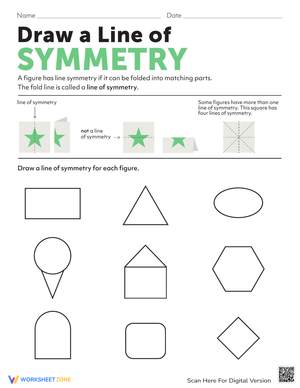
CCSS.MATH.CONTENT.4.G.A.3 asks students to recognize a line of symmetry for a two-dimensional figure as a line across the figure such that the figure can be folded along the line into matching parts. Students also need to identify line-symmetric figures on sight and draw lines of symmetry for shapes that have them. This standard lives inside the Grade 4 Geometry domain alongside 4.G.1 and 4.G.2, which cover classifying shapes by their angles and side properties, so symmetry work in your classroom should connect back to the shape vocabulary students are already building.
According to the Common Core State Standards Initiative, CCSS.MATH.CONTENT.4.G.A.3 requires fourth graders to recognize a line of symmetry as a line across a two-dimensional figure such that folding along it produces two matching parts, and to both identify and draw such lines across a range of shapes. That precise fold-based definition is the detail worksheets need to test directly, rather than asking students to simply eyeball a shape and guess.
Worksheet Formats That Build Symmetry Skills Step by Step
Not every symmetry worksheet asks the same question, and sequencing the formats well makes a real difference for retention. Consider building a short progression across a week of practice.
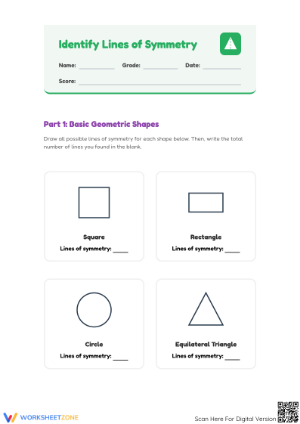
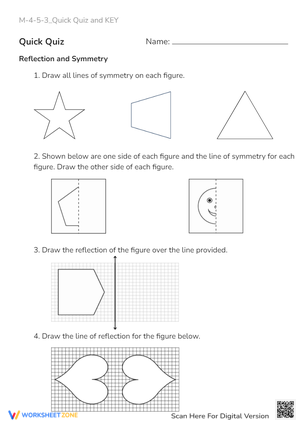
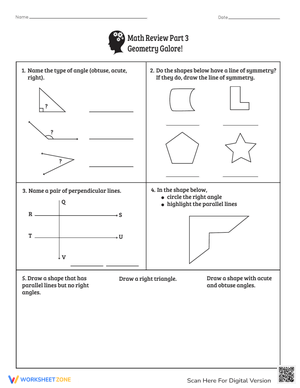
- Identifying all lines of symmetry in regular polygons, starting with squares and equilateral triangles before moving to pentagons and hexagons.
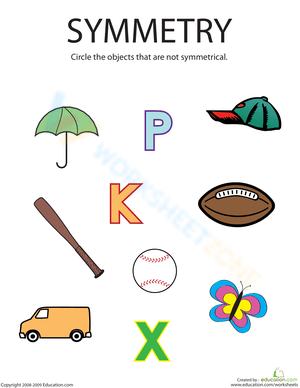
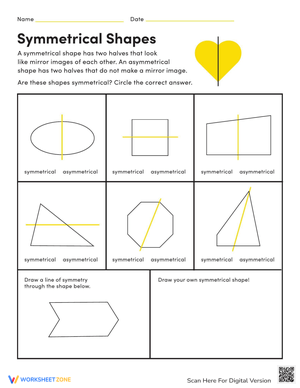
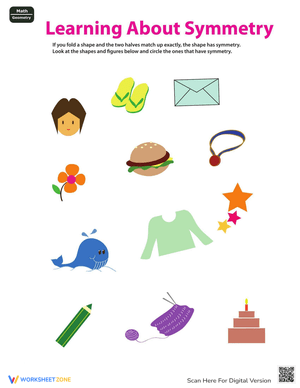
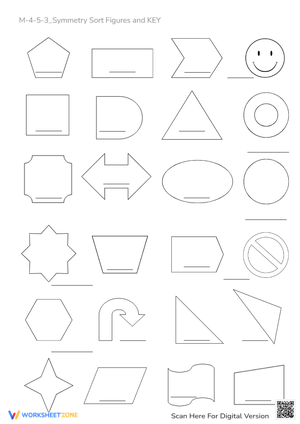
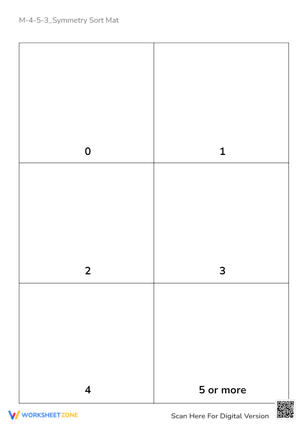
- Sorting shapes into symmetric and non-symmetric groups, which forces students to apply the fold test rather than pattern-match familiar shapes.
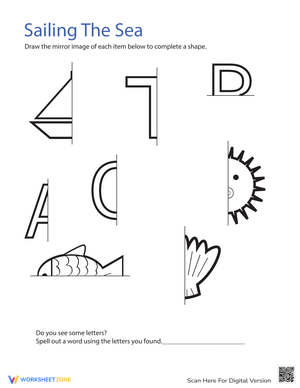
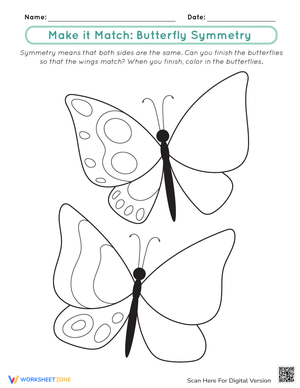
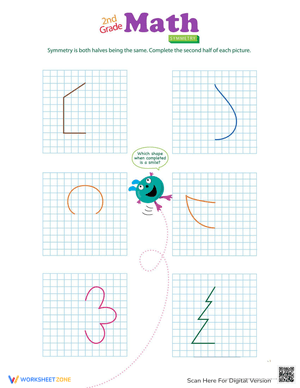
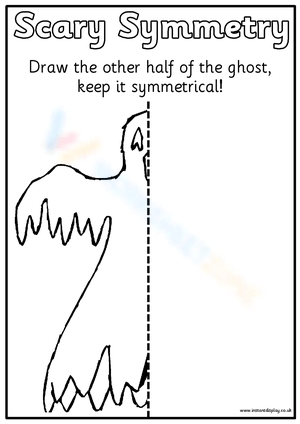
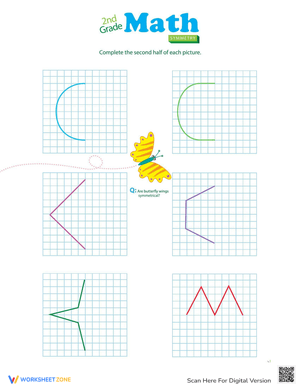
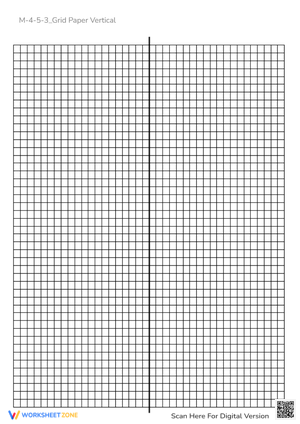
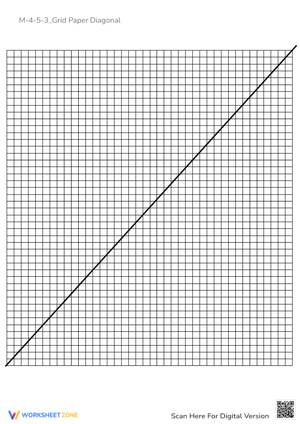
- Completing half-drawn figures on a grid, where students use a given line of symmetry to draw the missing half accurately.
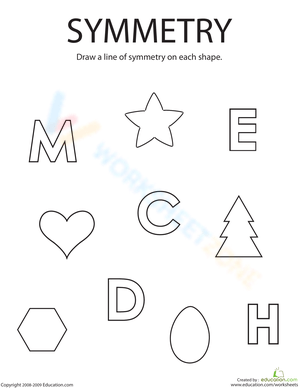
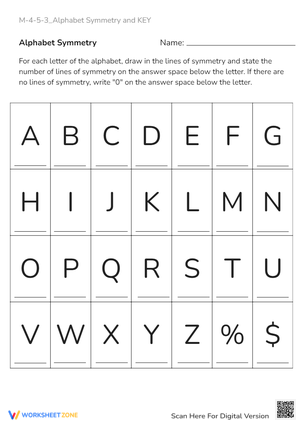
- Applying symmetry to letters and numbers, which ties the skill to something students see every day and previews the cross-curricular angle covered below.
Starting with regular polygons gives students a predictable pattern to test their thinking against, then the sorting task raises the difficulty by mixing symmetric and non-symmetric shapes together, and the completion task is the most demanding because it requires students to produce an accurate drawing rather than just make a judgment.
Teacher Tips
Symmetry worksheets work well as a five-minute formative checkpoint partway through a geometry unit, not just as a stand-alone lesson. Use one short worksheet after your fold-and-check lesson and before students move on to more abstract geometry work, so you can see which students are still relying on visual guessing rather than the fold test. Keep a few of these classroom moves in mind as you plan.
- Pull a quick exit-ticket worksheet with three or four shapes rather than a full page, so you get a clear read on understanding without eating into instructional time.
- Group students by the type of error they make: students who miss valid lines of symmetry usually need more fold-and-check practice, while students who mark lines that are not true symmetry lines usually need more explicit vocabulary work.
- Connect a symmetry worksheet to a short discussion of real classroom objects, such as window panes, classroom flags, or the covers of books on your shelf, so the skill does not stay confined to worksheet shapes.
- Save a folded example from a lesson to reference later when students draw lines of symmetry from memory on assessments.
Frequently Asked Questions
1. How many lines of symmetry does a square, rectangle, or regular polygon have, and how can worksheets teach this systematically?
A square has four lines of symmetry, a rectangle has two, and a regular polygon generally has as many lines of symmetry as it has sides. Worksheets teach this best by asking students to test each candidate line with a fold or mirror rather than memorize the count, since the counting fact should come out of hands-on testing, not the other way around.
2. What is the difference between line symmetry and rotational symmetry at the 4th grade level?
CCSS.MATH.CONTENT.4.G.A.3 focuses specifically on line symmetry, where folding a shape along a line produces matching halves. Rotational symmetry, where a shape matches itself after being turned around a center point, is not part of the grade 4 standard and is better introduced later as students move into middle school geometry and transformations.
3. How can teachers use symmetry worksheets for small-group intervention versus whole-class instruction?
For whole-class instruction, use worksheets with a mix of shape types so students see a full range of examples together. For small-group intervention, narrow the shape set to simple, familiar figures and keep fold-and-check tools on the table so students can verify each answer physically before moving to independent practice.
4. What hands-on tools pair well with printable symmetry worksheets?
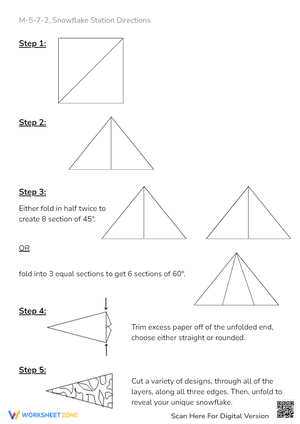
Paper folding is the most reliable tool because it mirrors the exact language of the standard. A small mirror or reflective tool is useful for shapes on a board or poster that cannot be folded, and tracing paper works well for students who need to check a drawn line of symmetry without damaging the original worksheet.
5. How do symmetry worksheets support formative assessment before a geometry unit test?
A short symmetry worksheet given midway through a unit lets you see quickly which students are still guessing visually versus applying the fold test, which gives you time to regroup students for a quick intervention before the unit assessment rather than discovering the gap only after a graded test.













 Interactive Worksheet Maker
 Quiz Maker
 Word Search Maker
 Crossword Puzzle Maker
 Word Scramble Generator
 Sentence Scramble Generator
 Handwriting Worksheet Generator
 Name Tracing Generator
 Fill In The Blank Generator