Citing Evidence From the Text Printable Worksheets for Grade 4
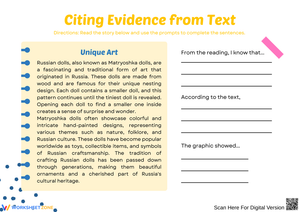
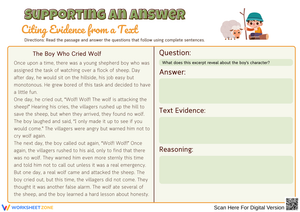
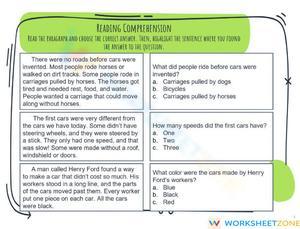
These citing evidence from the text printable worksheets for 4th grade give teachers a direct way to move students from vague comprehension responses toward text-based reasoning — the kind where a student doesn't just know the answer but can point to the line that proves it. Each worksheet pairs a short passage with text-dependent questions, annotation tasks, and response space, so the full process of locating and writing evidence stays visible in one place.
The Specific Skills These Worksheets Build
The set covers the full arc of evidence work, not just the final written response. Students practice close reading through annotation tasks that require them to underline or circle the specific sentence or phrase that supports an answer before writing anything. That physical act of marking slows the scanning habit responsible for most 4th-grade evidence errors — students stop at the first thing that sounds related rather than reading with the actual question in mind.
Across the worksheets, the question types include:
- Literal retrieval questions — what does the text say directly, in exact or paraphrased terms
- Inference questions — what can you conclude, and which specific detail from the text leads you there
- Evidence-selection tasks — choose the stronger of two possible supporting details, then explain why the other one falls short
- Response-writing prompts — write a complete answer using a sentence frame, then again without one
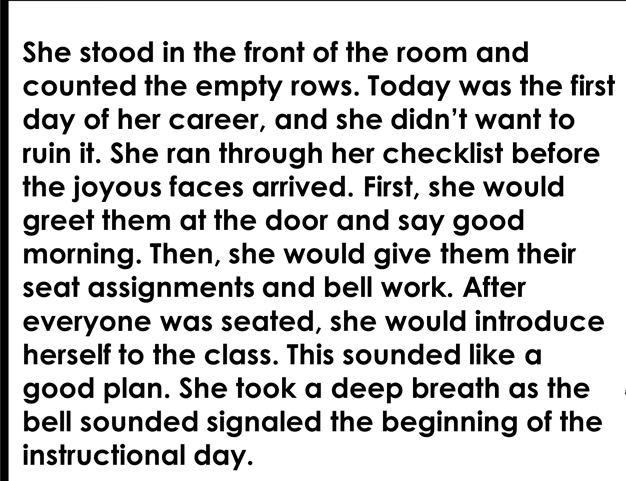
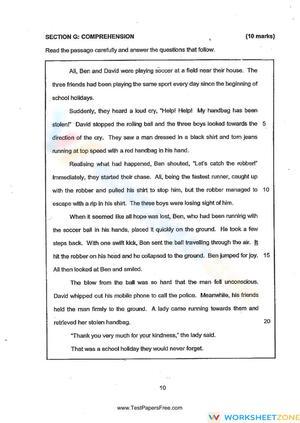
The passages run between 150 and 250 words and draw from both fiction and informational text. That balance matters because evidence-citing looks different across genres. In a narrative, students often need to infer from dialogue or character behavior. In informational text, the evidence is usually more explicit, but students still need to distinguish the relevant detail from the adjacent sentence that happens to cover the same topic.
Common Response Errors Worth Catching Early
The most consistent error at this grade isn't an inability to find evidence — it's assuming that any sentence near the answer is the right evidence. A student asked about a character's motivation will underline the sentence immediately before or after where the motivation is actually explained, then paste that line into the response. When you ask why that sentence proves the point, they often realize it doesn't. The issue is proximity, not comprehension.
The second pattern: students write a correct answer and then attach a piece of evidence that doesn't logically support it. The quotation is accurate; the function is wrong. You'll see responses like "Marcus was nervous because of the test. The cafeteria smelled like pizza." — the student has demonstrated they can copy a line from the passage, but they haven't shown they understand what evidence is supposed to do. These worksheets expose that breakdown because the written response space makes the gap impossible to paper over.
A third issue specific to 4th grade: students who discuss a text fluently in conversation can't always translate that understanding onto paper. Their oral version of the evidence relationship is accurate; their written version loses the connective step entirely. This is a real developmental friction at this grade and is separate from comprehension difficulty. The worksheets help teachers see which problem is actually present before they plan reteaching.
Fitting These Into Your Reading Block
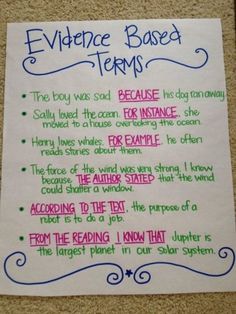
The most reliable starting point is a Monday whole-group lesson using one passage projected for the class. Read it once, then model the annotation before anyone writes: read the question aloud, return to the passage, mark the evidence while thinking aloud — I'm not answering yet; I'm finding the proof first. That sequence — question, locate, mark, then write — is what students need to see before independent work makes sense.
Partner work on Tuesday reduces the load just enough that students still uncertain about the process can hear how a peer reads the question and searches the text. By Wednesday's independent practice, most students have seen the routine three times. Thursday small-group instruction can then focus on whoever surfaced connection errors in Wednesday's work — the students who found evidence but couldn't explain why it mattered to the answer.
When citing evidence from the text printable worksheets for 4th grade are built into a weekly rotation this way — modeling on Monday, guided practice mid-week, independent review on Friday — the habit of checking the text before writing builds without requiring extra instructional time. Friday warm-ups of 8 to 10 minutes are especially effective because the short format lowers the stakes enough that reluctant writers participate without the resistance that longer tasks produce.
One addition worth the 30 seconds it takes to explain: ask students to use two colors when annotating. One marks the evidence in the passage; the other marks where they referenced it in the written response. That two-color system shows you immediately during review whether a student's answer actually connects to the line they underlined — or whether the two things are sitting in the same paragraph without relating to each other at all.
Standard Alignment
Citing evidence from the text printable worksheets for 4th grade align to CCSS.ELA-LITERACY.RL.4.1 and CCSS.ELA-LITERACY.RI.4.1, both of which require students to refer to details and examples in a text when explaining what it says explicitly and when drawing inferences. In practical classroom terms, these two standards appear every time students write a reading response or answer a constructed-response question — on unit tests, on state assessments, and in content-area reading. The worksheets give students the low-stakes, repeated practice with that exact move so that the process feels automatic by the time formal assessment arrives, rather than being explained for the first time under testing conditions.
Adjusting These Worksheets for a Range of Learners
For students who need more guided support, the most effective adjustment is narrowing the search area without removing the thinking task. If a student needs to find proof of a character trait, direct them to the relevant paragraph before asking them to name the sentence. This keeps the skill intact — which sentence proves this? — while removing the scanning demand that overwhelms readers working with longer texts. Sentence frames stay useful for these students longer than teachers sometimes expect; they reveal when a student's understanding breaks down under the pressure of producing written language, which is a different problem than not understanding the text.
On-level students work through mixed question types on the full passage without additional direction. That mixture matters: citing evidence from the text printable worksheets for 4th grade that rely entirely on literal retrieval train students to copy rather than to reason. At least one question per worksheet should require students to infer and to name the specific detail that led them there.
Students ready for more challenge get the most from two-part question structures. First: identify the strongest piece of evidence for the answer. Second: explain why another plausible sentence from the passage doesn't work as well. That comparison task separates students who understand what evidence is supposed to do from those who found something that sounded related and stopped there.
Frequently Asked Questions
What makes a question text-dependent at this grade level?
A text-dependent question cannot be answered from background knowledge or personal experience alone. "Have you ever felt nervous before a test?" is a general comprehension check. "What detail in paragraph two tells you Marcus was nervous before the test?" is text-dependent. The second version requires students to return to the passage, which is the only condition under which evidence-citing practice actually occurs.
How much should a 4th grader write in a text evidence response?
Two to three sentences is a workable standard: one sentence answers the question, one presents the evidence, and one connects the two. Length is not the real issue — completeness is. These worksheets include response space proportioned to make two to three sentences feel natural, neither crowded nor so open that students don't know where to stop.
Can these worksheets support both reading block instruction and test prep?
Yes, because the task structure — short passage, text-dependent questions, written response with evidence — mirrors exactly what students face on constructed-response reading assessments. The difference is that the worksheets are used for practice before the stakes are formal. Students who have completed 15 or 20 evidence-response cycles before a unit assessment go in with a reliable routine, not just a general understanding of what evidence means in the abstract.
What if students can find evidence but consistently fail to explain the connection?
That is the most common breakdown point in 4th-grade evidence work, and it signals a specific instructional need. Adding one deliberate step helps more than reteaching the whole process: after students mark the evidence, ask them to say aloud why that sentence answers the question before they write anything. Oral rehearsal of the connection — even one sentence spoken to a partner — significantly reduces the number of responses where evidence and answer sit in the same paragraph without actually relating to each other.
Clear All