


























Views
Downloads

Printable Reading Comprehension Worksheet | Grade 4 ELA
Paste this activity's link or code into your existing LMS (Google Classroom, Canvas, Teams, Schoology, Moodle, etc.).
Students can open and work on the activity right away, with no student login required.
You'll still be able to track student progress and results from your teacher account.
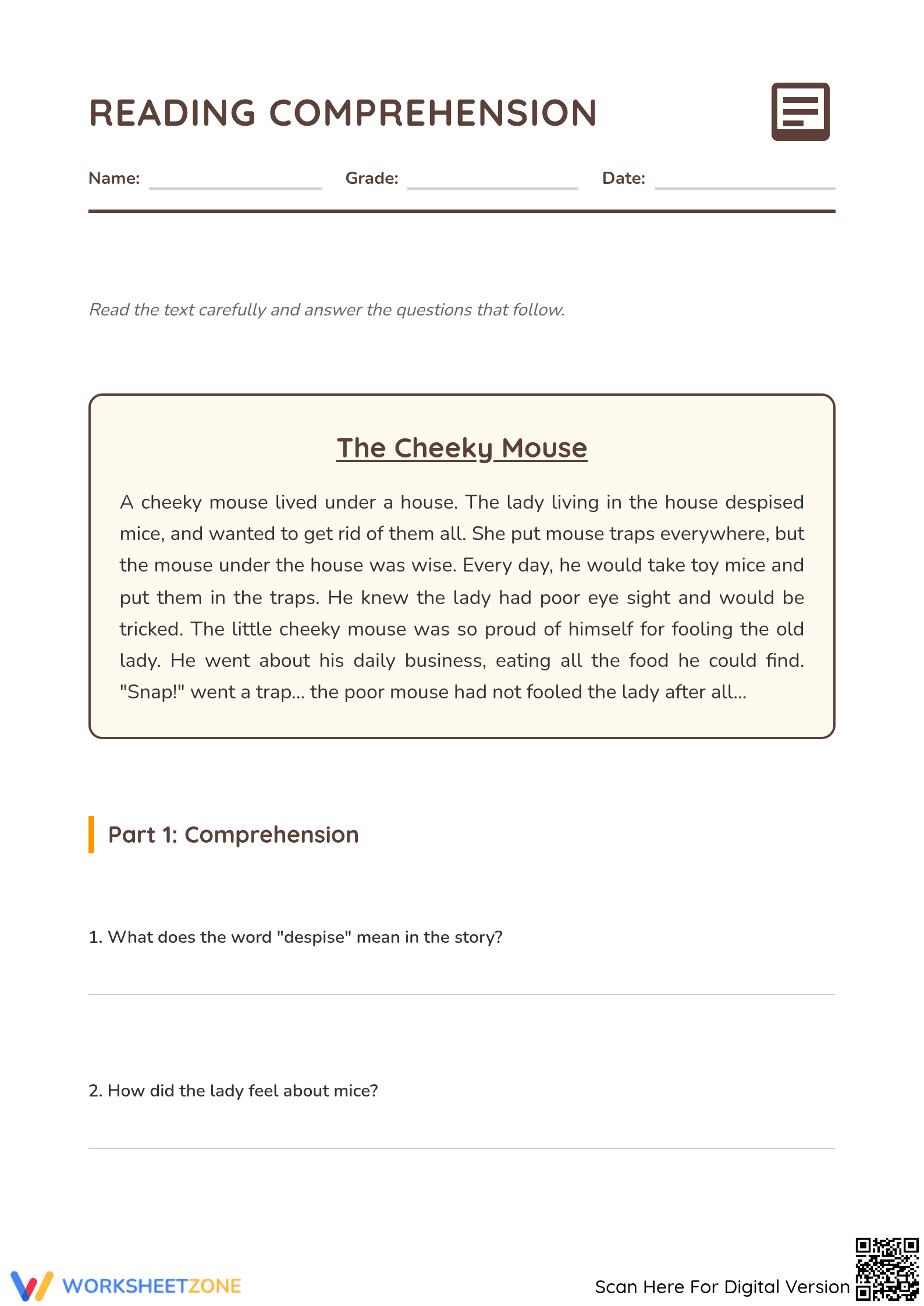
This Grade 4 reading comprehension worksheet helps students build essential literacy skills by analyzing a short fiction text. Students read an engaging story about a clever mouse and answer targeted questions to practice drawing inferences, determining vocabulary meaning in context, and explaining explicit details.
At a Glance
- Grade: 4 · Subject: ELA
- Standard:
CCSS.ELA-LITERACY.RL.4.1— Draw inferences and explain explicit text details- Skill Focus: Reading Comprehension and Inference
- Format: 3 pages · 8 problems · Answer key included · PDF
- Best For: Independent practice or morning work
- Time: 15–20 minutes
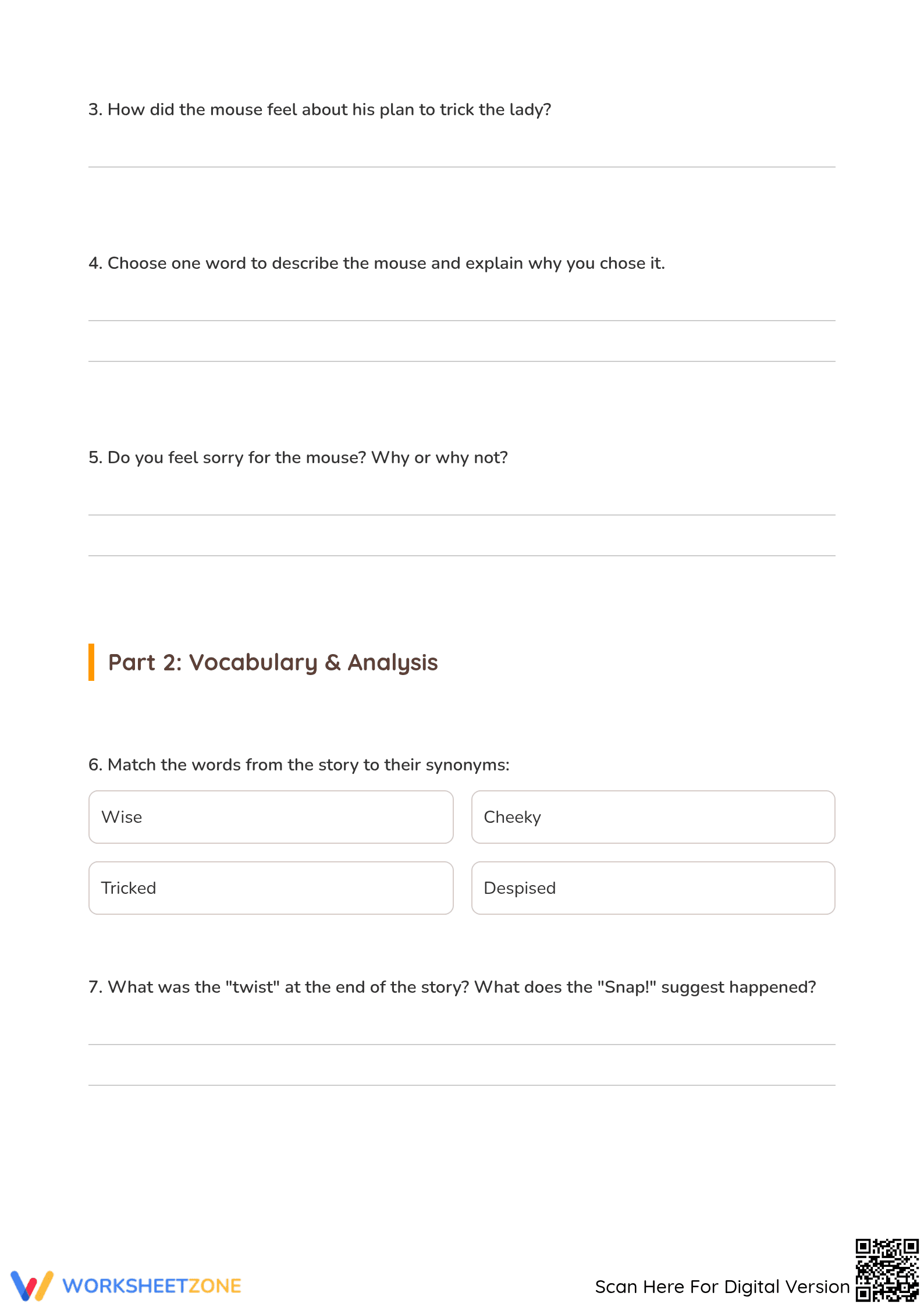
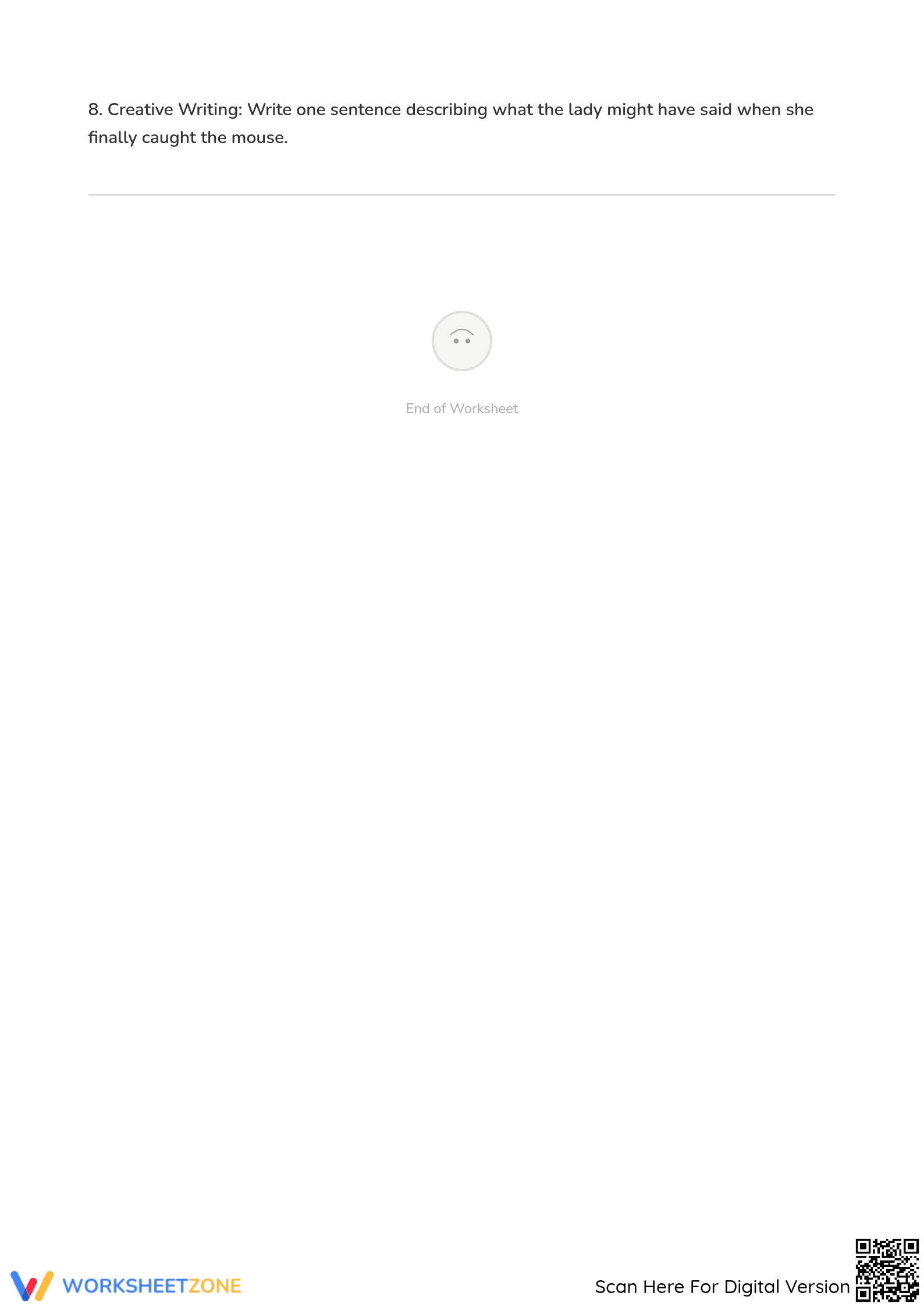
This resource features a short fiction passage titled "The Cheeky Mouse," followed by two sections of tasks. Part 1 focuses on general comprehension, requiring students to recall details and analyze character feelings. Part 2 shifts to vocabulary, featuring a synonym-matching exercise and an inference-based question about the twist ending. A creative writing prompt asks students to write a concluding sentence. A complete answer key is provided.
Zero-Prep Workflow
This worksheet is designed for immediate classroom use. Total prep time is under two minutes:
- Print (1 minute): Print the three-page student packet. The clean layout ensures high-quality reproduction.
- Distribute (1 minute): Hand out the packets during your literacy block. Instructions are self-explanatory.
- Review (Ongoing): Use the included answer key to quickly check responses.
Because it requires no additional materials, this packet is highly suitable for emergency sub plans.
Standards Alignment
This resource is directly aligned to CCSS.ELA-LITERACY.RL.4.1: Refer to details and examples in a text when explaining what the text says explicitly and when drawing inferences from the text. It also supports vocabulary development by asking students to determine the meaning of words as they are used in the story. Both standard codes can be copied directly into lesson plans, IEP goals, or district curriculum mapping tools.
How to Use It
Independent Literacy Centers: Assign this packet during reading rotations. The short passage allows students to practice comprehension independently. As a formative assessment tip, observe how students tackle the synonym-matching section to gauge contextual vocabulary skills.
Substitute Teacher Plans: Keep this PDF in your emergency sub folder. The self-contained format means a guest teacher can easily administer the 20-minute activity without needing background knowledge of your current unit.
Who It's For
This worksheet is primarily designed for fourth and fifth-grade students developing their reading comprehension and inference skills. The straightforward narrative makes it accessible for on-level readers, while the final creative writing prompt provides a natural extension for early finishers. It pairs excellently with direct instruction lessons on identifying character motivations or using context clues to define unfamiliar words.
Developing strong reading comprehension requires consistent practice with texts that challenge students to look beyond the literal meaning. By aligning with CCSS.ELA-LITERACY.RL.4.1, this resource ensures students actively draw inferences and explain explicit text details. According to Fisher & Frey (2014), providing students with structured, text-dependent questions significantly improves their ability to analyze complex narratives and synthesize information. When learners are prompted to justify their answers and explore vocabulary in context, they build the cognitive frameworks necessary for advanced literacy. This targeted practice helps bridge the gap between basic decoding and deep, critical understanding. Regular engagement with short, focused reading passages allows educators to monitor progress effectively and adjust instruction to meet diverse learning needs, ultimately fostering more confident and capable readers in the upper elementary classroom.


