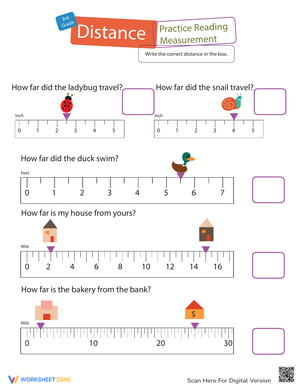
These 3rd grade measurement worksheets cover all five strands of the 3.MD domain — elapsed time, metric mass and liquid volume, area in square units, perimeter, and ruler measurement to the nearest quarter inch — giving teachers targeted practice resources that drop directly into stations, exit-ticket routines, and mixed-review blocks throughout the year. Each worksheet focuses on a single strand, which means teachers can assign exactly what a lesson calls for without trimming down a larger collection or piecing together materials from multiple sources.
The Specific Skills These Worksheets Target
The set spreads across five skill areas, and each one receives multiple worksheets at varying levels of demand.
Elapsed time is the skill where Grade 3 first asks students to compute intervals — not simply read a clock. The elapsed-time worksheets pair analog clock faces with word problems that cross the hour mark, since that's where most student work falls apart. Open number lines printed on each worksheet let students hop forward in five- or ten-minute increments rather than subtracting clock positions mentally, which is a fundamentally harder operation for this age group.
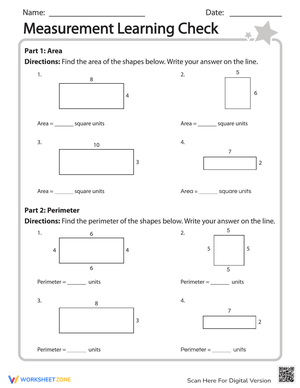
Area and perimeter worksheets appear together by design. One worksheet presents six rectangles and asks students to find area by counting grid squares, then find perimeter by adding all side lengths — same shape, both tasks. Another worksheet introduces the formula length × width and asks students to write it before each calculation, keeping the conceptual language present as the problems become procedural.
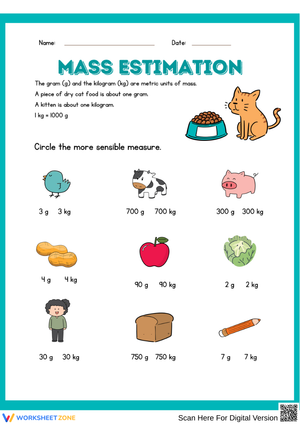
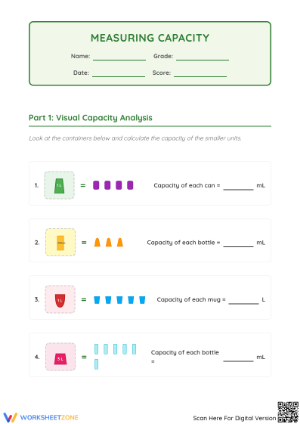
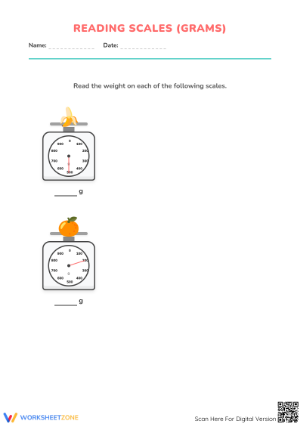
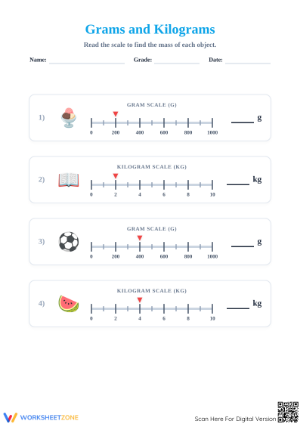
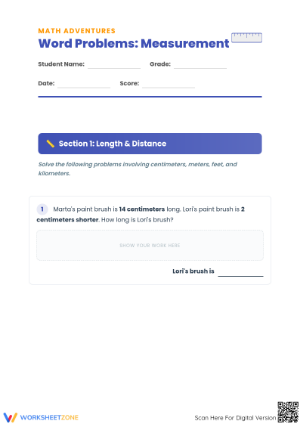
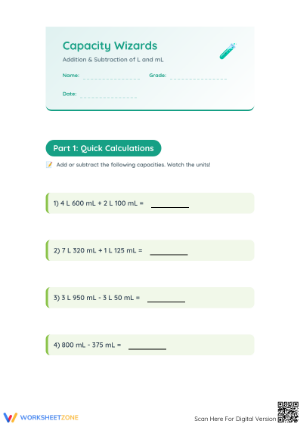
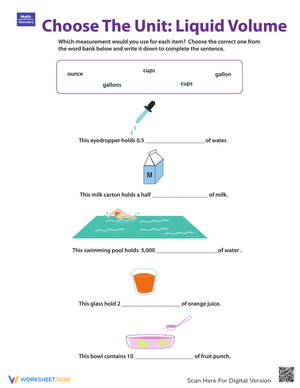
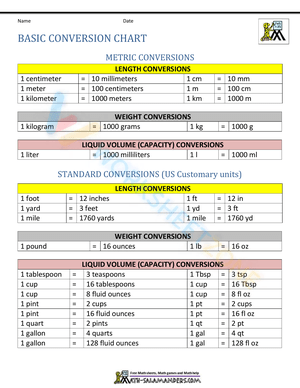
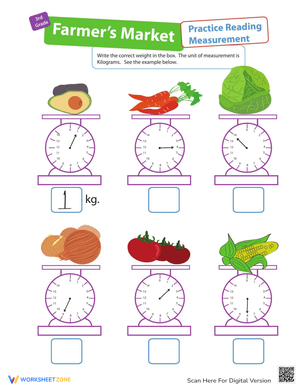
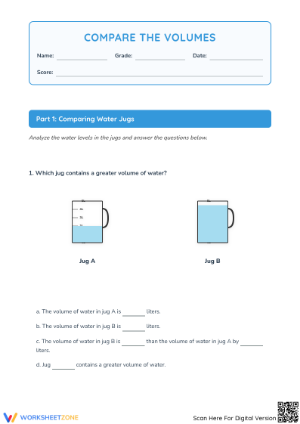
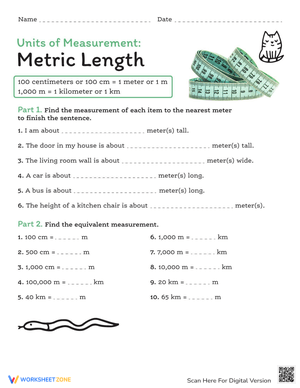
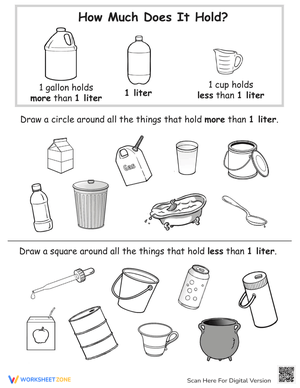
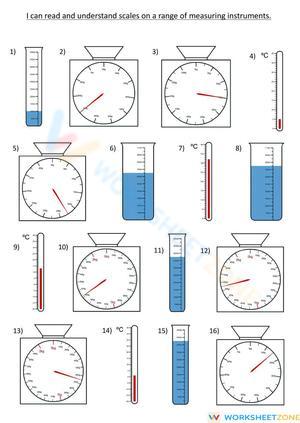
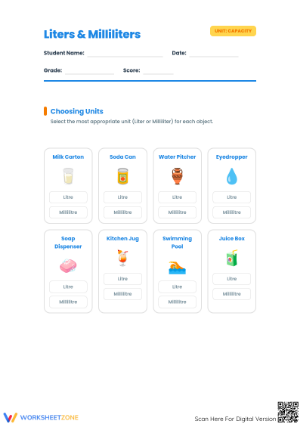
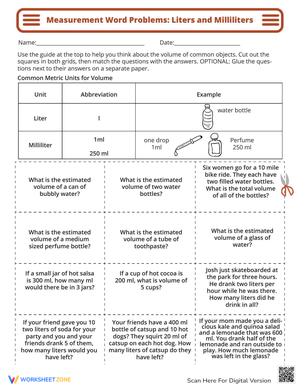
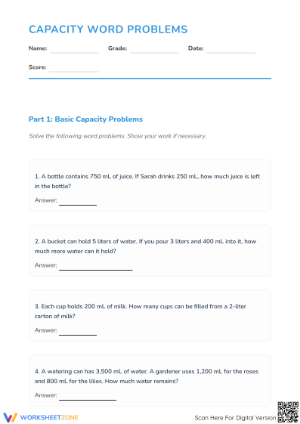
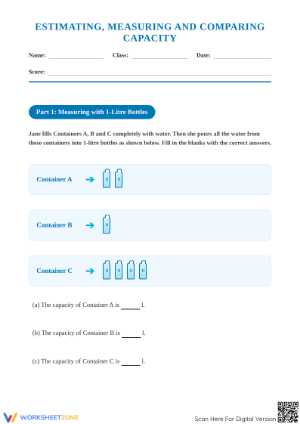
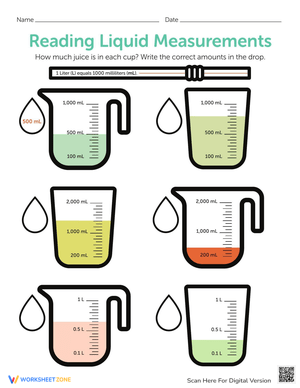
Metric mass and liquid volume worksheets use labeled illustrations of graduated cylinders, balance scales, and recognizable objects — a 1-liter water bottle, a 500-gram bag of rice — so students anchor their estimates to something they have actually seen or handled rather than memorizing bare unit names.
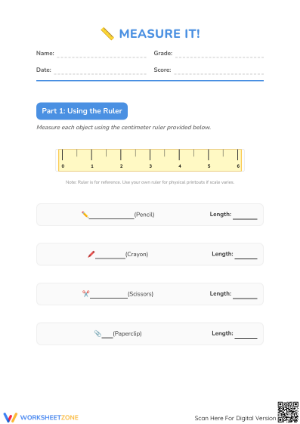
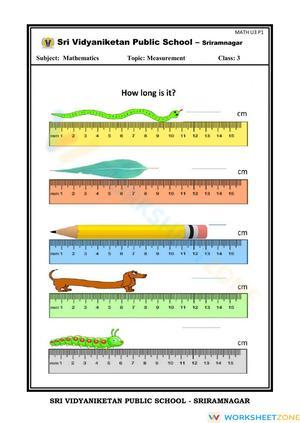
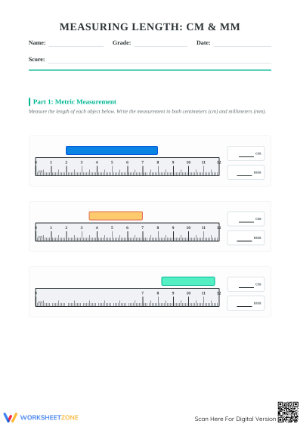
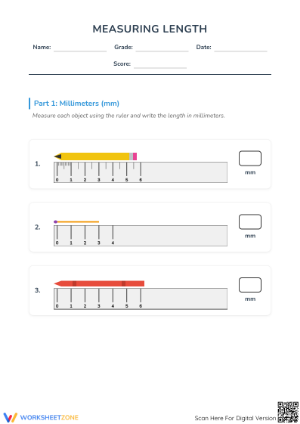
Ruler measurement to the nearest quarter inch worksheets include enlarged ruler graphics marked in halves and fourths of an inch next to printed line segments. Several worksheets in this group close with a line plot, asking students to record and represent their measurements — connecting the measurement practice directly to the data-representation requirement in 3.MD.B.4.
Mistakes Students Make That These Worksheets Help You Catch
The area-perimeter confusion rarely looks the way teachers expect. Students who correctly explain area during a class discussion will still write "12 cm" instead of "12 sq cm" on a worksheet — and then, when asked for the perimeter of that same rectangle, will multiply the side lengths. The error is not a conceptual gap; it's that both procedures occupy the same working-memory space and students swap them under time pressure. Worksheets that require both calculations for the same shape, with a labeled units blank beside every answer line, force students to name what they are actually finding before they write a number.
Elapsed-time errors concentrate at one specific moment: crossing the hour boundary. A student who correctly calculates 10:10 to 10:45 as 35 minutes will freeze at 10:45 to 11:20 because the digits stop flowing in a single direction. The number-line time strips on these worksheets give students a concrete path forward — mark 11:00, count the gap from 10:45, count the remaining distance to 11:20, add — which turns one confusing subtraction into two short additions.
On the ruler worksheets, the quarter-inch mark is genuinely new territory for third graders. Students who read whole inches without difficulty will often misread ¾ inch as ½ inch because they count tick marks rather than reading the fraction the mark represents. The enlarged ruler graphics, where each increment is wide enough to examine carefully, give students room to practice reading fractional positions before they move to a physical ruler where the marks are barely 2 mm apart.
How to Work These Worksheets Into Your Weekly Lesson Plans
Station rotations are the most time-efficient structure for moving through the full 3.MD strand inside a single math block. Set up four stations — elapsed time, area, perimeter, and metric units — with a worksheet at each. Twelve-minute rotations cover all four skill areas in under 50 minutes, and most students finish each worksheet before the rotation ends, which leaves a minute or two for a partner check before moving.
Exit tickets are another high-return use. Two or three problems from an area or perimeter worksheet at the close of a lesson take about four minutes to complete and give teachers sorting data that same afternoon: which students are still swapping area and perimeter, which forgot to label units, which are ready for composite shapes. That quick review before leaving school shapes the next morning's warm-up. Used consistently this way, 3rd grade measurement worksheets function as a running formative record rather than one-off assignments.
One limitation worth naming directly: the metric mass and volume worksheets frustrate students who have no physical reference for grams and kilograms, which is common in the United States where metric units rarely appear in daily life. The illustrations help, but they are not a substitute for handling a 100-gram weight or holding a full liter bottle before the paper practice begins. Teachers who do even a five-minute physical demonstration first get noticeably more confident written work from students on those worksheets.
Standard Alignment
The set addresses every standard in the Common Core 3.MD domain. Standard 3.MD.A.1 covers telling time to the nearest minute and computing elapsed time; the elapsed-time worksheets address this directly, with problems ranging from same-hour intervals to problems that cross the hour mark. Standard 3.MD.A.2 introduces metric mass in grams and kilograms and liquid volume in liters; those worksheets focus on estimation and one-step word problems within those exact units. Standards 3.MD.C.5 through 3.MD.C.7 define area as covering a plane with square units and connect area measurement to multiplication — the area worksheets move from unit-square counting to the length × width formula in deliberate order. Standard 3.MD.D.8 defines the perimeter of polygons; the perimeter worksheets address that standard and pair it with area practice so teachers can assess both simultaneously. Standard 3.MD.B.4 asks students to generate and represent measurement data to the nearest quarter inch; the ruler worksheets close that loop with a line plot at the end of each worksheet. Teachers matching resources to a standards-based report card will find these 3rd grade measurement worksheets map cleanly to each 3.MD code.
Adjusting the Set for a Range of Learners
Students who need more support with elapsed time benefit from pairing the number-line worksheets with a manipulative clock — the worksheet then records their thinking rather than carrying the full cognitive load. For area and perimeter, focusing on one formula per session and covering the other reduces the working-memory demand for students who are still consolidating both procedures. On the metric worksheets, allowing students to annotate the illustrations — labeling a drawn object with an estimated mass before solving — gives them a reference point inside the worksheet itself.
Advanced students move naturally into the composite-shape worksheets, where an L-shape or a rectangle with a section removed requires decomposing the figure before any formula applies. A further push: ask those students to design their own closed shape with a target area — say, 24 square units — and then calculate its perimeter. This reverses the standard problem structure and demands flexible thinking well beyond procedural fluency. Both extensions work within the existing worksheet formats rather than requiring a separate set of materials entirely.
Frequently Asked Questions
Do these worksheets cover all the 3.MD standards, or just some of them?
Every standard in the 3.MD domain is covered — 3.MD.A.1, 3.MD.A.2, 3.MD.B.4, 3.MD.C.5 through 3.MD.C.7, and 3.MD.D.8. Each worksheet targets a specific standard, so teachers can match the resource to the lesson rather than sorting through a mixed collection.
Can these worksheets work for 2nd graders or 4th graders reviewing earlier content?
Some of the elapsed-time worksheets work as enrichment for strong 2nd graders who already have solid clock-reading skills. The metric and area content would be above grade level for most 2nd graders. Fourth graders revisiting 3.MD concepts before moving into multi-digit area sometimes use the area and perimeter worksheets as a quick check of prior knowledge before advancing.
How many problems does each worksheet include?
Problem counts vary by skill type. Elapsed-time worksheets run 8–12 problems, which leaves space for the number-line work each problem requires. Area and perimeter worksheets generally include 10–15 problems. Ruler measurement worksheets vary depending on how many line segments are included. The goal across the set is enough practice to build fluency within the time a typical Grade 3 math block allows for a single skill — not so many problems that students are still working when the block ends.
Are these resources useful for state test preparation?
The mixed-review worksheets — each one combining area, perimeter, elapsed time, and metric units — work directly as test-prep review. The problem formats and vocabulary match what students encounter on state assessments aligned to Common Core. Using these 3rd grade measurement worksheets in the weeks before testing gives students repeated exposure to every measurement question type in a timed, lower-stakes setting than the test itself.













 Interactive Worksheet Maker
 Quiz Maker
 Word Search Maker
 Crossword Puzzle Maker
 Word Scramble Generator
 Sentence Scramble Generator
 Handwriting Worksheet Generator
 Name Tracing Generator
 Fill In The Blank Generator