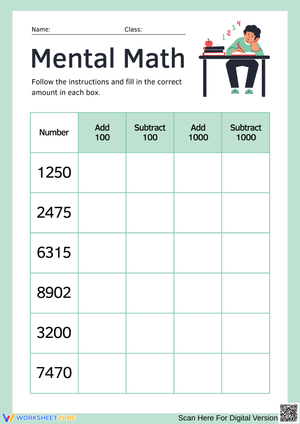
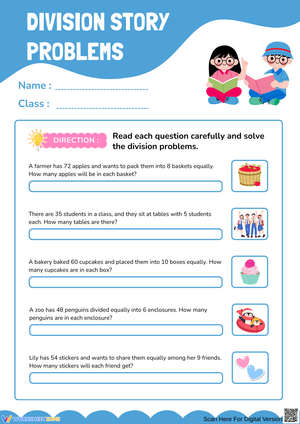
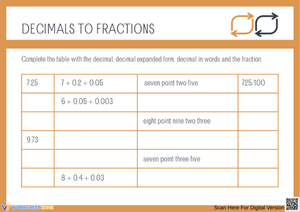
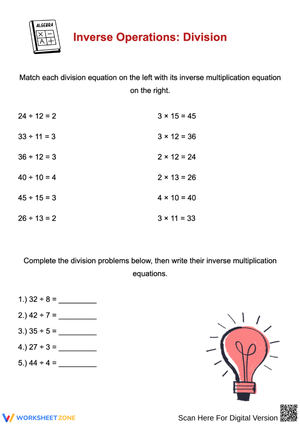
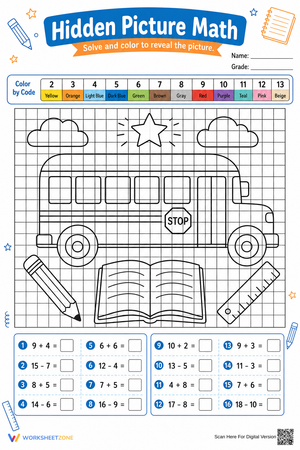
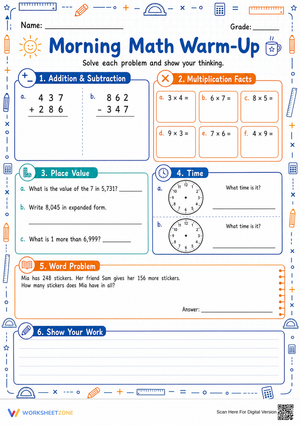
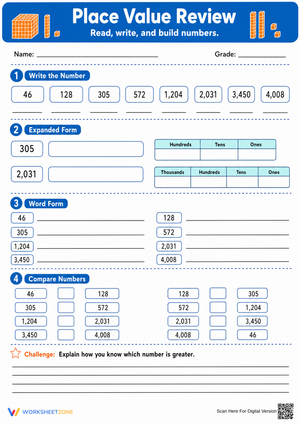
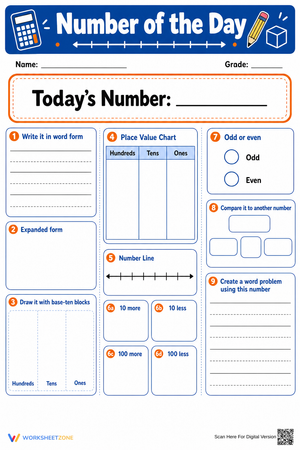
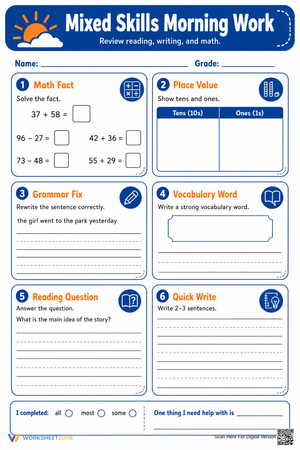
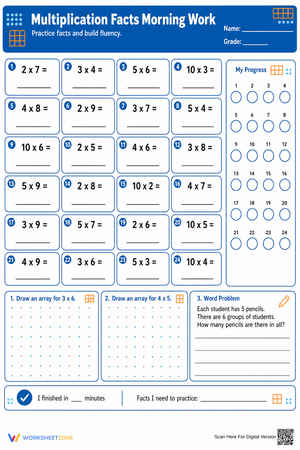
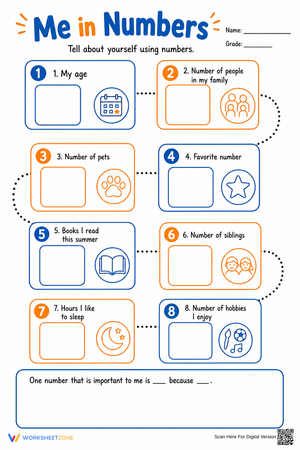
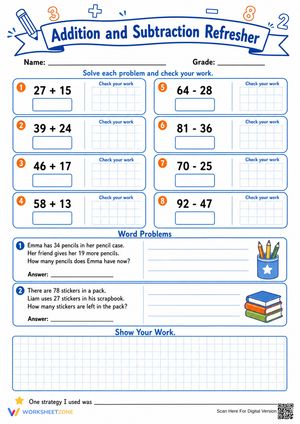
These math printable worksheets for 3rd grade target the skills that define the year — multiplication and division fluency, unit fractions, two-step word problems, and area with perimeter — giving teachers ready-to-use practice for each domain. Each worksheet focuses on one skill, so teachers can assign exactly what a class needs rather than working around content that hasn't been introduced yet. The set covers procedural practice and the conceptual groundwork students need before those procedures start to make sense.
Skills Covered Across the Set
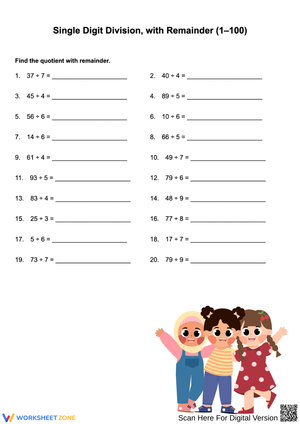
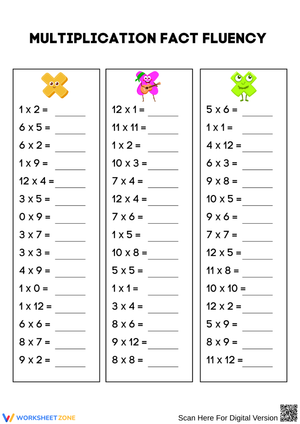
Multiplication and division take up the largest portion. Early worksheets ask students to draw equal groups and arrays before they touch a multiplication table — the visual step that separates students who understand why 4 × 6 equals 24 from students who only know that it does. Later worksheets move into related fact families, drills at the 1s through 10s level, and missing-factor problems where students write the equation 3 × ___ = 18 rather than simply compute a product.
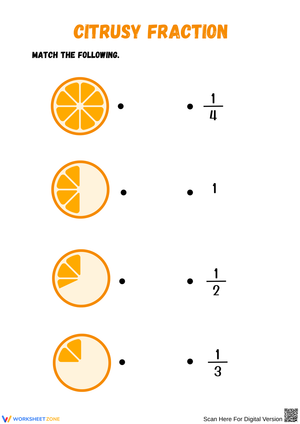
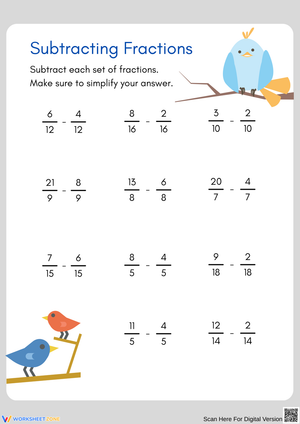
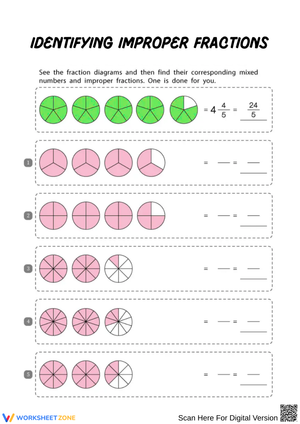
Fraction worksheets introduce unit fractions first — 1/2, 1/3, 1/4, 1/6, 1/8 — using number lines and fraction bars rather than pie charts alone. Pie models work adequately for halves and quarters, but once denominators reach sixths and eighths, the slices become difficult to judge accurately by eye. Comparing fractions with the same denominator or the same numerator gets its own worksheet, and placing fractions on a number line between 0 and 1 is treated as a separate skill from shading a shape.
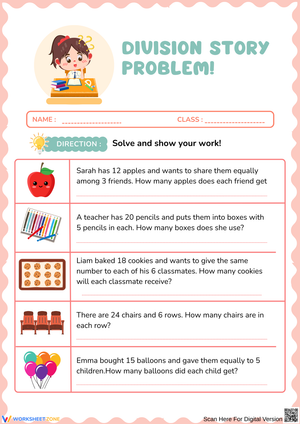
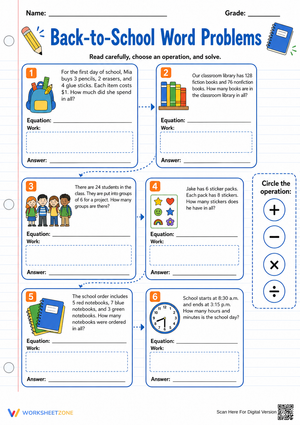
The word problem worksheets require two calculations per problem — the level Grade 3 standards explicitly call for. Each problem names a concrete context and asks students to identify two separate operations before writing a final answer. Area and perimeter worksheets round out the set: some use grids so students count square units before applying the length-times-width relationship; others show labeled rectangles and ask students to find both measurements for the same figure.
Error Patterns Teachers Should Catch Early
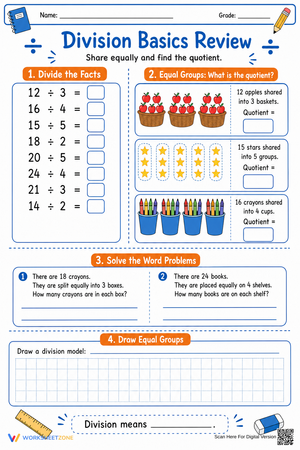
Division errors cluster around one consistent mistake. Students who know that 3 × 8 = 24 still confidently write 24 ÷ 8 = 3 as if the divisor and quotient are interchangeable, then pull whichever version surfaces first when a problem asks for a specific one. The visual partitioning worksheets — draw 24 dots, circle groups of 3, count the groups — expose this before the error calcifies into habit.
With fractions, the most persistent third-grade error is concluding that 1/4 is greater than 1/2 because 4 is greater than 2. It shows up in roughly a third of unguided first attempts at fraction comparison. The number-line worksheets address it directly because students must place each fraction as an actual point — they can't just compare numerals in isolation and stop there.
Area and perimeter generate their own confusion: students frequently add all four sides when asked for area, or multiply length times width when asked for perimeter. Requiring students to label area answers in square units and perimeter answers in linear units — built into the worksheet format itself — gives students a self-check that reduces the mix-up more reliably than re-explaining the definitions from scratch.
How to Work These Worksheets Into Your Instructional Week
The most reliable placement for most of these worksheets is the final 10–12 minutes of a lesson — after direct instruction and guided practice, when students need independent reps before the skill gets shelved overnight. That window also lets teachers circulate and catch errors in real time rather than discovering them the next morning during warm-up review.
During guided math rotations, assign the worksheet that directly mirrors what the small group just practiced at the teacher table. Students at independent stations work on a previously introduced skill, and the worksheet gives them enough structure to stay on task without constant redirection. Monday morning is another dependable slot: a short multiplication fact review or a fraction comparison problem retrieves knowledge that would otherwise take 10 to 15 minutes to rebuild mid-lesson.
One classroom move worth building into your routine: after students finish a two-step word problem worksheet, ask one student to narrate their steps aloud while classmates follow along on their own paper. This surfaces students who arrived at the right answer through faulty reasoning — invisible when you're simply reading a completed worksheet — and shows the group that more than one solution path is valid. Math talk of this kind transforms math printable worksheets for 3rd grade from independent busywork into material for genuine classroom discussion.
Standard Alignment
These worksheets address four domains from the Common Core State Standards for Mathematics, Grade 3:
- 3.OA (Operations and Algebraic Thinking) — multiplication and division within 100, properties of operations, two-step word problems using all four operations, identifying arithmetic patterns in addition and multiplication tables
- 3.NF (Number and Operations — Fractions) — understanding fractions as numbers, representing unit fractions on a number line, comparing fractions with the same numerator or the same denominator
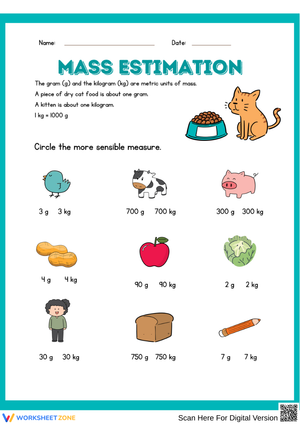
- 3.MD (Measurement and Data) — solving word problems involving liquid volumes and masses, understanding area by tiling with unit squares, relating area to multiplication, distinguishing perimeter from area
- 3.G (Geometry) — understanding shared attributes of shape categories and partitioning shapes into equal areas
In classroom terms, 3.OA is typically the first domain taught and runs through most of the fall and winter; 3.NF arrives in the spring once students have enough whole-number fluency to reason productively about parts. These math printable worksheets for 3rd grade are most effective when assigned by domain and matched to what's currently under instruction, rather than handed out as a year-end general review.
Adjusting the Work for Students at Different Levels
Students who are still shaky on basic facts work through the array and equal-groups worksheets alongside physical counters or tiles. The worksheet provides the written structure; the manipulatives offer a concrete check. For students who have already internalized the facts, the missing-factor problems and two-step word problems provide a genuine stretch — especially when teachers ask those students to write a second equation that represents the same relationship differently, or to explain in writing why a particular operation applies.
The fraction comparison worksheets extend well for advanced students: ask them to order three fractions rather than compare two, which requires reasoning about a benchmark (is this fraction closer to 0, to 1/2, or to 1?) rather than applying a single rule. One honest limitation worth naming: the word problem worksheets create a language barrier for students who read well below grade level, because the problem text blocks access to the math before it even begins. Reading each problem aloud before students work independently removes that barrier without reducing the mathematical demand at all.
Frequently Asked Questions
Can these worksheets serve as formative assessments?
Yes. Because each worksheet targets a single skill, reviewing completed work gives teachers precise information — not just "this student struggled with fractions" but "this student shades fraction models correctly and struggles specifically with number-line placement." That distinction shapes small-group instruction far more usefully than a general classroom observation during whole-group practice.
What if students haven't fully mastered addition and subtraction before starting the multiplication worksheets?
The equal-groups and array worksheets treat multiplication as repeated addition, so students with solid addition skills have a workable entry point even if they're still slow. The problem comes with timed drills, which penalize students still counting up on their fingers. Use the conceptual worksheets first and reserve timed practice for students who have already demonstrated understanding through the model-based work.
Are these worksheets matched to specific CCSS codes, or just general grade-level content?
The math printable worksheets for 3rd grade in this set map to specific standards — 3.OA.1 through 3.OA.8, 3.NF.1 through 3.NF.3, and the relevant 3.MD and 3.G standards — not just a broad "Grade 3 math" category. That specificity matters when you're confirming standards coverage during unit planning rather than assuming it after the fact.
How do these worksheets fit alongside an existing curriculum program?
They work alongside curriculum materials, not instead of them. Use each worksheet as a targeted practice rep when the program's built-in exercises feel insufficient for a particular skill, or as a quick exit check before moving on. The worksheets are not paced to any specific curriculum sequence, so match them to your unit progression rather than assigning the full set in order.













 Interactive Worksheet Maker
 Quiz Maker
 Word Search Maker
 Crossword Puzzle Maker
 Word Scramble Generator
 Sentence Scramble Generator
 Handwriting Worksheet Generator
 Name Tracing Generator
 Fill In The Blank Generator