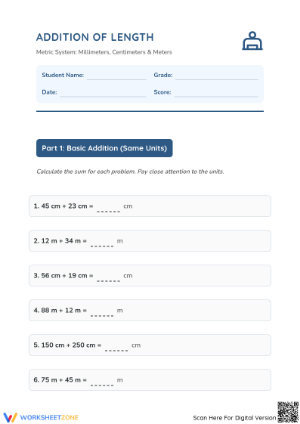
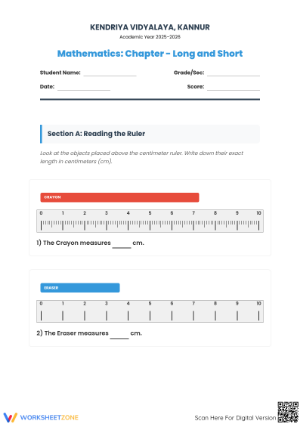
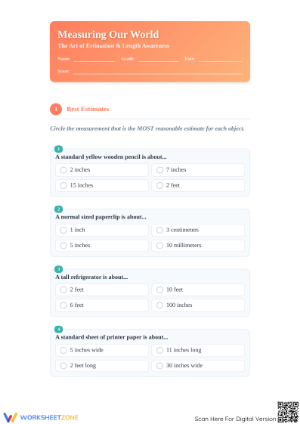
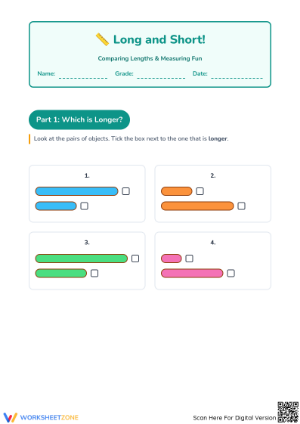
These 3rd grade measuring length worksheets files target the moment in ruler instruction that trips most third graders: the shift from whole-inch identification to reading half-inch and quarter-inch marks with precision. The set spans both US Customary and metric units and includes estimation columns, broken-ruler problems, and line plot tasks that connect directly to CCSS 3.MD.B.4. Question types range from straightforward ruler-reading to problems that check whether a student understands length as a distance between two points — not just a number at the end of an object.
What the Set Covers
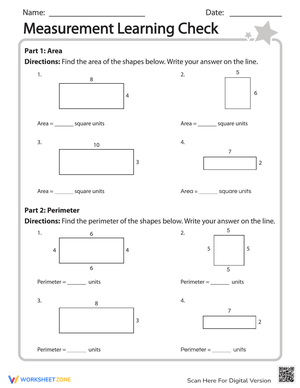
Each worksheet targets a specific skill in third-grade linear measurement. Here is what teachers find across the collection:
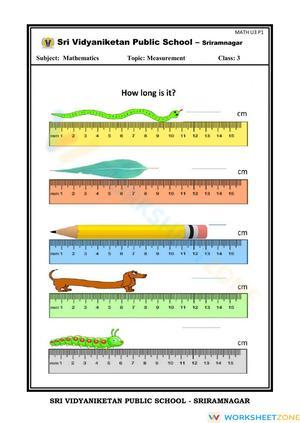
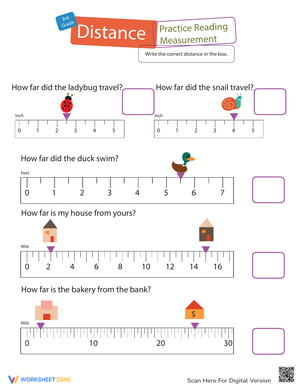
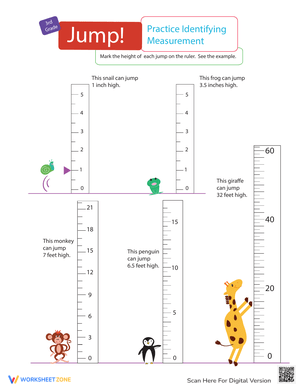
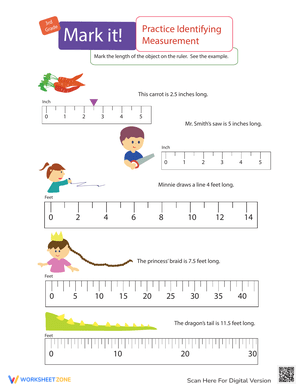
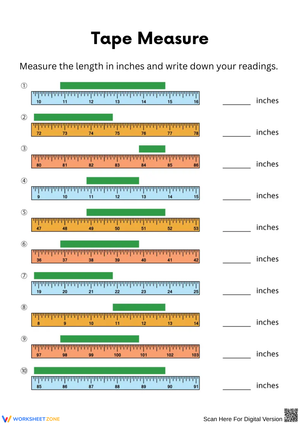
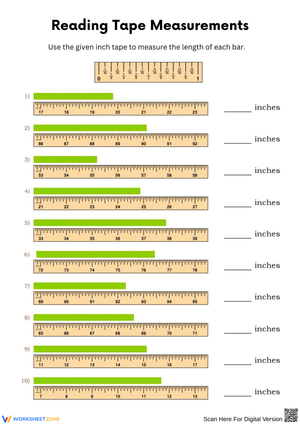
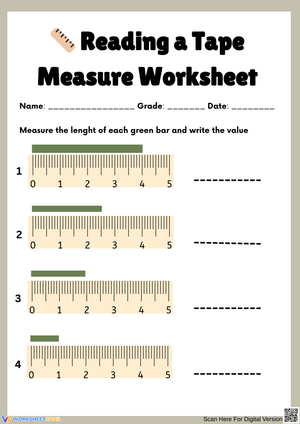
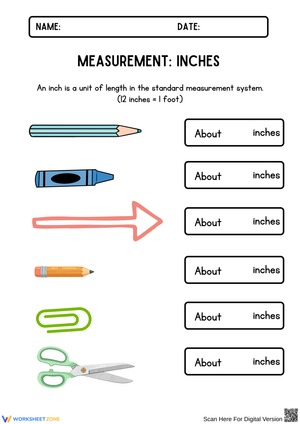
- Ruler reading to the half-inch and quarter-inch — students identify the length of pictured objects aligned to a printed ruler and record answers as mixed numbers where needed
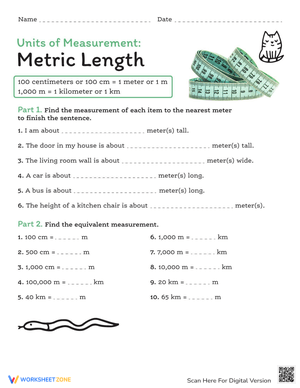
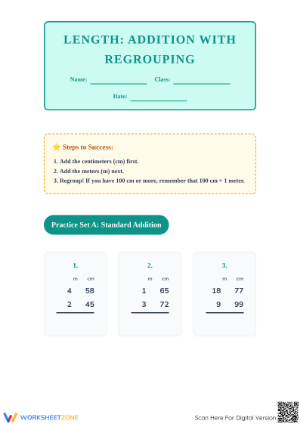
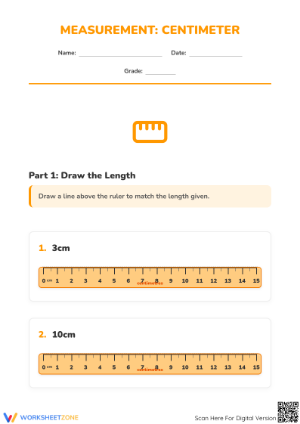
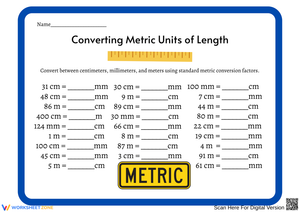
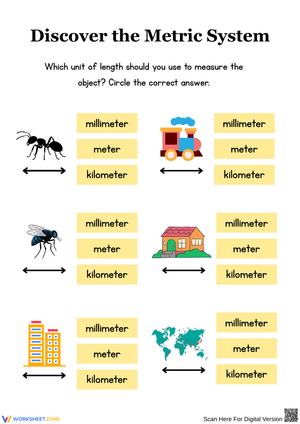
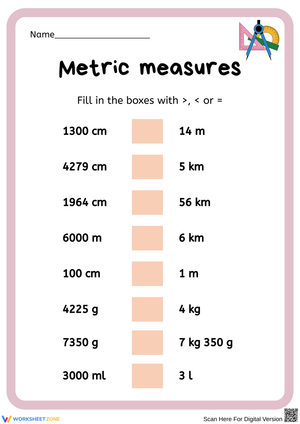
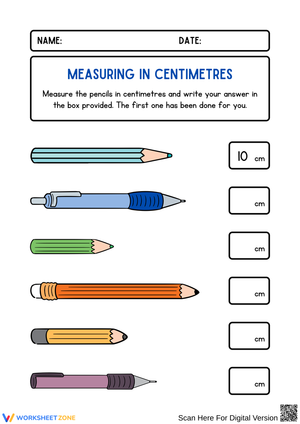
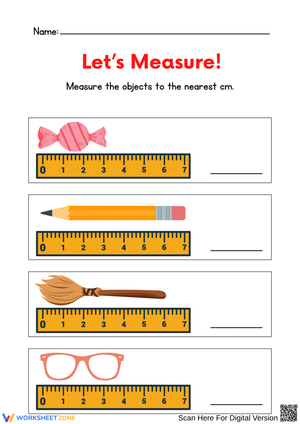
- Centimeter measurement — separate worksheets focus on metric rulers, building familiarity with finer increments before students work with physical tools in class
- Estimation before measuring — worksheets with a dedicated "estimate" column ask students to commit to a predicted length first; the two-step format builds number sense alongside measurement skill
- Broken-ruler problems — objects that do not start at zero require students to find the difference between endpoints rather than reading the right-side value directly
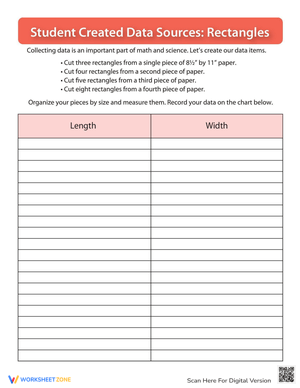
- Line plot construction — after recording a set of measurements, students mark an X above each value on a pre-drawn scale, satisfying the data-display component of the standard
The Measurement Errors Teachers See Most Often at This Level
The most persistent error is starting from the physical end of the ruler rather than the zero mark. Most plastic classroom rulers have a small blank gap before the zero line — sometimes close to an eighth of an inch — and students who haven't been explicitly shown where the zero tick sits will measure short on almost every problem. When a student records 5¾ inches for an object that actually measures 6 inches, check for this first.
The second error is misreading fractional marks. Students who correctly identify the longest mark between two whole numbers as the half-inch often treat every unlabeled mark as the same increment. A student who knows a quarter is one of four equal parts will still write ¾ when an object ends at the third small tick — even when those ticks represent eighths rather than quarters. Worksheets that leave fractional marks unlabeled are more useful as a diagnostic here than ones that label everything.
Broken-ruler problems expose a different gap entirely. When an object runs from the 2-inch mark to the 5-inch mark, many students write 5 inches because they read the endpoint and stop there. This is not carelessness — it reflects a genuine conceptual misunderstanding of what length means. Students who make this error see measurement as a label at the right end of an object rather than a distance between two positions on a scale. That distinction is worth addressing directly before moving into geometry.
Standard Alignment
These 3rd grade measuring length worksheets files align to CCSS.MATH.CONTENT.3.MD.B.4: Generate measurement data by measuring lengths using rulers marked with halves and fourths of an inch. Show the data by making a line plot, where the horizontal scale is marked off in appropriate units — whole numbers, halves, or quarters. In classroom terms, most teachers introduce half-inch reading first, run a quick formative check, then layer in quarter-inch work before introducing line plots. The worksheets follow that same progression, so they fit the unit rather than requiring teachers to sequence around them.
Fitting These Worksheets Into Your Week
The estimation-column worksheets work well as Monday warm-ups — four minutes, students write a predicted length for two objects, then read the ruler and compare. The built-in self-check is more engaging than a straight measurement task, and it takes almost no setup after morning meeting. By Thursday, if several students are still recording endpoint values on broken-ruler problems, pull that worksheet for a small group during center rotation rather than reteaching the whole class. The broken-ruler format is specific enough that it isolates the conceptual gap without introducing new content.
These 3rd grade measuring length worksheets files also hold up as homework because rulers are printed directly on each worksheet, which removes the "I don't have a ruler at home" problem entirely. Students who struggle to hold a physical ruler steady against an object often perform better on printed-ruler tasks first — building visual fluency before the hands-on transfer is a sensible sequence for third graders who haven't yet developed the fine motor control for consistent tool use.
Making These Worksheets Work for Every Level in the Room
For students still anchored to whole-inch measurement, start them on worksheets where every pictured object ends cleanly on a whole-inch mark. This keeps the zero-point habit in focus without adding fractional reading at the same time — treating them as two separate skills to master in sequence rather than one combined task. Once they're reliably starting from zero and recording whole-inch values correctly, the half-inch worksheets are the natural next step.
Students who move quickly through half-inch and quarter-inch reading are ready for the broken-ruler worksheets. If those come easily too, ask them to draw their own broken-ruler problems for a partner — sketching an object over a ruler that starts at a non-zero mark — which shifts the cognitive demand from reading to construction. The line plot worksheets extend well in the same direction: advanced students can generate a measurement data set from actual classroom objects and build a line plot from scratch rather than working from a pre-measured list.
Frequently Asked Questions
When in the unit should I introduce broken-ruler problems?
After students show reliable quarter-inch reading on standard rulers. If students are still making zero-point errors, adding the broken-ruler format layers a second unresolved problem on top of the first. These worksheets fit well as a midpoint conceptual check — once whole-inch and half-inch reading are consistent, the broken-ruler format reveals whether students actually understand what length measures or have simply memorized a procedure.
Do the worksheets mix inches and centimeters on the same ruler image?
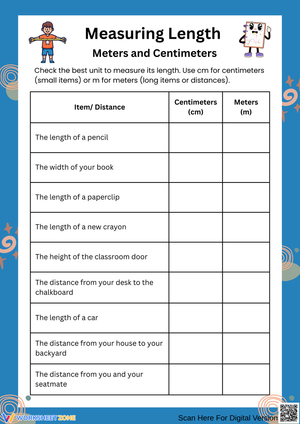
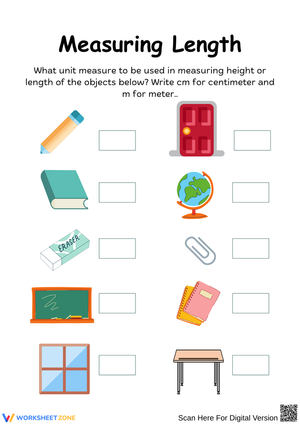
Most worksheets in the set address the two unit systems separately. When students try to read both scales at once before they've internalized either one, they frequently grab the wrong set of marks — particularly on dual-sided rulers where the inch and centimeter scales run in opposite directions. Comparative work — noticing that a centimeter is smaller than an inch, or that the same object produces a numerically larger measurement in centimeters — appears in specific worksheets once each system has been practiced on its own.
How do the line plot worksheets connect to the measurement practice?
These 3rd grade measuring length worksheets resources include line plot tasks where students record a set of measured lengths and then mark an X above each value on a pre-drawn number line scaled in halves or quarters. The scale is already labeled, so the task stays focused on plotting accuracy rather than scale construction. This keeps the activity accessible while still meeting the data-display requirement in 3.MD.B.4 — the same standard the ruler-reading worksheets address — which is why the two activity types belong together in the same unit.













 Interactive Worksheet Maker
 Quiz Maker
 Word Search Maker
 Crossword Puzzle Maker
 Word Scramble Generator
 Sentence Scramble Generator
 Handwriting Worksheet Generator
 Name Tracing Generator
 Fill In The Blank Generator