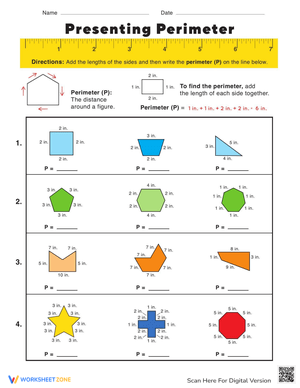
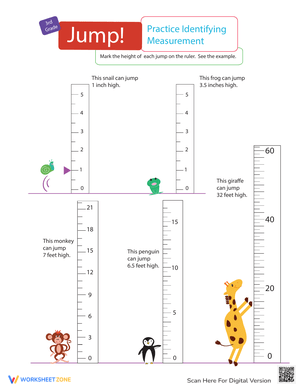
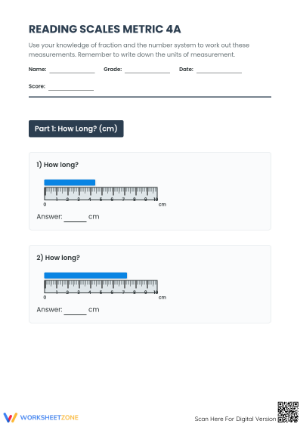
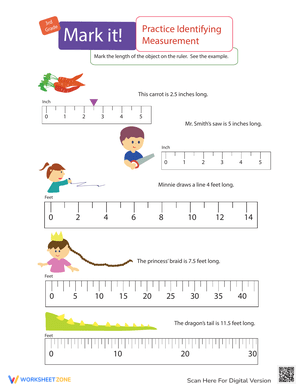
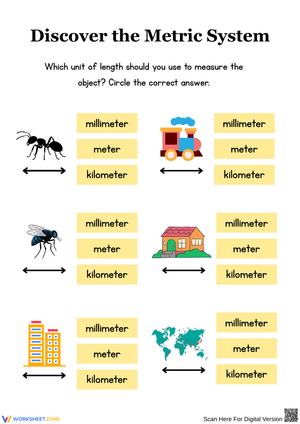
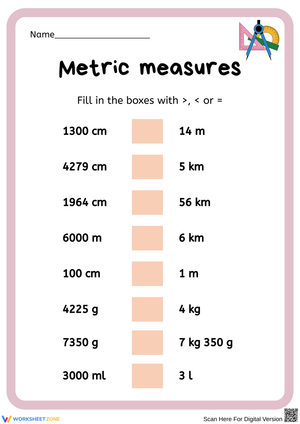
These units of measurement printable worksheets for 3rd grade address the three domains students tackle simultaneously in year three: metric mass and capacity, ruler precision to the half and quarter inch, and the multi-step word problems that require both. Teachers get a ready-to-print set they can pull for morning warm-ups, station rotations, or end-of-unit review without building anything from scratch.
The Skills Each Worksheet Targets
The set of units of measurement printable worksheets for 3rd grade breaks into four focused skill areas, each corresponding to a distinct instructional goal rather than lumping everything into a mixed-review format.
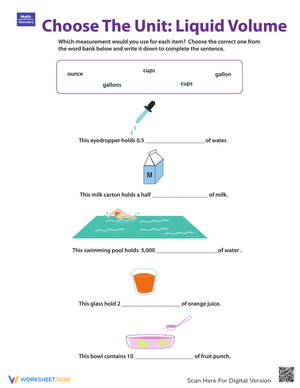
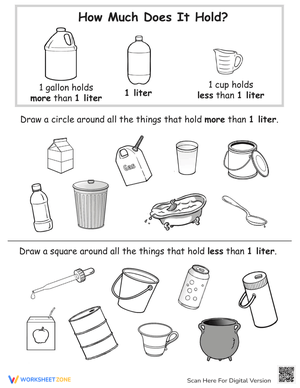
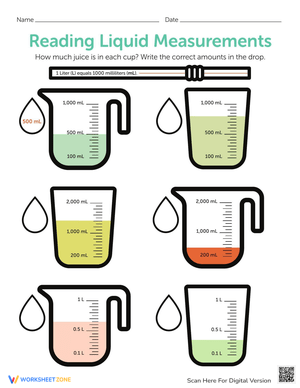
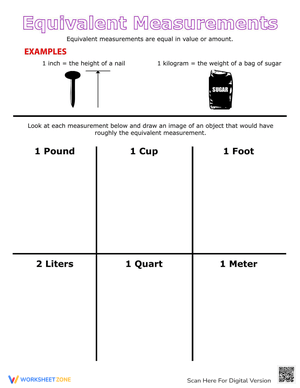
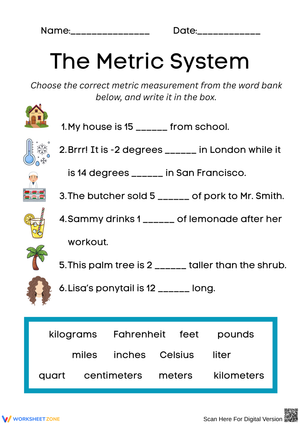
- Metric mass and capacity estimation: Students choose the most reasonable unit for everyday objects — deciding, for instance, whether a dog weighs closer to 5 grams or 5 kilograms, or whether a soup pot holds 2 liters or 2 milliliters. The emphasis is on building intuitive number sense about unit size before students encounter calculation problems.
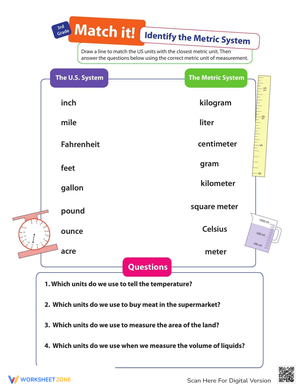
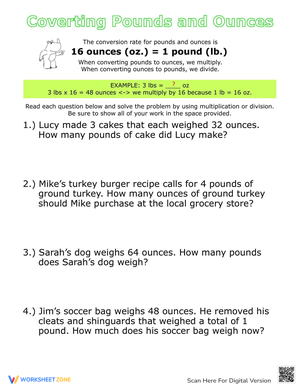
- US customary unit sorting: Each worksheet presents a set of objects and asks students to categorize them by the most appropriate unit — inches or feet for length, ounces or pounds for weight, cups or gallons for capacity. These sorting tasks expose gaps in understanding that a simple fill-in-the-blank format misses entirely.
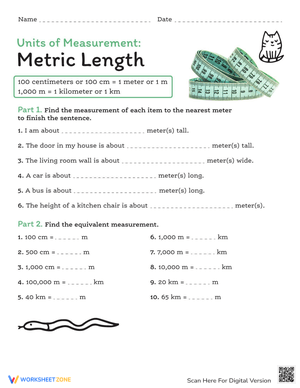
- Ruler reading to the nearest half and quarter inch: Students read ruler images and record measurements with correct fractional notation. Several worksheets extend this by having students transfer measurements to a line plot, connecting measurement to data representation inside a single exercise.
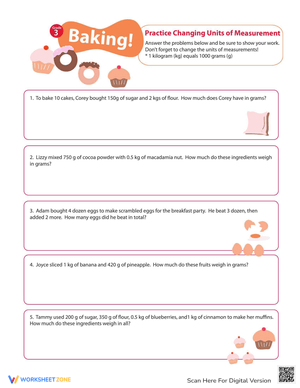
- Measurement word problems: Multi-step problems ask students to apply units inside addition, subtraction, and multiplication contexts — finding the total capacity of three equal containers, comparing two unequal masses. These problems require reasoning about units, not just computation.
Frequent Student Errors Worth Watching and Addressing
The metric estimation tasks surface a predictable error: students who have learned that "kilo means big" will overcorrect and assign kilograms to everything larger than a pencil — including apples, shoes, and textbooks — rather than developing any real feel for the 1-kilogram benchmark. This happens because the conceptual anchor (a textbook weighs about 1 kilogram, a paperclip about 1 gram) hasn't transferred to unfamiliar objects. Repeated exposure to new objects at each weight level, which these worksheets provide, pushes students to reason rather than guess by association.
On the ruler worksheets, the quarter-inch mark trips up a significant number of students. They read the ruler correctly to the nearest half inch but then write the fractional measurement as a decimal — recording 3.25 inches instead of 3 and 1/4 inches. This isn't strictly a measurement error; it's a fraction notation error surfacing inside measurement practice, which makes it easy to miss in a standard math unit. Catching it here gives you a clear heads-up before the fractions unit arrives.
Building These Worksheets Into Your Instructional Week
The estimation worksheets work best at the start of a lesson, before students touch any manipulatives or hear explicit instruction. Asking students to predict whether a stapler weighs closer to 1 gram or 1 kilogram — and defend their choice in writing — activates prior knowledge and immediately reveals who has no mental anchor for metric mass. That five-minute task tells you more than a pre-assessment quiz about where the class actually stands.
Ruler-reading worksheets fit the transition moment between introducing the concept whole-group and releasing students to measure physical objects. Running a worksheet first keeps the experience grounded in a fixed image so every student reads the same measurement — useful when you want a clean class discussion about common errors before students spread out with rulers. The word-problem worksheets belong at the end of the unit, when students need to pull all their measurement knowledge into applied reasoning rather than isolated skill recall. Assigning one word-problem worksheet as independent work and then discussing two or three student responses as a class is a reliable way to see whether students are labeling their answers with units or stripping them out — the most persistent problem in student work at this stage.
One pairing that experienced Grade 3 teachers use consistently: give an estimation worksheet, then hand out pan balances and gram weights so students can weigh the actual objects and compare results to their predictions. That loop between paper-based estimation and physical verification deepens conceptual understanding far more than either activity alone, and the worksheet becomes a written record of student thinking you can reference at data meetings or parent conferences.
Standard Alignment
The core standard driving most of this set is CCSS.MATH.CONTENT.3.MD.A.2, which requires students to measure and estimate liquid volumes and masses using grams, kilograms, and liters, and to solve one-step word problems using those quantities. The estimation worksheets and word-problem worksheets map directly to this standard. The ruler-reading and line-plot worksheets align to CCSS.MATH.CONTENT.3.MD.B.4, which addresses measuring lengths to the nearest half and quarter inch and representing that data on a line plot. These two standards appear in sequence during most Grade 3 math units — teachers typically finish 3.MD.A.2 before moving into ruler precision — so the set supports the instructional arc rather than mixing standards out of order.
Adjusting the Set for Students Working at Different Levels
Units of measurement printable worksheets for 3rd grade work across a wider ability range than most measurement resources because the skill domains don't peak at the same cognitive level. Estimation tasks are accessible entry points for students who struggle with computation — selecting a reasonable unit requires reasoning, not calculation, and a student who is behind in arithmetic can still succeed here. For students working above grade level, the word-problem worksheets extend naturally by removing the unit labels from the answer choices, requiring students to supply the correct unit independently rather than selecting from a list.
For students who are still shaky on fraction concepts, the quarter-inch ruler worksheets should follow explicit fraction instruction rather than precede it. There's no benefit in asking a student to record "3 and 1/4 inches" if they haven't yet solidified what one-fourth means. In mixed-ability classrooms, treat the ruler worksheets as a later-stage resource and front-load the estimation and sorting worksheets while the fraction foundation is still being built.
Frequently Asked Questions
Which units of measurement are covered at the 3rd grade level under the Common Core?
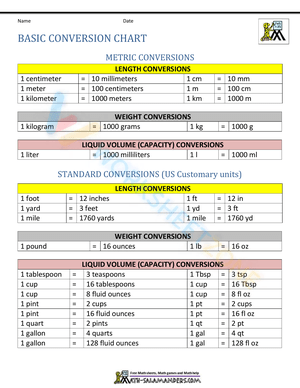
CCSS.MATH.CONTENT.3.MD.A.2 specifically names grams, kilograms, and liters as the metric units for mass and capacity. The standards also require ruler measurement to the nearest half and quarter inch. US customary units — ounces, pounds, cups, feet, yards — are not explicitly named in the Common Core at this grade level, but most district curricula include them to connect measurement to students' everyday experience, and several worksheets in this set address them directly.
How do these worksheets fit into a hands-on measurement lesson?
These units of measurement printable worksheets for 3rd grade work best as the recording layer of a hands-on lesson, not as a replacement for it. In a mass and capacity station, students can estimate on the worksheet before weighing an object on a balance scale, then record the actual measurement next to their prediction. That side-by-side record is genuinely useful — the gap between prediction and actual measurement tells you, at a glance across all student papers, who needs reteaching on metric benchmarks before the unit closes.
Do the worksheets include answer keys?
Yes. Each worksheet comes with a corresponding answer key, which makes self-checking during station rotations practical and reduces grading time during independent work. For the ruler-reading worksheets, the answer keys show both the accepted measurement and the correct fractional notation — which directly addresses the decimal-versus-fraction error described above and gives students a clear model for how their answers should look.













 Interactive Worksheet Maker
 Quiz Maker
 Word Search Maker
 Crossword Puzzle Maker
 Word Scramble Generator
 Sentence Scramble Generator
 Handwriting Worksheet Generator
 Name Tracing Generator
 Fill In The Blank Generator