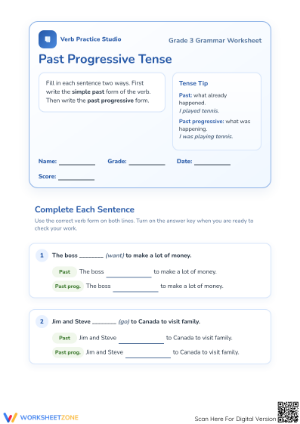
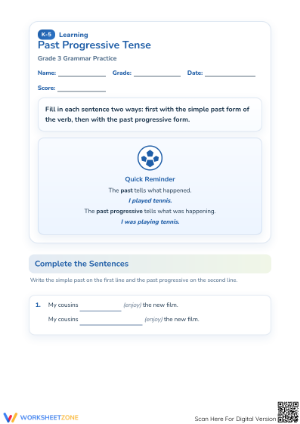
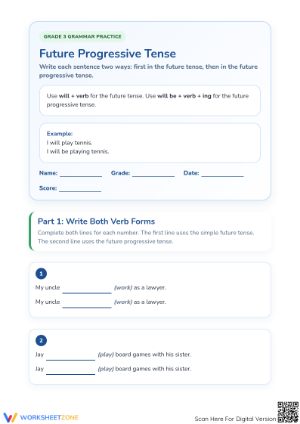
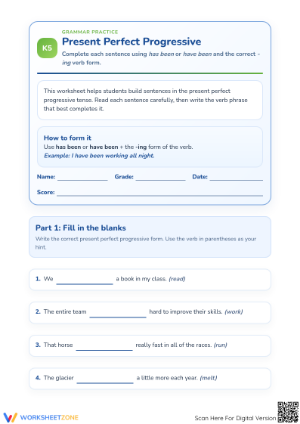
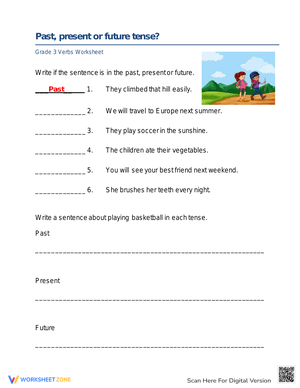
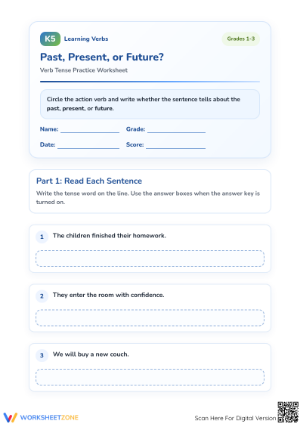
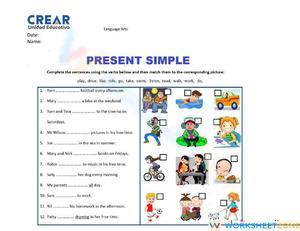
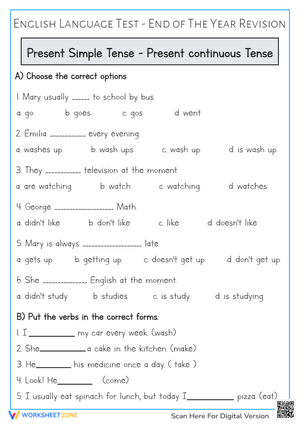
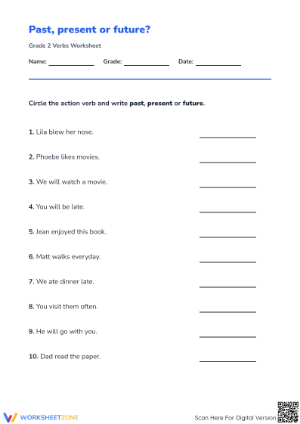
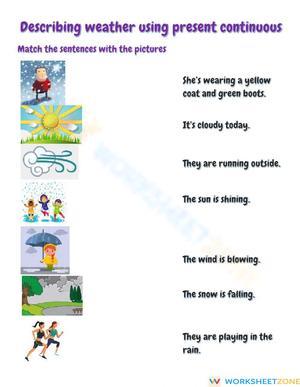
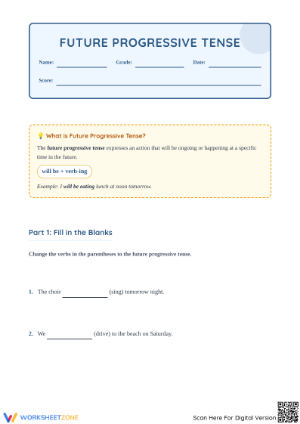
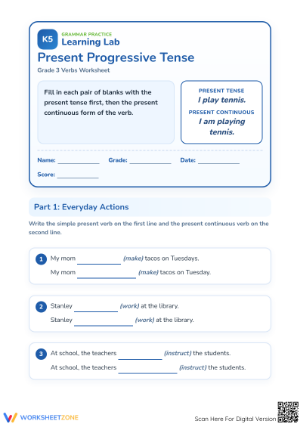
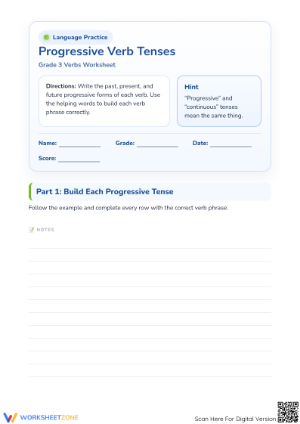
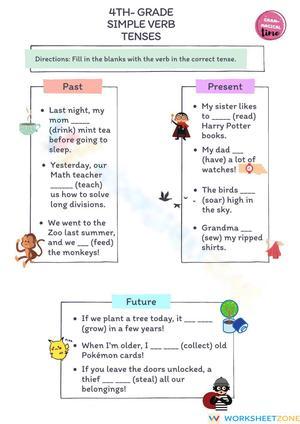
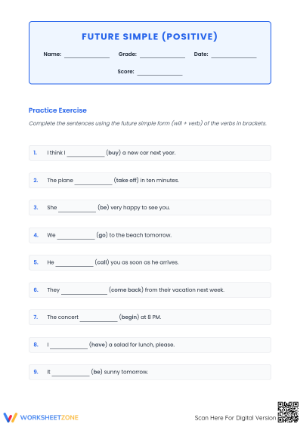
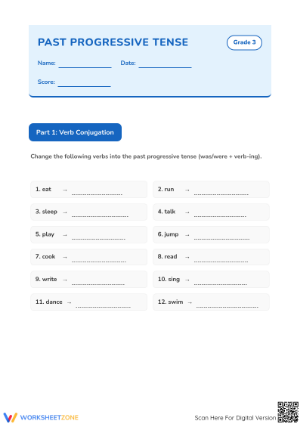
These tenses worksheets for 3rd grade give teachers a focused set of practice tools for the simple past, present, and future — the three tense forms students must control before their writing can hold together. The set covers both regular verb patterns and the high-frequency irregular verbs that trip up nearly every eight-year-old, with activity formats varied enough to use across a full instructional week without repetition. Each worksheet targets a specific skill rather than mixing concepts, which keeps student attention on the rule at hand.
The Specific Skills Targeted
Third grade is a turning point for verb instruction. Second graders identify action words; third graders conjugate them accurately across time. That shift — from recognition to production — is what each worksheet in this set addresses directly.
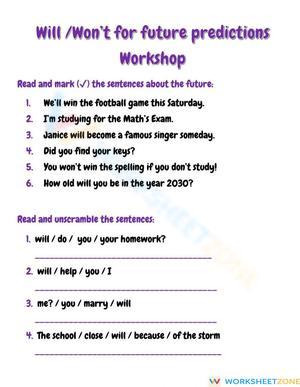
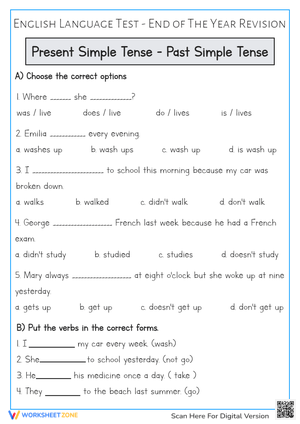
- Sentence transformation: Students take a present-tense sentence and rewrite it in both past and future form. The task demands active manipulation rather than passive identification.
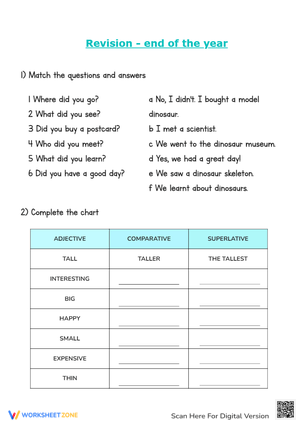
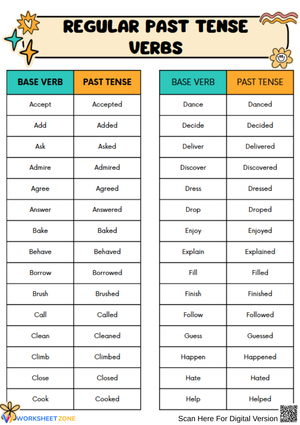
- Irregular verb match-up: Students draw connections between base forms and their past-tense counterparts (go/went, see/saw, eat/ate, run/ran). The matching format provides repeated exposure without becoming a rote drill.
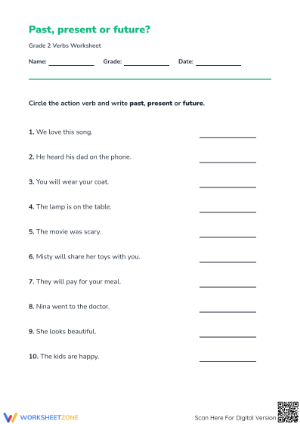
- Signal word detection: Sentences containing temporal markers — yesterday, tomorrow, last week, next year — ask students to select or write the correctly tensed verb. This builds the reading habit of scanning for context before committing to a form.
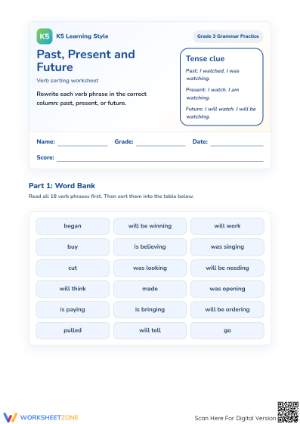
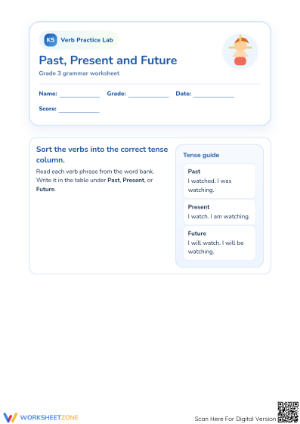
- Tense timeline sorting: Students map verbs and verb phrases onto a past-present-future continuum. Visual placement helps students who grasp the concept in discussion but still flip tense forms under pressure.
- Paragraph editing: Short passages contain deliberate tense shifts. Students mark and correct each error — the same cognitive work they need to apply to their own drafts.
Mistakes Students Make That These Worksheets Help You Catch
The most consistent pattern in third-grade verb work is over-regularization of irregular verbs. Students who have just internalized the -ed rule for past tense immediately apply it to every verb they know, producing goed, eated, runned. The matching worksheets surface this quickly — a student who draws a line from go to goed tells you exactly what re-teaching is needed.
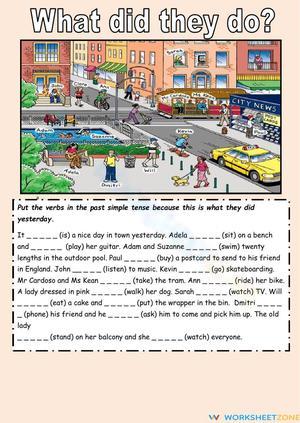
Tense inconsistency within a paragraph is harder to catch and slower to fix. A student will open a personal narrative in past tense, shift to present when the action picks up, and land in future tense at the end — without noticing any of it. The editing worksheets are useful here precisely because students encounter the shifts in someone else's writing first. That slight distance makes the errors visible in a way they almost never are when students read their own sentences.
Subject-verb agreement errors in the present tense deserve their own attention. Students learn that singular subjects take a verb ending in -s or -es (the dog barks, she walks), then over-apply that rule to plural subjects as well. A student writing the dogs barks is not confused about tense — they're confused about agreement. The worksheets that ask students to circle the correct verb based on the subject force that distinction into the open.
How to Work These Worksheets Into Your Lesson Plans
The signal-word detection worksheets work well as Monday morning warm-ups — five or six sentences, enough to reactivate grammar memory after the weekend without burning through the literacy block. Save the timeline sorting worksheets for the day a tense is introduced for the first time. Placing a new concept on a visual continuum before asking students to produce sentences with it reduces the cognitive load of that first encounter considerably.
Tenses worksheets for 3rd grade fit naturally into the Friday review block, especially in the editing format. Once students have worked through a week of grammar instruction, a short editing passage gives you fast formative data before Monday. Three to five questions at the end of class tell you who has internalized the rule and who will need a small-group follow-up the next week.
For literacy centers, laminate the sentence transformation worksheets and supply dry-erase markers. Students complete and erase independently, which cuts prep time and keeps the activity functional across multiple rotations. Pairing students for the irregular verb match-up also pays off — hearing a partner explain why went is the past tense of go tends to stick in a way that reading the word wall does not.
Standard Alignment
These tenses worksheets for 3rd grade address CCSS.ELA-LITERACY.L.3.1.E, which requires students to form and use simple verb tenses (past, present, and future) accurately. In classroom terms, this standard typically lands in the third-quarter grammar unit — after students have reviewed basic sentence structure in the fall and before the fourth-grade progression into progressive and perfect tenses. The production expectation inside L.3.1.E matters: the standard asks students to form and use tenses, not merely recognize them, which is exactly the distinction the sentence transformation and editing worksheets push students toward.
Adjusting the Worksheets for a Range of Learners
For students still developing confidence with regular verb endings, attach a reference strip to the top of each worksheet listing the -ed rule with two or three examples. That addition removes the need to hold the rule in working memory while simultaneously applying it — students glance at the strip and keep moving rather than stalling mid-task.
Tenses worksheets for 3rd grade can be extended for students who have already mastered the simple tenses by adding a layer to the paragraph editing tasks: rather than just correcting errors in place, those students rewrite the entire passage in a different tense. That shift — making a full paragraph consistently past tense when it was written in the present — is meaningfully harder than fixing individual errors and functions as genuine production practice.
For students who freeze when facing an unfamiliar paragraph in the editing format, replacing the passage with sentences drawn from a read-aloud text the class already knows reduces the decoding burden. The student can focus on the grammar task rather than spending working memory on comprehension.
Frequently Asked Questions
Which irregular verbs should 3rd graders know before the end of the year?
Focus on the verbs students use constantly in their own writing: go/went, see/saw, eat/ate, run/ran, come/came, do/did, say/said, have/had, make/made, get/got. These appear in almost every third-grade narrative, so errors with them are visible and repeated. The match-up worksheets cycle through these high-frequency pairs deliberately — not an exhaustive irregular verb list, just the ones whose incorrect forms show up most reliably in student drafts.
Do these worksheets cover progressive tenses, or only simple tenses?
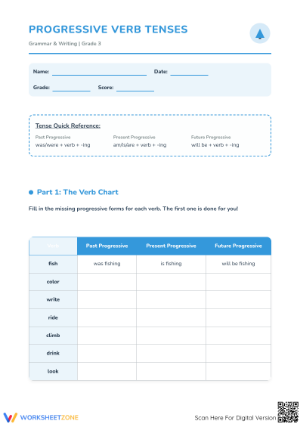
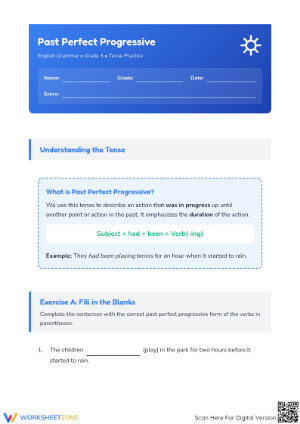
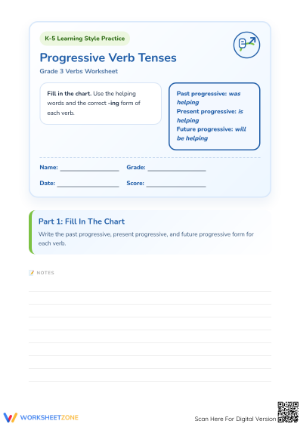
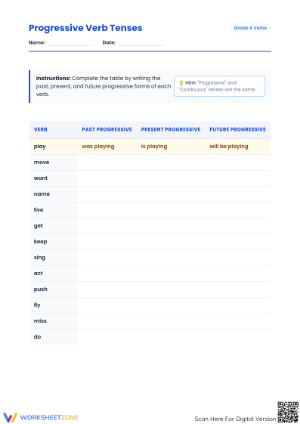
The set focuses on simple past, present, and future, which aligns with the L.3.1.E scope for third grade. Progressive tenses (is walking, were running) belong to the fourth-grade sequence. If a student asks about -ing forms during practice, the clearest short answer is that simple tenses mark a completed or habitual action while progressive tenses mark an action still in motion — but that distinction is a fourth-grade lesson, not a third-grade grammar block.
Why do students make tense errors in their writing even after performing well on the worksheets?
Worksheet performance and writing performance are different tasks. A student can circle the correct verb in a controlled exercise and still drift between tenses in a four-sentence paragraph, because independent writing draws on working memory in a way fill-in-the-blank tasks do not. When you see that gap, the editing worksheets bridge it — they sit between isolated practice and independent production. Repeated work in that editing format tends to transfer to student drafts over two to three weeks.












 Interactive Worksheet Maker
 Quiz Maker
 Word Search Maker
 Crossword Puzzle Maker
 Word Scramble Generator
 Sentence Scramble Generator
 Handwriting Worksheet Generator
 Name Tracing Generator
 Fill In The Blank Generator