


























Views
Downloads

Printable Past Present or Future Tense Worksheet | Grade 1-3
Paste this activity's link or code into your existing LMS (Google Classroom, Canvas, Teams, Schoology, Moodle, etc.).
Students can open and work on the activity right away, with no student login required.
You'll still be able to track student progress and results from your teacher account.
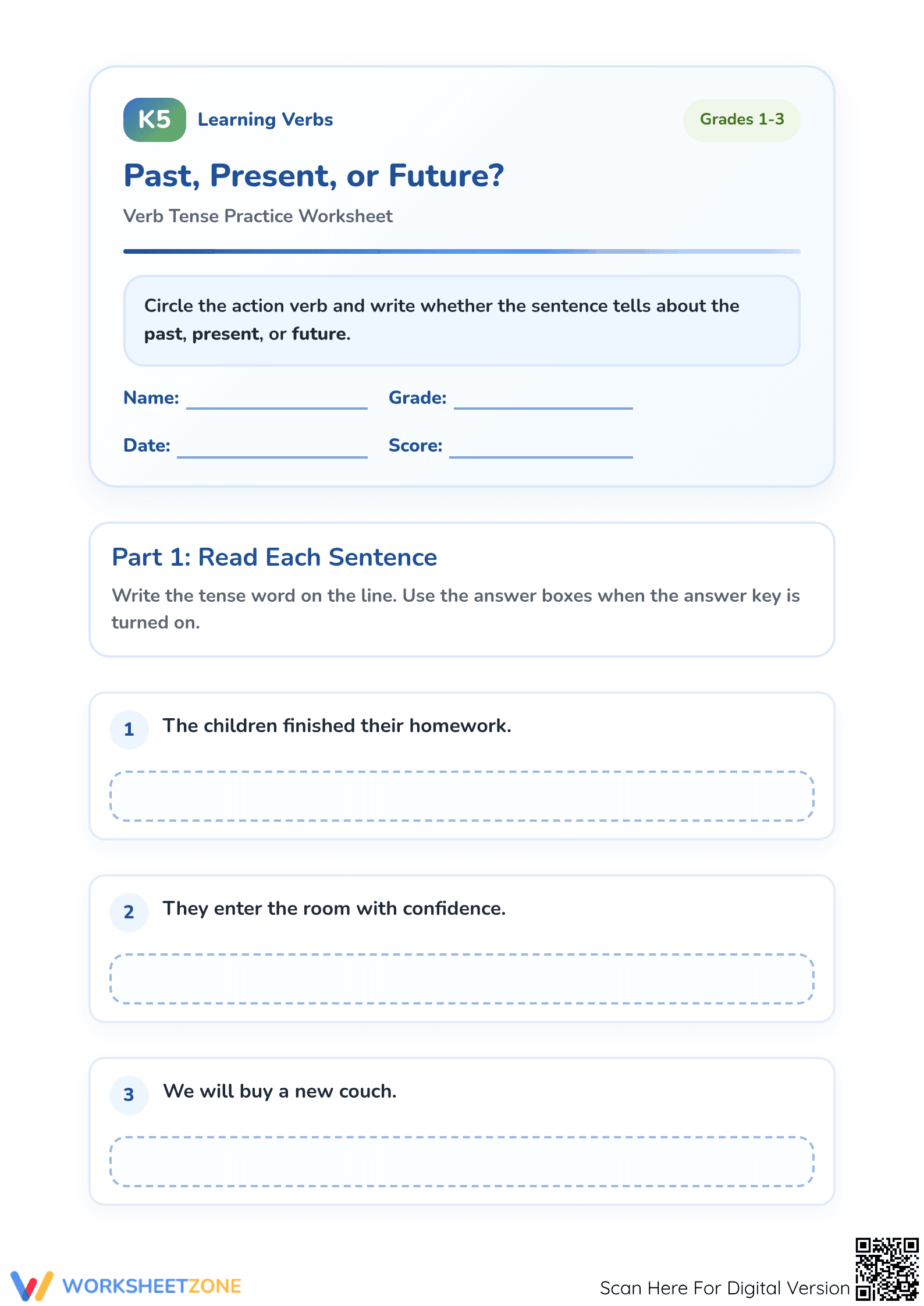
This comprehensive verb tense practice worksheet helps elementary students master the distinction between past, present, and future actions. By analyzing 13 structured sentences, learners build the grammatical foundation necessary for clear communication and reading comprehension. This essential resource ensures students can accurately identify when events occur within a narrative or informational text.
At a Glance
- Grade: 1-3 · Subject: English Language Arts
- Standard:
CCSS.ELA-LITERACY.L.1.1.E— Use verbs to convey a sense of past, present, and future- Skill Focus: Verb Tense Identification
- Format: 3 pages · 13 problems · Answer key included · PDF
- Best For: Grammar reinforcement and formative assessment
- Time: 15–20 minutes
What's Inside
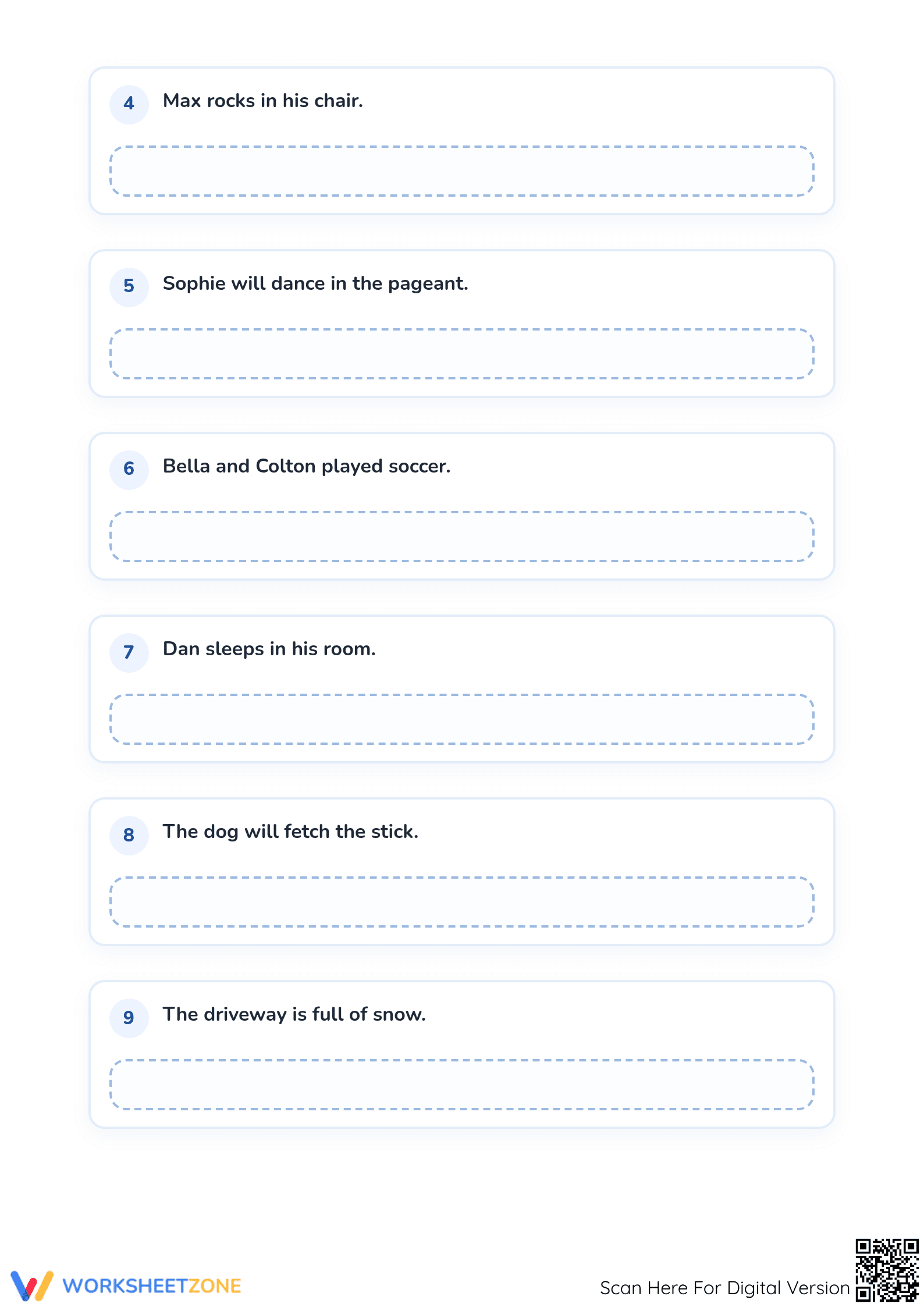
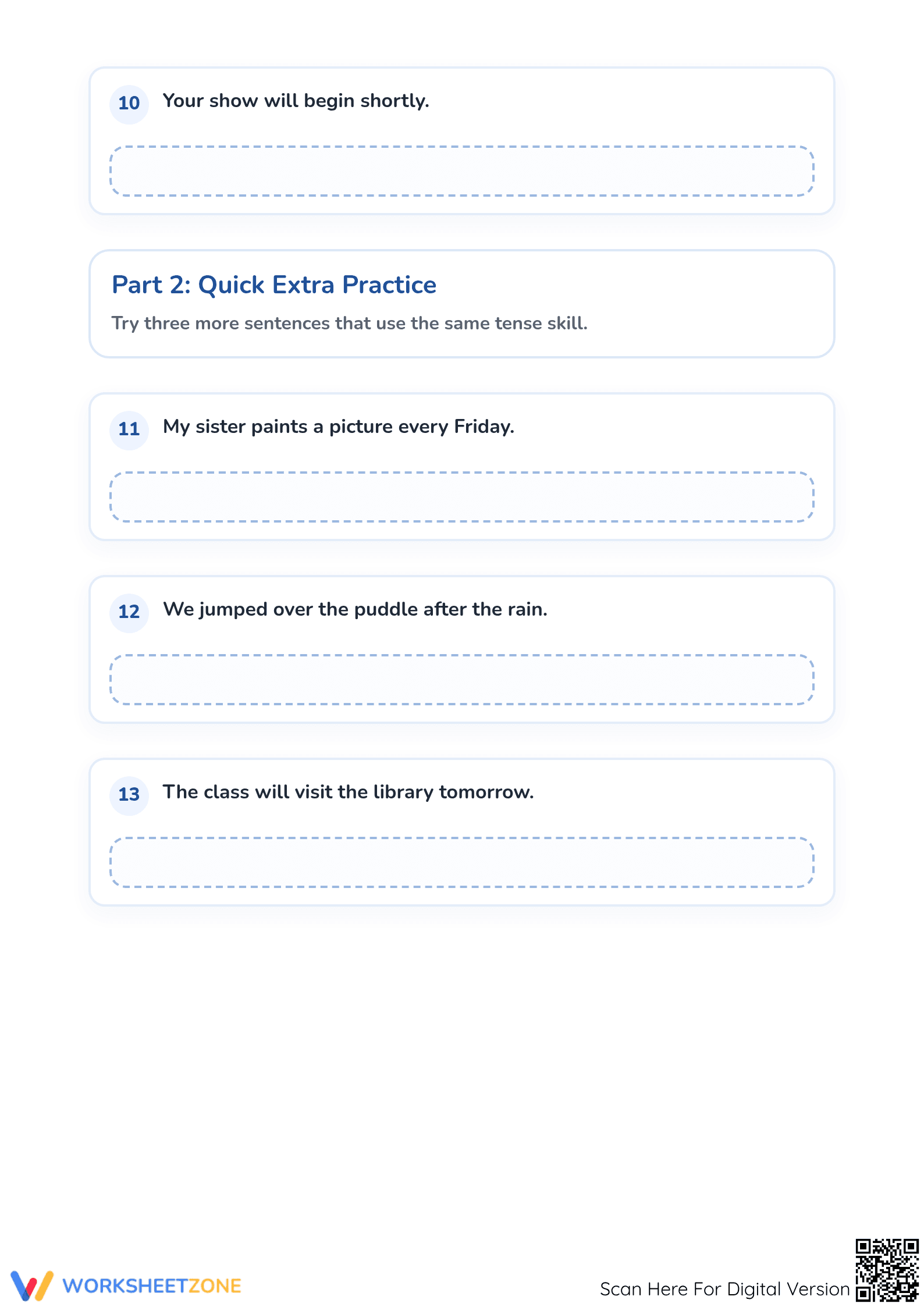
This three-page PDF features 13 carefully curated sentences designed to test a student's ability to recognize verb forms. The first two pages contain ten initial identification tasks, while the third page provides a "Quick Extra Practice" section with three additional challenges. Every problem includes a dedicated workspace for writing the correct tense word, and a full answer key is provided for immediate feedback.
Zero-Prep Workflow
This worksheet is designed for maximum efficiency in the modern classroom. First, print the three-page PDF in under 30 seconds. Next, distribute the copies to your students; the clear instructions mean you spend less than a minute explaining the task. Finally, review the completed work using the included answer key in roughly two minutes. This streamlined process makes it a perfect resource for sudden sub plans.
Standards Alignment
The primary focus of this activity is `CCSS.ELA-LITERACY.L.1.1.E`, which requires students to use verbs to convey a sense of past, present, and future. Additionally, it supports `CCSS.ELA-LITERACY.L.3.1.E` by providing practice with simple verb tenses in context. Both standard codes can be copied directly into lesson plans, IEP goals, or district curriculum mapping tools for administrative documentation.
How to Use It
Use this worksheet as a formative assessment after an introductory lesson on verb tenses to gauge student understanding. During the session, walk around and observe if students are correctly identifying future tense indicators like "will." This resource is also ideal for independent centers or homework, with an expected completion time of 15 to 20 minutes for most elementary learners.
Who It's For
This resource is specifically tailored for Grade 1 through Grade 3 students who are developing their foundational grammar skills. It is particularly effective for English Language Learners who need structured practice with English verb morphology. Pair this worksheet with a tense-focused anchor chart or a short reading passage to provide a complete instructional cycle.
Verb tense mastery is a critical milestone in early literacy, as it allows students to construct logical timelines within their writing. According to research from RAND AIRS 2024, explicit instruction in grammatical structures like verb tenses significantly improves reading comprehension scores for elementary students. This worksheet targets CCSS.ELA-LITERACY.L.1.1.E by requiring learners to decode the temporal markers within sentences, such as "will" for the future or "-ed" suffixes for the past. By isolating the verb tense identification skill, this resource helps bridge the gap between simple sentence recognition and complex narrative production. Educational practitioners can rely on this standard-aligned tool to provide the repetitive, focused practice required for long-term retention of morphological rules. The inclusion of an answer key further supports the gradual release of responsibility model, enabling students to eventually self-correct their work and build linguistic autonomy.


