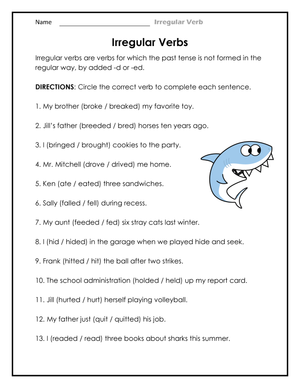
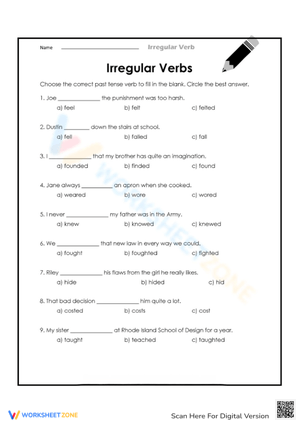
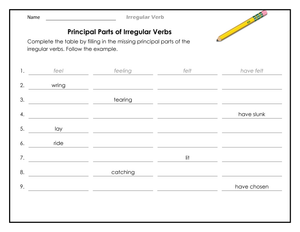
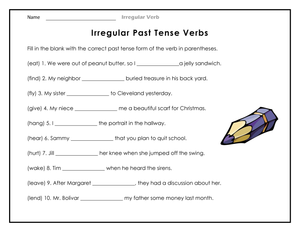
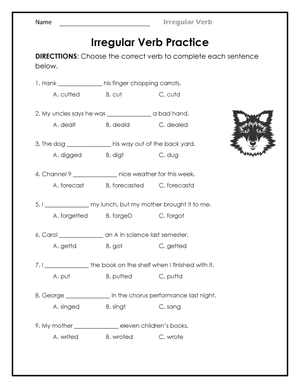
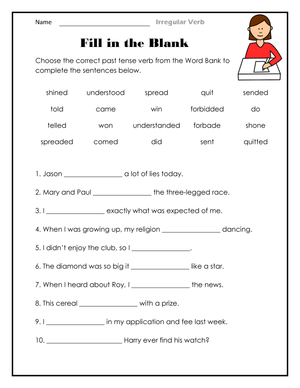
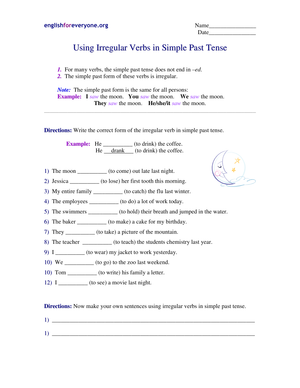
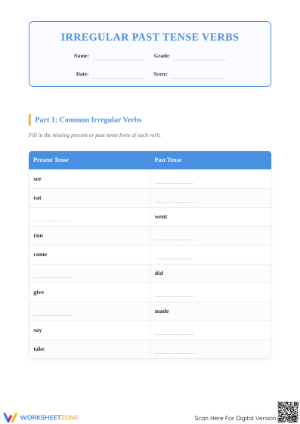
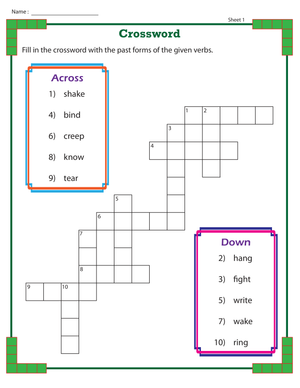
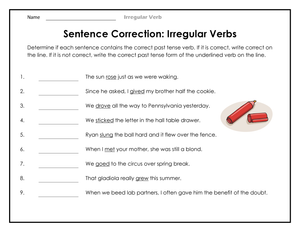
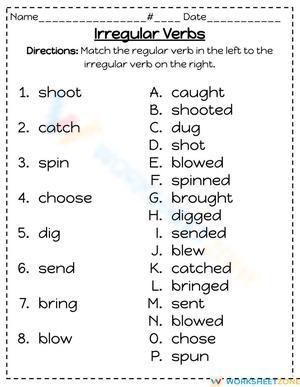
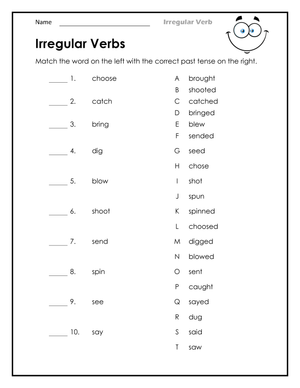
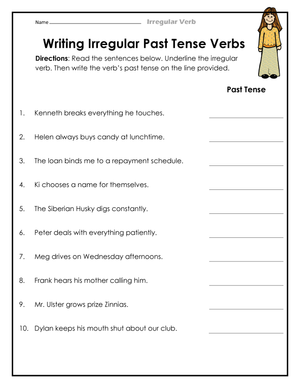
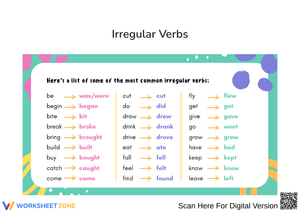
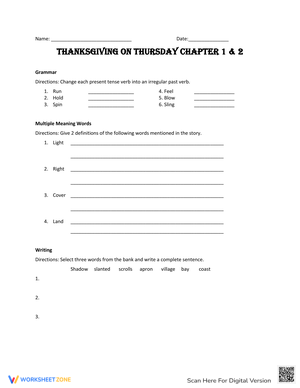
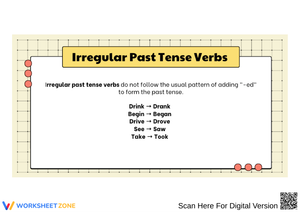
These 3rd grade irregular past tense worksheets give teachers a targeted practice set for one of the most stubborn verb skills at this level — the forms that simply will not follow the -ed rule. The resources cover high-frequency verbs students need to produce automatically: went, saw, ran, ate, said, wrote, knew, and about twenty others that appear constantly in third-grade reading and writing. Each worksheet moves students from recognizing a correct form to actually writing it without stopping to think.
What's Inside the Set
The worksheets target three broad types of irregular verb — and each type catches students in a different way. Vowel-shift verbs like sing/sang and run/ran follow a pattern once students see it. The no-change group (put, cut, hit) confuses students who expect a visible difference between present and past tense. The complete-transformation group (go/went, am/was) requires direct memorization because no internal logic connects the two forms.
Activity types across the set include:
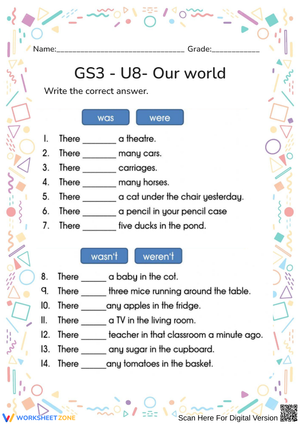
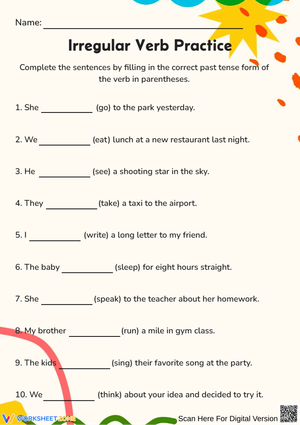
- Fill-in sentences where students supply the correct past tense form from memory
- Sentence-rewriting tasks that ask students to shift a present-tense sentence into past tense
- Error-correction paragraphs where students read as editors, identify the wrong form, and rewrite it correctly
- Verb sorting by category — students place each verb before completing a follow-up writing task
Several worksheets close with an open-ended prompt requiring students to use three or more targeted verbs in original sentences. That last step is where recognition becomes production — and where teachers learn what has actually stuck.
Errors Worth Knowing Before You Hand These Out
Over-regularization — "goed," "runned," "eated" — is the error that gets the most attention, and for good reason: it's nearly universal in early third grade. What is worth explaining to students is that applying -ed to every verb actually shows they understand the rule; the problem is knowing which verbs are exceptions. That framing reduces the shame students attach to the error and makes them more willing to self-correct rather than just avoid the verb entirely.
The no-change verbs create a separate confusion. A student who writes "she cutted the paper" is over-regularizing — straightforward enough. But a student who writes "he putted the book down" hasn't made a vowel error; they've simply never encountered the fact that put stays put. These verbs need explicit attention precisely because their sameness across tenses is what makes them hard. Students assume something must change.
A third pattern worth watching: dialectal forms like "she done it" or "he seen the movie." These aren't over-regularization — they're accepted forms in some spoken varieties of English. Students who produce them often need a careful conversation about written academic English rather than a correction that implies their home language is wrong. That conversation takes longer than marking the error and moving on, but skipping it usually means the form reappears on the next assignment.
Fitting These Worksheets Into a Real Teaching Week
A 3rd grade irregular past tense worksheets drops naturally into the five minutes before a writing block — use it as a mental gear-shift into language-thinking mode rather than a standalone grammar lesson. Monday morning warm-ups work well too, especially after a weekend when students have been speaking but not writing; the short review reactivates forms before new instruction begins.
The error-correction worksheets are well suited to partner work inside a center rotation. Have one student read each sentence aloud while both decide whether the verb form sounds right. That oral step matters more than it might appear — students who write "he swimmed" will often hear that it sounds wrong when they say it aloud, creating a self-correction loop before any teacher feedback is needed. For exit tickets, project two or three sentences, ask students to write just the verb form, and you have usable data in under three minutes.
Standard Alignment
CCSS.ELA-LITERACY.L.3.1.D requires third graders to form and use regular and irregular verbs accurately. At third grade, this standard marks a specific instructional shift: students are expected to produce correct forms in their own writing, not merely identify them in isolation. Each 3rd grade irregular past tense worksheets in this set addresses L.3.1.D with task types that span both recognition (error correction, identification) and production (sentence rewriting, open-ended writing) — because the standard implies both demands. For TEKS-aligned classrooms, the parallel expectation appears in Strand 2 of the Texas Language Arts standards, where third graders are required to use irregular past tense verbs accurately in their own writing.
Adjusting the Worksheets Across Ability Levels
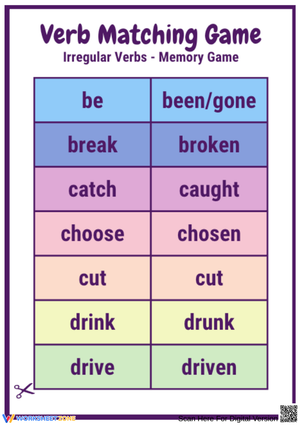
For students who are still building verb fluency, print a two-column reference — present form in one column, past form in the other — and let them keep it visible during the exercise. The goal is not to remove support immediately; it is to let students practice the verb-selection process while memory demand is lower, then fade the reference as forms become automatic. Removing it all at once tends to spike frustration without adding learning.
Students who move through the exercises quickly benefit from a structural constraint rather than more of the same task. Require them to use each target verb inside a compound sentence — "She ate quickly, but she still missed the bus" — which forces them to manage verb form and sentence complexity at the same time. That is a genuinely harder task, not just additional volume.
A 3rd grade irregular past tense worksheets from this set can also be cut apart and used as a physical sort. Print two copies, cut one into individual verb cards, and have students match each present-tense form to its past-tense counterpart before completing the written portion. For students who process better through movement than through reading a column of sentences, the manipulative version reaches the same learning target without the frustration.
Frequently Asked Questions
Which irregular verbs should third graders learn first?
Start with the verbs that appear most in student writing and classroom read-alouds: went, saw, ate, came, said, ran, did, gave, took, knew, and thought. These show up constantly in narrative assignments, and automatic control of them frees students to focus on their ideas rather than their grammar.
Why do students keep writing "runned" and "eated" even after weeks of practice?
The -ed rule is deeply internalized, and irregular forms require overriding a well-learned pattern — which takes more repetition than most grammar units allow. The correction tends to be more durable when it happens inside actual student writing rather than only on exercises. Writing conferences, where a teacher points to the error inside a sentence the student wrote themselves, make the fix stick faster than drilling the form in isolation.
Do these worksheets support English language learners at the third-grade level?
Yes, with some additional support layered in. Many world languages use more regular conjugation patterns than English, so ELL students may not have the tacit phonological knowledge that native speakers draw on — "runned" might not sound wrong to them the way it would to someone who grew up hearing "ran." Pairing worksheet practice with oral rehearsal and a bilingual verb reference, where available, gives ELL students a more complete picture of what the correct form sounds and looks like.












 Interactive Worksheet Maker
 Quiz Maker
 Word Search Maker
 Crossword Puzzle Maker
 Word Scramble Generator
 Sentence Scramble Generator
 Handwriting Worksheet Generator
 Name Tracing Generator
 Fill In The Blank Generator