These 2nd grade compound words printable worksheets give teachers a concrete set of resources for one of the more teachable vocabulary moments in second grade — when students first realize that a long, unfamiliar word is just two familiar words pressed together. The set targets both directions of compound word understanding: splitting a compound into parts to infer meaning, and combining known words to form new ones.
What Each Worksheet Covers
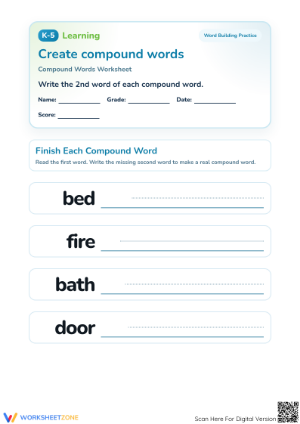
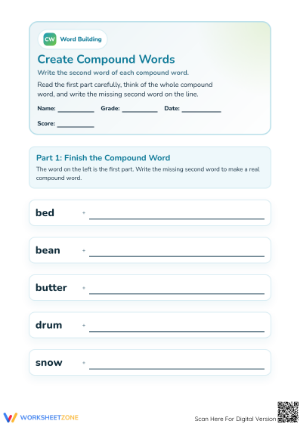
Second graders need to work with compound words from both ends. They need to break an unfamiliar compound into recognizable parts and use those parts to reason about meaning, and they also need to build new compound words from familiar roots. These two operations feel different to students, and each worksheet in the set targets one direction clearly — so neither task feels like a mystery before it becomes automatic. Specific formats across the set include:
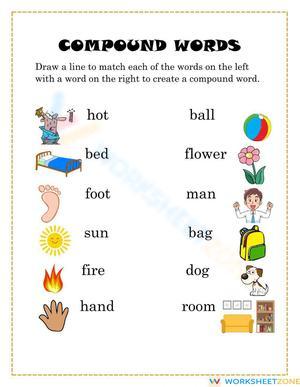
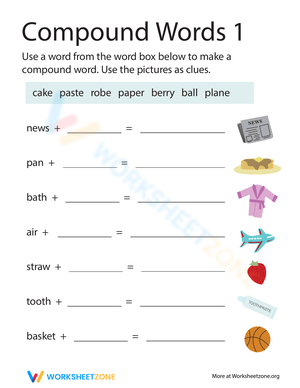
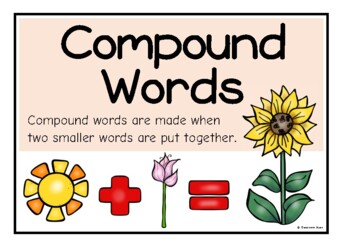
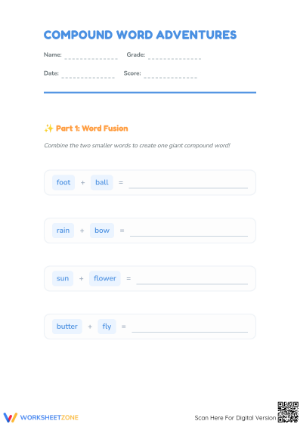
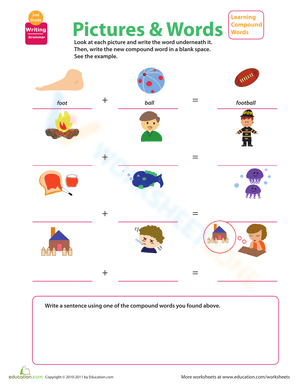
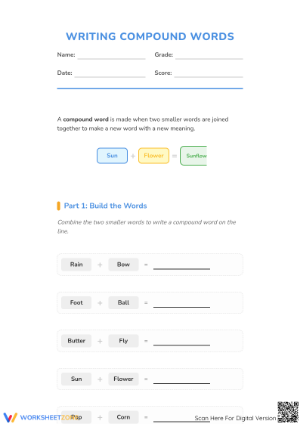
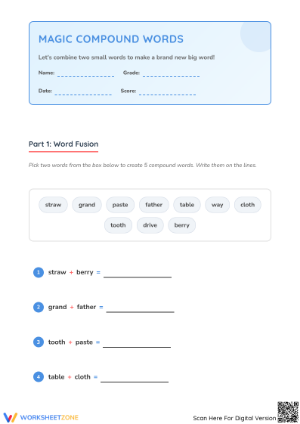
- Picture equations: two images representing short words (e.g., rain + coat), with spaces for students to write each word and the resulting compound
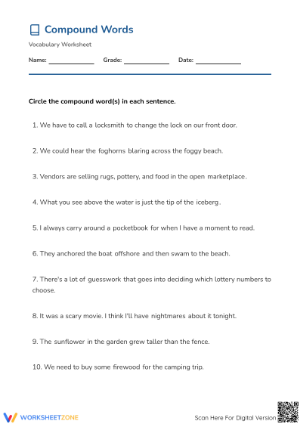
- Word-part splitting: students underline the two smaller words inside a given compound, then write a working definition based on both parts
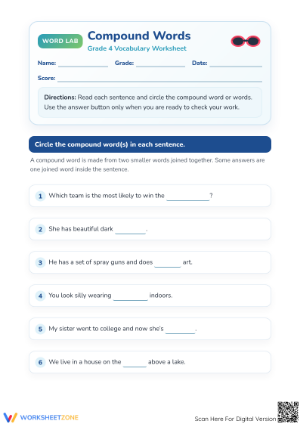
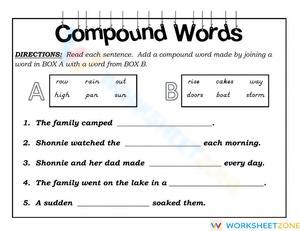
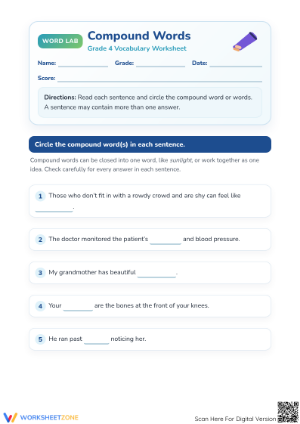
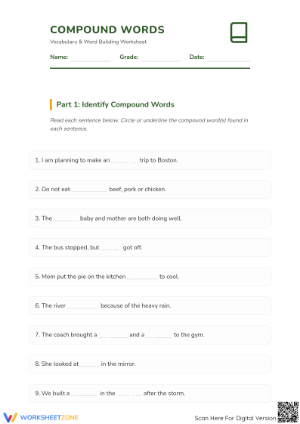
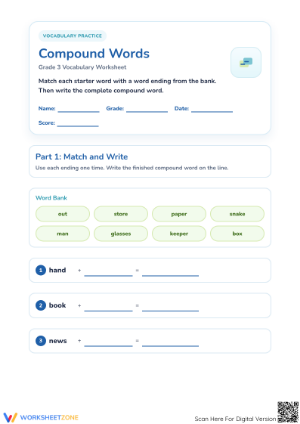
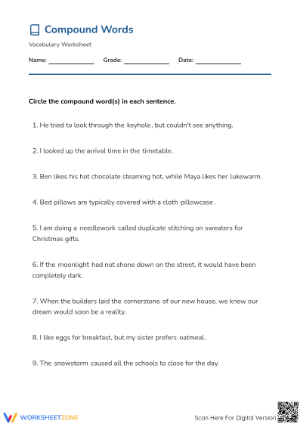
- Sentence fill-ins: students choose the correct compound word from a word bank to complete a context-rich sentence
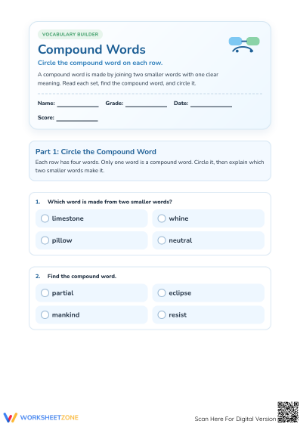
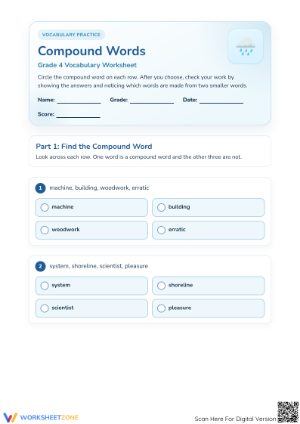
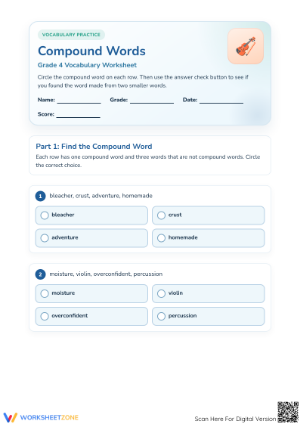
- Word sorting: students classify a list of words as compound or not compound — a format that reliably surfaces the most instructive misconceptions
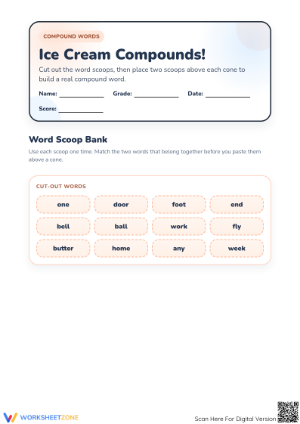
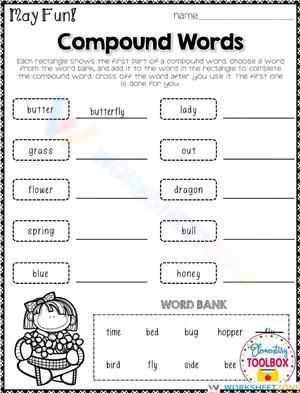
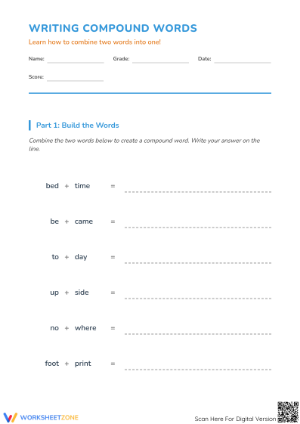
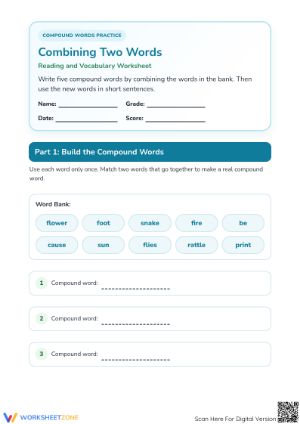
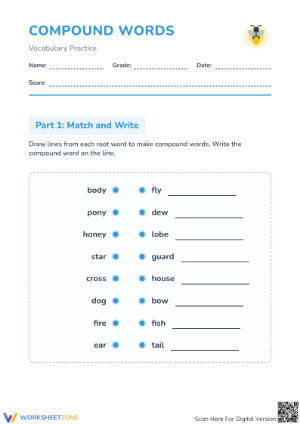
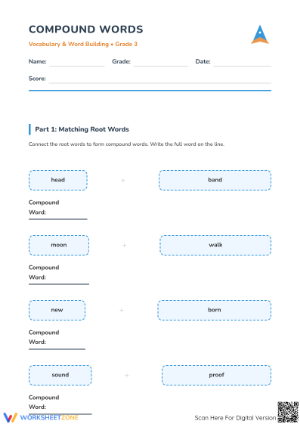
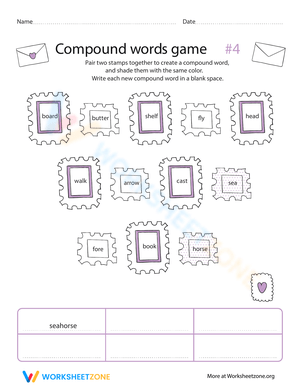
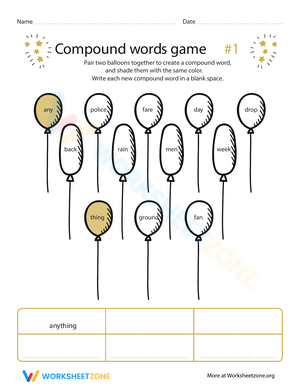
- Cut-and-paste combining: students match first-word strips to second-word strips to form real compound words
Mistakes That Show Up in Student Work — and Why They Matter
The most persistent error is not confusion about the concept itself. Most second graders absorb the definition quickly. The real problem is false positives: students who will confidently circle "carpet" as a compound word because they see "car" inside it, or mark "butter" because "but" is in there. The word-sorting worksheet is where this surfaces most clearly, and that moment is genuinely useful. When a student defends "carpet," the follow-up question — "What does 'car' plus 'pet' mean? Does that match what the full word means?" — teaches them that both parts must contribute real meaning. That is exactly the inferential work CCSS.ELA-LITERACY.L.2.4.D is asking for, and no lecture produces it as cleanly as a student defending a wrong answer.
A second error pattern shows up on the sentence fill-in worksheets. Students who correctly identify compound words in isolation will still choose the wrong word to complete a sentence if they skim instead of read. This is a reading comprehension problem wearing vocabulary clothing. When you review those worksheets as a class and ask students to explain their choices, the distinction between "knew the word" and "read the sentence" becomes clear fast.
Standard Alignment
CCSS.ELA-LITERACY.L.2.4.D asks students to use their knowledge of individual word meanings to predict the meaning of compound words — and the operative word is predict. The standard is not about recognition alone; it is about inference. A student who can circle all the compound words on a page but cannot explain why "birdhouse" means what it does has only partially met it.
The 2nd grade compound words printable worksheets in this set address both halves of that standard: recognition tasks (picture equations, cut-and-paste) and inference tasks (word-splitting with written definitions, sentence fill-ins that require contextual judgment). If you track L.2.4.D in your data binder, the word-splitting worksheets produce the clearest formative evidence, because they require students to articulate the relationship between the parts and the whole — which is the behavior the standard is actually measuring.
How to Build These Worksheets Into Your Instructional Week
Picture equation and cut-and-paste worksheets work well as morning entry tasks. Students can start them without directions because the visual format communicates the task immediately. That matters in the first eight minutes of the day, when you are moving through attendance, folder checks, and settling routines and need something students can begin on their own.
Word sorting and sentence fill-ins are better suited to later in the week, after direct instruction on compound words has already happened. Both formats reward the five-minute share-out that follows — especially when a student makes a defensible wrong choice. Running a brief class discussion after collecting the sorting worksheet gives you formative data without additional assessment prep. These 2nd grade compound words printable worksheets also hold up as reliable substitute-day materials: directions are visual or brief, tasks are self-contained, and finished work shows enough student writing to confirm engagement.
For literacy centers, the cut-and-paste worksheet fits cleanly at a word work station. Students complete it without adult support, and checking finished work is straightforward because the combined words are either real compound words or they are not.
Adjusting the Work for a Range of Learners
Students still building basic decoding get the most from picture equation worksheets. The images carry the semantic weight, so a student who cannot independently read "rainfall" can still engage with the concept by reading two shorter, decodable words and observing what combining them produces. The compound word concept stays in focus instead of getting buried under decoding demands.
For students who move through the standard tasks quickly, the word-sorting worksheet is a natural extension point. Ask them to generate additional examples for each category, then challenge them to find a word that looks like a compound but is not — one that could plausibly fool a classmate. That metacognitive task pushes well beyond what L.2.4.D requires and into real word study.
When working with the 2nd grade compound words printable worksheets, English language learners benefit from starting with compound words where both components are already part of their spoken vocabulary: backpack, bedroom, sunlight, lunchbox. When both halves are familiar in conversation, the worksheet becomes a bridge between oral and written vocabulary rather than a double load of unfamiliar print.
Frequently Asked Questions
Which compound words make the best starting examples in second grade?
Start with words students already use in speech every day: backpack, lunchbox, playground, bedtime, raincoat, sunshine. When the vocabulary is already familiar, students direct their full attention to the concept — that two independent words fuse into one — rather than splitting focus between new words and a new idea. Once those first examples feel solid, introduce less familiar compounds like "scarecrow" or "footprint," where the picture equation format gives students enough context to infer the meaning on their own.
How do the word-splitting worksheets serve as formative assessment?
If a student correctly identifies both parts of "footprint" but writes a definition that ignores one of them, you know the recognition skill is there but the inference work of L.2.4.D is still developing. That distinction matters when deciding who needs a small-group reteach and who is ready to move forward. The word-splitting format makes that diagnostic clear without requiring a separate quiz.
Are these worksheets usable in first or third grade classrooms?
Strong readers in the final weeks of first grade can handle the picture equation and cut-and-paste formats, particularly in a small-group setting rather than as independent work. The word-sorting and sentence fill-in worksheets are more squarely calibrated for second grade. Third-grade students who need compound word review generally get the most from those two formats, which demand more word knowledge and contextual judgment than the visual tasks do.